
الموارد
استكشف مجموعة واسعة من الموارد القيمة حول تعليم المواطنة العالمية لتعميق فهمك وتعزيز البحث والمناصرة والتعليم والتعلم.
تم العثور على 518 نتيجة
 The 1994 Genocide as Taught in Rwanda’s Classrooms سنة النشر: 2017 This blog looks at how textbook and curricula reforms in Rwanda have worked to cover the 1994 Genocide and instill the ideals of tolerance, unity and reconciliation in students. It is part of a series of blogs on this site published to encourage debates around a new GEM Report Policy Paper: Between the Lines, which looks at the content of textbooks and how it reflects some of the key concepts in Target 4.7 in the UN Sustainable Development Goals (SDGs).by Jean-Damascene Gasanabo, PhD, Director-General, Research and Documentation Center on Genocide, National Commission for the Fight against Genocide (CNLG), Kigali, Rwanda. The 1994 Genocide against the Tutsi saw the slaughter of more than one million people over the span of three months, and placed Rwanda at the forefront of the world’s political consciousness. Almost 23 years later, Rwanda has rebuilt and become a modern hub of progress and development, putting in place social, political and economic systems that are grounded in national unity and reconciliation – with education reforms playing a central role.The large-scale participation of children and adolescents in perpetrating acts of genocide made it clear that an education system that fails to integrate basic human values, will also inevitably fail the nation. Education was used prior to the Genocide to inculcate fear, intolerance and hatred; and so too is it being utilized by the current Government to foster peace and inclusivity, and combat genocide ideology. Post-genocide Rwanda has used education as a main tool to correct biased perceptions of its socio-political history, and to provide accurate representations of the root causes of the genocide, and preventative measures.With over 60% of Rwandans under the age of 24, the formal education system needs to instill the ideals of tolerance, unity and reconciliation in the next generation. With this realization, the Rwanda Education Board and the Ministry of Education have integrated genocide studies in the curricula of its primary, secondary and higher education institutions so that they are better able to lead a nation that is cognizant of its past. Instead of highlighting difference, the national curriculum of post-genocide Rwanda has been reconfigured to emphasize the politics of inclusion and to encourage a spirit of critical thinking that pursues peace, social cohesion and harmony above all else.Prior to the Genocide, educational resources were used as a tool by the genocidal regime to promote ethnic division, discrimination and propaganda. The biased curricula and teaching methods cemented ethnic segregation within classrooms and fostered genocide ideology. The students who were not expelled from primary and secondary school due to the ethnic and regional quota system were forced to identify themselves as being Tutsi – inherently separate to those who were Hutu or Twa. The pre-1994 curriculum lacked “the essentials of human emotion, attitudes, values and skills” as it continued to promote discriminatory and divisive ideologies that were “imparted through formalized rote learning in history, civic education, religious and moral education and languages.”Post-Genocide Rwanda faced the herculean task of rebuilding its dismantled institutions. With a profound lack of qualified teachers, a huge pool of orphaned children, insufficient funds and inaccurate textbooks following the genocide, many education challenges lay ahead. In early 1995, a moratorium was placed on history textbooks which disseminated biased information, as the country grappled with how and to what extent the nation’s past could be incorporated constructively in the education system, without causing pain or resurfacing conflicts.Rwanda chose a gradual, yet comprehensive, approach. In the years immediately following the Genocide, the history curriculum lightly touched on the subject so as to protect students from their recent past, and prevent division in classrooms based on differing family experiences. Classrooms promoted knowledge based on the essential ideas of unity, peace, tolerance and justice. In 2008 the National Curriculum Development Centre within the Ministry of Education published the new history curriculum which incorporated the Genocide against the Tutsi, coinciding with the renewed emphasis on the unifying and inclusive qualities of nationality, citizenship and patriotism, instead of ethnicity.The current national curriculum was formulated by the Rwanda Education Board in conjunction with varying public institutions, UN agencies and nongovernmental organizations. It incorporates the Genocide into the curriculum of every grade level, and discusses it in various contexts suited to the student’s particular stage in learning. Eyewitness accounts and the presence of elders in the classroom allow for a “multi-generational opportunity” for learning. In understanding how violent conflict erupts in society, it is possible to prevent future atrocities from beginning. Teaching the Genocide in present-day Rwanda aims to provide a more nuanced understanding of the event by using primary sources, encouraging class discussions on genocide denial, the persistence of genocide ideology, and the reconciliation efforts embarked on after the Genocide.Moreover, this change in the curriculum has been supplemented by a shift to transform learning from one based on standard rote memorization to one that encourages discussion and a spirit of critical thinking and analysis. This approach identifies the student as an active participant in the learning experience, not merely a silent recipient of history as “evangelical speech.” By promoting an environment that encourages spirited, objective discussions, the Ministry of Education seeks to redress the biases taught by the genocidal regime, as well as prepare young people to thoughtfully and constructively enter the workforce.Genocide education nevertheless faces some challenges ahead. With genocide denial still present, not only are ongoing revisions of educational resources required, but teacher training is also necessary to ensure that revisions to the curriculum are well presented by teachers.The way conflict and genocide has been taught through textbooks in Rwanda has evolved over time. For Rwandans, learning about the 1994 Genocide is not only vital in understanding the history of their country, but also in developing critical thinking skills that help young people become informed citizens in today’s globalized society. Peace education, as well as tools for conflict resolution and genocide prevention, are now heavily featured. Indeed the initiatives embarked on by the education sector signal a promising start to the continuous pursuit of truth through knowledge of the past.In comprehensively integrating the study of genocide into the national curriculum and by empowering students to become agents of their own learning process, Rwanda offers an ambitious recipe for successfully teaching one’s own history for the better.
 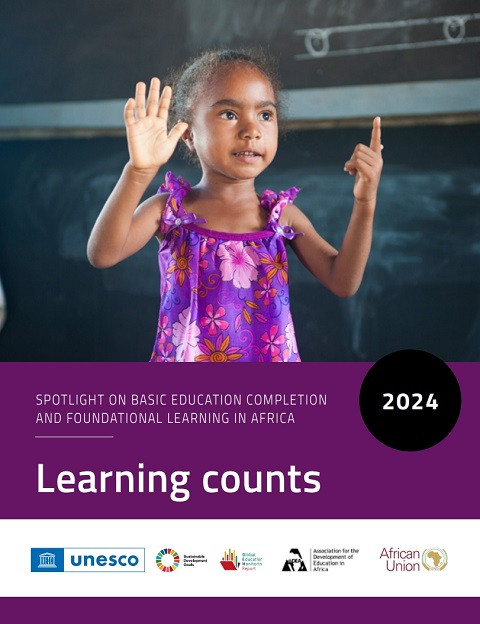 Learning Counts: Spotlight on Basic Education Completion and Foundational Learning in Africa, 2024 سنة النشر: 2024 المؤلف المؤسسي: Global Education Monitoring Report Team | Association for the Development of Education in Africa (ADEA) | African Union The African Union’s designation of 2024 as the Year of Education highlights the critical importance of education for equipping young Africans with the skills essential for their own and for the continent’s development. It is also a recognition of the multiple challenges ahead before every child can complete primary school having acquire the foundational skills that open the door for lifelong learning. Currently the out-of-school population is rising, one in five children do not complete primary school and, of those who do, only about one in five achieve minimum proficiency in reading and mathematics. African countries have set targets on primary completion and foundational learning but to effectively translate their ambitions into results, the 2024 Spotlight continental report emphasizes the importance of coherence between their curricula, textbooks, teacher guides and assessments. It evaluates the alignment of these policy documents with each other but also with a global standard of what students are expected to know and by when. It also assesses how these key documents are used in classrooms and what the implications are for children’s opportunities to learn. This report is the second in a series of three envisaged between 2022 and 2025, each covering some 12 countries of which a selection is examined in depth, in dialogue with education ministries and national stakeholders. The focus countries for this second Spotlight report cycle were Mauritania, Niger, South Africa, Uganda, and Zambia. The statistics and analysis presented in this publication aim to feed into the policy dialogue mechanism under the auspices of the African Union and its Continental Education Strategy for Africa. In particular, the Spotlight series aims to spark debate on foundational learning among African countries and encourage them to identify areas for joined action, given that they share a lot of policy challenges.
 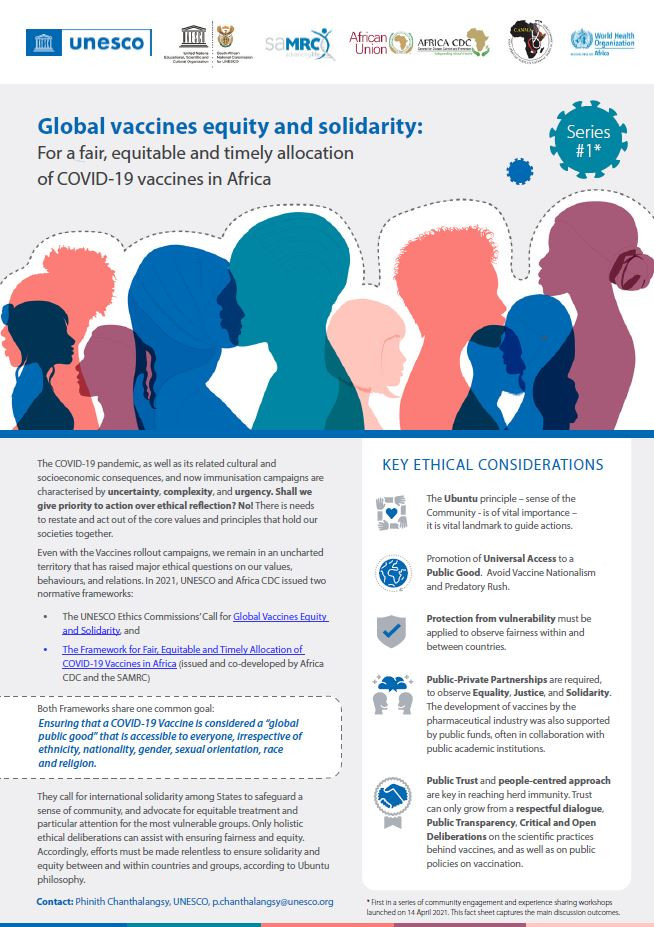 Global Vaccines Equity and Solidarity: For a Fair, Equitable and Timely Allocation of COVID-19 Vaccines in Africa; Series #1 سنة النشر: 2021 المؤلف المؤسسي: UNESCO Harare African populations have been side-lined through the COVID-19 Vaccination roll-out process. A vaccination timeline taking Africa into 2023 would be unethical. African countries need to invest in their own structures and stop relying on colonial structures. There is a moral obligation to safeguard the population through equal distribution. This not only makes moral and ethical sense but also scientific and economic sense as a slow roll out in Africa will impact the rest of the world. First in a series of community engagement and experience sharing workshops launched on 14 April 2021. This fact sheet captures the main discussion outcomes.
  Early Childhood Development and Early Learning for Children in Crisis and Conflict سنة النشر: 2018 المؤلف: Kolleen Bouchane المؤلف المؤسسي: Global Education Monitoring Report Team There is an urgent need for a comprehensive response, including early learning and family support programs, to the rapidly growing population of young children worldwide living in crisis and conflict. Substantial evidence from neuroscience to economics indicates that the early years of a child’s life lay the foundation for long-term health, learning and behavior. The first months and years are not only a critical period in an individual child’s lifelong capacity for learning, but weak learning foundations of children can compromise the long-term development of nations. Yet a review of Refugee and Humanitarian Response Plans conducted for this paper revealed that only 9 percent of plans included the essential elements of early learning. Relative to health and nutrition programming, early education and parenting interventions were more likely to be omitted from the Response Plans.The rationale for focusing new attention on the educational needs of young children living in fragile conditions is strong: there is a broad body of scientific evidence; the international legal framework of the United Nations Convention of the Rights of the Child asserts that all children have the right to health, education, legal registration, and protection from violence and separation from parents, beginning at birth; and the Sustainable Development Goals for all will be not reached without a focus on the earliest years of life in crisis and conflict situations. This background paper presents the case for increased attention and investment in early childhood in conflict and crisis contexts, with focused attention on early learning and family support. The scale of the problem, current science and evidence, current global standards and principles, and case studies are all discussed and priority recommendations are offered.
 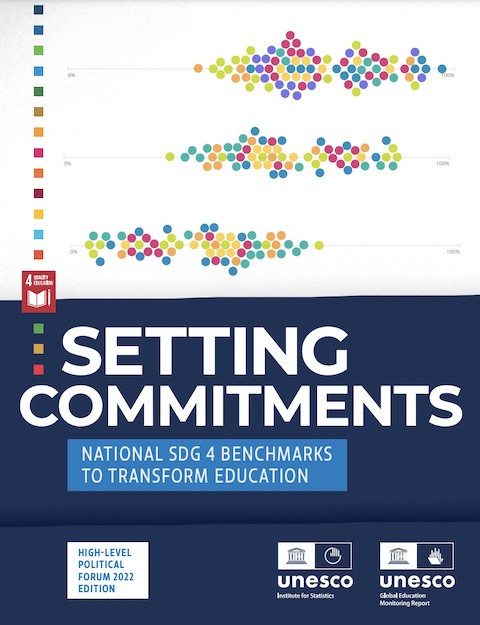 Setting Commitments: National SDG 4 Benchmarks to Transform Education سنة النشر: 2022 المؤلف المؤسسي: Global Education Monitoring Report Team | UNESCO Institute for Statistics (UIS) This publication provides an overview of the transformative agenda being established by countries, as they set SDG 4 benchmarks for education progress to take ownership of the 2030 Agenda for Sustainable Development. Inspired by the UN Secretary-General’s 2014 call for countries to embrace ‘a culture of shared responsibility’ based on ‘benchmarking for progress’, paragraph 28 of the Education 2030 Framework for Action also called on countries to establish ‘appropriate intermediate benchmarks for addressing the accountability deficit associated with longer-term targets’. This report outlines the steps taken by countries to set these commitments for 2025 and 2030 against seven indicators and is timed to feed into the second review of SDG 4 at the High-level Political Forum.The SDG 4 benchmark values now defined for almost nine in ten countries lay out their nationally determined contributions to the common education goal, using a concept embraced by the climate change sector. Twelve countries’ experiences of approaching the challenge of setting benchmarks based on their education sector plans are included, serving as inspiration for other countries to reflect on their own contributions and the task of developing appropriate policy responses in line with their own ambitions for the next decade, especially in the context of recovery from COVID-19.This publication proposes a way forward for monitoring progress towards the national SDG 4 benchmarks. This way of monitoring will be context-specific, recognizing countries’ starting points, helping link their national with regional and global education agendas.The benchmarks could be a basis for a compact in which countries commit to increasing their ambition, and, in return, the international community offers a program of support. In other words, a system of political accountability associated to political commitments with a support mechanism to accomplish the task.
 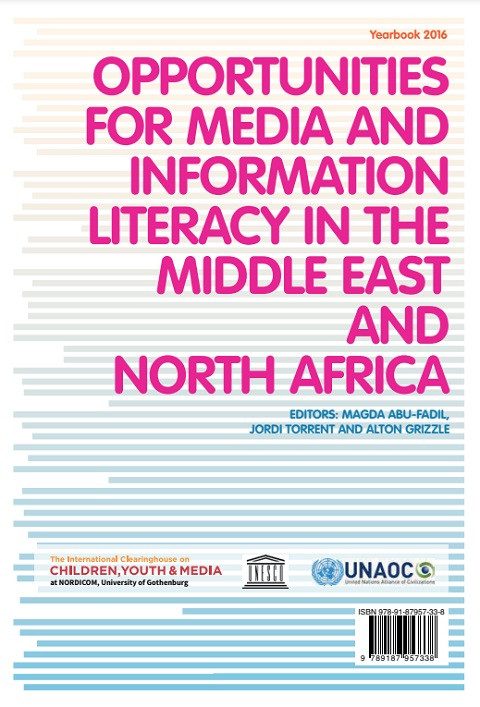 Opportunities for Media and Information Literacy in the Middle East and North Africa: Yearbook 2016 سنة النشر: 2016 المؤلف: Magda Abu-Fadil | Jordi Torrent | Alton Grizzle المؤلف المؤسسي: International Clearinghouse on Children, Youth and Media (Sweden) Opportunities for Media and Information Literacy in the Middle East and North Africa is the seventeenth Yearbook published by the Clearinghouse and fills a gap in the existing body of literature about the progress of media and information literacy work in different parts of the world. This book also helps educators in the Middle East and North Africa region looking for opportunities to bring to their classrooms elements of MIL education.
 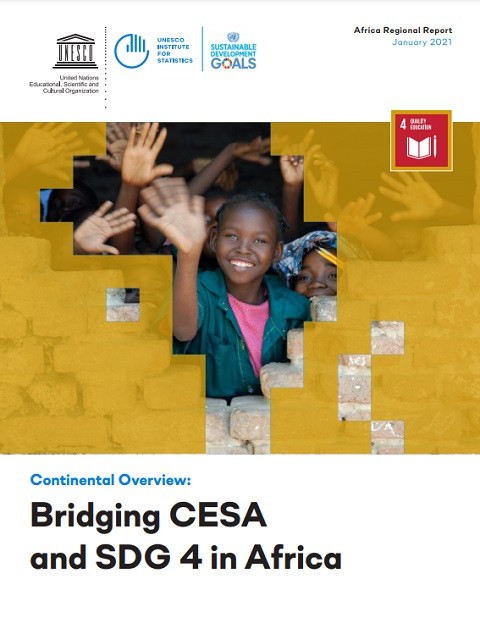 Continental Overview: Bridging CESA and SDG 4 in Africa; Africa Regional Report سنة النشر: 2021 المؤلف المؤسسي: UNESCO Institute for Statistics (UIS) Monitoring progress toward Sustainable Development Goal 4 for education (SDG 4) is crucial to ensuring that children around the world have access to a quality education where they can learn and gain the skills they need to meet their full potential. SDG 4 indicators are organized with a view to global, thematic, regional and national targets.This report by the UNESCO Institute for Statistics (UIS) is the first in a series intended to bring a regional focus to SDG 4 monitoring, highlight the work being done in the regions and compare SDG 4 targets with those established by regional bodies.This new series of regional reports serve two purposes. Firstly, to map regional and SDG 4 targets to provide an overview of the symmetries between the two. Continental Overview: Bridging CESA and SDG 4 in Africa looks at how the strategic objectives of the Continental Education Strategy for Africa (CESA) compares with SDG 4 targets. Secondly, it analyses progress towards these objectives by African sub-regions.
 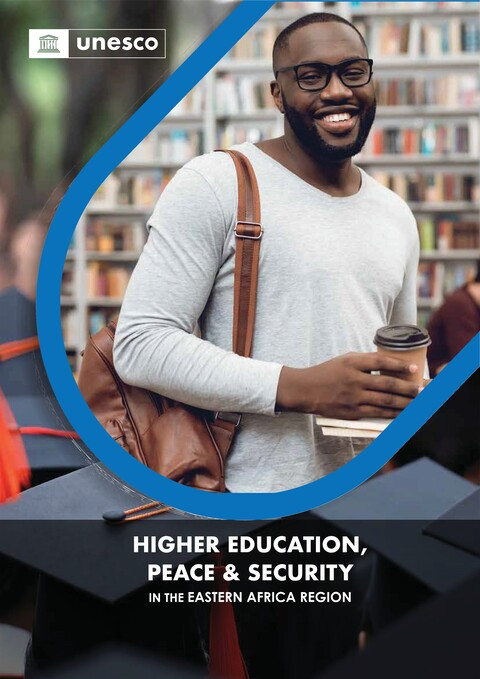 Higher Education, Peace & Security in the Eastern Africa Region سنة النشر: 2023 المؤلف: Sabiti Makara المؤلف المؤسسي: UNESCO Nairobi This paper stems from issues that were deliberated on at a regional conference titled, Emerging Issues in the Sciences, Climate Change, Peace and Security and Information and Communication Technologies (ICTs), organized in Djibouti, in May 2017 by UNESCO Regional Office for Eastern Africa. The paper examines the issues and challenges of peace and security in Eastern Africa region. It puts into perspective higher education in the region, in terms of assess, quality, relevance, knowledge and skill products, and capacity to solve social challenges of society. The May 2017 Djibouti Conference on Higher Education, Peace and Security aimed at placing higher education at the center of understanding the complex regional challenges with regard to peace and security in a broad context, including poverty, climate change and environment, intergenerational transfer of knowledge, colonial/neo-colonial heritage, regional integration, cultural resources, and unemployment. The centrality of education as a tool for social transformation in Africa, and elsewhere is a critical element of transforming society, however that very element is up for debate. Specifically, the impact of higher education as a means of accelerating the sciences (natural and social sciences) is due for robust debate, as to whether or not, it is leading to innovations, creativity, and research-led solutions to challenges of society. The critical issue for the Djibouti Conference deliberations was: could Science, technology and in more recent years, information and communications technology, lead to transformation of society in the region? The other issue was: is it only the natural sciences that have the greatest potential for that transformation, or that the social sciences and humanities are relevant in this context? Besides, since issues of peace and security are complex, could multidisciplinary approaches be appropriate? This paper is not a rapporteur's report of the Djibouti conference. It is a set of reflection and reframing of issues for further debate and discussion.
  The prospects of development education in African countries: building a critical mass of citizenry for civic engagement سنة النشر: 2015 المؤلف: Simon Eten المؤلف المؤسسي: Centre for Global Education (CGE) This article argues that development education is often framed in an African context within notions of national citizenship designed to engender support for public institutions and policies rather than develop critical thinking skills. This limited concept and application of development education often results in public apathy and disengagement from participation in community, national and global development initiatives. The author argues that recourse to the more radical, Freirean conception of development education practice in African states could potentially support more engaged public activism in issues underpinning poverty and injustice locally and globally. The author draws upon his knowledge and experience of the public sector in Ghana and general trends across Africa to propose potentially fertile areas of research that could support more effective DE practice that nurtures enhanced civic engagement. Les perspectives de l'éducation au développement dans les pays africains: la construction d'une masse critique de citoyens pour l'engagement civique سنة النشر: 2015 المؤلف: Simon Eten المؤلف المؤسسي: Centre for Global Education (CGE) Cet article soutient que l'éducation au développement est souvent encadrée dans un contexte africain dans les notions de citoyenneté nationale visant à susciter le soutien des institutions et des politiques publiques plutôt que de développer la pensée critique. Ce concept limité et l'application de l'éducation au développement se traduit souvent par l'apathie du public et le désengagement de la participation à la communauté, les initiatives nationales et mondiales de développement. L'auteur fait valoir que le recours à la plus radicale, la conception freirienne de la pratique de l'éducation au développement dans les pays africains pourrait soutenir l'activisme public plus engagé dans les questions qui sous-tendent la pauvreté et de l'injustice localement et globalement. L'auteur puise dans ses connaissances et de l'expérience du secteur public au Ghana et les tendances générales à travers l'Afrique pour proposer des zones potentiellement fertiles de la recherche qui pourrait soutenir la pratique DE plus efficace qui favorise l'engagement civique renforcée.