
الموارد
استكشف مجموعة واسعة من الموارد القيمة حول تعليم المواطنة العالمية لتعميق فهمك وتعزيز البحث والمناصرة والتعليم والتعلم.
تم العثور على 3,777 نتيجة
 2021 교육(누리)과정 연계 다문화교육 수업 도움자료: 다문화감수성 제고를 위한 세계시민교육 교수·학습 자료; 초등 (5~6학년) سنة النشر: 2021 المؤلف: 구정화 المؤلف المؤسسي: 국가평생교육진흥원 | 중앙다문화교육센터 본 도움자료는 다문화감수성 제고를 위한 세계시민교육을 교과 수업에서 실시하기 위해 초등학교 5~6학년 대상의 다양한 교수·학습과정안을 담고 있다.
  Global Citizenship Education in the Draft Social Studies K-6 Curriculum سنة النشر: 2021 المؤلف المؤسسي: Alberta Council for Global Cooperation (ACGC) This document is the Alberta Council for Global Cooperation’s (ACGC) response to the Draft Social Studies K-6 Curriculum released by the Government of Alberta on March 29, 2021. ACGC conducted the analysis of the draft social studies curriculum to better understand the alignment of the draft with global citizenship education (GCE) best practices.Global citizenship is a lens through which to see the world. ACGC understands global citizenship as “an ethos” primarily concerned with fostering “a sense of belonging to the global community and common humanity” (UNESCO, 2013). This not only involves members experiencing solidarity and collective identity themselves, but also necessitates collective responsibility to take local and global action for a better world.Following the analysis, ACGC strongly recommends that the draft curriculum be rewritten to reflect international best practices in global citizenship education. There are significant gaps in the draft when held against the suggested learning outcomes of UNESCO’s guide, Global Citizenship Education: Topics and Learning Objectives. Furthermore, the Alberta government’s Guiding Framework for the Design and Development of Kindergarten to Grade 12 Provincial Curriculum released in December 2020 provides an opportunity for GCE if the draft curriculum more closely aligns with our understanding of the Guiding Framework. Ultimately, the best path forward is rewriting the draft curriculum to include cognitive, socio-emotional, and behavioural learning outcomes that foster active global citizenship and prepare Alberta students to contribute to and thrive within a sustainable, interconnected world.
  Education Sector Analysis: Methodological Guidelines (Vol. 3) سنة النشر: 2021 المؤلف المؤسسي: UNESCO International Institute for Educational Planning (IIEP) | United Nations Children's Fund (UNICEF) | Global Partnership for Education (GPE) | Foreign, Commonwealth & Development Office (UK) This present volume is the third in a series of education sector analysis (ESA) guidelines following two volumes published in 2014. The series provides methodologies and applied examples for diagnosing education systems and informing national education policies and plans. This volume proposes guidelines to strengthen national capacities in analyzing education systems in four areas: inclusive education system for children with disabilities, risk analysis for resilient education systems, functioning and effectiveness of the educational administration, and stakeholder mapping and problem-driven analysis (governance and political economy).
  Guidelines for Data Collection to Measure SDG 4.7.4 and 4.7.5 سنة النشر: 2021 المؤلف: Andres Sandoval-Hernandez | Maria Magdalena Isac | Diego Carrasco | Daniel Miranda المؤلف المؤسسي: UNESCO Institute for Statistics (UIS) This document provides guidance to apply a recently developed strategy to assess two indicators that embody tolerance, respect and sustainable development, namely:Indicator 4.7.4: Percentage of students in lower secondary education showing adequate understanding of issues relating to global citizenship and sustainabilityIndicator 4.7.5: Percentage of students in lower secondary education showing proficiency in knowledge of environmental science and geoscienceFollowing a thorough review and endorsement by the UIS’ Technical Cooperation Group on the Indicators for SDG 4-Education 2030 (TCG), the measurement strategy has since been applied to the last cycles of TIMSS, PISA and ICCS to produce scores to measure Indicators 4.7.4 and 4.7.5 for 60 countries. While this marks a significant achievement, it is important to acknowledge that two- thirds of UN members have yet to participate in these assessments. To promote wider participation among UN members, this document serves as a robust and easy-to-use set of guidelines offering detailed technical guidance for countries on how to collect the data necessary to produce the information to measure and monitor SDG Indicators 4.7.4 and 4.7.5. Notably, these guidelines will aid in the production of information that is comparable with that of the 60 countries for which this data already exists.
  أساليب التنشئة الاجتماعية ودورها في التفاعل الاجتماعي الديمقراطي لدى الأبناء: دراسة ميدانية على عينة من تلاميذ الشق الثاني من التعليم الأساسي بمدينة المرج سنة النشر: 2018 المؤلف: Nabil Musa | Adel Abdul-Karim المؤلف المؤسسي: University of Benghazi محورت الدراسة حول موضوع "أساليب التنشئة الاجتماعية ودورها في التفاعل الاجتماعي الديمقراطي لدى الأبناء" دراسة ميدانية على عينة من تلاميذ الشق الثاني من التعليم الأساسي بمدينة المرج، وانطلقت الدراسة من هدف عام تمثل في التعرف على دور أساليب التنشئة الاجتماعية في التفاعل الاجتماعي الديمقراطي لدى الأبناء، وقد طبقت الدراسة على عينة بلغ قوامها 60 طالبا وطالبة، وبما أن توزيع مفردات العينة تم باتباع إجراءات العينة العشوائية الطبقية النسبة على أربع مدارس تم اختيارها بشكل عشوائي من مجتمع الدراسة؛ إلا أن اختيار مفردات العينة من الأربع مدارس تم من خلال إجراءات العينة العشوائية المنتظمة، وقد اعتمد الباحثان على استمارة المقابلة كأداة لجمع بيانات الدراسة، وبما أن الدراسة التي نحن بصددها تعد من الدراسة الاستكشافية فإنه تم استخدام الجداول الأحادية والنسب المئوية لتحليل معطيات الدراسة، وأسفرت عن الدراسة مجموعة من النتائج أهمها ما يأتي: 1- أكدت الدراسة على وجود مجموعة من الأساليب المتبعة داخل مجتمع الدراسة لتنشئة الأبناء، إلا أن أكثرها انتشارا الأسلوب السلطوي أي الأسلوب الذي يعتمد على العقاب والتهديد في التعامل مع الأبناء، حيث بلغت نسبة 45% من إجمالي الأساليب المتبعة داخل مجتمع الدراسة. 2- أوضحت الدراسة أن 72% من إجمالي أفراد العينة لا تهتم أسرهم بمشاركتهم الفعلية في مناقشة بعض القضايا الخاصة بالأسرة، الأمر الذي قد تترتب عليه نمو نمط الشخصية الإنسحابية التي تتميز بعدم تحمل المسؤولية، وتزداد خطورة هذه النتيجة خاصة إذا عرفنا أن 78% من إجمالي أفراد العينة لا يهتم والديهم بأخذ آرائهم حتى في اقتناء احتياجاتهم الخاصة. Methods of Social Upbringing and Its Role in the Social and Democratic Interaction of Children: A Field Study on a Sample of Second-grade Students of Basic Education in Al-Marj City سنة النشر: 2018 المؤلف: Nabil Musa | Adel Abdul-Karim المؤلف المؤسسي: University of Benghazi The study focused on the subject of "methods of socialization and its role in the social interaction of children." A field study was conducted on a sample of students in the second part of basic education in Al-Marj city. The study was applied to a sample of 60 students. Since the distribution of the sample items was done using the random stratified random sampling procedure, the ratio was randomly selected from the study community. However, the selection of the four sample items was done through The researchers used the questionnaire as a tool to collect the study data. Since the study in question is considered an exploratory study, the single tables and percentages were used to analyze the study data.The study resulted in a number of results, the most important of which are the following: 1. The study confirmed the existence of a set of methods used within the society of the study to raise children. However, the most prevalent is the authoritarian style, which is the method that depends on the punishment and the threat in dealing with children, as it reached 45% of the total methods used within the study community. 2. The study revealed that 72% of the sample members do not care about their families' actual participation in discussing some issues related to the family. This may lead to the growth of the withdrawal personality pattern, which is characterized by irresponsibility. This is especially dangerous if we know that 78% Their parents are not interested in taking their opinions even in acquiring their own needs.
 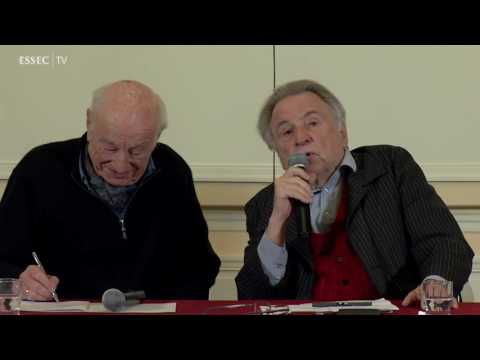 SANS TABOU, Debate Between Edgar Morin and Régis Debray on "Citizenship" سنة النشر: 2016 المؤلف المؤسسي: ESSEC Business School Debate "Without Taboo" between Edgar Morin and Régis Debray on the theme of "Citizenship", moderated by Jean-Michel Blanquer, Managing Director of Essec at the Maison de d'Amérique Latine on November 17, 2016 and organized by the chair Edgar Morin on the complexity of Essec directed by Professor Laurent Bibard. SANS TABOU, débat entre Edgar Morin et Régis Debray sur "La Citoyenneté" سنة النشر: 2016 المؤلف المؤسسي: ESSEC Business School Débat "Sans Tabou" entre Edgar Morin et Régis Debray sur le thème de "La Citoyenneté", animé par Jean-Michel Blanquer, Directeur Général de l'Essec à la Maison de l'Amérique Latine le 17 novembre 2016 et organisé par la chaire Edgar Morin de la complexité de l'Essec dirigée par le professeur Laurent Bibard.
 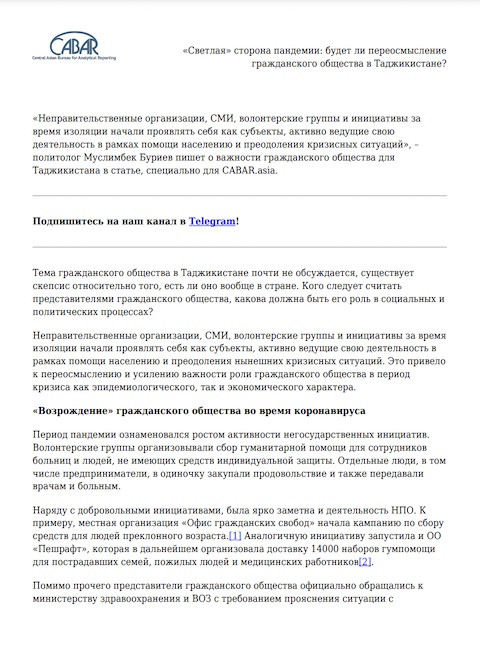 Silver Lining of Pandemic: Redefining Civil Society in Tajikistan سنة النشر: 2020 المؤلف: Muslimbek Buriev المؤلف المؤسسي: Central Asian Bureau for Analytical Reporting (CABAR) | Institute for War and Peace Reporting (IWPR) “Non-governmental organizations, mass media, community groups and initiatives have emerged amidst lockdown as actors actively engaged in assisting the population and addressing the crisis,” political scientist Muslimbek Buriev examines the role of civil society in Tajikistan in an article just for the CABAR.asia. «Светлая» сторона пандемии: будет ли переосмысление гражданского общества в Таджикистане? سنة النشر: 2020 المؤلف: Muslimbek Buriev المؤلف المؤسسي: Central Asian Bureau for Analytical Reporting (CABAR) | Institute for War and Peace Reporting (IWPR) «Неправительственные организации, СМИ, волонтерские группы и инициативы за время изоляции начали проявлять себя как субъекты, активно ведущие свою деятельность в рамках помощи населению и преодоления кризисных ситуаций», – политолог Муслимбек Буриев пишет о важности гражданского общества для Таджикистана в статье, специально для CABAR.asia.