
الموارد
استكشف مجموعة واسعة من الموارد القيمة حول تعليم المواطنة العالمية لتعميق فهمك وتعزيز البحث والمناصرة والتعليم والتعلم.
تم العثور على 2,668 نتيجة
 Case Studies From Schools Involved in Inclusive Education in Macedonia Training-of-Trainers Programme (2012–2014) سنة النشر: 2014 المؤلف المؤسسي: United Nations Children's Fund (UNICEF) This short booklet offers some of the case studies that the teachers/ trainers developed in their schools, following the training-of-trainers. Some of the examples focus on telling a whole-school story, while others focus on individual children who have been supported to attend and participate in learning. All of the case studies offer ideas and inspiration to other practitioners – within and beyond the former Yugoslav Republic of Macedonia – who are working hard to make education more inclusive for all children.
 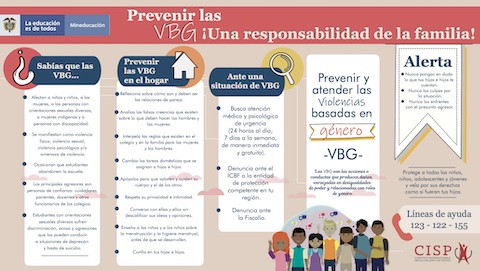 Preventing GBV: A Family Responsibility! المؤلف المؤسسي: Ministry of National Education of Colombia This infographic explains about what happens with gender-based violence, define it and explain what to do when it occurs. This infographic is intended to make the family aware of their role within this phenomenon and what the role they play in it.
 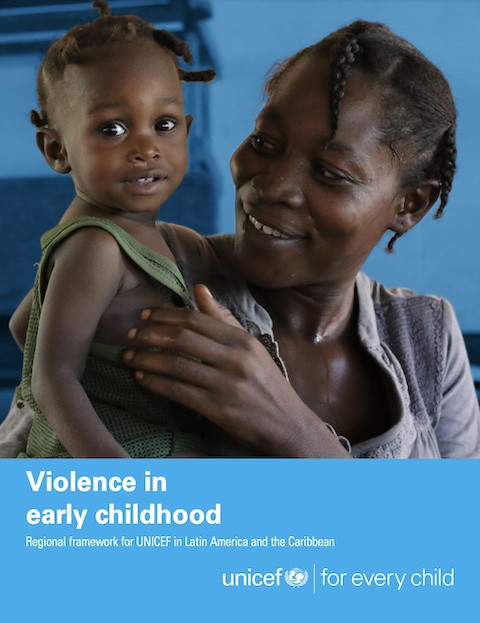 Violence in Early Childhood سنة النشر: 2017 المؤلف: Cecilie Modovar | Maria Elena Ubeda المؤلف المؤسسي: United Nations Children's Fund (UNICEF) It presents a comprehensive, multi-sectorial framework that aims to provide guidance to UNICEF country offices on how to improve programme interventions and synergies between programme areas in order to enhance young children’s development potential by reducing their exposure to violence. While early childhood is understood as the period from conception until age 8, the framework emphasizes the critical period from age 0-3. La violencia en la primera infancia سنة النشر: 2017 المؤلف: Cecilie Modovar | Maria Elena Ubeda المؤلف المؤسسي: United Nations Children's Fund (UNICEF) Se presenta un marco multisectorial integral, cuyo objetivo es orientar a las oficinas nacionales de UNICEF para mejorar las intervenciones programáticas y las sinergias entre las esferas de programa, a fin de potenciar el desarrollo de los niños pequeños reduciendo su exposición a la violencia. Aunque la primera infancia abarca el período que va desde la concepción hasta los 8 años de edad, este marco se centra en el período comprendido entre los 0 y los 3 años de edad debido a su importancia crítica.
  Human Rights: Handbook for Parliamentarians N° 26 سنة النشر: 2016 المؤلف المؤسسي: Inter-Parliamentary Union (IPU) The Human Rights Handbook for Parliamentarians is based on the conviction that parliaments and their members can play a key role in delivering concretely on human rights. It is a joint initiative of the IPU and the Office of the United Nations High Commissioner for Human Rights. With brief presentations of the international human rights legal framework and international mechanisms which oversee its implementation at the national level, the Handbook looks at how parliaments can contribute to greater human rights protection. Derechos Humanos: Manual para Parlamentarios N° 26 سنة النشر: 2016 المؤلف المؤسسي: Inter-Parliamentary Union (IPU) El Manual de Derechos Humanos está dirigido a parlamentarios que quieran familiarizarse con el marco que ha sido establecido desde 1945 por las Naciones Unidas y las organizaciones regionales para proteger y promover los derechos humanos. Presenta la noción de derechos humanos y los contenidos centrales de los derechos consagrados en la Declaración Universal de Derechos Humanos. Especifica las obligaciones de los Estados de proteger y promover los derechos humanos y contiene sugerencias sobre las acciones que los parlamentos y sus miembros pueden tomar para contribuir a su implementación. Droits de l’homme: Guide à l’usage des parlementaires N° 26 سنة النشر: 2016 المؤلف المؤسسي: Inter-Parliamentary Union (IPU) Le Guide des droits de l’homme à l’usage des parlementaires repose sur la conviction que les parlements et leurs membres peuvent jouer un rôle capital en obtenant des résultats concrets en matière de droits de l’homme. C’est une initiative conjointe de l’UIP et du Haut-Commissariat des Nations Unies aux droits de l’homme. Après avoir présenté brièvement le cadre juridique des droits de l’homme et les mécanismes internationaux qui veillent à sa mise en oeuvre au niveau national, l’ouvrage expose la manière dont les parlements peuvent contribuer à une meilleure protection des droits de l’homme. 국회의원을 위한 인권 핸드북 سنة النشر: 2016 المؤلف المؤسسي: Inter-Parliamentary Union (IPU) 본 자료는 국제인권규범의 일반적 원칙과 국가의 의무, 국제인권기구들의 기능 소개, 인권 및 국제인권규범에 대한 유용한 지식과 실질적인 적용에 관한 내용, 그리고 인권보호를 위한 국회의원의 역할 등을 제시하면서 국회와 의원들의 인권보호 및 증진에 관한 의정활동을 수행하는데 도움을 주고자 발간되었다.
  Fifteen Analytical Keys to Strengthen the Education 2030 Agenda سنة النشر: 2017 المؤلف: Renato Opertti المؤلف المؤسسي: UNESCO International Bureau of Education (IBE) The joint review of the goals of the Education 2030 agenda and global change accentuated by the emergence of a fourth industrial revolution highlights the need to rethink the concepts that have influenced education over the past forty years. This necessity is accompanied by a major challenge: that of giving a new meaning to these concepts, in the same way education systems, in a transformational and united perspective. The present document proposes a global reflection based on fifteen keys of analysis, in order to help define a vision of education and learning that is in line with the Education 2030 agenda examines the following aspects: 1) education as a reflection of the type of society targeted; 2) the state as guarantor of the right to education; 3) education as a cultural, social and economic ; 4) the characteristics and roles of education systems; 5) learning throughout life long; 6) education according to age groups; 7) inclusion as a basis for education systems; 8) education for global and local citizenship; 9) education for sustainable development ; 10) STEM training to build sustainable societies; 11) the relevance of the gender issue at a time of the democratization of society and education; 12) computer programming as a new challenge in the teaching of ICT; 13) the evolution of the relationship between training and work; 14) the trio formed by curricula, educational establishments and pedagogy; and 15) teachers as decision-makers. Quinze clés d’analyse pour renforcer l’agenda Éducation 2030 سنة النشر: 2017 المؤلف: Renato Opertti المؤلف المؤسسي: UNESCO International Bureau of Education (IBE) L’examen conjoint des objectifs de l’agenda Éducation 2030 et des changements planétaires accentués par l’émergence d’une quatrième révolution industrielle met en évidence la nécessité de repenser les concepts qui ont influencé l’éducation au cours des quarante dernières années. Cette nécessité s’accompagne d’un défi de taille : celui de donner un sens nouveau à ces concepts, de même qu’aux systèmes éducatifs, dans une perspective transformationnelle et unie. Le présent document propose une réflexion globale reposant sur quinze clés d’analyse, en vue de contribuer à définir une vision de l’éducation et de l’apprentissage qui soit en adéquation avec l’agenda Éducation 2030. Il se penche ainsi sur les aspects suivants : 1) l’éducation en tant que reflet du type de société visé ; 2) l’État en tant que garant du droit à l’éducation ; 3) l’éducation en tant que politique culturelle, sociale et économique ; 4) les caractéristiques et les rôles des systèmes éducatifs ; 5) l’apprentissage tout au long de la vie ; 6) l’éducation en fonction de groupes d’âge ; 7) l’inclusion en tant que fondement des systèmes éducatifs ; 8) l’éducation à la citoyenneté mondiale et locale ; 9) l’éducation pour le développement durable ; 10) la formation aux STEM en vue de bâtir des sociétés durables ; 11) la pertinence de la problématique hommes-femmes à l’heure de la démocratisation de la société et de l’éducation ; 12) la programmation informatique en tant que nouveau défi dans l’enseignement des TIC ; 13) l’évolution de la relation entre la formation et le travail ; 14) le trio formé par les curricula, les établissements éducatifs et la pédagogie ; et 15) les enseignants en tant que décideurs.