
الموارد
استكشف مجموعة واسعة من الموارد القيمة حول تعليم المواطنة العالمية لتعميق فهمك وتعزيز البحث والمناصرة والتعليم والتعلم.
تم العثور على 684 نتيجة
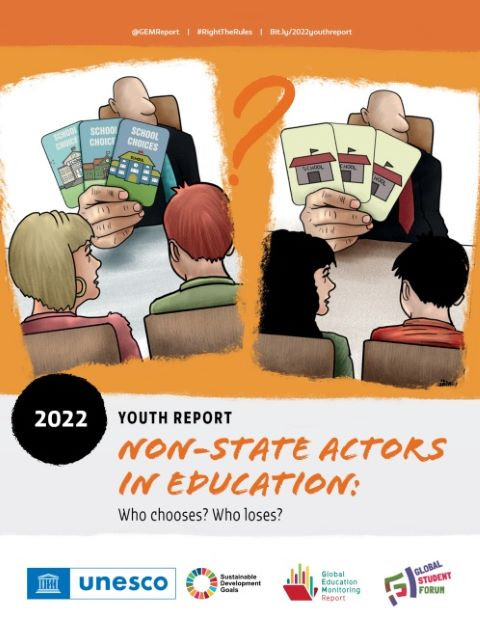 Informe sobre la juventud 2022: Los actores no estatales en la educación; ¿quién elige? ¿quién pierde? سنة النشر: 2022 المؤلف المؤسسي: UNESCO Este informe fue redactado en colaboración con el Foro Mundial de Estudiantes (Global Student Forum) para ayudarte a conocer el punto de vista de las y los jóvenes sobre las diferentes funciones y el impacto de los actores no estatales en la educación. Para muchos, una discusión sobre el papel de los actores no estatales en la educación se reduce rápidamente a un debate sobre si las escuelas privadas apoyan o socavan la educación de buena calidad. Pero el papel de los actores no estatales repercute en muchos más aspectos del sector educativo, desde los libros de texto que utilizas, la comida de tus comedores, el apoyo tutorial adicional que recibes, las habilidades que puedes aprender en el trabajo y de muchas otras maneras. El informe invita a las y los jóvenes a unirse a un llamamiento a los gobiernos para #RedefinirLasReglas de tal manera que se garantice que la participación de los actores no estatales no comprometa la promesa de proporcionar 1 año de educación preescolar y 12 años de educación primaria y secundaria gratuita para todos. Rapport des jeunes 2022: Les acteurs non étatiques dans l’éducation; Qui décide? qui est perdant? سنة النشر: 2022 المؤلف المؤسسي: Organisation des Nations Unies pour l'éducation, la science et la culture (UNESCO) Ce Rapport a été produit en partenariat avec le Forum mondial des étudiants pour vous donner un aperçu du point de vue des jeunes sur les différents rôles et l'impact des acteurs non étatiques de l'éducation. Pour beaucoup, débattre du rôle des acteurs non étatiques de l'éducation se résume rapidement à se demander si les écoles privées sont un atout ou un obstacle à une éducation de qualité. Mais le rôle des acteurs non étatiques a un impact sur bien d'autres aspects du secteur de l'éducation, qu'il s'agisse des manuels scolaires que vous utilisez, de la nourriture dans vos cantines, du soutien scolaire complémentaire que vous recevez, des compétences que vous pouvez acquérir au travail et bien plus encore. Le Rapport invite les jeunes à se joindre à l'appel à #RedéfinirLesRègles lancé aux gouvernements, appel qui garantira que l'implication des acteurs non étatiques ne compromette pas la promesse de fournir un an d'enseignement pré-primaire et douze ans d'enseignement primaire et secondaire gratuit pour tous.
 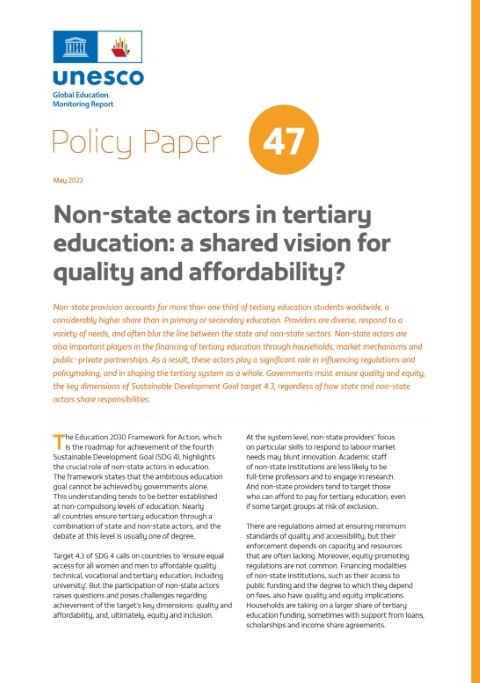 Non-state Actors in Tertiary Education: A Shared Vision for Quality and Affordability? (Policy Paper 47) سنة النشر: 2022 المؤلف المؤسسي: UNESCO Non-state provision accounts for more than one third of tertiary education students worldwide, a considerably higher share than in primary or secondary education. Providers are diverse, respond to a variety of needs, and often blur the line between the state and non-state sectors. Non-state actors are also important players in the financing of tertiary education through households, market mechanisms and public–private partnerships. As a result, these actors play a significant role in influencing regulations and policymaking, and in shaping the tertiary system as a whole. Governments must ensure quality and equity, the key dimensions of Sustainable Development Goal target 4.3, regardless of how state and non-state actors share responsibilities.
 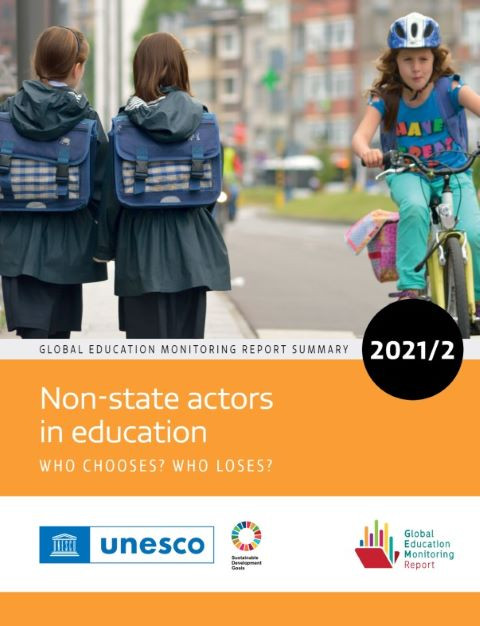 [Summary] Global Education Monitoring Report 2021/2: Non-state Actors in Education: Who Chooses? Who Loses? سنة النشر: 2022 المؤلف المؤسسي: UNESCO Non-state actors’ role extends beyond provision of schooling to interventions at various education levels and influence spheres. Alongside its review of progress towards SDG 4, including emerging evidence on the COVID-19 pandemic’s impact, the 2021/2 Global Education Monitoring Report urges governments to see all institutions, students and teachers as part of a single system. Standards, information, incentives and accountability should help governments protect, respect and fulfill the right to education of all, without turning their eyes away from privilege or exploitation. Publicly funded education does not have to be publicly provided but disparity in education processes, student outcomes and teacher working conditions must be addressed. Efficiency and innovation, rather than being commercial secrets, should be diffused and practiced by all. To that end, transparency and integrity in the public education policy process need to be maintained to block vested interests. The report’s rallying call – Who chooses? Who loses? – invites policymakers to question relationships with non-state actors in terms of fundamental choices: between equity and freedom of choice; between encouraging initiative and setting standards; between groups of varying means and needs; between immediate commitments under SDG 4 and those to be progressively realized (e.g. post-secondary education); and between education and other social sectors.
 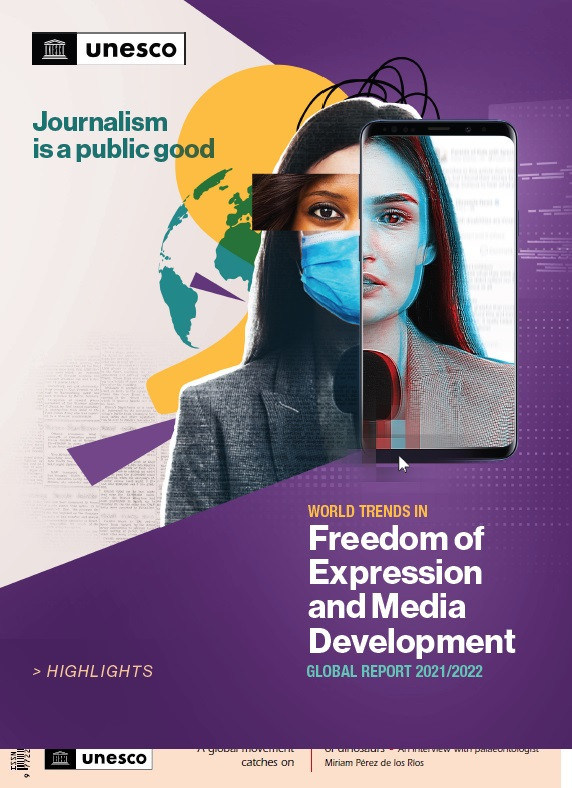 Journalism is a Public Good: World Trends in Freedom of Expression and Media Development: Global Report 2021/2022; Highlights سنة النشر: 2021 المؤلف المؤسسي: UNESCO This document is a report on world trends in freedom of expression and media development published by UNESCO in 2021/22 and focuses on the many challenges facing access to information since 2016, in terms of analysis of trends in media freedom, pluralism, independence and safety of journalists. 新闻是一种公共产品: 世界趋势、言论自由和媒体发展; 全球报告 2021/2022 سنة النشر: 2021 المؤلف المؤسسي: 联合国教科文组织 (UNESCO) 本文件是2021/22年联合国教科文组织所发布的关于言论自由和媒体发展的世界趋势报告,主要从媒体自由、多元化、独立性和记者安全等趋势分析,探讨2016年以来信息获取所面临的众多挑战。
 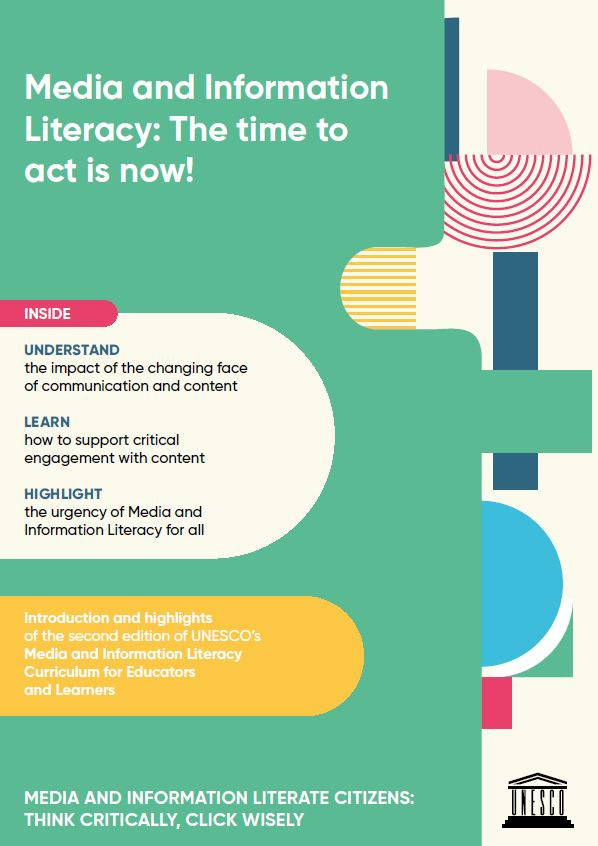 [Summary] Media and Information Literacy: The Time to Act is Now! سنة النشر: 2021 المؤلف المؤسسي: UNESCO UNESCO has developed a comprehensive Curriculum which provides a framework for training teachers. But it is also a foundation that will also be of help to others: to learners, to content providers like internet companies and news media outlets, and to citizens of all ages as they consume, create and use content, including information.The second edition of the learning resource has been significantly expanded since the first publication in 2011. The MIL Curriculum reflects the changing nature of the information landscape. It now includes insight from a broader range of content providers than before, including libraries, archives, museums, media, and digital communications companies.The Curriculum is designed to empower educators and learners in general – from schoolteachers to those involved in training, the media and libraries, governments, and NGOs – to train people to spot misrepresentations and disinformation, and most importantly develop critical thinking competencies.
 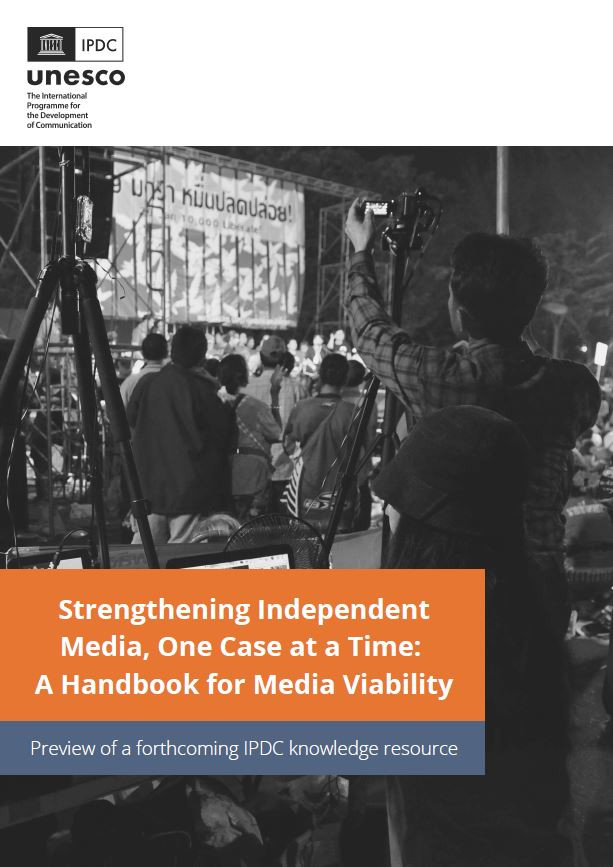 Strengthening Independent Media, One Case at a Time: A Handbook for Media Vability; Preview of a Forthcoming IPDC Knowledge Resource سنة النشر: 2021 المؤلف المؤسسي: UNESCO “Strengthening Independent Media, One Case at a Time: A Handbook for Media Viability” will include case studies of innovative ideas from a wide variety of news media companies, mostly in the developing world, that are succeeding in difficult times and have lessons to share with others who are struggling. The handbook project was announced during the 65th meeting of the Bureau of the Intergovernmental Council of the International Programme for the Development of Communication (IPDC).This brochure includes highlights of some of the cases to be included, from community media in South Africa to a pure-play digital success in Indonesia, to a fact-checking network in Brazil to a covid response in Pakistan, and much more. The Handbook will be published in September 2021 and will be available for free on the website of the IPDC.
 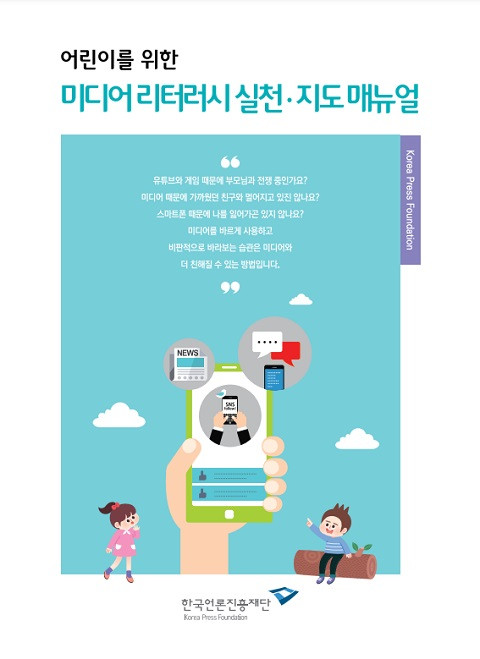 어린이를 위한 미디어 리터러시 실천·지도 매뉴얼 سنة النشر: 2018 المؤلف: 김형태 المؤلف المؤسسي: 한국언론진흥재단 본 자료는 어린이가 생활 속에서 미디어를 긍정적으로 활용할 수 있는 방법과 지침을 제시하여, 학생들의 발달역량 및 디지털 시민성 등 디지털 시대를 건강하게 살아갈 수 있는 능력을 향상시킬 수 있도록 구성하였다.
 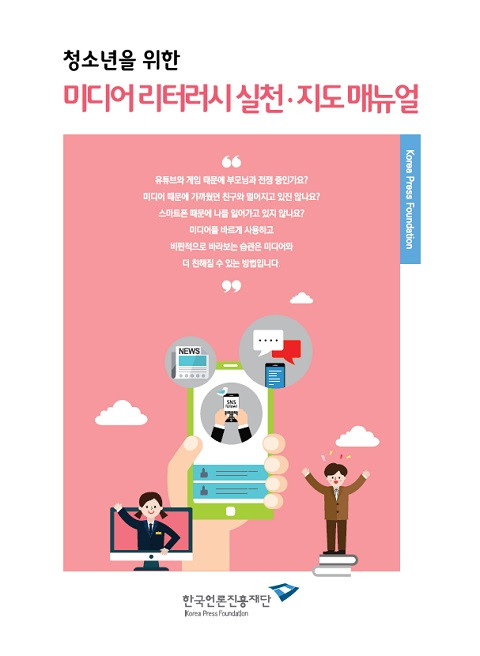 청소년을 위한 미디어 리터러시 실천·지도 매뉴얼 سنة النشر: 2018 المؤلف: 이연희 المؤلف المؤسسي: 한국언론진흥재단 본 매뉴얼은 미디어가 무엇인지, 미디어는 나의 삶에서 어떤 위치를 차지하고 있고 어떤 영향을 주고 있는 안내하면서, 청소년이 주체적으로 올바른 미디어 사용을 통해 세상을 바로 보는 힘을 키울 수 있도록 구성하였다.