
الموارد
استكشف مجموعة واسعة من الموارد القيمة حول تعليم المواطنة العالمية لتعميق فهمك وتعزيز البحث والمناصرة والتعليم والتعلم.
تم العثور على 1,451 نتيجة
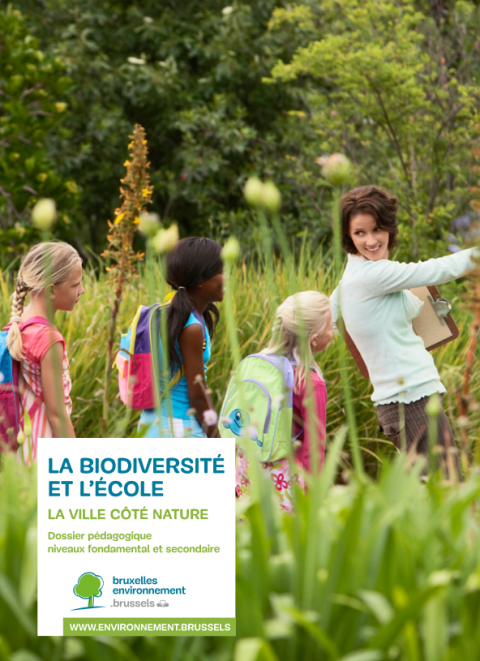 La biodiversité et l'école: la ville côté nature سنة النشر: 2019 المؤلف المؤسسي: Bruxelles Environnement Ce dossier pédagogique donne des infos de qualité sur la thématique et des pistes pour mener des activités concrètes au sein de l'école. Les activités proposées allient pédagogie et actions. Ce dossier vous propose divers outils et activités pédagogiques pour passer à l’action avec votre classe ou école : simple découverte de la biodiversité pour motiver vos élèves ; activités pour mieux comprendre la biodiversité à Bruxelles, son importance et les pressions qui pèsent sur elle, et actions concrètes pour la protéger ou la développer, au départ de l’école ou du quartier.
 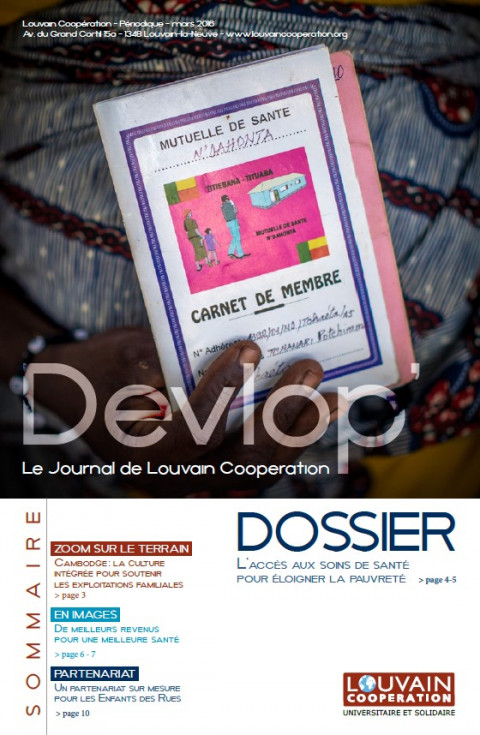 Devlop’ Le journal de Louvain Coopération 2 - Mars 2016 سنة النشر: 2016 المؤلف المؤسسي: Louvain Coopération "2016 sera une annee charniere pour Louvain Cooperation" 2016 sera une annee charniere a beaucoup d’egards. Nous fetons les 10 ans d’un partenariat solide avec l’Union Nationale des Mutualites Libres, autour des mutuelles de sante au Benin et au Togo. Chaque annee la collaboration se renforce. Les echanges d’expertise se multiplient. Tout cela dans un contexte ou la protection sociale et la couverture maladie universelle sont en bonne place dans les agendas politiques africains. Au-dela des communes et districts, l’enjeu est national. Le programme MASMUT, alliant les differentes Unions mutualistes belges et leurs ONG partenaires , soutient ce plaidoyer. Differents modeles s’opposent. La mutuelle de sante est le seul qui repartit les responsabilites entre l’Etat, les prestataires de soins et les patients d’une maniere fonctionnelle et democratique. Mais 2016, c’est aussi l’annee de reflexions et decisions en vue de notre prochain plan strategique et notre programme 2017-2021. Une evaluation pointue de nos actions passees nous pousse a encore elargir notre comprehension des mecanismes sociaux ou culturels qui operent partout. Quels codes regissent les choix des micro-entrepreneurs, les reticences a adherer a une cooperative ou a une mutuelle, le type d’alimentation, la conception du bien-etre ? Nos equipes et partenaires, avec l’appui transdisciplinaire de l’UCL vont consacrer leur energie a ces analyses qui nourriront nos projets et actions. Enfin, 2016, ce sont aussi des nouveaux projets, de nouvelles zones d’intervention.
  Devlop’ Le journal de Louvain Coopération 3 - Octobre 2016 سنة النشر: 2016 المؤلف المؤسسي: Louvain Coopération “Renforcer la collaboration entre ONG“ Quatre ONG universitaires belges, actives dans les pays du Sud et en Belgique, qui se rejoignent dans leurs domaines et lieux d’intervention, mais aussi dans leur specificite universitaire… Les points qui unissent Louvain Cooperation (ONG de l’UCL), ULB Cooperation (ONG de l’ULB), ADG (ONG de l’ULg-Gembloux) et la FUCID (ONG de l’UNamur) sont nombreux. Ces ONG ont en commun la realisation d’etudes ou de recherches-actions, la capitalisation des acquis, l’appel a des experts academiques universitaires, la diffusion la plus judicieuse possible des savoirs, la sensibilisation des etudiants a travers l’organisation de Campus Plein Sud… Ces collaborations existantes et points communs forment la base de l’idee d’une cooperation plus large, qui correspond a la dynamique du secteur de l’aide au developpement : rechercher des synergies, des apprentissages communs, des reseaux actifs. Les ONG, il faut bien l’admettre, ont souvent eu tendance a travailler de maniere trop isolee. A l’ere de la mondialisation, des nouvelles technologies de l’information et de la communication et des reseaux sociaux, il n’est plus possible, ni souhaitable de travailler dans son coin… Profitons au mieux de chacune des experiences, positive ou negative, des autres ! Juin 2016 fut donc une grande premiere dans l’histoire de ces quatre ONG : celles-ci ont decide de s’associer et de definir ensemble un programme quinquennal (2017-2021) qui vient d’etre soumis a la DGD pour une demande de financement commune. Ce programme comprend des actions au Sud dans les domaines de la Securite alimentaire et economique et de la Sante, et des actions en Belgique, d’Education a la Citoyennete Mondiale et Solidaire.
  SDG 4 on Ensuring Inclusive and Equitable Quality Education: A Toolkit of Legal & Institutional Practices سنة النشر: 2019 المؤلف المؤسسي: Centre for International Sustainable Development Law (CISDL) CISDL, in cooperation with the Dalhousie Schulich School of Law, Balsillie School of International Affairs/University of Waterloo, McGill University Faculty of Law/ Faculté de droit Université de Montréal, University of Victoria Peter A. Allard School of Law, and a consortium of institutional partners, held a multisite symposium on March 14, 2019 convening legal experts across Canada to discuss areas of opportunity to inform Canada’s 2030 agenda. This toolkit is a part of a series, which builds upon legal research conducted in collaboration with UN Environment. The by-projects of this research looking at legal measures for achievement of the SDGs in Canada is intended to inform policy-making moving forward.
 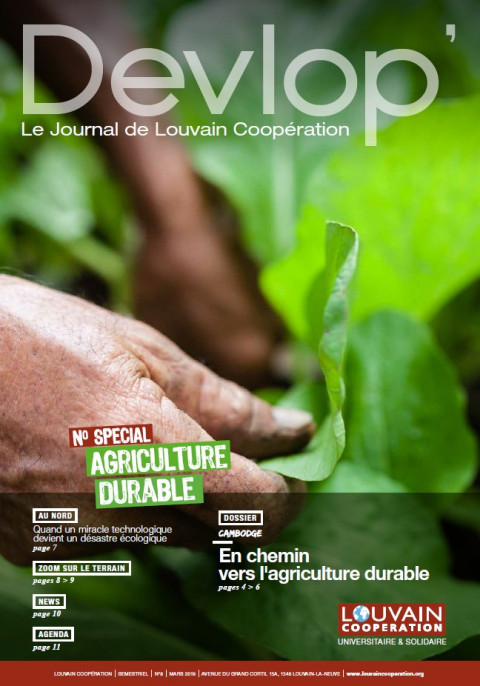 Devlop’ Le journal de Louvain Coopération 8 - MARS 2019 سنة النشر: 2019 المؤلف المؤسسي: Louvain Coopération Dans ce numéro, nous partirons de Louvain-la-Neuve avec le plaidoyer agro-écologique de Philippe Baret, doyen de la faculté d’agronomie de l’UCLouvain ; nous nous envolerons ensuite vers le Cambodge où académiques et acteurs de terrains soutiennent des paysans cambodgiens dans la réappropriation de leurs activités ; nous transiterons chez nos partenaires boliviens, dans les quartiers marginalisés d’El Alto, qui eux aussi lancent des initiatives d’agriculture urbaine pour mieux atterrir en République démocratique du Congo où place est faite à l’agro-écologie. Finalement, nous reviendrons à Louvain-la-Neuve où les Ingénieux-Sud réfléchissent avec leurs contreparties locales à mettre en place des solutions intelligentes et adaptées aux problèmes agricoles rencontrés. Nous espérons qu’à la lecture de notre journal vous serez convaincus, comme nous, que tous ensemble, producteurs, consommateurs, gouvernements, entreprises privées, associations, face aux défis agricoles, nous sommes capables de transformer des risques en opportunités.
 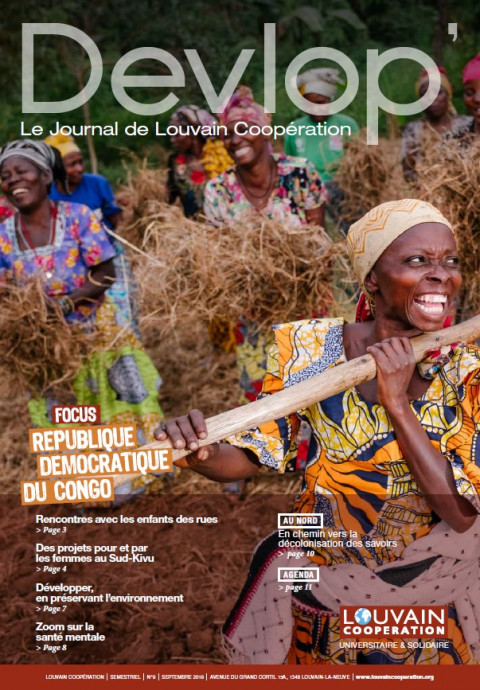 Devlop’ Le journal de Louvain Coopération 9 - SEPTEMBRE 2019 سنة النشر: 2019 المؤلف المؤسسي: Louvain Coopération Le renforcement des capacites de nos partenaires locaux est pour nous un objectif crucial et un theme transversal a tous les projets de Louvain Cooperation, ceci dans le but d’augmenter l’autonomie et la resilience des populations. Alors, oui, il n’est pas evident de travailler dans le contexte socio-politico-economique de la RDC et, oui, nous devons parfois faire face a des echecs lorsque des evenements que nous ne pouvons controler surviennent. Mais nous pouvons aussi constater chaque jour l’utilite de nos actions et la difference concrete qu’elles peuvent faire pour les personnes qui en beneficient. Voila pourquoi nous croyons en notre travail et nous voulons continuer d’agir en RDC, malgre les difficultes rencontrees. Ce Devlop’ vous invite aujourd’hui a decouvrir ces beaux projets et a rencontrer celles et ceux qui les vivent et qui les font vivre au quotidien.
  Intégrer le genre dans la coopération non gouvernementale سنة النشر: 2019 المؤلف المؤسسي: Solidarité mondiale Solidarité Mondiale place l’attention et la prise en compte du genre au cœur de ses pratiques et ses programmes. Ainsi, notre organisation s’emploie à créer une culture institutionnelle sensible au genre, tant au sein de notre équipe que dans la coopération avec nos partenaires d’ici et d’ailleurs. En effet, l’égalité des genres est essentielle pour garantir le caractère durable et inclusif de la coopération. Tant au niveau des droits du travail que de la protection sociale, les femmes se trouvent souvent dans les positions les plus précaires. C’est pourquoi Solidarité Mondiale s’est engagée pour l’égalité des genres au sein de la coopération non gouvernementale et a signé la "Charte Genre" le 29 novembre 2018. La "Charte Genre" a été signée par 56 organisations qui se sont engagées à soutenir un élan positif en leur sein autour de l’égalité et à mettre en place les actions nécessaires pour que les intentions se matérialisent. Elle inclut l’égalité des sexes (entre hommes et femmes) ainsi que la reconnaissance des droits des personnes LGBQTI (lesbiennes, gays, bisexuelles, queer, transgenres, intersexuées). Toutefois, comme nous vous l’expliquions en 2018, cette charte est issue d’un processus plus large, auquel Solidarité Mondiale a pris activement part, visant notamment à créer un guide d’inspiration. Bonne nouvelle, depuis peu, ce guide d’inspiration « Intégrer le genre dans la coopération non gouvernementale » est finalisé et accessible à tou.te.s ! Celui-ci regroupe des bonnes pratiques et des pistes d’intégration du genre dans les différentes activités propres à l’Éducation à la citoyenneté mondiale et solidaire (ECMS) en Belgique (communication, plaidoyer, mobilisation, etc.). Il a été conçu à l’aide d’un processus participatif et piloté par les 5 structures fédératives (11.11.11, ACODEV, CNCD-11.11.11, ngo-federatie et FIABEL) accompagnées du Monde selon les femmes.
  Devlop’ Le journal de Louvain Coopération 1 - Oct 2015 سنة النشر: 2015 المؤلف المؤسسي: Louvain Coopération "On ne fait pas un monde different avec des gens indifferents." Nous sommes heureux de pouvoir partager avec vous ce condense d’actions et de projets. L’ histoire de Louvain Cooperation se compte en dizaines d’annees et se deroule sur 4 continents. a travers les evolutions politiques, sociales, economiques et technologiques nous avons transforme nos pratiques, nos projets, nos methodologies pour maintenir notre action a la hauteur de nos ambitions en restant proche des populations au Sud. Aujourd’hui, le secteur des ONG se positionne de plus en plus precisement : declaration de Paris : accroissement de l’efficacite de l’aide, controle et evaluation des progres, adaptation aux situations nationales, les principes d’Istanbul, avec en vue la creation conjointe de savoirs et le renforcement des societes civiles de par le monde. C’est dans ce sens et avec vous que nous voulons regarder le present et jouer un role visa-vis des acteurs politiques, conomiques et des futurs citoyens qui se forment ici a l’UCL. Si nous pouvons participer a un monde meilleur, c’est notamment en encourageant les etudiants a imaginer leur arcour citoyen et professionnel dans un cadre de solidarite et de responsabilite. Cette annee encore, vous avez ete tres nombreux a soutenir activement tout ces projets. Vous, nos donateurs, nos partenaires, les bailleurs publics et prives et toutes les personnes qui nous font confiance. Nous tenons a vous remercier sincerement, au nom de toute l’equipe de Louvain Cooperation !
 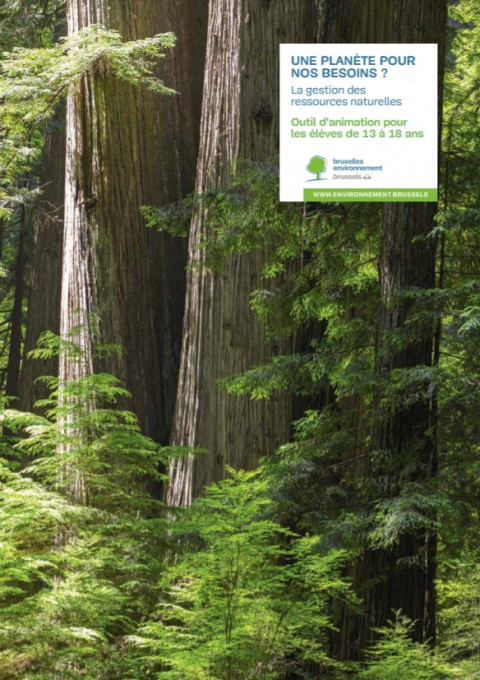 Une planète pour nos besoins سنة النشر: 2017 المؤلف المؤسسي: Bruxelles Environnement Ce jeu de rôle permet de comprendre notre dépendance à notre environnement et de réfléchir à la manière dont l’être humain exploite celui-ci pour sa survie et son bien-être. Les élèves devront coopérer pour espérer gagner!
  Devlop’ Le journal de Louvain Coopération 4 - Février 2017 سنة النشر: 2017 المؤلف المؤسسي: Louvain Coopération “Soutenir un tissu economique solide“ Louvain Cooperation est constamment a la recherche de diversification et d’innovation dans ses moyens d’action. Les subsides publics belges et europeens avec lesquels nous travaillons, s’ils sont necessaires et efficaces, ne sont pas l’unique moyen d’action que nous devons mobiliser pour remplir notre mission. Nos partenaires du monde agricole et rural, cooperative ou organisations paysannes, nous interpellent sur notre capacite a les soutenir dans leur developpement entrepreneurial, au-dela des techniques de production agroecologiques. Des unites de transformation et de commercialisation de leurs produits leur permettraient d’ajouter de la valeur a leur production tout en conservant la maitrise. Or ce type de projet entrepreneurial rencontre des difficultes de financement : exclus des subsides, trop risques pour les banques ou microfinances locales, trop petits pour les investisseurs sociaux des pays occidentaux. Le fonds d’investissement Kampani, dont Louvain Cooperation est membre fondateur, propose des outils financiers adaptes au developpement de telles initiatives. Le soutien technique et strategique apporte par nos programmes, couple, via Kampani, aux capacites et exigences d’investissement pour la creation de PME agricoles, nous donne la possibilite de soutenir un tissu economique solide, au service des petits agriculteurs et de la lutte contre le rechauffement climatique.