
الموارد
استكشف مجموعة واسعة من الموارد القيمة حول تعليم المواطنة العالمية لتعميق فهمك وتعزيز البحث والمناصرة والتعليم والتعلم.
تم العثور على 1,322 نتيجة
 Requirement for Activating the Relationship between the School and the Society in the light of School Community : A Field Research in the Public and Private teaching schools in Damascus سنة النشر: 2013 المؤلف: منصور، سمية المؤلف المؤسسي: Damascus University This research aimed to identify: the requirement for activating the relationship between the school and the society, the degree of independent variables effect (the status of the respondent, the school level and the belonging of the school) on the sample’s responses (from the principals, teachers, parents and educational experts) to the questions of the research tool.The research has reached the following findings: firstly, in order to make the relationship between school and society more effective, the school should satisfy the following four fundamental matters: Providing integrated services to the local society, achieving the partnership with the family, mobilizing the resources of the local society and enforcing voluntary work. Secondly, the effect of respondent's position variable was in favor of the managers, the teachers, the educational experts and parents respectively. Thirdly, the type of the school or its level has influenced the responses of the sample members at the general or total level as well as at the particular level for each sector of the field sectors, and this influence was in favor of basic education schools. Fourthly, there was no influence of belonging to the school variable on the sample responses whether on general or particular levels.The research introduced some suggestions and proposals, for the partnership between school and society such as, the agreement of Syrian Ministry of education to legalize and implement the approach of effecting the relationship between school and society on the one hand, and to encourage parents, local community and schools to participate and cooperate.
  دور مدير المدرسة في تفعيل الشراكة بين المدرسة والمجتمع المحلي في سلطنة عمان سنة النشر: 2010 المؤلف: محمد علي ذيب عاشور المؤلف المؤسسي: University of Bahrain. Scientific Publishing Center هدفت هذه الدراسة إلى تعرّف دور مدير المدرسة في تفعيل الشراكة بين المدرسة وبين المجتمع المحلي من وجهة نظر العاملين في المدارس وأفراد المجتمع المحلي. كما هدفت إلى تعرف ما إذا كانت هناك فروق ذات دلالة إحصائية في دور مدير المدرسة في تفعيل هذه الشراكة من وجهة نظر العاملين في المدارس وأفراد المجتمع المحلي وذلك من زاوية متغيرين: مسمى الوظيفة والمنطقة التعليمية. تكوّن مجتمع الدراسة من جميع المديرين والمعلمين والعاملين في مدارس التعليم الأساسي للعام الدراسي 2006-2007، والبالغ عددهم 9877، وتكونت العينة من 513 من العاملين في المدارس و80 من أفراد المجتمع المحلي.توصلت الدراسة إلى النتائج التالية: 1) إن دور مدير المدرسة في تفعيل الشراكة بين المدرسة وبين المجتمع المحلي جاء بدرجة قليلة. 2) جاء ترتيب مجالات الدراسة في مدير المدرسة في تفعيل الشراكة بين المدرسة وبين المجتمع المحلي وفق الترتيب الآتي: الشراكة في الرؤية والأهداف العامة للعملية التعليمية، تليها الشراكة في تقديم الدعم المالي للمدرسة، ثم الشراكة في الشؤون اﻹدارية للمدرسة، ثم الشراكة في تقديم الاستشارات للمدرسة، وجاء في المرتبة الأخيرة الشراكة في التخطيط المدرسي. 3) وجود فروق ذات دلالة إحصائية تعزى لمتغير المنطقة التعليمية لجميع مجالات الدراسة فيما عدا الشراكة في الشؤون اﻹدارية للمدرسة.
  Central Asia: struggle for the new future سنة النشر: 2018 المؤلف: A. Dankov The article discusses the social, economic and political prospects of Central Asia (2019-2024). Prognosis also covers the ethnic changes, migration, cultural and language diversity, urbanization, quality of life. Центральная Азия: борьба за новое будущее سنة النشر: 2018 المؤلف: A. Dankov В статье рассматриваются социальные, экономические и политические перспективы Центральной Азии (2019-2024). Прогноз также охватывает этнические изменения, миграцию, культурное и языковое разнообразие, урбанизацию, качество жизни.
  Kamishibai sur la biodiversité سنة النشر: 2017 المؤلف المؤسسي: Bruxelles Environnement Le principe du kamishibaï permet de raconter une histoire en dévoilant des images au fur et à mesure. Cette histoire fait découvrir différentes espèces animales qui vivent chacune dans un habitat de la forêt (arbre, buisson, mare, sol...). La notion de biodiversité est ainsi abordée à différentes échelles.
  5 fiches activités sur la biodiversité à l'école سنة النشر: 2015 المؤلف المؤسسي: Bruxelles Environnement En apprendre davantage sur la diversité fascinante de la vie sur terre et découvrir la nature dans le quartier de l’école permettra aux élèves non seulement d’acquérir des connaissances sur la nature mais aussi de l’apprécier et de la respecter. Ce qui est primordial pour pouvoir la protéger ! Ces fiches présentent une série d’activités en lien avec un ou plusieurs cours et compétences spécifiques. Elles contiennent également de nombreuses ressources pour vous permettre d’aller plus loin.
  La biodiversité au cours du temps سنة النشر: 2017 المؤلف المؤسسي: Bruxelles Environnement Cet outil retrace de manière interactive l’histoire de la vie sur Terre via des images représentant quelques grandes étapes de l’évolution de la biodiversité. Il permet d’aborder la notion du temps et l’apparition des espèces, ainsi que le phénomène d’extinctions massives.
 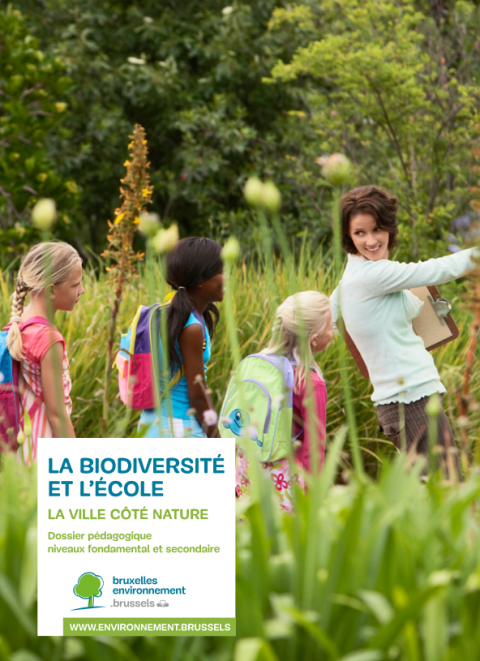 La biodiversité et l'école: la ville côté nature سنة النشر: 2019 المؤلف المؤسسي: Bruxelles Environnement Ce dossier pédagogique donne des infos de qualité sur la thématique et des pistes pour mener des activités concrètes au sein de l'école. Les activités proposées allient pédagogie et actions. Ce dossier vous propose divers outils et activités pédagogiques pour passer à l’action avec votre classe ou école : simple découverte de la biodiversité pour motiver vos élèves ; activités pour mieux comprendre la biodiversité à Bruxelles, son importance et les pressions qui pèsent sur elle, et actions concrètes pour la protéger ou la développer, au départ de l’école ou du quartier.
  Культурная идентичность таджиков и мультикультурализм سنة النشر: 2014 المؤلف: Khamrokhon Zarifi Статья посвящена вопросам истории, культурной идентичности и наследию таджикского народа. Обсуждаются вопросы сохранения и преемственности культурного разнообразия, а также феномен мультикультурализма.
  Tolerance of Kazakhstani society in the context of ensuring the harmony of values سنة النشر: 2013 المؤلف: Alma Sagyngali This article discusses the process of multinational Kazakh society searching for its cultural and civilizational identity in the framework of Kazakhstan's building of a social state and integration into the world community. Particular attention is paid to tolerance as a key cultural value.