
الموارد
استكشف مجموعة واسعة من الموارد القيمة حول تعليم المواطنة العالمية لتعميق فهمك وتعزيز البحث والمناصرة والتعليم والتعلم.
تم العثور على 1,443 نتيجة
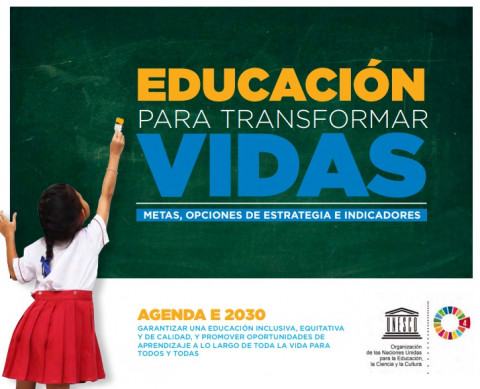 Educación para transformar vidas: metas, opciones de estrategia e indicadores سنة النشر: 2016 المؤلف المؤسسي: UNESCO Santiago La educación está en el centro de la agenda de desarrollo sostenible y es esencial para el éxito de todas estas metas. La nueva agenda de educación resumida en el Objetivo 4 es holística, ambiciosa, deseable y universal, yestá inspirada por una visión de que la educación transforma las vidas de las personas, las comunidades y las sociedades. La agenda atiende los temas no resueltos de los objetivos de la Educación para Todos (EPT) ylos ODM relacionados con la educación, al tiempo que aborda de manera efectiva los actuales y futuros desafíos de la educación a nivel mundial y nacional. Está basada en los derechos y está inspirada en una visión humanista de la educación y el desarrollo, con base en los principios de la dignidad humana, los derechos igualitarios, la justicia social, la paz, la diversidad cultural y la responsabilidad compartida. Basándose y continuando con el movimiento EPT, Educación 2030 toma en cuenta lecciones aprendidas desde 2000. Lo que es nuevo en esta agenda es su enfoque en mayores y más amplios resultados en el acceso, la equidad e inclusión, calidad y aprendizaje, además de un aprendizaje a lo largo de toda la vida.
 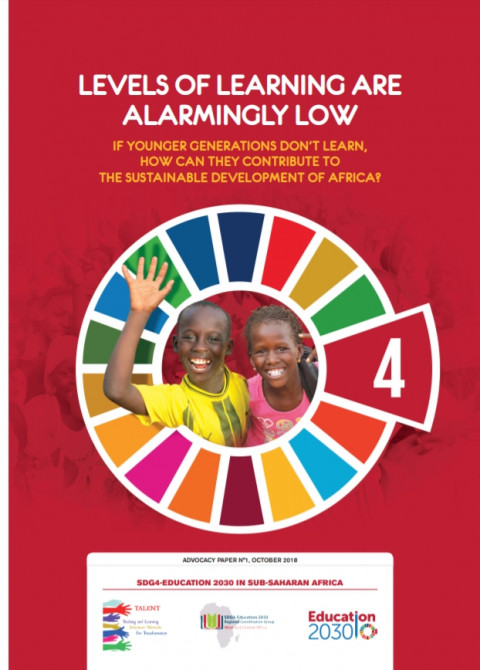 Levels of learning are alarmingly low: if younger generations don't learn, how can they contribute to the sustainable development of Africa? سنة النشر: 2018 المؤلف المؤسسي: UNESCO Dakar | Regional Coordination Group on SDG 4-Education 2030 in West and Central Africa | Teaching and Learning Educators’ Network for Transformation With the adoption of The 2030 Agenda for Sustainable Development, UN member states and partner organizations have agreed to ensure inclusive and equitable quality education and promote lifelong learning opportunities for all by 2030. Building on the unfinished agendas of the Millennium Development Goals and Education for All, quality education and learning are at the very core of both SDG4 and CESA 16-25 (see box 1). Five of the seven SDG4 targets are specifically designed with the intention of addressing the global learning crisis. Moreover, CESA 16-25 specifically calls on African Union member states to address issues of quality and equity in education, particularly at the pre-primary level, a neglected area in terms of investment and policy, and at the primary level where geographical disparities indicate that girls and women, the poorest and those leaving in remote areas are still left behind. The next question is whether these international and regional commitments have been translated into national policies and strategies that can address the alarmingly low levels of learning. Les niveaux d'apprentissage sont alarmants: si les jeunes générations n'apprennent pas, peuvent-elles contribuer au développement durable de l'Afrique? سنة النشر: 2018 المؤلف المؤسسي: UNESCO Dakar | Regional Coordination Group on SDG 4-Education 2030 in West and Central Africa | Teaching and Learning Educators’ Network for Transformation Avec l’adoption de le Programme pour le développement durable à l’horizon 2030, les États membres de l’ONU et les organisations partenaires ont convenu d’assurer, d’ici 2030, une éducation inclusive et équitable de qualité et de promouvoir des possibilités d’apprentissage tout au long de la vie pour tous. S’appuyant sur les programmes inachevés des Objectifs du Millénaire pour le développement et de l’Éducation pour tous, l’éducation et les apprentissages de qualité sont au cœur même de l’ODD4 et de la CESA 16-25 (voir l’encadré 1 dans la section suivante). En effet, cinq des sept cibles de l’ODD4 sont spécifiquement formulées pour s’attaquer à la crise mondiale de l’apprentissage. En outre, la CESA 16-25 appelle spécifiquement les États membres de l’Union Africaine à aborder les questions de qualité et d’équité dans l’éducation, en particulier au niveau pré-primaire, un domaine négligé en termes d’investissements et de politiques, et au niveau primaire où les disparités géographiques laissent sur le côté les filles et les femmes, les plus pauvres et ceux qui vivent dans les zones reculées. La question est désormais de savoir si ces engagements internationaux et régionaux ont été traduits en politiques et stratégies nationalesqui peuvent s’attaquer aux niveaux alarmants des résultats d’apprentissage.
 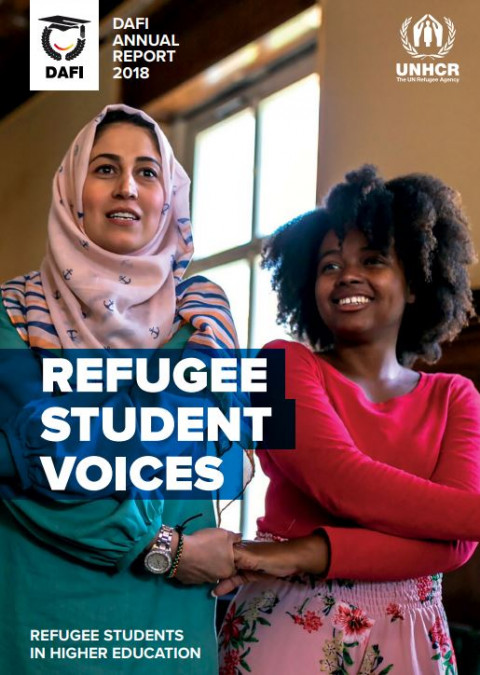 DAFI ANNUAL REPORT 2018- Refugee Student Voices: Refugee Student In Higher Education سنة النشر: 2019 المؤلف المؤسسي: UN. Office of the United Nations High Commissioner for Refugees (UNHCR) The DAFI refugee scholarship programme was launched in 1992 by UNHCR and the German government. The programme has supported over 15,500 young refugees to date and is currently implemented in 51 countries, the vast majority of which are in the Global South.The DAFI programme aims to secure refugee students’ inclusion in national education systems, prioritising enrolment in public higher education institutions. Participation in public institutions enables refugee students to study alongside their host country peers and pursue nationally accredited degree programmes, as well as bringing resources into public higher education institutions.
 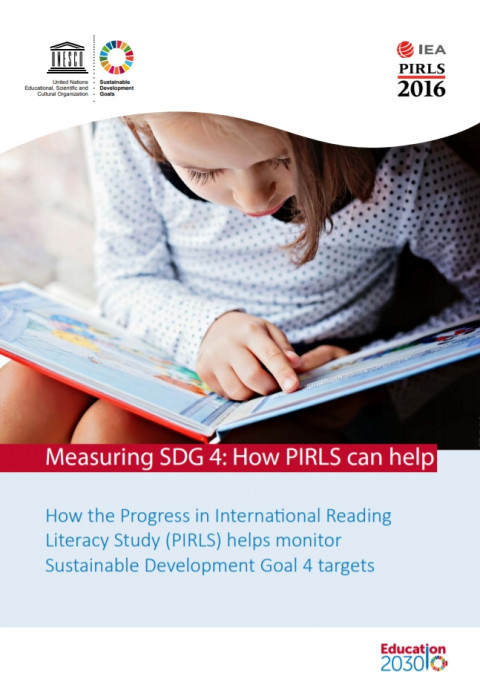 Measuring SDG 4: how PIRLS can help; how the Progress in International Reading Literacy Study (PIRLS) helps monitor Sustainable Development Goal 4 targets سنة النشر: 2017 المؤلف المؤسسي: International Association for the Evaluation of Educational Achievement (IEA) This booklet has been prepared for the international release of the 2016 Progress in International Reading Literacy Study (PIRLS) and ePIRLS at UNESCO. PIRLS is one of the International Association for the Evaluation of Educational Achievement’s (IEA) core largescale international assessment projects, successfully administered every five years since 2001. It provides internationally comparative data on how well children read by assessing grade 4 students’ reading achievement and offers policyrelevant information for improving teaching and learning. Initiated in 2016, ePIRLS is an extension of PIRLS that monitors how well grade 4 students read, interpret, and critique online information in an environment that looks and feels like the Internet.
  Partnering for prosperity: education for green and inclusive growth; Global education monitoring report, 2016; summary سنة النشر: 2017 المؤلف: Sachs, Jeffrey D المؤلف المؤسسي: UNESCO. Director-General, 2009-2017 (Bokova, I.G.) This Report makes three messages starkly clear. Firstly, the urgent need for new approaches. On current trends only 70% of children in low income countries will complete primary school in 2030, a goal that should have been achieved in 2015. We need the political will, the policies, the innovation and the resources to buck this trend. Secondly, if we are serious about SDG 4, we must act with a sense of heightened urgency, and with long-term commitment. Failure to do so will not only adversely affect education but will hamper progress towards each and every development goal: poverty reduction, hunger eradication, improved health, gender equality and women’s empowerment, sustainable production and consumption, resilient cities, and more equal and inclusive societies. Lastly, we must fundamentally change the way we think about education and its role in human well-being and global development. Now, more than ever, education has a responsibility to foster the right type of skills, attitudes and behavior that will lead to sustainable and inclusive growth. Mesurer l'ODD 4: la contribution du PIRLS, comment le Programme international de recherche en lecture scolaire (PIRLS) peut aider au suivi des cibles de l'Objectif de développement durable 4 سنة النشر: 2017 المؤلف المؤسسي: International Association for the Evaluation of Educational Achievement (IEA) Cette brochure a été préparée en vue de la présentation internationale du Programme international de recherche en lecture scolaire (PIRLS) et d’ePIRLS 2016 à l’UNESCO. Le PIRLS est l’un des principaux projets d’étude internationale à grande échelle de l’Association internationale pour l’évaluation des acquis scolaires (International Association for the Evaluation of Educational Achievement, IEA), mené avec succès tous les cinq ans depuis 2001. Cette étude fournit des données comparatives internationales sur le niveau d’alphabétisation des enfants en évaluant les performances en lecture des élèves en 4ème année de scolarité, et livre des informations d’intérêt politique destinées à améliorer l’enseignement et l’apprentissage. De plus, inaugurée en 2016, ePIRLS est une extension du PIRLS visant à déterminer la façon dont les élèves en 4ème année de scolarité lisent, interprètent, et critiquent les informations en ligne dans un environnement semblable à celui d’Internet.
 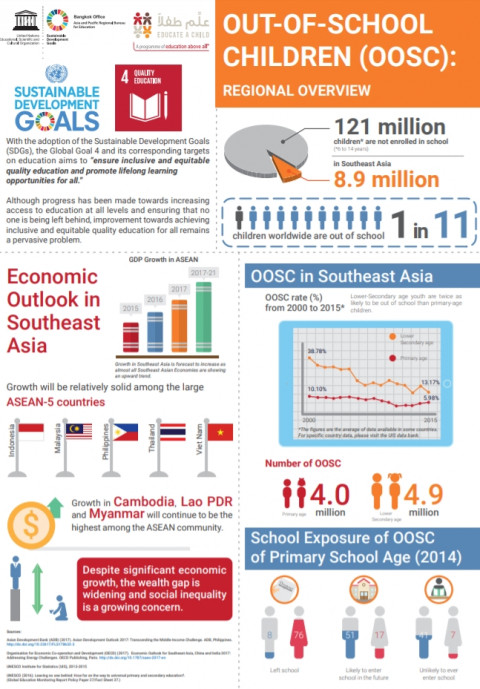 Out-of-School Children (OOSC): regional overview سنة النشر: 2017 المؤلف المؤسسي: UNESCO Bangkok This leaflet provides a regional overview of out-of-school children (OOSC) situation in Southeast Asia including school exposure of OOSC of primary school age. To provide learning opportunities for OOSC in the region, UNESCO Bangkok has launched the project titled “Strengthening Education Systems for Out of School Children” with the support of Educate a Child (EAC). Information on country activities implemented under the project is included in the leaflet.
  Pursuing quality in early learning, vol. 1: Early childhood care and education (ECCE) teacher competency framework for Southeast Asia (SEA) سنة النشر: 2018 المؤلف المؤسسي: Southeast Asian Ministers of Education Organization (SEAMEO) | UNESCO Bangkok With the United Nation’s (UN) Sustainable Development Goals (SDGs) as a platform for achieving quality early childhood care and education outcomes by 2030, ECCE policy-makers, practitioners, and academicians from Asia-Pacific countries gathered at the second Asia-Pacific Regional Policy Forum on Early Childhood Care and Education in Putrajaya, Malaysia in 2016 to share experiences, innovations, and lessons learned in developing and implementing ECCE policies and initiatives. This document first provides a brief background, and discusses the purposes and intended audience for which the framework was developed (Section I). A succeeding section reflects on the regional ECCE landscape (Section II), before proceeding to a discussion of the ECCE teacher competency framework for Southeast Asia (Section III). Section IV suggests possible uses of the ECCE teacher competency framework; a final section concludes with areas for future action.
  Desafíos de la educación secundaria en América Latina: ponencias del Foro regional de políticas educativas 2018 سنة النشر: 2019 المؤلف: Nestor López المؤلف المؤسسي: UNESCO IIEP Oficina para América Latina y el Caribe En el marco de los esfuerzos realizados por la UNESCO para apoyar a los países de la región en el cumplimiento del Objetivo de Desarrollo Sostenible (ODS) 4, el 20 y 21 de septiembre de 2018 se celebró en Buenos Aires, Argentina, la segunda edición del Foro Regional de Políticas Educativas, un evento de la Oficina para América Latina del Instituto Internacional de Planeamiento de la Educación de la UNESCO. Este evento contó con la participación de representantes de los gobiernos de los 19 países de la región, expertos en políticas de educación secundaria, y representantes de organismos internacionales. El tema de esta edición del Foro Regional --Desafíos de la educación secundaria en América Latina ante la Agenda Educación 2030-- resultó particularmente de actualidad para los países de la región, dado que, en las últimas dos décadas, la mayor parte de ellos incorporó la secundaria como parte del ciclo de educación obligatoria. Sin embargo, hasta ahora no se ha logrado garantizar una educación secundaria “inclusiva, equitativa y de calidad” para todas las personas, como declara el ODS 4.