
الموارد
استكشف مجموعة واسعة من الموارد القيمة حول تعليم المواطنة العالمية لتعميق فهمك وتعزيز البحث والمناصرة والتعليم والتعلم.
تم العثور على 55 نتيجة
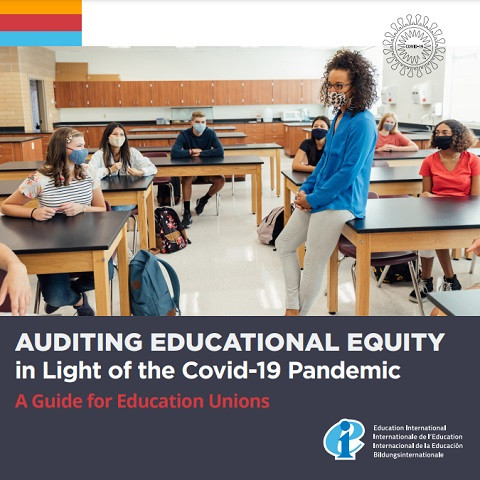 Auditing Educational Equity in Light of the COVID-19 Pandemic: A Guide for Education Unions سنة النشر: 2020 المؤلف المؤسسي: Education International (EI) The COVID-19 pandemic has led to unprecedented school closures that have affected over 1.5 billion students worldwide. However, the impact of the pandemic has not been equal, with vulnerable and disadvantaged students disproportionately affected by the resulting global crisis in teaching and learning."Auditing Educational Equity in Light of the COVID-19 Pandemic" is a guide to support education unions as they advocate for equity audits to be conducted at both education institution and systems levels.The guide stresses the importance of equity audits in enabling education institutions and systems to adapt more effectively to a COVID-19 ‘new normal’ and also address entrenched structures of inequality that have long prevented countries from realising the universal right to education.
  The Implications of the COVID-19 Pandemic on Fundamental Rights and Civic Space سنة النشر: 2022 المؤلف: Filip Pazderski | Giada Negri | Chayma Khazzani | Ivana Rosenzweigova | Boglarka Szalma | Luben Panov | Carlotta Besozzi المؤلف المؤسسي: European Economic and Social Committee (EESC) This report was compiled for the European Economic and Social Committee at the request of the Diversity Europe Group by a consortium of four partners - European Civic Forum, Civil Society Europe, European Center for Not-for-Profit Law and the Institute of Public Affairs. It examines how the COVID-19 pandemic has affected the work of civil society organisations (CSOs) across Europe. It also focuses on how solutions implemented in individual EU Member States have impacted CSOs' ability to exercise their fundamental rights and freedoms.The report is based on in-depth analysis of existing studies and reports, a survey, 29 expert interviews and three focus groups. It showcases a number of ways in which the pandemic has affected the functioning of civil society organisations in the EU. The observations emerging from the different stages of the research were characterised by a high degree of consistency, validating the picture depicted.
  Citizenship education at school in Europe سنة النشر: 2005 المؤلف المؤسسي: Eurydice. European Unit This comparative analysis is based on country descriptions supplied by the Eurydice National Units.To collect information for them, a Guide to Content, including common guidelines and definitions, was prepared by the Eurydice European Unit (EEU) in consultation with the National Units at the beginning of 2004.The aim of the Guide to Content was to ensure that the country descriptions were drafted in accordance with a common structure to facilitate subsequent cross-country comparison of the information provided. L'éducation à la citoyenneté dans l'école en Europe سنة النشر: 2005 المؤلف المؤسسي: Eurydice. European Unit Cette analyse comparative est basée sur les descriptions de pays fournies par les Unités nationales d'Eurydice. Afin de recueillir des informations à leur sujet, un Guide du contenu, comprenant des lignes directrices et des définitions communes, a été élaboré par l'Unité Européenne d'Eurydice (UEE) en consultation avec les Unités nationales au début de 2004. Le Guide du contenu visait à garantir que Les descriptions de pays ont été rédigées conformément à une structure commune pour faciliter la comparaison entre pays des informations fournies.
  Social Media 4 Peace سنة النشر: 2021 المؤلف المؤسسي: UNESCO | European Union (EU) The overall objective of the UNESCO project 'Social Media 4 Peace' funded by the European Union is to strengthen the resilience of societies to potentially harmful content spread online, in particular hate speech inciting violence while protecting freedom of expression and enhancing the promotion of peace through digital technologies, notably social media. For more information, please visit:https://en.unesco.org/social-media-4-peace