
الموارد
استكشف مجموعة واسعة من الموارد القيمة حول تعليم المواطنة العالمية لتعميق فهمك وتعزيز البحث والمناصرة والتعليم والتعلم.
تم العثور على 950 نتيجة
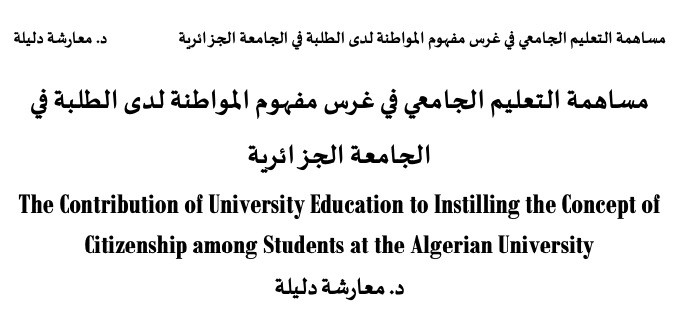 The Contribution of University Education to Instilling the Concept of Citizenship among Students at the Algerian University (vol.17, no.3; Journal of human resources development) سنة النشر: 2022 المؤلف: Maarcha Dalila المؤلف المؤسسي: University Mohamed Lamine Debaghine - Setif2 University education endeavors to equip students with the necessary skills and knowledge in scientific research and various disciplines, enabling them to confront the economic, social, and cultural challenges of life. The primary objective of university education is to fulfill societal needs for skilled human resources capable of contributing to societal development and keeping pace with global advancements in education and knowledge. In alignment with this, the University of Algeria aims to instill principles and values of citizenship among its students through its curricula and programs. It aims to foster a sense of belonging and patriotism, as well as to nurture national identity, thereby facilitating the holistic development of students across all dimensions. مساهمة التعليم الجامعي في غرس مفهوم المواطنة لدى الطلبة في الجامعة الجزائرية (vol.17, no.3 مجلة تنمية الملوارد البشرية) سنة النشر: 2022 المؤلف: Maarcha Dalila المؤلف المؤسسي: University Mohamed Lamine Debaghine - Setif2 يسعى التعليم الجامعي إلى إعداد الطلاب وتنمية قدراتهم في مجال البحث العلمي، وتكوينهم في مجالات التخصصات المختلفة لتحمل ومواجهة مسؤوليات الحياة الاقتصادية والاجتماعية والثقافية، فالهدف الرئيسي للتعليم الجامعي هو تلبية حاجات المجتمع من الموارد البشرية المؤهلة للقيام بدورها التنموي في المجتمع، وتساير التطورات الحديثة في القطاع أي عولمة التعليم والمعرفة، وتمثلت نتائج الدراسة الحالية في ان البرامج الجامعية المدرسة تسعى إلى زرع مبادئ وقيم المواطنة لدى طلبة الجامعة في ميدان العلوم الاجتماعية تخصص علم النفس وعلوم التربية ، والى تعميق روح الانتماء والولاء للوطن وترسيخ الهوية الوطنية في نفوسهم قصد التنمية المتكاملة لشخصياتهم في جوانبها المختلفة، ويبقى نجاحه مرهون بكفاءات طرائق التدريس ونجاعتها.
 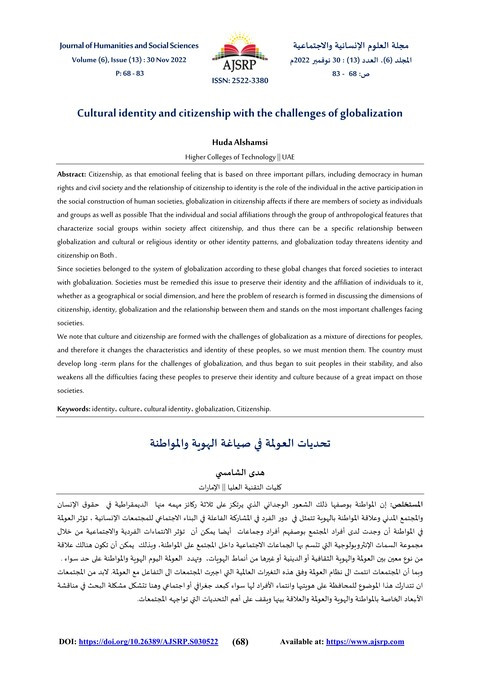 Cultural Identity and Citizenship With the Challenges of Globalization (Journal of Humanities and Social Sciences; Vol.6, No.13) سنة النشر: 2022 المؤلف: Huda Alshamsi المؤلف المؤسسي: Arab Institute of Science and Research Publishing (AISRP) Citizenship is the emotional feeling that is based on three important pillars, including democracy in human rights, civil society, and the relationship between citizenship and identity, is manifested in the active role of individuals in social construction within human societies. Globalization affects citizenship when it exists among individuals and groups in society. Individual and social affiliations, characterized by anthropological features within social groups, can also impact citizenship. Thus, there may be a specific relationship between globalization and cultural, religious, or other identity patterns. Today, globalization threatens both identity and citizenship. As societies adapt to the global system through these global changes that force interaction with globalization, it becomes essential for communities to address this issue to preserve their identity and individual belonging, whether geographically or socially. This forms the basis for researching the dimensions related to citizenship, identity, globalization, and their interrelationships, which pose significant challenges for societies. تحديات العولمة في صياغة الهوية والمواطنة (مجلة العلوم الإنسانية والإجتماعية; Vol. 6, No. 13) سنة النشر: 2022 المؤلف: Huda Alshamsi المؤلف المؤسسي: Arab Institute of Science and Research Publishing (AISRP) إن المواطنة بوصفها ذلك الشعور الوجداني الذي يرتكز على ثلاثة ركائز مهمه منها الديمقراطية في حقوق الإنسان والمجتمع المدني وعلاقة المواطنة بالهوية تتمثل في دور الفرد في المشاركة الفاعلة في البناء الاجتماعي للمجتمعات الإنسانية ، تؤثر العولمة في المواطنة أن وجدت لدى أفراد المجتمع بوصفهم أفراد وجماعات أيضا يمكن أن تؤثر الانتماءات الفردية والاجتماعية من خلال مجموعة السمات الإنثروبولوجية التي تتسم بها الجماعات الاجتماعية داخل المجتمع على المواطنة، وبذلك يمكن أن تكون هنالك علاقة من نوع معين بين العولمة والهوية الثقافية أو الدينية أو غيرها من أنماط الهويات، وتهدد العولمة اليوم الهوية والمواطنة على حد سواء . وبما أن المجتمعات انتمت الى نظام العولمة وفق هذه التغيرات العالمية التي اجبرت المجتمعات الى التفاعل مع العولمة. لابد من المجتمعات ان تتدارك هذا الموضوع للمحافظة على هويتيها وانتماء الأفراد لها سواء كبعد جغرافي أو اجتماعي وهنا تتشكل مشكلة البحث في مناقشة الأـبعاد الخاصة بالمواطنة والهوية والعولمة والعلاقة بينها ويقف على أهم التحديات التي تواجهه المجتمعات.
 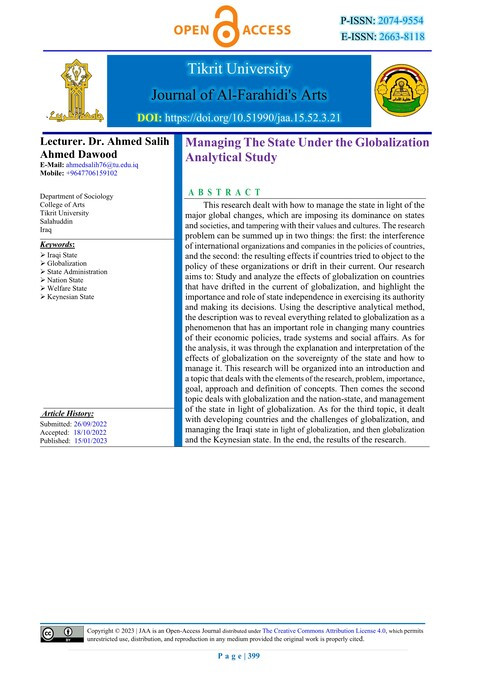 Managing the State Under the Globalization Analytical Study (Journal of Al Farahidi's Arts; Vol.15, Issue 52-3) سنة النشر: 2023 المؤلف: Ahmed Saleh Ahmed Dawood المؤلف المؤسسي: Tikrit University This research dealt with how to manage the state in light of the major global changes, which are imposing its dominance on states and societies, and tampering with their values and cultures. The research problem can be summed up in two things: the first: the interference of international organizations and companies in the policies of countries, and the second: the resulting effects if countries tried to object to the policy of these organizations or drift in their current. Our research aims to: Study and analyze the effects of globalization on countries that have drifted in the current of globalization, and highlight the importance and role of state independence in exercising its authority and making its decisions. Using the descriptive analytical method, the description was to reveal everything related to globalization as a phenomenon that has an important role in changing many countries of their economic policies, trade systems and social affairs. As for the analysis, it was through the explanation and interpretation of the effects of globalization on the sovereignty of the state and how to manage it. This research will be organized into an introduction and a topic that deals with the elements of the research, problem, importance, goal, approach and definition of concepts. Then comes the second topic deals with globalization and the nation-state, and management of the state in light of globalization. As for the third topic, it dealt with developing countries and the challenges of globalization, and managing the Iraqi state in light of globalization, and then globalization and the Keynesian state. In the end of the research, resuls will be presented and recommendations will be made. إدارة الدولة في ظل العولمة: دراسة تحليلية (مجلة آداب الفراهيدي؛ Vol.15, Issue.52-3) سنة النشر: 2023 المؤلف: Ahmed Saleh Ahmed Dawood المؤلف المؤسسي: Tikrit University تناول هذا البحث كيفية ادارة الدولة في ظل المتغيرات العالمية الكبرى، التي باتت تفرض سطوتها على الدول والمجتمعات، وتعبث بقيمها وثقافاتها. وتتلخص مشكلة البحث في امرين: الاول: تدّخّل المنظمات والشركات العالمية في سياسات الدول وحتى الداخلية منها، والثاني: الاثار الناتجة لو حاولت الدول الاعتراض على سياسة هذه المنظمات او الانجراف في تيارها. ويهدف بحثنا الى: دراسة وتحليل اثار العولمة على الدول التي انجرفت بتيار العولمة، وابراز اهمية ودور استقلال الدولة في ممارسة سلطتها واتخاذ قراراتها. مستعينين بالمنهج الوصفي التحليلي، فكان الوصف للكشف عن كل ما يتعلق بالعولمة كظاهرة لها اهمية ودور في تغيير الكثير من الدول لسياساتها الاقتصادية وانظمتها التجارية وشؤونها الاجتماعية. اما التحليل فكان من خلال شرح وتفسير اثار العولمة على سيادة الدولة وكيفية ادارتها. وسينتظم بحثنا هذا في مقدمة وثلاث مباحث، تناول المبحث الاول عناصر البحث، مشكلة واهمية وهدف ومنهج وتعريف بالمفاهيم. ثم يأتي المبحث الثاني ليتناول العولمة والدولة القومية، وادارة الدولة في ظل العولمة. اما المبحث الثالث فتناول الدول النامية وتحديات العولمة، وادارة الدولة العراقية في ظل العولمة، ومن ثم العولمة والدولة الكينزية. وفي النهاية النتائج التي أسفر عنها البحث، ومن ثم التوصيات.
 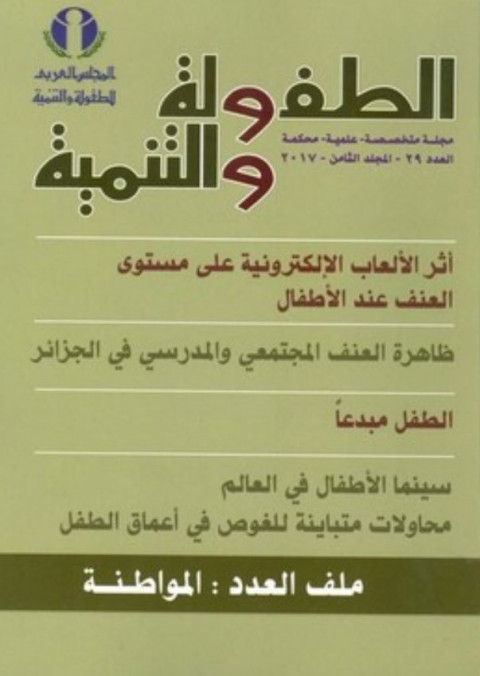 Thoughts on Global Citizenship (Universal) سنة النشر: 2017 المؤلف: Nahla Abu Aliwa المؤلف المؤسسي: Arab Council for Childhood and Development (ACCD) This article addresses global citizenship as one of the hot topics the world currently. The researcher highlighted the difference between global citizenship and traditional citizenship. He also touched upon the concept of multiculturalism and its importance in this multicultural world. Emphasis was placed on the Education for Global Citizenship initiative proposed by UNESCO. أفكار حول المواطنة العالمية ( الكوكبية ) سنة النشر: 2017 المؤلف: Nahla Abu Aliwa المؤلف المؤسسي: Arab Council for Childhood and Development (ACCD) يتناول هذا المقال المواطنة الكوكبية باعتبارها أحد الموضوعات المطروحة بقوة على الساحة العالمية. قام الباحث بإلقاء الضوء على الفرق بين المواطنة العالمية والمواطنة التقليدية. وأيضا تطرق لمفهوم التعددية الثقافية وأهميته في العالم المتنوع الثقافات. كما تم التركيز على مبادرة التربية من أجل المواطنة العالمية والتي طرحتها منظمة اليونسكو.
 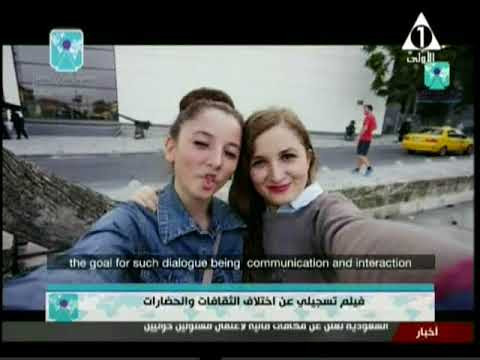 A Documentary about Different Cultures and Civilizations سنة النشر: 2017 المؤلف المؤسسي: Egypt News The documentary talks about the differences between cultures and civilizations. It talks about the importance of cross-fertilization between civilizations for a happy life and sustainable development. فيلم تسجيلى عن اختلاف الثقافات والحضارات سنة النشر: 2017 المؤلف المؤسسي: Egypt News يتحدث الفيلم الوثائقي عن الاختلافات بين الثقافات والحضارات. ويتحدث عن اهمية التلاقح بين الحضارات للعيش السعيد والتنمية المستدامة.