
الموارد
استكشف مجموعة واسعة من الموارد القيمة حول تعليم المواطنة العالمية لتعميق فهمك وتعزيز البحث والمناصرة والتعليم والتعلم.
تم العثور على 1,322 نتيجة
 시민 인식의 녹색 전환을 위한 환경 리터러시 진단 및 강화 방안 سنة النشر: 2021 المؤلف: 염정윤 | 김남수 | 정행운 | 정우현 المؤلف المؤسسي: 한국환경연구원 1. 연구의 필요성 및 목적 환경 정책이 성공적으로 정책 목표를 달성하기 위해서는 정책 이해와 필요성에 대한 범국민적 공감대가 필수 환경교육의 중요성을 강조하고 있지만 실질적으로 교육의 효과를 확인할 수 있는 객관적이고 구체적인 지표가 부재함 환경교육의 목표를 환경 리터러시의 증대로 설정하고 이를 측정할 지표 개발이 필요2. 연구의 범위 환경 리터러시 개념 정리 및 성인 대상의 측정 도구 개발 일반 시민의 환경 리터러시 수준 측정 환경 리터러시의 예측 요인과 결과 요인 확인 군집 분석을 통한 시민 유형 파악* 본 저작물은 한국환경연구원에서 '2021'년에 작성하여 공공누리 제'4'유형으로 개방한 ‘시민 인식의 녹색 전환을 위한 환경 리터러시 진단 및 강화 방안(작성자: 염정윤)’을 이용하였으며 해당 저작물은 한국환경연구원 홈페이지(http://www.kei.re.kr)’에서 무료로 다운받으실 수 있습니다.
  终身学习背景下老年人群体自主参与学习活动的影响因素实证研究 (老龄化研究 第10卷 第3期) سنة النشر: 2023 المؤلف: 郑滢 在终身学习背景下老年人自主参与学习活动是积极老龄化的一种表现。本文基于CGSS2021年数据,对于3342份老年人群体自主参与学习的影响因素进行了实证研究。本研究采用有序逻辑回归分析模型研究,将人口特征、个体认知能力、社会保障和居住环境等纳入分析模型分析其与老年人群体是否自主参与学习的关系。结合实证研究结果与我国老年人自主参与学习的实际情况,最终可以基本了解到我国老年人群体自主参与学习的意愿与频率仍较低,而我国老年人群体自主参与学习的影响因素表现在人口特征、个体认知能力、居住环境三个方面。据此,本研究在终身学习背景的基础上提出针对性地关注不同老年人的学习需求,多元化老年人学习渠道并积极推动老年教育的普惠性发展,营造终身学习的社会氛围。
  21世纪以来我国终身教育视角下社会教育研究的回顾与反思展望 : 基于CiteSpace知识图谱分析 (运筹与模糊学 第13卷 第4期) سنة النشر: 2023 المؤلف: 郑滢 社会教育是终身教育体系的重要组成部分,但基于终身教育视角进行社会教育研究还存在可探讨空间,本文通过对关于终身视角下社会教育研究已有的学术性文献的发文作者分布、机构分布、突现词共现图等分析终身教育视角下社会教育的研究现状与趋势,结合知识图谱系统梳理与分析研究热点主题,发现热点主要有社区教育实践研究、国外社会教育经验比较研究、社会教育概念论证研究、终身教育与学习型社会构建研究等四个方面,最后通过研究结论对21世纪以来终身教育视角下社会教育研究从国家、学校、学术研究层面等提出展望。
 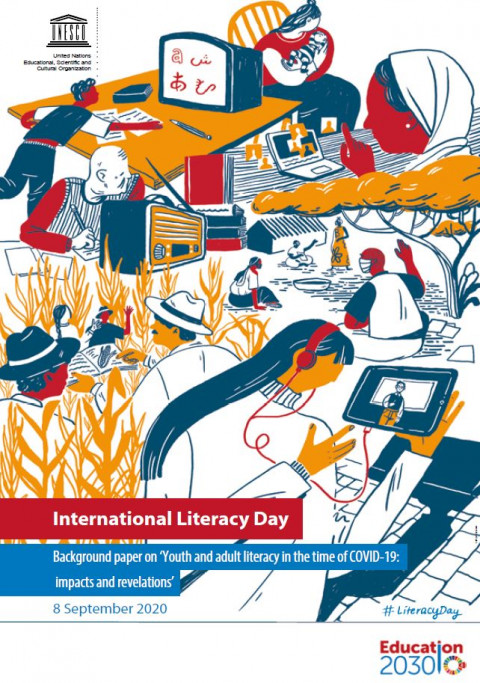 International Literacy Day: Background Paper on 'Youth and Adult Literacy in the Time of COVID-19; Impacts and Revelations' سنة النشر: 2020 المؤلف المؤسسي: UNESCO Specially prepared on the occasion of International Literacy Day 2020, this background paper illustrates the impact of the COVID-19 crisis on youth and adult literacy, based on the limited information that is currently available. It provides five regional snapshots and identifies preliminary lessons learned thus far, while aiming to inspire continued reflection and subsequent action. It also makes the case for the ongoing importance of advancing youth and adult literacy, a priority that was already neglected even before the pandemic but which deserves all our attention. ILD 2020 thus seeks to trigger reimaginations of literacy teaching and learning in the COVID-19 crisis and beyond, with a particular focus on the role of educators.
  Teaching Students How to Learn: Setting the Stage for Lifelong Learning (Educational Practices Series No. 33) سنة النشر: 2021 المؤلف: Stella Vosniadou | Michael J. Lawson | Helen Stephenson | Erin Bodner المؤلف المؤسسي: UNESCO International Bureau of Education (IBE) | International Academy of Education In this Teaching How to Learn booklet, teachers can find information about some of the cognitive, metacognitive, emotional, and motivational capabilities that characterise self-regulated learners, and some of the actions that teachers can take to promote self-regulated learning in their students. These include giving students time to engage in constructive tasks independently or in collaboration with their peers and providing them with the knowledge and strategies that they can use to manage their learning and control their motivation and emotions while they complete these tasks successfully.
 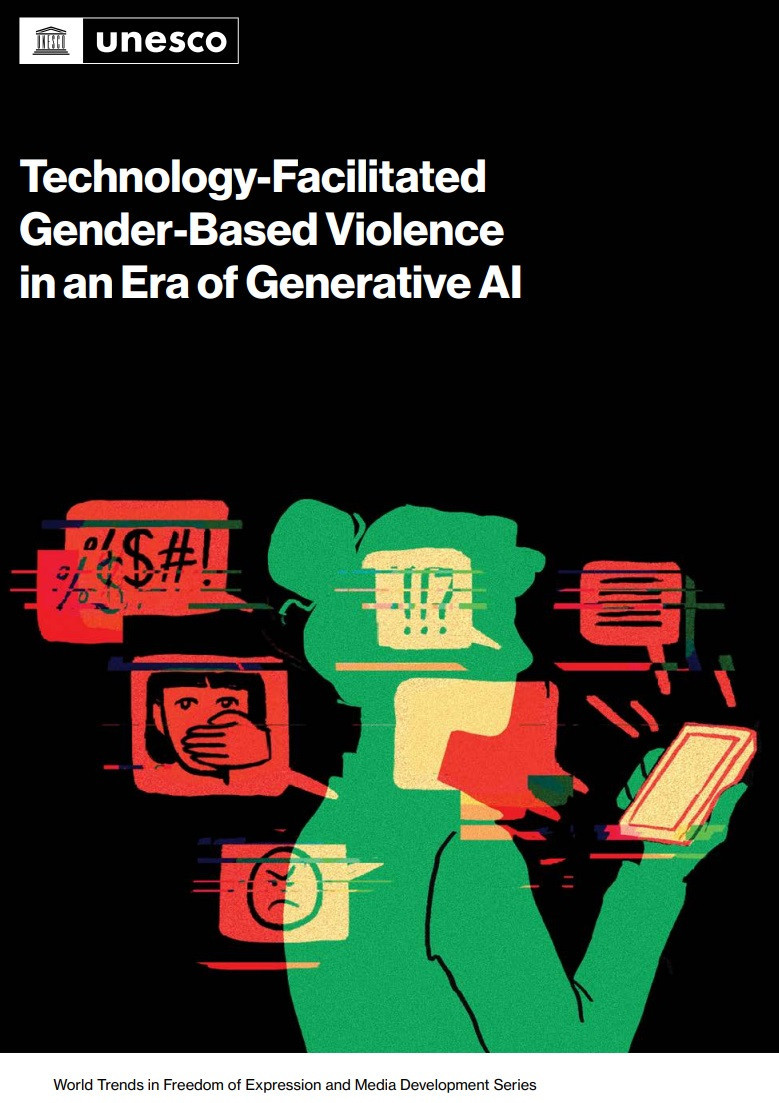 Technology-facilitated gender-based violence in an era of generative AI سنة النشر: 2023 المؤلف المؤسسي: UNESCO <Short summary>Experiments reveal how generative AI facilitates gender-based violence Generative Artificial Intelligence (AI) — deep-learning models that create voice, text, and image — are revolutionizing the way people access information and produce, receive and interact with content. While technological innovations like ChatGPT, DALL-E and Bard offer previously unimaginable gains in productivity, they also present concerns for the overall protection and promotion of human rights and for the safety of women and girls.The arrival of generative AI introduces new, unexplored questions: what are the companies’ policies and normative cultures that perpetuate technology-facilitated gender-based violence and harms? How do AI-based technologies facilitate gender-specific harassment and hate speech? What “prompt hacks” can lead to gendered disinformation, hate speech, harassment, and attacks? What measures can companies, governments, civil society organisations and independent researchers take to anticipate and mitigate these risks?A combination of measures are proposed to be put in place by generative AI companies and the technology companies that platform them, regulators and policy makers, by civil society organisations and independent researchers, as well as users.
  Ensuring Well-Being through Social-Emotional Learning in the Digital World سنة النشر: 2023 المؤلف المؤسسي: Mahatma Gandhi Institute of Education for Peace and Sustainable Development (MGIEP) This document aims to identify the important elements addressed during the various TAGe discussions (social media discussion and live event) in addition to offering key recommendations for decision-makers. Concretely, this document has sought to highlight two social and emotional challenges faced today by youth, with a third issue present in each of them –(1) educational and employment disparities (economic exclusion),(2) poor civic engagement, and(3) the impact of the digital divide and misuse of social media platforms– in addition to showing how SEL competencies can be a tool to address the social and emotional challenges that may be encountered, supported by technological tools.
 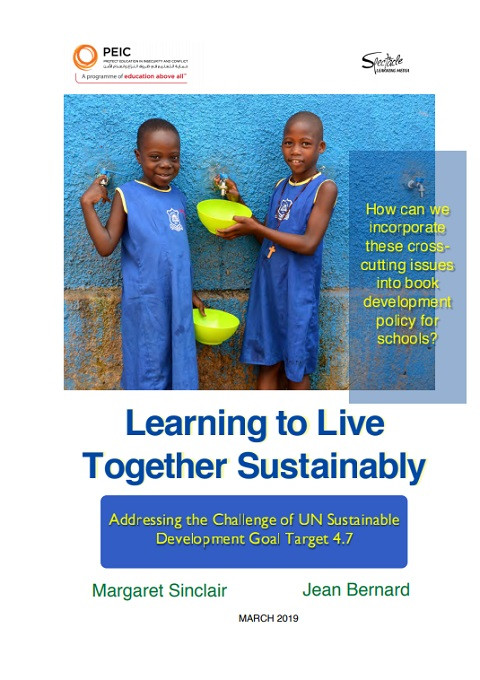 Learning to Live Together Sustainably: Addressing the Challenge of UN Sustainable Development Goal Target 4.7 سنة النشر: 2019 المؤلف: Margaret Sinclair | Jean Bernard المؤلف المؤسسي: Protect Education in Conflict and Insecurity (PEIC) | Spectacle Learning Media The practical advice and guidelines in this book help support learning to live together, conflict transformation and peace at the individual, group and community levels. The framework for developing widely accessible, high quality learning materials supports the UN Sustainable Development Goals and is relevant to formal and non-formal education activities and projects. This document also raises important issues about the professional responsibilities of policy-makers at global and national level, who determine what content is addressed in the classroom. In particular, it addresses the need for education materials that support cross-cutting issues such as learning to live together, global citizenship education, and education for sustainable development.
  Asia-Pacific Education 2030: SDG 4 Midterm Review سنة النشر: 2024 المؤلف المؤسسي: UNESCO Institute for Statistics (UIS) | UNESCO Bangkok This publication marks the conclusion of the collaborative national midterm reviews of SDG 4 achievement in the Asia-Pacific. More importantly, it represents the beginning of the final sprint to the 2030 finish line. It also serves as a comprehensive analytical and policymaking tool for all stakeholders in the region to reflect and be better prepared for the second half of the journey. At the midway point of implementing the Education 2030 Agenda, we are observing both challenges and progress in achieving Sustainable Development Goal 4 (SDG 4) in the Asia-Pacific. The region, overall, has made advances in reaching the globally and regionally most important targets under SDG 4, yet it is still far from delivering the common commitment of the Education 2030 Agenda, to ‘ensure inclusive and equitable quality education and promote lifelong learning opportunities for all’. Eight years into implementation, the Asia-Pacific has shown progress, especially in improving access to lower levels of basic education, as well as expanding early childhood education (ECE). Across most subregions of Asia and the Pacific, over 95% of primary school students complete primary education within the expected timeframe, while more than 80% of children one year before the official primary entry age are enrolled in organized early childhood education. However, participation in education is only one part of the puzzle, and the quality of learning, evidenced by limited data for the Asia-Pacific region on learning outcomes, remains concerning. More than half of students in Eastern and South-Eastern Asia do not reach the minimum proficiency level in mathematics at the end of lower secondary education. Overall and from a regional perspective, with priorities having accelerated in ECE, primary education reaching universal participation, and higher education being consistently regarded as prestigious to accomplish, secondary education is currently the weakest link apart from the chronically undervalued technical vocational education and training path. Fulfilling our commitment to the Education 2030 Agenda and leaving no one behind is not an easy endeavour and we need everyone on board in this unprecedented, yet necessary feat. This publication is meant to facilitate taking stock of the current situation and accelerate focused advances on the most relevant education topics for the Asia-Pacific region.
  The Role of Education in Countering Violent Extremism سنة النشر: 2013 المؤلف المؤسسي: Center on Global Counterterrorism Cooperation and Hedayah On 18 and 19 September 2013, the Center on Global Counterterrorism Cooperation (CGCC) and Hedayah co-hosted in New York City an expert roundtable on “The Role of Education in Countering Violent Extremism.” The meeting brought together a group of policy-makers, researchers and practitioners to discuss challenges and best practices related to efforts to counter violent extremism through education.