
الموارد
استكشف مجموعة واسعة من الموارد القيمة حول تعليم المواطنة العالمية لتعميق فهمك وتعزيز البحث والمناصرة والتعليم والتعلم.
تم العثور على 1,405 نتيجة
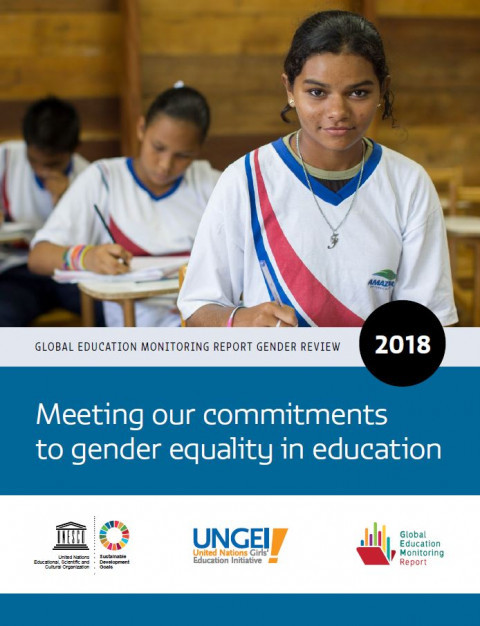 Tenir nos engagements en faveur de l'égalité des genres dans l'éducation: Rapport mondial de suivi sur l'éducation, résumé sur l'égalité des genres 2018 سنة النشر: 2018 المؤلف المؤسسي: Organisation des Nations Unies pour l'éducation, la science et la culture (UNESCO) Le Cadre d’action Éducation 2030, outil qui vise à aider la communauté internationale à atteindre l’ODD 4 sur l’éducation, reconnaît explicitement l’égalité des genres comme principe directeur lié à la réalisation du droit à l’éducation. Il stipule clairement que les filles et les garçons, les femmes et les hommes, doivent bénéficier des mêmes possibilités « dans et par l’éducation ».Dans ce sixième résumé sur l’égalité des genres, qui fait partie d’une série qui a commencé en 2011, l’équipe du Rapport mondial de suivi sur l’éducation reste concentrée sur une large conception de l’égalité des genres, qui va au-delà du simple comptage du nombre de filles et de garçons dans les classes. La première partie du résumé examine les disparités en matière de participation et de compétences, aux postes à responsabilité des secteurs éducatif et politique et dans certains aspects des infrastructures et des programmes scolaires. Elle examine également les questions liées au genre dans le cadre de la formation professionnelle, en explorant le rôle de l’éducation dans trois autres ODD concernant l’agriculture, la santé, et l’eau et l’assainissement.La deuxième partie du résumé analyse les institutions, les lois et les politiques afin d’explorer des manières de déterminer et de faire appliquer le principe de responsabilité pour l’égalité des genres dans l’éducation. Cumplir nuestros compromisos de igualdad de género en la educación: Resumen sobre género del informe de seguimiento de la educación en el mundo 2018 سنة النشر: 2018 المؤلف المؤسسي: Organización de las Naciones Unidas para la Educación, la Ciencia y la Cultura (UNESCO) El Marco de Acción para la Educación 2030, que es una herramienta encaminada a contribuir a que la comunidad internacional alcance el ODS 4 relativo a la educación, reconoce explícitamente la igualdad de género como un principio rector para la realización del derecho a la educación para todos. Dice claramente que las niñas y los niños, las mujeres y los hombres, deben adquirir las mismas competencias “en la educación y mediante ella”.En este sexto Resumen sobre Género de una serie que se inició en 2011, los autores del Informe de Seguimiento de la Educación en el Mundo siguen centrándose en un concepto amplio de la igualdad de género que va más allá del simple recuento del número de niños y niñas en las aulas.En la primera parte del documento se examinan las disparidades en materia de participación y de competencias, de puestos de dirección de alto nivel en el ámbito educativo y político, y en determinados aspectos de las infraestructuras y los programas de enseñanza. Se examinan asimismo las cuestiones de género en el desarrollo profesional, estudiando el papel de la educación en otros tres ODS, los relativos a la agricultura, la salud, y el agua y saneamiento.En la segunda parte se analizan las instituciones, leyes y políticas, con miras a explorar modalidades que permitan determinar y aplicar la rendición de cuentas en materia de igualdad de género en la educación.
 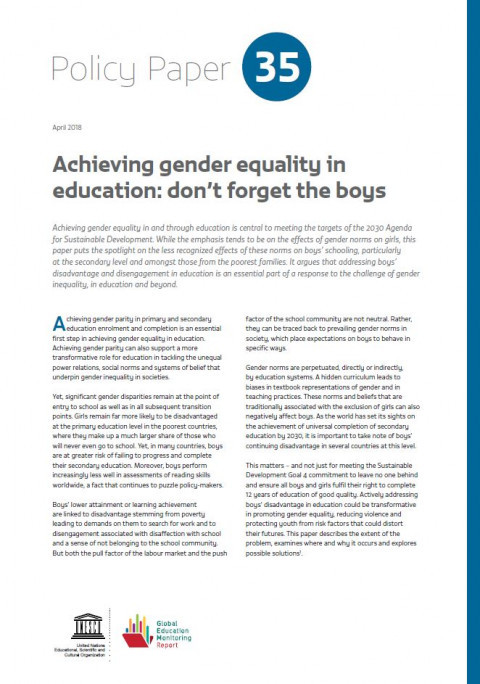 Achieving Gender Equality in Education: Don't Forget the Boys (Policy Paper 35) سنة النشر: 2018 المؤلف المؤسسي: UNESCO Achieving gender equality in and through education is central to meeting the targets of the 2030 Agenda for Sustainable Development. While the emphasis tends to be on the effects of gender norms on girls, this paper puts the spotlight on the less recognized effects of these norms on boys’ schooling, particularly at the secondary level and amongst those from the poorest families. It argues that addressing boys’ disadvantage and disengagement in education is an essential part of a response to the challenge of gender inequality, in education and beyond.
 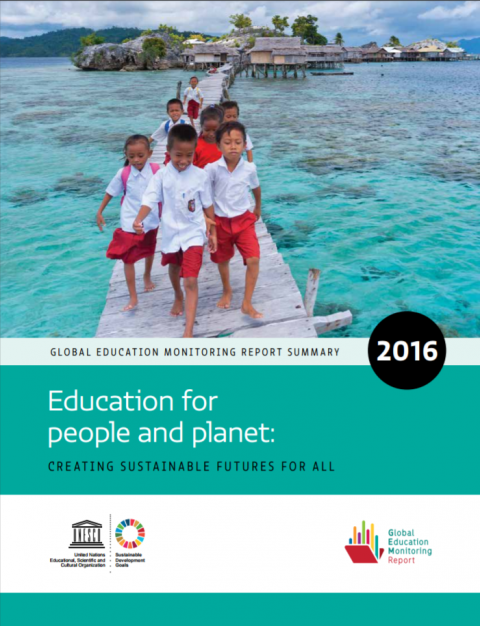 教育造福 人类与地球:为全民创造可持续的未来, 2016 全球教育监测报告; 摘要 سنة النشر: 2016 المؤلف المؤسسي: UNESCO The GEM Report provides an authoritative account of how education is the most vital input for every dimension of sustainable development. Better education leads to greater prosperity, improved agriculture, better health outcomes, less violence, more gender equality, higher social capital and an improved natural environment. Education is key to helping people around the world understand why sustainable development is such a vital concept for our common future. Education gives us the key tools – economic, social, technological, even ethical – to take on the SDGs and to achieve them. These facts are spelled out in exquisite and unusual detail throughout the report. Yet the report also emphasizes the remarkable gaps between where the world stands today on education and where it has promised to arrive as of 2030.
  Re|shaping cultural policies: a decade promoting the diversity of cultural expressions for development سنة النشر: 2015 المؤلف المؤسسي: UNESCO This Report presents the work of fourteen independent experts, as well as the Secretary of the Convention and the Principal Editor, who have analysed the implementation of the Convention on the Protection and Promotion of the Diversity of Cultural Expressions. Its purpose is to move forward the process of monitoring the Convention’s implementation that was put in place by a mechanism of Quadrennial Periodic Reports (QPRs) approved by the Convention’s Conference of Parties in 2011. The contributors have consulted the 71 reports submitted by Parties, but have also used data derived from other, non-official sources and have drawn upon their own expert experience. Re|penser les politiques culturelles: 10 ans de promotion de la diversité des expressions culturelles pour le développement سنة النشر: 2015 المؤلف المؤسسي: Organisation des Nations Unies pour l'éducation, la science et la culture (UNESCO) This Report presents the work of fourteen independent experts, as well as the Secretary of the Convention and the Principal Editor, who have analysed the implementation of the Convention on the Protection and Promotion of the Diversity of Cultural Expressions. Its purpose is to move forward the process of monitoring the Convention’s implementation that was put in place by a mechanism of Quadrennial Periodic Reports (QPRs) approved by the Convention’s Conference of Parties in 2011. The contributors have consulted the 71 reports submitted by Parties, but have also used data derived from other, non-official sources and have drawn upon their own expert experience. Re|pensar las politicas culturales: 10 anos de promocion de la diversidad de las expresiones culturales para el desarrollo سنة النشر: 2015 المؤلف المؤسسي: UNESCO This Report presents the work of fourteen independent experts, as well as the Secretary of the Convention and the Principal Editor, who have analysed the implementation of the Convention on the Protection and Promotion of the Diversity of Cultural Expressions. Its purpose is to move forward the process of monitoring the Convention’s implementation that was put in place by a mechanism of Quadrennial Periodic Reports (QPRs) approved by the Convention’s Conference of Parties in 2011. The contributors have consulted the 71 reports submitted by Parties, but have also used data derived from other, non-official sources and have drawn upon their own expert experience. التعليم من أجل الناس والكوكب: بناء مستقبل مستدام للجميع سنة النشر: 2016 المؤلف المؤسسي: UNESCO The GEM Report provides an authoritative account of how education is the most vital input for every dimension of sustainable development. Better education leads to greater prosperity, improved agriculture, better health outcomes, less violence, more gender equality, higher social capital and an improved natural environment. Education is key to helping people around the world understand why sustainable development is such a vital concept for our common future. Education gives us the key tools – economic, social, technological, even ethical – to take on the SDGs and to achieve them. These facts are spelled out in exquisite and unusual detail throughout the report. Yet the report also emphasizes the remarkable gaps between where the world stands today on education and where it has promised to arrive as of 2030.
 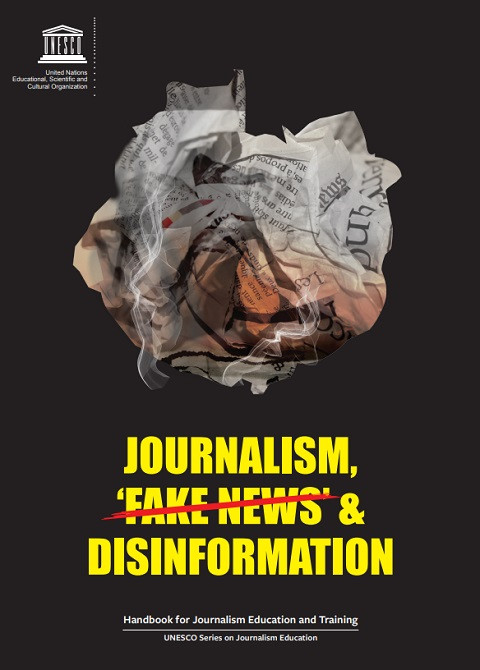 Journalism, Fake News & Disinformation: Handbook for Journalism Education and Training سنة النشر: 2018 المؤلف: Julie Posetti | Cherilyn Ireton | Claire Wardle | Hossein Derakhshan | Alice Matthews | Magda Abu-Fadil | Tom Trewinnard | Fergus Bell | Alexios Mantzarlis المؤلف المؤسسي: UNESCO This handbook seeks to provide an internationally-relevant model curriculum, open to adoption or adaptation, which responds to the emerging global problem of disinformation that confronts societies in general, and journalism in particular. Serving as a model curriculum, the publication is designed to give journalism educators and trainers a framework and lessons to help students and practitioners of journalism to navigate the issues associated with ‘fake news’.The contents draw together the input of leading international journalism educators, researchers and thinkers who are helping to update journalism method and practice to deal with the challenges of misinformation and disinformation. The lessons are contextual, theoretical and in the case of online verification, extremely practical. Used together as a course, or independently, they can help refresh existing teaching modules or create new offerings.It is part of the “Global Initiative for Excellence in Journalism Education”, which is a focus of UNESCO’s International Programme for the Development of Communication (IPDC). The Initiative seeks to engage with teaching, practising and researching of journalism from a global perspective, including sharing international good practices.
 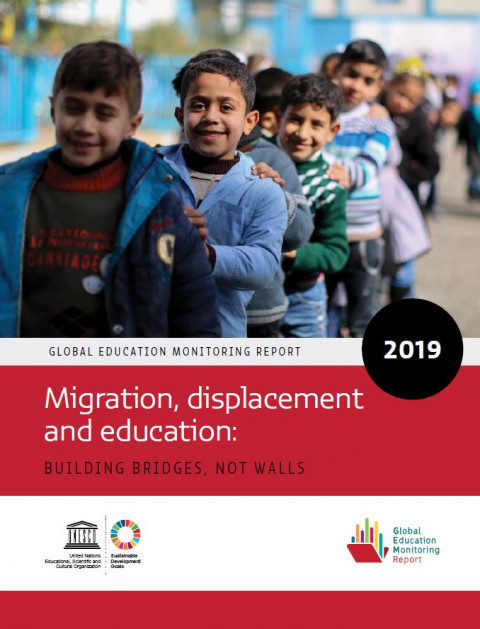 Rapport mondial de suivi sur l'éducation 2019: Migration, déplacement et éducation: bâtir des ponts, pas des murs سنة النشر: 2018 المؤلف المؤسسي: UNESCO | Global Education Monitoring Report Team Le Rapport mondial de suivi sur l’éducation 2019 examine l’incidence des migrations et des déplacements sur l’éducation à travers tous les mouvements de population : à l’intérieur et à l’extérieur des frontières, volontaires ou forcés, motivés par l’emploi ou par les études. Le Rapport fait également le point sur les progrès accomplis dans le domaine de l’éducation dans le cadre du Programme de développement durable à l’horizon 2030.Deux nouveaux pactes mondiaux sur les migrants et les réfugiés reconnaissent le rôle de l’éducation et fixent des objectifs conformes à l’engagement pris par la communauté internationale pour que personne ne soit laissé pour compte. Ce Rapport, guide pratique indispensable au service de ces deux pactes, aborde des questions d’ordre politique concernant les migrants saisonniers, le regroupement des écoles rurales, les programmes interculturels, l’intégration des réfugiés aux systèmes éducatifs nationaux, la lutte contre la ségrégation, la reconnaissance des qualifications, le financement ciblé des écoles, le renforcement de l’efficacité de l’aide humanitaire allouée à l’éducation et une formation qui prépare les enseignants à la diversité dans les classes.Ce Rapport invite les pays à considérer l’éducation comme un outil de gestion des migrations et des déplacements et comme une chance pour ceux qui en ont besoin.