
الموارد
استكشف مجموعة واسعة من الموارد القيمة حول تعليم المواطنة العالمية لتعميق فهمك وتعزيز البحث والمناصرة والتعليم والتعلم.
تم العثور على 1,405 نتيجة
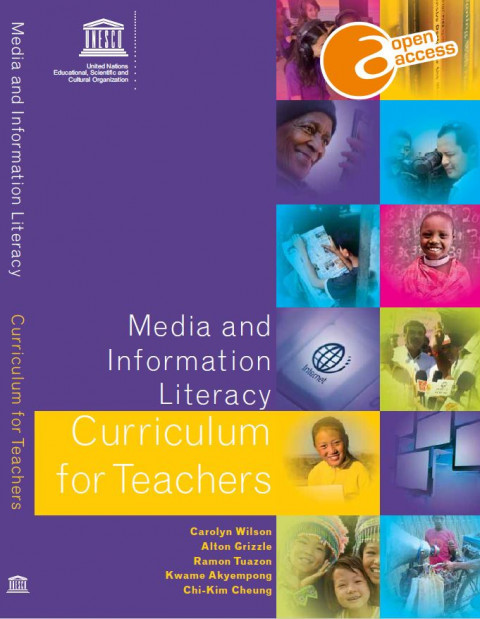 Media and Information Literacy Curriculum for Teachers سنة النشر: 2011 المؤلف: Carolyn Wilson | Alton Grizzle | Ramon Tuazon | Kwame Akyempong | Chi Kim Cheung المؤلف المؤسسي: UNESCO We live in a world where the quality of information we receive largely determines our choices and actions, including our capacity to enjoy fundamental freedoms and the ability for self-determination and development. This Media and Information Literacy Curriculum for Teachers is an important resource for UNESCO Member States and a pioneering publication.First, it is forward looking, drawing on present trends toward the convergence of radio, television, Internet, newspapers, books, digital archives and libraries into one platform. Second, it is specifically designed for integration into the formal teacher education system.UNESCO believes that, ultimately, this curriculum will contribute to innovation and improvement in all levels of education.
  Preventing Violent Extremism through Education: A guide for policy-makers سنة النشر: 2017 المؤلف المؤسسي: 联合国教科文组织 (UNESCO) 该出版物在如何处理暴力极端主义带来的具体挑战的问题上为教育领域人员(政策制定者、教师以及各类教育利益相关者)提供了技术性的指导。该指导手册特别旨在帮助教育相关教育部门的政策制定者从教育方面入手优先考虑、规划并采取有效的预防性的相关行动,为国家预防工作做出贡献。
 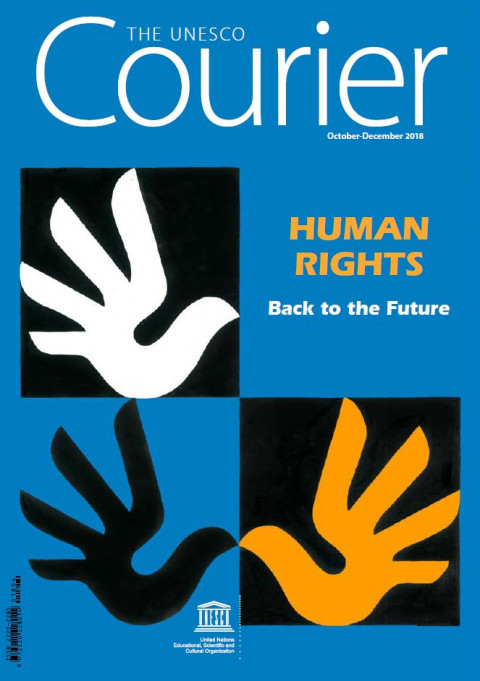 Human Rights: Back to the Future (The UNESCO Courier no. 4, October-December 2018) سنة النشر: 2018 المؤلف المؤسسي: UNESCO Benedetto Croce, Aldous Huxley, Humayun Kabir, Harold J. Laski, Lo Chung-Shu, Salvador de Madariaga, Jacques Maritain, F.S.C. Northrop, Arnold Schoenberg, Pierre Teilhard de Chardin – these are some of the contributors to this issue of the Courier. To mark the seventieth anniversary of the Universal Declaration on Human Rights, adopted on 10 December 1948, we decided to take a detour into the past to enable us to better orient ourselves in the future. This explains the title of this issue: “Back to the Future”. Travelling back to 1946, when the world was grappling with the aftermath of the Second World War, “what kind of moral statement could the international community make that would adequately express its collective outrage and hope, however utopian, for a better future?” Mark Goodale discusses this massive international effort in his introductory article for our Wide Angle section, which he also guest-edited. The series of articles in this section uncovers a hitherto little-known part of the history of the Universal Declaration on Human Rights – the inquiry into the origins and philosophic bases of human rights. This initiative was decided upon during the first UNESCO General Conference (November-December 1946) and launched the following year by the Organization’s first Director-General, Julian Huxley. It was coordinated by the young French philosopher, Jacques Havet. For this project, UNESCO brought together leading intellectual figures of the post-war world, thus making an essential contribution to the reflection on human rights at the time. It remains amazingly relevant today. Equally relevant today are the drawings of Our Guest, the Peruvian artist Fernando Bryce, who derives his inspiration from this historic period “when the idea of progress was genuinely linked to a whole new perspective”. His series, The Book of Needs – which takes pages of the Courier between 1948 and 1954 and transforms them into works of art – is featured as a supplement in this issue. Droits de l’homme : retour vers le futur (Le Courrier de l’UNESCO no. 4, octobre-décembre 2018) سنة النشر: 2018 المؤلف المؤسسي: Organisation des Nations Unies pour l'éducation, la science et la culture (UNESCO) Benedetto Croce, Aldous Huxley, Humayun Kabir, Harold J. Laski, Lo Chung-Shu, Jacques Maritain, F. S. C. Northrop, Arnold Schoenberg, Pierre Teilhard de Chardin : voici quelques-uns des contributeurs de ce numéro du Courrier. Pour marquer le soixante-dixième anniversaire de la Déclaration universelle des droits de l’homme, adoptée le 10 décembre 1948, nous avons décidé de faire un détour par le passé, afin de mieux nous orienter dans l’avenir. Ce qui explique le titre de ce numéro : « Retour vers le futur ». Nous sommes donc en 1946. Alors que le spectre de la guerre totale hante tous les esprits, « la communauté internationale a besoin de formuler un énoncé moral qui exprime adéquatement son indignation collective et son espoir (pour utopique qu'il fût) d'un avenir meilleur », explique Mark Goodale, auteur de l’article introductif et consultant pour Grand angle. Un dossier qui dévoile tout un pan méconnu de l’histoire de la Déclaration universelle des droits de l’homme : l’enquête mondiale sur les fondements philosophiques des droits de l’homme, décidée lors de la première Conférence générale de l’UNESCO (novembre-décembre 1946), lancée l’année suivante par le premier Directeur général, Julian Huxley, et coordonnée par le jeune philosophe français Jacques Havet. L’UNESCO a réuni autour de ce projet l’élite intellectuelle du monde de l'après-guerre et apporté ainsi une contribution essentielle à la réflexion sur les droits de l’homme. Elle demeure aujourd’hui d’une étonnante actualité. Tout aussi actuels sont les dessins de Notre invité, l’artiste péruvien Fernando Bryce qui puise son inspiration dans cette période historique « où l'idée de progrès ouvrait réellement de multiples perspectives ». Sa série The Book of Needs (Le livre des nécessités), qui transfigure en œuvres d’art des pages du Courrier des années 1948 - 1954, fait l’objet du supplément à ce numéro. Derechos humanos: regreso al futuro (El Correo de la UNESCO no. 4, Octubre-Diciembre 2018) سنة النشر: 2018 المؤلف المؤسسي: UNESCO Benedetto Croce, Aldous Huxley, Humayun Kabir, Harold J. Laski, Lo Chung-Shu, Salvador de Madariaga, Jacques Maritain, F. S. C. Northrop, Arnold Schoenberg, Pierre Teilhard de Chardin: estos son algunos de los colaboradores de este número de El Correo. Para conmemorar el 70 aniversario de la Declaración universal de los derechos humanos, adoptada el 10 de diciembre de 1948, decidimos hacer un recorrido por el pasado para orientarnos mejor en el futuro, lo cual explica el título de este número: “Regreso al futuro”. Nos encontramos pues en 1946. Mientras el espectro de la guerra mundial atormenta todas las conciencias, “la comunidad internacional necesita formular un enunciado moral que exprese adecuadamente su indignación colectiva y su esperanza (por utópica que fuese) de un futuro mejor”, explica Mark Goodale, autor del artículo introductorio y consultor para nuestra sección Gran angular. Una sección que desvela toda una parte desconocida de la historia de la Declaración universal de los derechos humanos: la encuesta mundial sobre los fundamentos filosóficos de los derechos del hombre, decidida durante la primera Conferencia General de la UNESCO (noviembre-diciembre de 1946), enviada el año siguiente por el primer Director General, Julian Huxley, y coordinada por el joven filósofo francés Jacques Havet. La UNESCO reunió en torno a este proyecto a la élite intelectual del mundo de la posguerra y aportó así una contribución fundamental a la reflexión sobre los derechos humanos. Una encuesta que aún hoy resulta de sorprendente actualidad. Igual de actuales son los dibujos de Nuestro invitado, el artista peruano Fernando Bryce, que encuentra su inspiración en este período histórico “donde la idea de progreso abría realmente múltiples perspectivas”. Su serie The Book of Needs (El libro de las necesidades), que transfigura en obras de arte algunas páginas de El Correo de los años 1948 - 1954, es objeto del suplemento de este número.
  Enforcing the right to education of refugees: a policy perspective سنة النشر: 2019 المؤلف المؤسسي: UNESCO This paper, aimed at education policymakers, provides analysis and insights on how the right to education for refugees could be ensured from a policy perspective. It does so by reviewing the current status of access to education of refugees, using the scant data that is available in this area. It also outlines some of the extensive barriers to education that refugees face, with recognition of the multifaceted, interlinked and complex nature of exclusion. It provides an overview of the international normative frameworks and global agendas on education that can be applied to refugees to ensure their right to education and achieve SDG 4. Additionally, this document presents practical examples, good practices, and promising measures taken by countries in order to ensure the inclusion of refugees in their national systems and better guarantee the fulfilment of their right to education. As a result of this research, collaboration and the invaluable contributions from the participants in a dedicated Expert Meeting in Barcelona (2018), a set of policy recommendations are provided in the last chapter which aims to guide policymakers to ensure equal access to good quality education for refugees.
 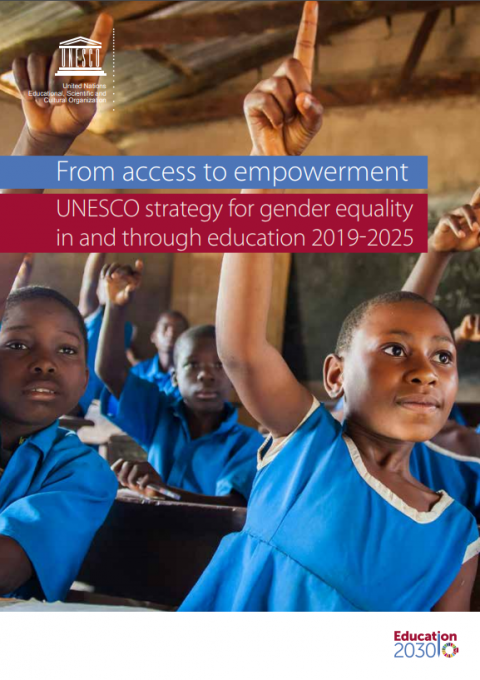 From access to empowerment: UNESCO strategy for gender equality in and through education 2019-2025 سنة النشر: 2019 المؤلف المؤسسي: UNESCO Gender bias still permeate the entire education system in some settings and is often perpetuated rather than questionned. This includes the absence of women as leaders in textbooks, to differential expectations of boys and girls by teachers, to school policies that put pregnant girls at the door rather than respecting, protecting and fulfilling their right to education. This Strategy focuses on system-wide transformation to benefit all learners and targeted interventions to support girls’ and women’s empowerment. It offers three clear lines of action: better data to inform action for gender equality in and through education, better legal, policy and planning frameworks to advance rights, and better teaching and learning practices to empower. De l’accès à l’autonomisation: stratégie de l’UNESCO pour l’égalité des genres dans et par l’éducation 2019-2025 سنة النشر: 2019 المؤلف المؤسسي: Organisation des Nations Unies pour l'éducation, la science et la culture (UNESCO) Les préjugés de genres continuent d’imprégner l’ensemble du système éducatif et sont souvent perpétués au lieu d’être contestés. Ces derniers vont de l’absence de leaders féminins dans les manuels scolaires, aux attentes différentes des enseignants concernant les filles et les garçons, en passant par les politiques scolaires qui excluent les filles enceintes au lieu de les respecter, de les protéger et de garantir leur droit à l’éducation. Cette stratégie met l’accent sur la transformation à l’échelle du système au profit de tous les apprenants, et sur des interventions ciblées pour soutenir l’autonomisation des filles et des femmes. Elle propose trois thématiques prioritaires distincts : meilleures données pour éclairer l’action ; meilleurs cadres juridiques, politiques et de planification pour faire progresser les droits ; et meilleures pratiques d’enseignement et d’apprentissage pour autonomiser.
 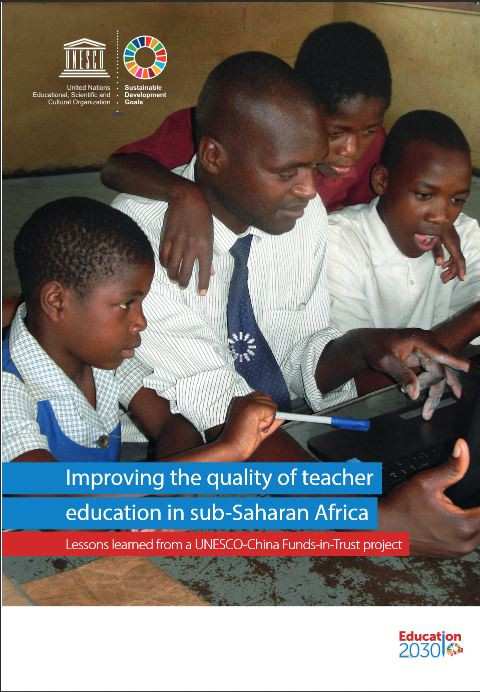 Improving the quality of teacher education in Sub-Saharan Africa: lessons learned from a UNESCO-China Funds-in-Trust project سنة النشر: 2018 المؤلف المؤسسي: UNESCO The booklet describes how the project started, the choice of beneficiary countries, the implementation strategies and its achievements. The different sections numbered one to four describe particular aspects of the project, using country cases to illustrate how the success of the project was due to strong country ownership and leadership. UNESCO, in partnership with the Government of the People’s Republic of China, initiated the project to enhance the institutional capacity and the professional development of teacher educators through ICT-supported learning, teaching and research. This technology aided the transformation of capacity teacher training through digitalization of instructional materials.
  Monitoring the implementation of the Lisbon Recognition Convention - Council of Europe Higher Education Series No. 23 سنة النشر: 2019 المؤلف المؤسسي: UNESCO | Council of Europe In accordance with the Lisbon Recognition Convention, the Committee of the Convention shall oversee its implementation and guide the competent authorities in implementing the convention and in their consideration of applications for the recognition of foreign qualifications. The Rules of procedure (adopted by the Committee in Vilnius in 1999) reiterate this role – the function of the Committee is to promote the application of the convention and oversee its implementation. Article II. of the convention states that where the central authorities of a party are competent to make decisions in recognition cases, that party shall be immediately bound by the provisions of the convention and shall take the necessary measures to ensure the implementation of its provisions on its territory. Where the competence to make decisions in recognition matters lies with individual higher education institutions or other entities, each party, according to its constitutional situation or structure, shall transmit the text of this convention to those institutions or entities and shall take all possible steps to encourage the favourable consideration and application of its provisions. The provisions of Article II. are central to determining the obligations of the parties to the convention. This article places upon these parties an obligation to make sure that information on the provisions is disseminated to all competent recognition authorities, and that these institutions are encouraged to abide by the convention (Explanatory report to the convention). The objective of this monitoring exercise has been to oversee the implementation of the main provisions of the convention and to report to parties on the outcome of this monitoring, presenting the main findings and recommendations. This monitoring report is also a contribution to the commitment set out in the Yerevan Communiqué (2015) to review national legislation to ensure full compliance with the convention, and to ask the Convention Committee, in co-operation with the ENIC (Council of Europe and UNESCO European Network of National Information Centres on academic recognition and mobility) and NARIC (EU Network of National Academic Recognition Information Centres) networks, to prepare an analysis of the national legislation reports by the end of 2017, taking due account of this monitoring report. This is the first monitoring of implementation of the Lisbon Recognition Convention (LRC) since its signature in 1997. The questionnaire used for the monitoring exercise was drawn up by the Bureau of the Convention Committee, namely Gunnar Vaht, President of the Committee, Gayane Harutyunyan, Vice-President, Allan Bruun Pedersen, Vice-President, and Baiba Ramina, Rapporteur, together with the joint Council of Europe/UNESCO Secretariat. The monitoring covers the 10 main provisions of the convention and comprises 22 questions relating to implementation of the main principles. The questions focus primarily on how the convention requirements are regulated at national level and to what extent the rules are reflected in national legislation. In cases where some or all of the provisions are not regulated at national level and where the higher education institutions have total autonomy in establishing the principles of the convention, the aim has been to discover how national authorities oversee implementation of the principles of the convention at institutional level. As stated above, the objective of this monitoring report is to monitor implementation of the convention by the parties to the convention. The executive summary focuses on the key findings and the conclusions focus on the recommendations made by the Convention Committee Bureau, which will require political decisions from the Convention Committee and from national authorities for follow-up action. The various chapters of the report elaborate further on both the key findings and the recommendations. The questionnaire was sent to 53 states parties to the LRC, and replies were received from 50 countries. The initial deadline given was 15 February 2015, but this was extended to June 2015. The analysis by the members of the Convention Committee Bureau took place from June to November 2015 and was assisted and reviewed by the Council of Europe and UNESCO, the joint Secretariat of the LRCC Bureau.