
الموارد
استكشف مجموعة واسعة من الموارد القيمة حول تعليم المواطنة العالمية لتعميق فهمك وتعزيز البحث والمناصرة والتعليم والتعلم.
تم العثور على 1,405 نتيجة
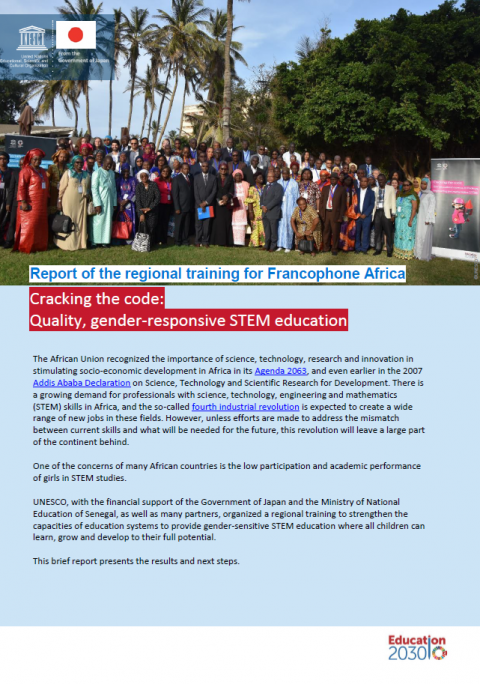 Report of the regional training for Francophone Africa, cracking the code: quality, gender-responsive STEM education سنة النشر: 2019 المؤلف المؤسسي: UNESCO The African Union recognized the importance of science, technology, research and innovation in stimulating socio-economic development in Africa in its Agenda 2063, and even earlier in the 2007 Addis Ababa Declaration on Science, Technology and Scientific Research for Development.There is a growing demand for professionals with science, technology, engineering and mathematics (STEM) skills in Africa, and the so-called fourth industrial revolution is expected to create a wide range of new jobs in these fields. However, unless efforts are made to address the mismatch between current skills and what will be needed for the future, this revolution will leave a large part of the continent behind.One of the concerns of many African countries is the low participation and academic performance of girls in STEM studies. UNESCO, with the financial support of the Government of Japan and the Ministry of National Education of Senegal, as well as many partners, organized a regional training to strengthen the capacities of education systems to provide gender-sensitive STEM education where all children can learn, grow and develop to their full potential. This brief report presents the results and next steps.
 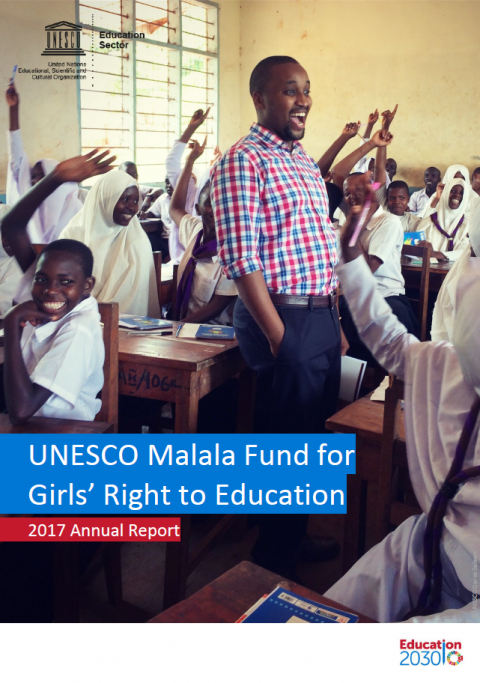 UNESCO Malala Fund for Girls' Right to Education: 2017 annual report سنة النشر: 2018 المؤلف المؤسسي: UNESCO The brutal assassination attempt made against Pakistani teenager and activist for girls’ education Malala Yousafzai gave birth to the UNESCO Malala Fund for Girls’ Right to Education. Part of the “Better Life, Better Future” Global Partnership for Girls’ and Women’s Education, the fund was established in 2012 to expand girls’ access to quality and gender-responsive education and ensure safe learning environments, especially in countries affected by conflict and disaster. The Islamic Republic of Pakistan initially committed 10 million USD to the Fund, and since 2014 the CJ Group is another major contributor to the Fund, along with other supporters.Fund objectivesThe Fund supports the implementation of holistic programmes which aim to: Expand access to education for girls and women, especially those hardest to reach and affected by conflict and disaster Improve the quality and relevance of education, ensuring that content, teaching practices, learning processes and environments are gender-sensitive Strengthen policy and capacity to ensure safe learning environments
 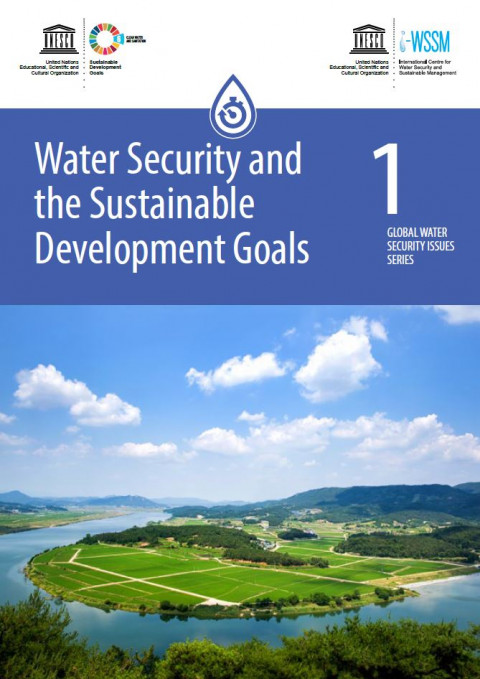 Water Security and the Sustainable Development Goals (Global Water Security Issues Series, 1) سنة النشر: 2019 المؤلف المؤسسي: UNESCO | International Centre for Water Security and Sustainable Management (i-WSSM) The ‘Global Water Security Issues (GWSI) series’ is the product of synergy within the UNESCO system, in particular the International Water Security and Sustainable Management (i-WSSM).The first edition of the GWSI series also seeks to demonstrate that water has a central role in all aspects of economic development and social welfare, and that concerted action via a collective approach of the water-using sectors is needed to ensure water’s many benefits are maximized and shared equitably and that water-related development goals are achieved.While this publication is factual, containing the most current information available concerning the state of knowledge on water security in the perspective of sustainable development and covering the most recent developments that affect it, this publication also provides decision-makers with concrete examples of approaches and potential responses for addressing water security-related challenges from the perspectives of both the sustainable development goals (SDGs) and a broader political and sectoral scope, which covers development, financing, capacity-building, institutional reform and technology.It is hoped that this publication will be a reference source on water security as it covers all aspects of human development and the cases and solutions introduced in the GWSI series can be invaluable for decision-makers, their advisors and anyone interested in – and concerned about – water security, and that this first edition will reach an ever-widening audience that includes actors outside the ‘water box’ who make or influence broad socio-economic policies that can affect water security.
  Global Citizenship Education for the Rule of Law: Doing the Right Thing سنة النشر: 2018 المؤلف المؤسسي: UNESCO | UN. Office on Drugs and Crime (UNODC) UNESCO and UNODC have established a partnership to promote the rule of law and a culture of lawfulness through education. Combining their resources and expertise, they are seeking to build the capacities of educators, teachers and policy-makers to plan and undertake educational activities that empower learners to take constructive and ethically responsible decisions in their daily lives that support justice, human rights and strong institutions to defend them.
  Proposal for a Global Action Programme on Education for Sustainable Development as Follow-up to the United Nations Decade of Education for Sustainable Development (DESD) after 2014 سنة النشر: 2013 المؤلف المؤسسي: UNESCO The present document contains the proposal for a Global Action Programme on Education for Sustainable Development (ESD) and the comments and observations of the Executive Board thereon.
  برنامج الملك عبد الله بن عبد العزيز الدولي لثقافة السلام والحوار: أهم منجَزات المرحلة الأولى سنة النشر: 2016 المؤلف المؤسسي: منظمة الأمم المتحدة للتربية والعلم والثقافة (UNESCO) انبثق برنامج الملك عبد الله بن عبد العزيز الدولي لثقافة السلام والحوار من الإطار المؤسسي لبرنامج اليونسكو لثقافة السلام واللاعنف.إن ثقافة السلام لا تقتصر على كونها مفهوماً بل تتعداه إلى كونها التزاماً بجعل السلام واقعاً ملموساً للجميع. فهي تعبِّ عن “مجموعة من القيم والمواقف والتقاليدوأنماط السلوك وأساليب الحياة تستند إلى [...] احترام الحياة وإنهاء العنف [... و] التمسك بمبادئ الحرية والعدل والديمقراطية والتسامح والتضامنوالتعاون والتعددية والتنوع الثقافي والحوار والتفاهم على مستويات المجتمع كافة وفيما بين الأمم” (المادة 1 من إعلان وبرنامج العمل بشأن ثقافة السلام،اليونسكو، 1999 ). وتثابر اليونسكو على العمل لغرس ثقافة السلام مع مراعاة اعتبارات التنمية، بمضافرة القوى مع أصحاب المصلحة الملتزمين فيمجال التربية والعلوم والثقافة، والاتصال والإعلام.
 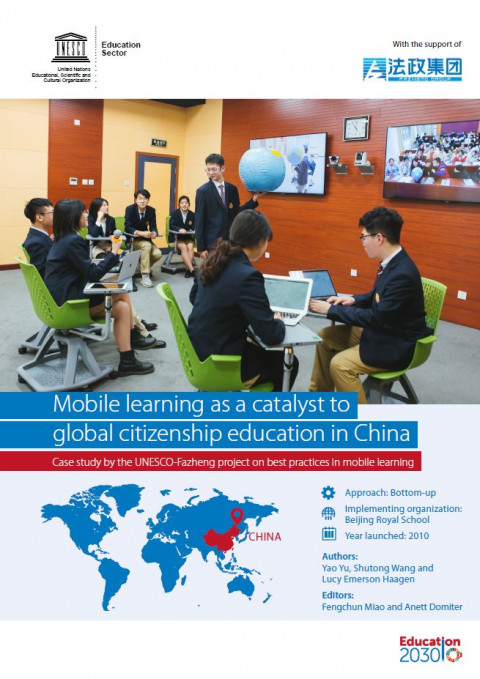 Mobile Learning as a Catalyst to Global Citizenship Education in China: Case Study by the UNESCO-Fazheng Project on Best Practices in Mobile Learning سنة النشر: 2019 المؤلف: Yao Yu | Shutong Wang | Lucy Emerson Haagen المؤلف المؤسسي: UNESCO The Beijing Royal School was one of the pioneer schools in China in incorporating mobile learning into pedagogical transformation. Its mobile learning programme started in 2010. Stemming from the school’s orientation towards global citizenship education, the Beijing Royal School recognizes mobile learning as both driver and enabler for supporting the development of students’ cognitive, socio-emotionaland behavioural dimensions, organized around knowledge acquisition, understanding and respect for difference and diversity, and responsible engagement with global issues. It takes advantage of a variety of mobile apps to support students’ multilingual education, and uses open educational resources (OER) to support multicultural education, taking advantage of the up-to-date worldwide data and information available on the web. It also engages with students from other countries in projects and courses that help the students to widen their understanding of diverse cultures and social contexts. Overall, this case study illustrates how to use mobile technologies to support the implementation of a well-defined and clearly structured educational vision by embedding the use of mobile technologies in students’ daily learning lives.
 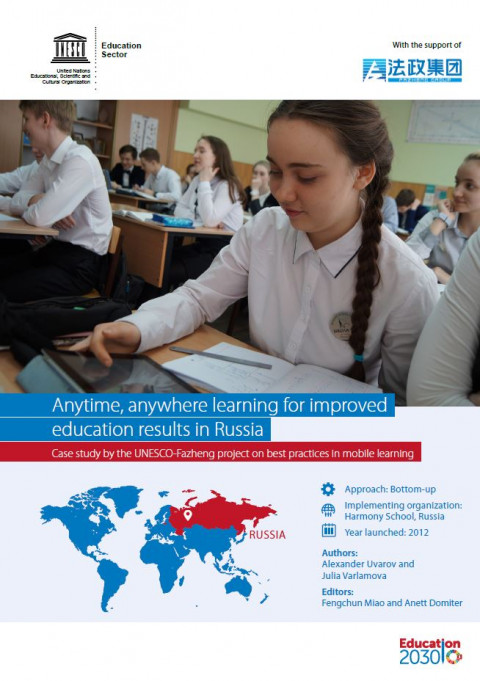 Anytime, Anywhere Learning for Improved Education Results in Russia: Case Study by the UNESCO-Fazheng Project on Best Practices in Mobile Learning سنة النشر: 2019 المؤلف: Alexander Uvarov | Julia Varlamova المؤلف المؤسسي: UNESCO The Harmony School in Izhevsk is a regular municipal school located in one of the city districts of the capital city of the Udmurt Republic in Russia. Students come to Harmony school from different cultural and social environments, with various physical and mental abilities, and the school is eager to create the best conditions for learning and developing for each of them. In 2012, Harmony School took a part in the School of Digital Age project supported by the federal Skolkovo project and the Russian branch of Microsoft. The mobile technologies in the school are implemented as a tool for anytime and anywhere learning to differentiate and individualize learning to improve education results.According to the school vision, mobile learning technologies should provide all students and teachers anytime and anywhere access to a variety of teaching and learning materials and digital instruments and students who are unable to attend classes should be able to continue their systematic studies. The mobile learning model should enable every student to experience independent learning activities in the digital educational environment and improve their educational results with new methods and organizational forms of teaching and learning. To implement this vision, the new school-wide teaching and learning practices including online/blended learning, mobile learning in the classroom and outside-classroom learning have been developed and used actively. The new in-school teachers’ professional development model has become a crucially important element for the project’s success.
 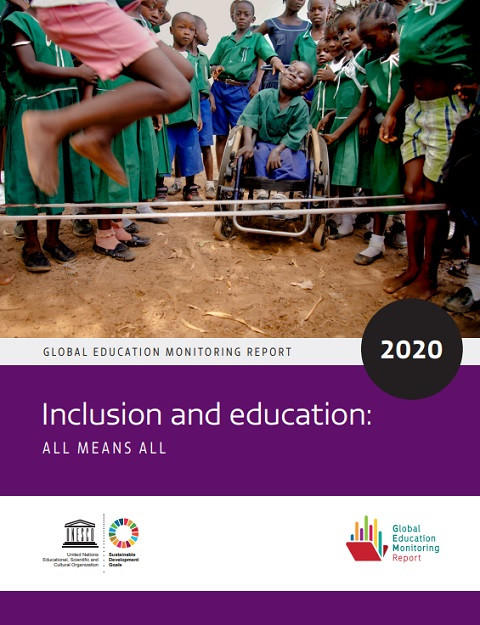 Informe de seguimiento de la educación en el mundo 2020: Inclusión y educación: Todos y todas sin excepción سنة النشر: 2020 المؤلف المؤسسي: Global Education Monitoring Report Team | UNESCO En el Informe de Seguimiento de la Educación en el Mundo 2020 se examinan los mecanismos sociales, económicos y culturales que discriminan a niños, jóvenes y adultos desprotegidos, manteniéndolos excluidos de la educación o marginados dentro de ella. Estimulados por su compromiso de hacer realidad el derecho a la educación inclusiva, los países están ampliando su visión de la inclusión en la educación y otorgando a la diversidad un lugar central en sus sistemas. Sin embargo, la aplicación de leyes y políticas bienintencionadas suele flaquear. El informe, publicado a principios del decenio de acción que culmina en 2030 y en el contexto de la crisis de Covid-19 que ha exacerbado las desigualdades subyacentes, sostiene que la resistencia a atender las necesidades de todos los educandos es una verdadera amenaza para el logro de los objetivos mundiales de educación.En Inclusión y educación: todos y todas sin excepción se definen prácticas en materia de gobernanza y finanzas; planes de estudios, manuales escolares y evaluaciones; formación de los docentes; infraestructura escolar; y relaciones con los alumnos, los padres y las comunidades que pueden desbloquear el proceso hacia la inclusión. Se formulan recomendaciones de política para que la diversidad de los educandos sea una fuerza que se valora, una fuerza de cohesión social.Dos nuevos sitios web complementan la cuarta edición del Informe de Seguimiento de la Educación en el Mundo. Education Profiles (Perfiles educativos) describe la manera en que los países abordan la inclusión, y constituye un medio útil para el diálogo sobre políticas. Education Progress (El Progreso de la educación) brinda la oportunidad de interactuar con los datos y explorar una serie de indicadores del ODS 4.
 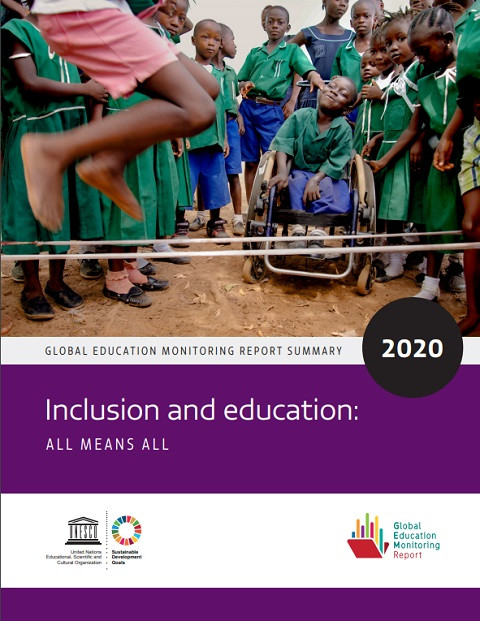 [요약문] 세계 교육 현황 보고서 요약본 2020: 포용과 교육; 모두는 모든 이를 의미한다 (All Means All) سنة النشر: 2020 المؤلف المؤسسي: 유네스코 | 세계교육현황보고서팀 『2020 세계 교육 현황 보고서』는 취약계층 아동, 청소년 및 청년을 차별하여 교육에서 배제시키거나 소외시키는 사회적, 경제적, 문화적 메커니즘을 살펴본다. 포용적 교육에 대한 권리를 실현하겠다는 약속에 힘입어 모든 국가는 다양성을 교육제도의 핵심에 두기 위해 포용에 대한 비전을 확대하고 있다. 그러나 선의의 법과 정책의 시행은 종종 비틀거리곤 한다. 2030년까지 10년간의 실행이 시작되는 시점이자 근본적인 불평등을 악화시킨 코로나19 위기의 중간에 발표된 이 보고서는 모든 학습자의 요구를 해결하는 것에 대한 저항이 세계 교육 목표를 달성하는데 실질적인 위협이라고 주장한다. 『포용과 교육: 모두는 모든 이를 의미한다(ALL MEANS ALL)』는 거버넌스와 재정, 교육과정, 교과서 및 평가, 교사 교육, 학교 인프라, 그리고 포용의 과정을 밝힐 수 있는 학생, 학부모, 지역사회와의 관계 등에서 많은 실천들을 확인할 수 있다. 이 보고서는 학습자의 다양성을 사회적 응집력으로 만들기 위한 정책 권고안을 제공한다.