
الموارد
استكشف مجموعة واسعة من الموارد القيمة حول تعليم المواطنة العالمية لتعميق فهمك وتعزيز البحث والمناصرة والتعليم والتعلم.
تم العثور على 1,444 نتيجة
 The United Nations world water development report 2018: nature-based solutions for water سنة النشر: 2018 المؤلف المؤسسي: UNESCO World Water Assessment Programme (WWAP) The 2018 edition of the World Water Development Report (WWDR 2018) seeks to inform policy and decision-makers, inside and outside the water community, about the potential of nature-based solutions (NBS) to address contemporary water management challenges across all sectors, and particularly regarding water for agriculture, sustainable cities, disaster risk reduction and water quality. NBS use or mimic natural processes to enhance water availability (e.g., soil moisture retention, groundwater recharge), improve water quality (e.g., natural and constructed wetlands, riparian buffer strips), and reduce risks associated with water-related disasters and climate change (e.g., floodplain restoration, green roofs). The WWDR2018, titled Nature-based solutions for water, demonstrates how nature-based solutions (NBS) offer a vital means of moving beyond business-as-usual to address many of the world’s water challenges while simultaneously delivering additional benefits vital to all aspects of sustainable development. Currently, water management remains heavily dominated by traditional, human-built (i.e. ‘grey’) infrastructure and the enormous potential for NBS remains under-utilized. NBS include green infrastructure that can substitute, augment or work in parallel with grey infrastructure in a cost-effective manner. The goal is to find the most appropriate blend of green and grey investments to maximize benefits and system efficiency while minimizing costs and trade-offs. NBS for water are central to achieving the 2030 Agenda for Sustainable Development because they also generate social, economic and environmental co-benefits, including human health and livelihoods, food and energy security, sustainable economic growth, decent jobs, ecosystem rehabilitation and maintenance, and biodiversity. Although NBS are not a panacea, they will play an essential role towards the circular economy and in building a more equitable future for all. Working with nature improves the management of water resources, helps achieve water security for all, and supports the core aspects of sustainable development. The World Water Development Report was presented at the 8th World Water Forum, in Brasilia (Brazil) on the 19th of March. URL: http://www.unesco.org/new/en/natural-sciences/environment/water/wwap/wwdr/2018-nature-based-solutions/ Informe Mundial sobre el Desarrollo de los Recursos Hídricos de las Naciones Unidas 2018: Soluciones Basadas En La Naturaleza Para La Gestion Del Agua سنة النشر: 2018 المؤلف المؤسسي: UNESCO World Water Assessment Programme (WWAP) La edición 2018 del El Informe Mundial sobre el Desarrollo de los Recursos Hídricos (WWDR) busca informar a los responsables políticos y tomadores de decisiones, dentro y fuera de la comunidad del agua, sobre el potencial de las soluciones basadas en la naturaleza para afrontar los desafíos actuales de la gestión del agua en todos los sectores, particularmente los relacionados con el agua para la agricultura, para las ciudades sostenibles, para la reducción del riesgo de desastres naturales y los de la calidad del agua. Las soluciones basadas en la naturaleza (NBS) están inspiradas y respaldadas por la naturaleza, usan o imitan los procesos naturales para contribuir al manejo mejorado del agua. La gestión del agua sigue estando fuertemente dominada por la infraestructura tradicional construida por el hombre (es decir, "gris") y el enorme potencial de NBS sigue desaprovechado. Las soluciones basadas en la naturaleza (NBS) incluyen infraestructura verde que puede sustituir, aumentar o trabajar en conjunto con la infraestructura gris de una manera rentable. El objetivo es encontrar la combinación más adecuada de inversiones verdes y grises para maximizar los beneficios y la eficiencia del sistema a la vez que se minimizan los costos y las compensaciones. Las NBS para el agua son fundamentales para alcanzar la Agenda 2030 para el Desarrollo Sostenible porque también generan beneficios colaterales sociales, económicos y ambientales, incluidos la salud humana y los medios de subsistencia, la seguridad alimentaria y energética, el crecimiento económico sostenible, empleos decentes, rehabilitación y mantenimiento de ecosistemas y biodiversidad. Si bien las NBS no son una panacea, jugarán un papel esencial en la economía circular y en la construcción de un futuro más equitativo para todos. Trabajar con la naturaleza mejora la gestión de los recursos hídricos, ayuda a lograr la seguridad del agua para todos y respalda los aspectos centrales del desarrollo sostenible. El Informe Mundial sobre el Desarrollo del Agua se presentó en el 8º Foro Mundial del Agua, en Brasilia (Brasil), el 19 de marzo. URL: http://www.unesco.org/new/en/natural-sciences/environment/water/wwap/wwdr/2018-nature-based-solutions/ Rapport mondial des Nations Unies sur la mise en valeur des ressources en eau: Les solutions fondées sur la nature pour la gestion de l’eau سنة النشر: 2018 المؤلف المؤسسي: UNESCO World Water Assessment Programme (WWAP) L'édition 2018 du Rapport mondial sur le développement de l'eau (WWDR 2018) vise à informer la politique et les décideurs, qu’ils soient parties prenante de la communauté de l’eau ou non, sur le potentiel des solutions fondées sur la nature (SfN) pour répondre aux défis contemporains de gestion de l'eau dans tous les secteurs, notamment en ce qui concerne l'eau pour l'agriculture, les villes durables, la réduction des risques de catastrophe liées à l'eau et la qualité de l'eau. Les SfN utilisent ou imitent les processus naturels pour améliorer la disponibilité de l'eau (par exemple, rétention de l'humidité du sol, recharge des eaux souterraines), améliorer la qualité de l'eau (par exemple, zones humides naturelles et construites, bandes riveraines tampons) et réduire les risques associés aux catastrophes liées à l’eau et au changement climatique (par exemple, restauration d'une plaine d'inondation, toits verts).Le WWDR2018, intitulé « Les solutions fondées sur la nature pour la gestion de l’eau », démontre comment les solutions basées sur la nature (SfN) offrent un moyen essentiel de répondre à de nombreux défis mondiaux liés à l'eau, tout en offrant simultanément des avantages supplémentaires essentiels à tous les aspects du développement durable.Actuellement, la gestion de l'eau reste fortement dominée par une infrastructure devenue habituelle, construite par l'homme (c'est-à-dire « grise ») et l'énorme potentiel des SfN reste sous-utilisé. Les SfN comprennent une infrastructure « verte » qui peut remplacer, compléter ou agir en parallèle avec une infrastructure grise de manière rentable. L'objectif est de trouver la combinaison la plus appropriée d'investissements verts et gris pour maximiser les avantages et l'efficacité du système tout en minimisant les coûts et les compromis.Les SfN pour l'eau sont essentielles à la réalisation du Programme de développement durable à l'horizon 2030, car elles génèrent des avantages sociaux, économiques et environnementaux, qui soutiennent notamment la santé humaine et les moyens de subsistance, la sécurité alimentaire et énergétique, la croissance économique durable, les emplois décents, la réhabilitation et l’entretien des écosystèmes, ainsi que la biodiversité. Bien que les SfN ne soient pas une panacée, elles joueront un rôle essentiel dans l'économie circulaire et dans la construction d'un futur plus équitable pour tous.Travailler avec la nature améliore la gestion des ressources en eau, contribue à la sécurité de l'eau pour tous et soutient les aspects fondamentaux du développement durable.Le Rapport mondial sur la mise en valeur des ressources en eau a été présenté lors du 8e Forum mondial de l'eau, à Brasilia (Brésil), le 19 mars. URL: http://www.unesco.org/new/en/natural-sciences/environment/water/wwap/wwdr/2018-nature-based-solutions/
  Youth and the Field of Countering Violent Extremism سنة النشر: 2018 المؤلف: Marc Sommers Most youth are peaceful. Even if the field known as “countering violent extremism” (CVE) did not exist, most young people still would not join a violent extremist organization (VEO). At the same time, the overwhelming majority of people who become violent extremists are youth — most of whom are male. The challenge at the center of CVE is thus an unusual one: identifying the fraction of youth populations most likely to enter a VEO and thwarting that option. This paper investigates that challenge, with analysis featuring interviews with 21 experts and over 400 publications on violent extremism, CVE, and youth. Two correlations inform this work: the direct relationship between nations with “youth bulge” populations and state repression, and the connection between state repression and increased violent extremism, with repressive states usually targeting male youth.
  School-related violence and bullying on the basis of Sexual Orientation and Gender Identity or Expression (SOGIE) - Synthesis Report on China, the Philippines, Thailand and VietNam سنة النشر: 2018 المؤلف المؤسسي: UNESCO Bangkok School related violence and bullying is a problem in all countries. UNESCO is committed to ensuring that all children and young people have access to safe, inclusive, health-promoting learning environments as part of its strategy on education for health and well-being. This synthesis report on school related violence and bullying on the basis of Sexual Orientation and Gender Identity or Expression (SOGIE), covering China, the Philippines, Thailand and Viet Nam, was developed to broaden awareness and understanding about this issue, while also identifying best practices and policies. It also aims to mobilize support for advocacy among educators, research institutions, policy makers and activists at the national and regional levels.
 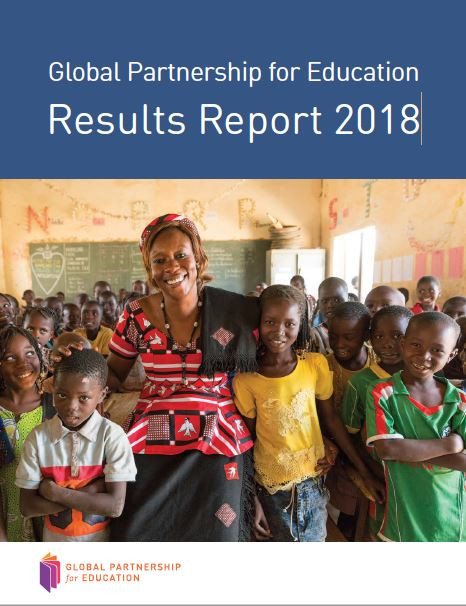 Global Partnership for Education Results Report 2018 سنة النشر: 2018 المؤلف المؤسسي: Global Partnership for Education (GPE) The GPE Results Report 2018 shows progress against agreed-upon targets and identifies critical gaps that need to be addressed.
  Cultural space of Central Asia: unity in diversity سنة النشر: 2010 المؤلف المؤسسي: Swiss Agency for Development and Cooperation (SDC) The report is the proceedings of the "Cultural space of Central Asia: unity in diversity" regional forum held in Dushanbe, Tajikistan in 2010. Культурное пространство Центральной Азии: единство в многообразии سنة النشر: 2010 المؤلف المؤسسي: Swiss Agency for Development and Cooperation (SDC) Доклад представляет собой материалы регионального форума «Культурное пространство Центральной Азии: единство в разнообразии», состоявшегося в Душанбе, Таджикистан в 2010 году.
  UNESCO World Conference on Education for Sustainable Development سنة النشر: 2009 المؤلف المؤسسي: German Commission for UNESCO | Germany. Federal Ministry of Education and Research UNESCO held its Conference on Education for Sustainable Development, which highlighted the main contribution of education to sustainable development in education and its quality . This booklet contains a detailed overview of the meetings and proceedings of the International Conference. مؤتمر اليونيسكو العالمي للتعليم من اجل التنمية المستدامة سنة النشر: 2009 المؤلف المؤسسي: German Commission for UNESCO | Germany. Federal Ministry of Education and Research عقدت المنظمة الدولية اليونيسكو مؤتمرها الخاص بالتعليم من أجل التنمية المستدامة والذ سلط الضوء على المساهمة الرئيسية للتعليم في التنمية المستدامة في التعليم وجودته ، ويتضمن هذا الكتيب عرضا مفصلا للجلسات ووقائع المؤتمر الدولي