
الموارد
استكشف مجموعة واسعة من الموارد القيمة حول تعليم المواطنة العالمية لتعميق فهمك وتعزيز البحث والمناصرة والتعليم والتعلم.
تم العثور على 1,322 نتيجة
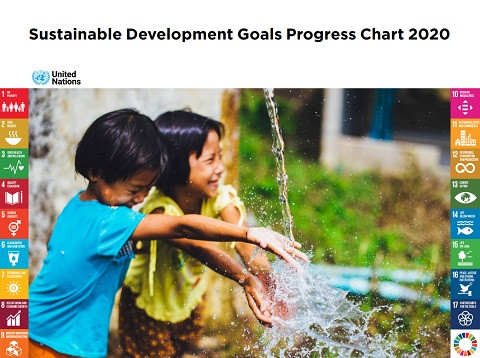 Tableau récapitulatif des progrès vers les objectifs de développement durable 2020 سنة النشر: 2020 المؤلف المؤسسي: United Nations (UN) Le présent tableau donne un aperçu des progrès mondiaux et régionaux accomplis jusqu’à la fin de 2019 et couvre certaines cibles des 17 objectifs du Programme de développement durable à l’horizon 2030. Début 2020, le Secrétaire général de l’Organisation des Nations Unies a lancé la Décennie d’action, appelant à des solutions accélérées de la part des gouvernements nationaux et locaux, des organisations de la société civile et du secteur privé pour atteindre les objectifs de développement durable d’ici à 2030. Le tableau montre le chemin parcouru pour réaliser les engagements pris ainsi que les domaines nécessitant une attention urgente. Il fait apparaître également que, pour la plupart des objectifs, le rythme des progrès a été insuffisant et qu’une forte accélération est nécessaire.
  Citoyen·ne·s, mais pas encore adultes ? Les injonctions à la responsabilité et à la citoyenneté dans les rituels d’accession à la majorité en Suisse سنة النشر: 2018 المؤلف: Maxime Felder | Laurence Ossipow | Isabelle Csupor المؤلف المؤسسي: Lien social et Politiques En Suisse, les communes ritualisent le passage à la majorité civile et civique en organisant des promotions dites civiques ou citoyennes. À l’aube de leurs 18 ans, les jeunes reçoivent une invitation des autorités communales à laquelle environ un tiers répond favorablement. Dans les six communes que nous avons étudiées durant trois ans, les autorités invitent les jeunes à participer à une séance du conseil communal, les convient à un repas ou un apéritif, leur organisent une nuit de jeux en plein air, ou encore une soirée de témoignages et de spectacles. Quelle que soit la forme que prennent ces événements, ils font place à des discours dans lesquels des élu·e·s rappellent aux jeunes majeur·e·s les nouvelles responsabilités et les choix qui les attendent à l’orée de l’âge adulte, et les enjoignent à devenir de «bonnes» et «bons» citoyen·ne·s. Ces événements offrent ainsi une opportunité d’étudier empiriquement la «fabrication» (Bénéï, 2005; Gagné et Neveu, 2009) de la citoyenneté juvénile. Dans un premier temps, nous décrirons très brièvement l’approcheméthodologique et les dispositifs mis en place par les six communes étudiées. Puis, nous ferons une analyse des discours qui, outre l’appel au vote, incitent à se battre pour des droits qui permettent à la démocratie de perdurer, mais ne s’arrêtent pas à cette définition restreinte de la citoyenneté. Enfin, nous nous concentrerons sur trois tensions que révèle le croisement de ces injonctions à la citoyenneté, avec ce qu’en disent les jeunes participant·e·s.
 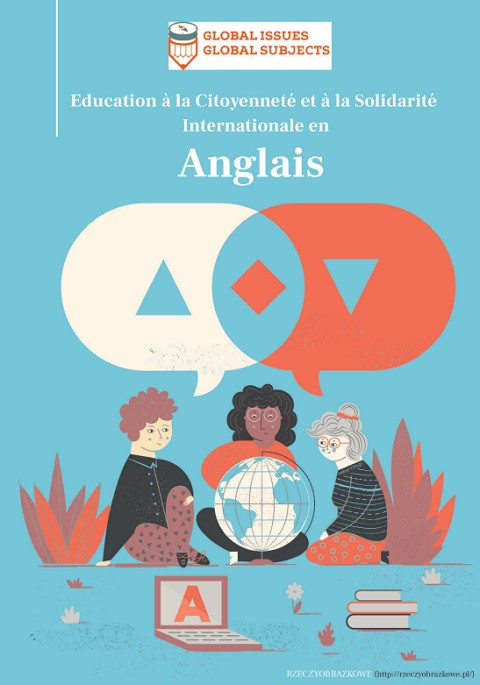 Education à la citoyenneté et à la solidarité internationale en anglais سنة النشر: 2020 المؤلف: Morgane Boscher | Michael Lionne | Bénédicte Feys المؤلف المؤسسي: Le Partenariat | Global Issues, Global Subjects (GIGS) | Union européenne Afin de promouvoir la démarche d'Education à la Citoyenneté et à la Solidarité Internationale et les Objectifs de Développement Durable dans l'enseignement secondaire, des groupes de travail d’enseignants ont conçu cette ressources pédagogique à destination de leurs collègues d’anglais.
  코로나19 대응 세계시민교육 활동 가이드라인 سنة النشر: 2020 المؤلف المؤسسي: 국제개발협력민간협의회 (KCOC) 국내 코로나19 감염의 우려가 여전히 남아있는 상태에서 전국 초·중·고교 및 특수학교 등의 요청에 따라 강사 파견 형태의 세계시민교육을 재개하게 될 시 안전한 환경에서 세계시민교육을 진행할 수 있도록 작성한 세계시민교육 담당자와 강사들을 위한 활동지침서이다.
  Creativity, Resilience and Global Citizenship: Activity Toolkit سنة النشر: 2015 المؤلف المؤسسي: CIT Crawford College of Art and Design | Youth Work Ireland This publication is a step by step guide to a range of activities exploring the themes of Creativity, Resilience & Global Citizenship through a wide range of workshops, sharing creative methods and tools. It has been co-developed by the Fast Forward training programme which brought together young people and youth workers from Ireland, Hungary, Italy and UK in Cork, Ireland in January 2015. It was developed with thirty young people: youth workers, artists and educators who are passionate about supporting young people to grow as global citizens. It is useful to provide a context for anyone engaging others in the creative activities presented in this toolkit. Citizens but Not Adults? Injunction to Be Responsible and Citizens in Official Coming of Age Rituals in Switzerland سنة النشر: 2018 المؤلف: Maxime Felder | Laurence Ossipow | Isabelle Csupor المؤلف المؤسسي: Lien social et Politiques Swiss municipalities organize ceremonies for their residents reaching the official age of full citizenship. In the six studied municipalities, local authorities invite them to a municipal council’s meeting, offer them a dinner or an aperitif, or organize them a show and a debate with role models. Speeches are central to these ceremonies, and authority representatives encourage their audience to be “good” citizens. Call to vote is the leitmotiv, but discourses reveal broader definitions of citizenship, insisting sometimes on a local commitment and volunteering, and sometimes on the necessity to fight climate change and inequalities. Comparing officials’ speeches to statements of young people participating in these events reveals “tensions”. Indeed, authority representatives address young citizens without considering them as fully adult, and they do not consider themselves as such neither. However, some of them are already involved in forms of vernacular citizenship, and are progressively leaving the municipality to study, work or travel. Ultimately, these ceremonies allow officials to stage their interest in the youth, which they consider as both uncompleted and essential to the renewal of democracy.
 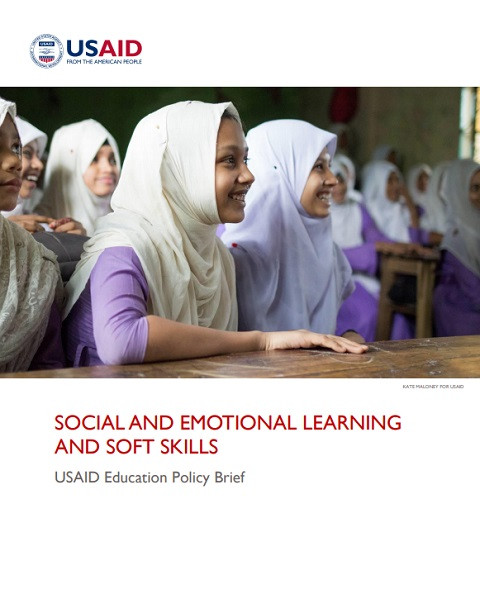 Social and Emotional Learning and Soft Skills: USAID Education Policy Brief سنة النشر: 2019 المؤلف: Kalene Resler | Anjuli Shivshanker | Samantha Alvis | Chris Capacci-Carneal | Melissa Chiappetta | Lauren Greubel | Julie Hanson Swanson | Ashley Henderson | Josh Josa | Laura Lartigue | Rebeca Martinez | Leah Maxson | Olga Merchan | Yolande Miller-Grandvaux | Sandy Oleksy-Ojikutu | Rebecca Pagel | Nancy Taggart | Nina Weisenhorn | Wendy Wheaton المؤلف المؤسسي: United States Agency for International Development (USAID) Both the 2018 USG Strategy on International Basic Education and the 2018 USAID Education Policy emphasize the importance of social and emotional skills or soft skills in assuring the long-term success of children and youth. Through the Strategy and Policy, USAID is providing new opportunities to systematically design, measure, implement, and understand the impact of programs that build social and emotional skills or soft skills for children and youth.To support USAID staff and implementing partners in this work, this brief: Provides an introductory understanding of what USAID means by the terms “social and emotional skills” and “soft skills” and how to communicate about them. Specifies the desired outcomes and quality standards for programming that teach social and emotional skills or soft skills. Identifies areas in which evidence and best practices still have gaps, and areas in which we should consider investing in further learning.
  A Comparative Analysis on Content Elements of Global Citizenship Education in 2009 and 2015 Revised Middle School Social Studies Curriculum (Education Research; Vol. 74) سنة النشر: 2019 المؤلف: Kyunghee Sung | Soyeon Lee المؤلف المؤسسي: Sungshin Women's University Educational Research Institute This study is a follow-up study of the 2017 research which analyzed content elements of global citizenship education in elementary school Social Studies. Based on the global citizenship education index, the content elements of are analyzed in the 2009 and 2015 revised middle school Social Studies curriculum, and then it was compared to the results of previous research in elementary school. As a result, it can be found that the content elements of global citizenship education in the middle school Social Studies are not increased or strengthened. In terms of 'strong connection', there was almost no change in the proportion of the cognitive domain and the socio-emotional domain, but rather it decreased in the behavioral domain. Compared with the results of elementary school, it is appeared that elementary school showed a larger increase than the middle school in the proportion of content elements depending on the change of curriculum. Through this, it can be confirmed that the global citizenship education was strengthened in elementary school in the 2015 revised Social Studies curriculum. At the time of next curriculum revision, it will be necessary to consider adding and revising the content elements related to global citizenship education to meet the needs of international community. 2009 개정과 2015 개정 중학교 ‘사회’ 교육과정에 나타난 세계시민교육 내용요소 비교 분석 (교육연구; Vol. 74) سنة النشر: 2019 المؤلف: Kyunghee Sung | Soyeon Lee المؤلف المؤسسي: Sungshin Women's University Educational Research Institute 본 연구는 초등학교 ‘사회’ 교육과정의 세계시민교육 내용요소를 분석한2017년 연구의 후속 연구로, 세계시민교육 지표에 근거하여 2009 개정 및 2015 개정중학교 ‘사회’ 교육과정에 나타난 내용요소를 분석하고, 나아가 이전의 초등학교 연구결과와도 비교⋅분석을 수행하였다. 분석 결과, 2009 개정 대비 2015 개정의 중학교‘사회’에서 세계시민교육 내용요소의 비중이 증가하거나 강화되는 모습을 발견할 수없었다. 강한 관련성을 중심으로 영역별로 살펴보면, 인지 영역과 사회⋅정서적 영역의비중 변화는 거의 없었으며, 행동적 영역에서는 오히려 감소하였다. 초등학교 ‘사회’ 분석 결과와 비교하면, 교육과정 변화에 따른 내용요소 비중의 증가 폭과 내용 심화가중학교급보다 초등학교급이 더 큰 것으로 나타났다. 이를 통해 2015 개정 교육과정에서는 초등학교급에서 세계시민교육이 강화되었음을 확인할 수 있었다. 향후 세계시민교육 차원에서 중학교 ‘사회’가 시대의 흐름 및 국제사회의 요구에 부응할 수 있도록차기 교육과정 개편 시 내용요소 추가 및 수정이 고려될 필요가 있을 것이다.
  Investigation and Analysis on the Service Status of University Libraries in Digital Citizen Education (Library Work in Colleges and Universities; No. 4) سنة النشر: 2020 المؤلف: Tangyi | Liulu المؤلف المؤسسي: College library and Information Committee of Hunan Provincial This paper investigated the status of the service provided by university libraries in China to cultivate digital citizens and the cognition of responsibility of cultivating digital citizens provided by university libraries. The survey found that: firstly, the number of service in the digital citizen education provided by the university library is related to the university’s level; secondly, university libraries provide the most abundant service in the areas of digital literacy, digital access and digital communication, and less service in the areas of digital law, digital etiquette and digital power; thirdly, university libraries provide the scarcest service in the area of digital trade and most university libraries consider it is no responsible to provide this service or just hold an uncertain attitude; fourthly, there is no significant correlation between the service on digital citizen education provided by university libraries and the cognition status of responsibility.