
الموارد
استكشف مجموعة واسعة من الموارد القيمة حول تعليم المواطنة العالمية لتعميق فهمك وتعزيز البحث والمناصرة والتعليم والتعلم.
تم العثور على 2,781 نتيجة
 School Violence: Its Causes, Forms, Effects and Treatment سنة النشر: 2020 المؤلف المؤسسي: Success Channel The video explains the lesson "school violence: its causes, forms, effects and treatment". The video begins with an introduction to the concept of school violence and will elaborate on examples of it. This video is good for parents and teachers.
  الأخوة الإسلامية فريضة شرعية وضرورة عصرية سنة النشر: 2012 المؤلف: Ismail Ali Muhammad الملف عبارة عن كتاب يتحدث عن أهمية الأخوة في الإسلام. ويتكون الكتاب من خمسة فصول: حقيقة الأخوة الإسلامية، الحقوق والواجبات، أثار الأخوة، المعوقات في سبيل الاخوة الإسلامية، واجب المسلمين في النهوض بالأخوة الإسلامية. Islamic Brotherhood is a Religious Obligation and a Modern Necessity سنة النشر: 2012 المؤلف: Ismail Ali Muhammad The file is a book that talks about the importance of brotherhood in Islam. The book consists of five chapters: the reality of Islamic brotherhood, rights and duties, effects of brotherhood, obstacles for the sake of Islamic brotherhood, and the duty of Muslims to advance Islamic brotherhood.
  التنوع الثقافي والتعايش السلمي في الوطن العربي: التحديات الفكرية والسياسية سنة النشر: 2015 المؤلف: Osman Hassan المؤلف المؤسسي: Jil Research Center أصبحت مسألة التنوع الثقافي من المسائل المهمة في المجتمع العربي المعاصر. وقد شغلت الإشكاليات التي تثيرها مثل: "التعايش السلمي". "الوحدة في التنوع". "الاختلاف". "دولة المواطنة"... وغيرها: شغلت كثيرا من الكتاب. والمفكرين. والباحثين على مدى السنوات الماضية. وجزء كبير من تلك الجهود ركز اهتمامه في تدعيم قضايا التنوع الثقافي لبناء المجتمع من ناحية. وتعزيز علاقة الانتماء المشترك في الوطن الواحد من ناحية أخرى. وذلك بالنظر لما تثيره قضايا التنوع الثقافي من مطالب متناقضة على الحياة السياسية خلفت واقعاً مأساويا في جانب من التجربة العربية الحديثة والمعاصرة يقتضي المعالجة على مستوى الفكر والممارسة. لهذا نقول في ضوء التجربة المعيشة في المجتمعات العربية إن مسألة التعايش بين الثقافات. وأشكال التنوع. وما انبثق عنها من اشكاليات ليست ذات طبيعة ثقافية. وإنما هي مشكلة سياسة ومصالح مرتبطة بالبعض تزامنت مع متغيرات نمو الوعي بحقيقة الذات ومعرفة حقوقها المشروعة. كما إن التعايش يتحقق على أساس الحقوق والواجبات التي تكفلها الأنظمة والدساتير التي يضعها البشر. Cultural Diversity and Peaceful Coexistence in the Arab World: Intellectual and Political Challenges سنة النشر: 2015 المؤلف: Osman Hassan المؤلف المؤسسي: Jil Research Center The issue of cultural diversity has become an important issue in contemporary Arab society. It has occupied the problems it raises, such as: "peaceful coexistence". "Unity in Diversity". "the difference". "State of Citizenship"... and others: It occupied a lot of books. and thinkers. and researchers over the past years. A large part of those efforts focused on strengthening the issues of cultural diversity to build society on the one hand. And strengthening the relationship of common belonging to the one country on the other hand. This is in view of the contradictory demands raised by cultural diversity issues on political life, which have left a tragic reality in an aspect of the modern and contemporary Arab experience that requires treatment at the level of thought and practice. That is why we say in light of the experience of living in Arab societies that the issue of coexistence between cultures. and forms of diversity. And the problems that emerged from it are not of a cultural nature. Rather, it is a problem of politics and interests linked to some that coincided with the variables of the growth of awareness of the truth of the self and knowledge of its legitimate rights. Coexistence is also achieved on the basis of the rights and duties guaranteed by the systems and constitutions established by human beings.
 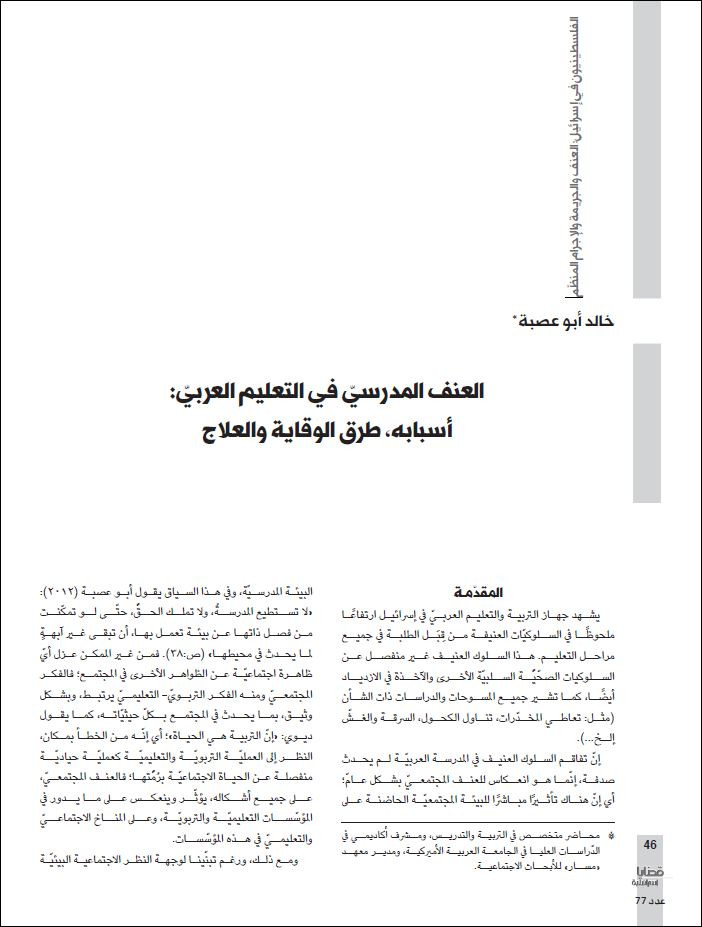 العنف المدرسيّ في التعليم العربيّ: أسبابه، طرق الوقاية والعلاج سنة النشر: 2012 المؤلف: Khalid Abu Asaba المؤلف المؤسسي: Palestinian Center for Israeli Studies يستعرض الكاتب في هذا المقال قضية العنف المدرسيّ في التعليم العربي. ويتطرق لأهم الأسباب، وطرق الوقاية والعلاج. كما يناقش المقال بعض العوامل التي تشير لتعرض الطلاب للعنف المدرسي. School Violence in Arab Education: Its Causes, Prevention and Treatment Methods سنة النشر: 2012 المؤلف: Khalid Abu Asaba المؤلف المؤسسي: Palestinian Center for Israeli Studies In this article, the author reviews the issue of school violence in Arab education. It deals with the most important causes, methods of prevention and treatment. The article also discusses some of the factors that indicate students' exposure to school violence.
  اللاجئون والنازحون والتعليم: تحديات جديدة تقف في وجه التنمية والسياسات سنة النشر: 2016 المؤلف المؤسسي: Network for International Policies and Cooperation in Education and Training (NORRAG) يلفت هذا العدد من أخبار NORRAG الانتباه إلى العديد من الأبعاد المختلفة للاجئين والنازحين والتعليم. لا ينصب التركيز على الهجرة الاقتصادية أو على الهجرة من أجل التعليم العالي في حد ذاته ، بل على ما يسميه المنتدى الاقتصادي العالمي "الهجرة غير الطوعية" وعلاقاتها بالتعليم. Refugees, Displaced Persons and Education: New Challenges for Development and Policy سنة النشر: 2016 المؤلف المؤسسي: Network for International Policies and Cooperation in Education and Training (NORRAG) This issue of NORRAG News (NN) draws att ention to many diff erent dimensions of refugees, displaced persons and education, but it is not focused on economic migration or on migration for higher education per se, but on what the WEF calls ‘involuntary migration’ and its connections with education.
 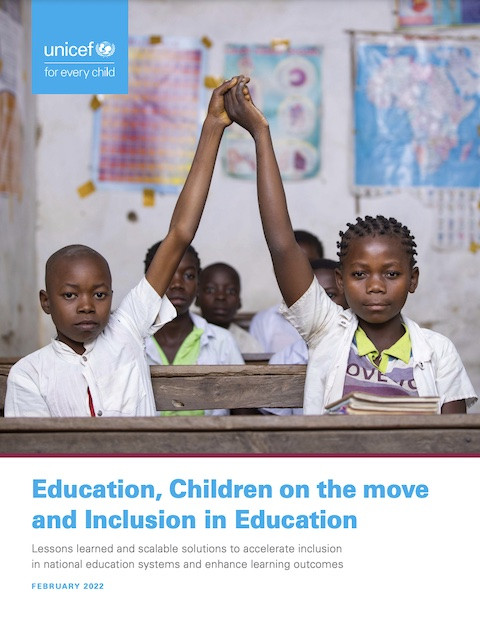 Education, Children on the Move and Inclusion in Education: Lessons Learned and Scalable Solutions to Accelerate Inclusion in National Education Systems and Enhance Learning Outcomes سنة النشر: 2022 المؤلف: Neven Knezevic | Katherine Curtiss | Eric Gero المؤلف المؤسسي: United Nations Children's Fund (UNICEF) This report summarizes how UNICEF and its partners have contributed to the creation of education solutions that support the skills development and educational attainment of children on the move in countries and regions across the world. Country case studies highlighting best practices from 19 countries and the East African and Sahel regions showcase UNICEF’s work with country governments on issues such as the inclusion of refugees in national education systems and improving relations between refugee children, their families, and their host communities.