
الموارد
استكشف مجموعة واسعة من الموارد القيمة حول تعليم المواطنة العالمية لتعميق فهمك وتعزيز البحث والمناصرة والتعليم والتعلم.
تم العثور على 3,451 نتيجة
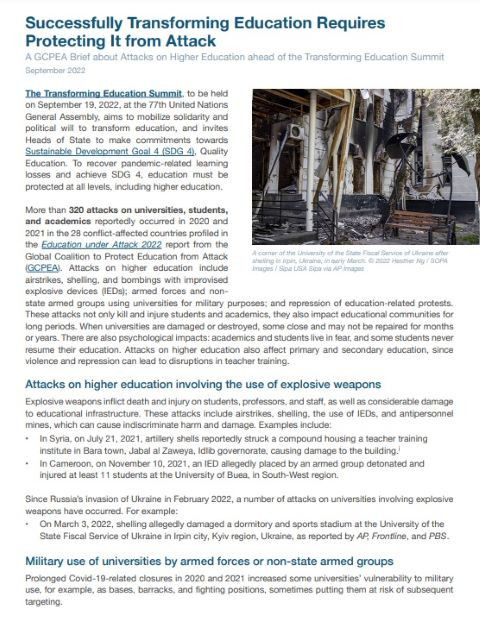 Successfully Transforming Education Requires Protecting It from Attack سنة النشر: 2022 المؤلف المؤسسي: Global Coalition to Protect Education from Attack (GCPEA) The Transforming Education Summit, to be held on September 19, 2022, at the 77th United Nations General Assembly, aims to mobilize solidarity and political will to transform education, and invites Heads of State to make commitments towards Sustainable Development Goal 4 (SDG 4), Quality Education. To recover pandemic-related learning losses and achieve SDG 4, education must be protected at all levels, including higher education.
 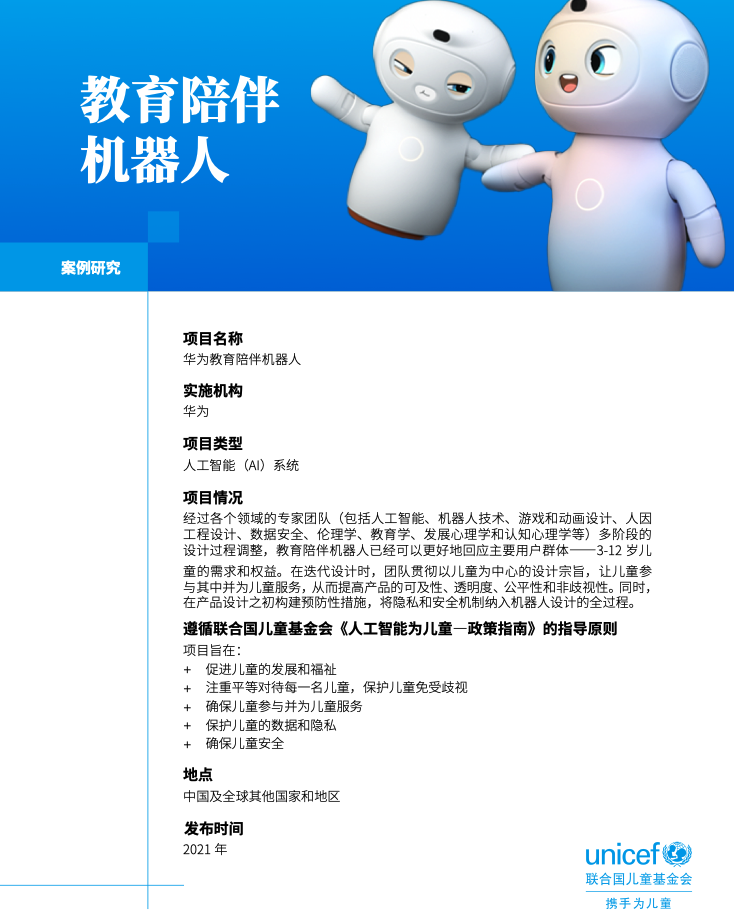 人工智能为儿童 سنة النشر: 2023 在芬兰政府的支持下,联合国儿童基金会于2020年发布了《人工智能为儿童——政策指南》,并于2021年发布2.0版本,鼓励商界在各自领域进行试点,并公开分享研究结果。这是两份描述联合国儿童基金会《人工智能为儿童——政策指南》的应用情况、展现其应用结果的案例研究。研究由中国传媒大学(CUC)在中国网络社会组织联合会(CFIS)的指导下和联合国儿童基金会驻华办事处的支持下开展,由埃莱奥诺·鲍威尔斯(Eleonore Pauwels)执笔,说明了如何将指南中所述的、“以儿童为中心”的原则嵌入人工智能系统相关产品的开发、设计和推广的全过程中。 相关人工智能系统产品由企业生产,并为企业所有。联合国儿童基金会未参与该过程的任一阶段。本项目提及特定公司并不意味着联合国儿童基金会认可该公司的政策和做法。 联合国儿童基金会鼓励开源学习平台的设计、制作和传播。
  2022-2030年全面的学校安全框架 المؤلف: 全球教育部门减灾和韧性全球联盟 2022-2030年全面的学校安全框架(Comprehensive School Safety Framework, 以下简称“框架”)支持教育领域的政策制定者、规划人员、学校管理者及其合作伙伴促进教育领域对儿童的权利保护、可持续发展和韧性提升。针对教育和儿童保护领域的所有相关人员、体系和项目,本框架提供了全面的韧性提升和安全管理方法,涵盖全灾种与全风险。框架为在教育领域提升入学率、把控教育质量及制定管理战略提供支持。
  Address by Irina Bokova, Director-General of UNESCO, on the occasion of the Honorary Graduate Degree from King's College London سنة النشر: 2017 المؤلف المؤسسي: UNESCO. Director-General, 2009-2017 (Bokova, I.G.) This address was delivered by Irina Bokova, Director-General of UNESCO, on the occasion of the Honorary Graduate Degree from King's College London on 25 October 2017.
  Global Research Policy & Practices Report: Advancing Artificial Intelligence-Supported Global Digital Citizenship Education سنة النشر: 2022 المؤلف المؤسسي: UNESCO Institute for Information Technologies in Education (IITE) | Shanghai Open University The UNESCO Institute for Information Technologies in Education (IITE) was established as an integral part of UNESCO by the General Conference of UNESCO at its 29th session November 1997) and is located in Moscow, Russian Federation. IITE is the only UNESCO Category 1 Institute that holds a global mandate for ICT in education.In line with the new Education 2030 Agenda, IITE has developed its strategic priority areas to meet new demands and tasks ahead. The mission of IITE in the new era is promoting the innovative use of ICT and serving as facilitator and enabler for achieving Sustainable Development Goal 4 (SDG 4) through ICT-enabled solutions and best practices. This report, supported by the Online Learning Consortium (OLC), is published in partnership with Shanghai Open University (SOU) to help amplify best practices regarding artificial ntelligence, digital literacy, and digital citizenship instruction for lifelong learning and success. 全球政策与实钱研究报告: 以人工智能为支撑,推动全球数字公民教育 سنة النشر: 2022 المؤلف المؤسسي: UNESCO Institute for Information Technologies in Education (IITE) | Shanghai Open University 1997年11月,联合国教科文组织大会在第二十九届会议上设立联合国教科文组织教育信息技术研究所(以下简称 “本研究所),确定其办公地点在俄罗斯联邦莫斯科。本研究所是联合国教科文组织一类机构中唯一在教育领域拥 有信息与通信技术全球授权的机构,并根据新的《2030 年教育议程》, 确定了战略优先领域,以满足未来的新需求 和新任务。其在新时代的使命是以信息与通信技术为支撑,制订解决方案,形成最佳实践,加强创新使用信息与通 信技术,促进和推动实现可持续发展目标 4。在线学习联盟对本工具包给予支持,并与上海开放大学合作将其发布, 旨在帮助推广有关人工智能、数字素养和数字公民教育的最佳实践,以实现终身学习和取得成功,并为政策制定者 和执业者提供一个评估框架和评价工具,以衡量支持学习和参与实践在设计、交付和实施方面所取得的重大进步。
  A Review of Research on Teaching and Learning Transformation under the Influence of ChatGPT Technology (Advances in Education; Vol.13, No.5) سنة النشر: 2023 المؤلف: 师璇 | 王绽蕊 Artificial intelligence continues to develop, and recently ChatGPT, which has caught the attention of various sectors of society in the internet boom. Starting from the perspectives of “teaching” and “learning”, this paper introduces the development history and learning path of ChatGPT, and reviews domestic and foreign literature from three aspects: teacher teaching, personalized learning for students, and teaching evaluation. It summarizes the attitudes and views of domestic and foreign scholars on the future development of education under the influence of ChatGPT technology. ChatGPT技术影响下的教与学变革研究综述 (教育进展; Vol.13, No.5) سنة النشر: 2023 المؤلف: 师璇 | 王绽蕊 人工智能持续发展,最近在互联网大火的ChatGPT引起了社会各界不同领域的广泛关注。本文从“教”与“学”的视角出发,在介绍ChatGPT的发展历史及学习路径的基础上,从教师教学、学生个性化学习、教学评估等三个方面对国内外文献进行了梳理,概括了国内外学者在ChatGPT技术影响下对未来教育前景发展的态度和看法。
  Guidelines for Implementing SEL in Schools سنة النشر: 2022 المؤلف المؤسسي: Mahatma Gandhi Institute of Education for Peace and Sustainable Development (MGIEP) Schools that promote SEL help in their students’ academic and global learning. It enables learners to live peacefully with others in heterogeneous societies and build ‘tolerance’ and ethics in behaviour in terms of universal human traits that go beyond social, cultural and gender differences. SEL cultivates children’s wellbeing, and because schools are mirrors or microcosms of our larger and dynamic societies, it is vital that personal and social learning be mainstreamed in schools. The purpose of these guidelines is to share the latest research with policymakers, school leaders, and teachers looking to integrate SEL into school practices and present scientific evidence on creating school environments and recommending practices that are key to building peaceful and sustainable societies.
  [Summary] Climate Change 2021: The Physical Science Basis; Summary for Policymakers سنة النشر: 2021 المؤلف: Valérie Masson-Delmotte | Panmao Zhai | Anna Pirani | Sarah L. Connors | Clotilde Péan | Sophie Berger | Nicolas Caud | Yazhen Chen | Leah Goldfarb | Marcos I. Gomis | Min Huang | Kathy Leitzell | Elisa Lonnoy | James B.R. Matthews | Timothy K. Maycock | Trudy Waterfield | Ozlem Yelekçi | Rucong Yu | Baohua Zhou المؤلف المؤسسي: Intergovernmental Panel on Climate Change (IPCC) The Summary for Policymakers (SPM) provides a high-level summary of the understanding of the current state of the climate, including how it is changing and the role of human influence, and the state of knowledge about possible climate futures, climate information relevant to regions and sectors, and limiting human-induced climate change.