
الموارد
استكشف مجموعة واسعة من الموارد القيمة حول تعليم المواطنة العالمية لتعميق فهمك وتعزيز البحث والمناصرة والتعليم والتعلم.
تم العثور على 1,444 نتيجة
 Risks in the Fight for Justice and Human Rights in Central Asia: Protecting Civil Society in the Region in 2017 سنة النشر: 2018 المؤلف المؤسسي: International Partnership for Human Rights (IPHR) This 2017 report provides an overview of the main trends regarding civil society in five countries of Central Asia: Kazakhstan, Kyrgyzstan, Tajikistan, Turkmenistan and Uzbekistan. The report is mainly based on the results of monitoring conducted by Central Asian organizations in their countries and on regular reports prepared jointly with IPHR as part of the CIVICUS Monitor initiative aimed at monitoring the state of civil society worldwide. Риски в борьбе за справедливость и права человека в Центральной Азии: Защита гражданского общества в регионе в 2017 году سنة النشر: 2018 المؤلف المؤسسي: International Partnership for Human Rights (IPHR) В этом отчете за 2017 год представлен обзор основных тенденций, касающихся гражданского общества в пяти странах Центральной Азии: Казахстане, Кыргызстане, Таджикистане, Туркменистане и Узбекистане. Отчет главным образом основан на результатах мониторинга, проведенного центрально-азиатскими организациями в своих странах и на регулярных отчетах, подготовленных ими совместно с МППЧ в рамках инициативы CIVICUS Monitor, направленной на отслеживание состояния гражданского общества во всем мире.
 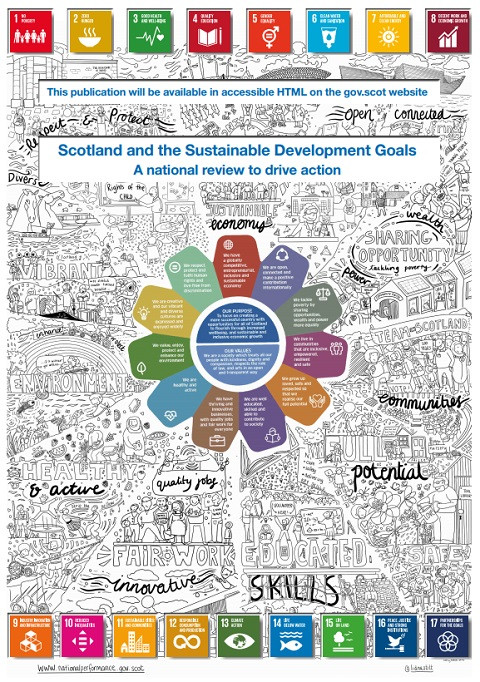 Scotland and the Sustainable Development Goals: A National Review to Drive Action سنة النشر: 2020 المؤلف المؤسسي: Government of Scotland The 2030 Agenda for Sustainable Development provides a shared blueprint for peace and prosperity for people and the planet, now and into the future. As part of this, the Sustainable Development Goals (SDGs) are a universal call to action. Scotland signed up to the SDGs in 2015 and this review brings together evidence, actions and stories of how we are making progress to meet the Goals. It contains inspirational examples of how people across Scotland are taking action to make us a more successful country and to ensure we are at the forefront of this international agenda. It also highlights some of the challenges we face. This review, a collaborative effort between the SDG Network Scotland, Scottish Government and the Convention of Scottish Local Authorities (COSLA), scratches the surface of the depth of activity across Scotland. This review provides an overall picture of activity and performance based on the evidence currently available.
  Women Empowerment in Saudi Arabia - Human Rights Commission سنة النشر: 2019 المؤلف المؤسسي: HRCSaudi The symposium on women's empowerment in the Kingdom was held on Thursday, 03/30/1440 H, organized by the Human Rights Commission and in cooperation with the United Nations Office in Riyadh at the Ritz Carlton Hotel.
  A Transdisciplinary Biomimetic Perspective on Global Citizenship Education سنة النشر: 2016 المؤلف: Javier Collado Ruano المؤلف المؤسسي: University of the Andes This paper reflects on the Global Citizenship Edu- cation (GCE) and Sustainable Development Goals (SDGs) discussed in 2015 during the Second UNESCO Forum on Global Citizenship Education in January, the Second Global Education Forum in May and the Millenium Summit in September. The study is supported by a transdisciplinary methodolo- gy and the biomimetic principles in order to streng- then the bonds between education and sustainabili- ty. As a result, this research identifies the operational principles that constitute the interdependence of ecosystems in order to make a biomimetic imple- mentation in the social, political and educational structure in human systems. To conclude, three pro- posals to achieve SDGs are given. Una perspectiva transdisciplinar y biomimética de la educación para la ciudadanía mundial سنة النشر: 2016 المؤلف: Javier Collado Ruano المؤلف المؤسسي: University of the Andes El presente artículo reflexiona sobre la Educación para la Ciudadanía Mundial (ECM) y los Objetivos de Desarrollo Sostenible (ODS) discutidos en 2015 durante el 2o Foro de la UNESCO de ECM de enero, el 2o Foro Mundial de Educación de mayo y la Cumbre del Milenio de septiembre. El estudio se apoya en la metodología transdisciplinar y el principio de biomímesis con el propósito de reforzar los lazos entre la educación y la sostenibilidad. Como resultado, el trabajo identifica los principios operacionales que constituyen la interdependencia de los ecosistemas para hacer una aplicación biomimética en las estructuras sociales, políticas y educativas de los sistemas humanos. Para concluir, se realizan tres propuestas para contribuir a alcanzar los ODS.
 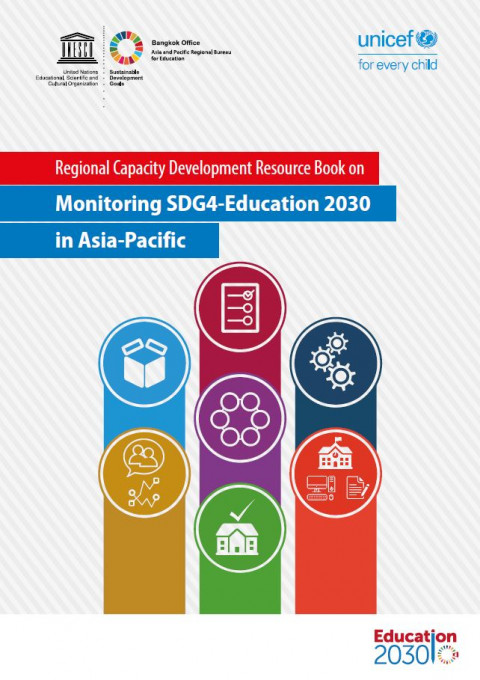 Regional Capacity Development Resource Book on Monitoring SDG4-Education 2030 in Asia-Pacific سنة النشر: 2019 المؤلف المؤسسي: UNESCO Bangkok | UNICEF East Asia and the Pacific The Education 2030 Agenda calls for robust monitoring, reporting, and evaluating indicators from Early Childhood Education (ECE) to adult education. The new agenda demands clear indicators and measurement to generate evidence-based international discourses and advocacy. Ensuring availability of education data and statistics for evidence based policy making and planning is also crucial. Countries’ capacity to respond to these demands will depend on quality mechanism for monitoring in place and technical capacity of data providers and users. The modules included in the this Regional Capacity Development Resource Book on Monitoring SDG 4-Education 2030 in Asia Pacific covers various topics that are relevant to building an effective national monitoring system, such as the creation of a national indicator framework and the development of national strategies for education statistics; strengthening the administrative data production system; and increasing the household survey application in monitoring education at the national level, as well as reporting at the global level.
 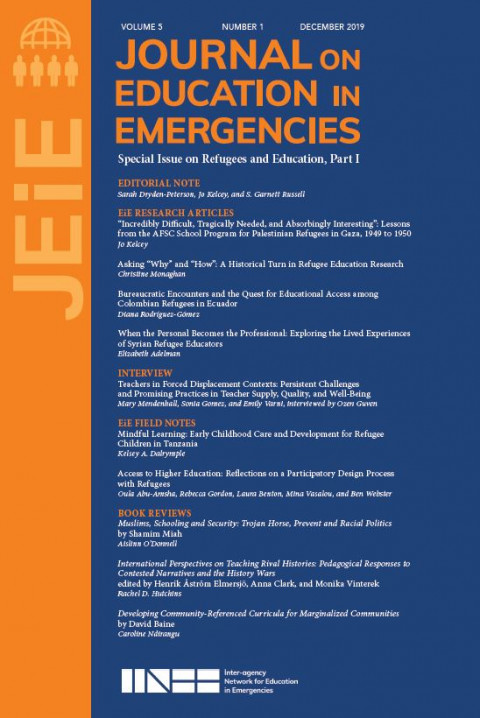 Journal on Education in Emergencies: Special Issue on Refugees and Education, Part I (Vol. 5, No.1 December 2019) سنة النشر: 2019 المؤلف: Sarah Dryden-Peterson | Jo Kelcey | S. Garnett Russell المؤلف المؤسسي: Inter-agency Network for Education in Emergencies (INEE) This special issue of JEiE—the first of two parts—showcases research on important developments in the field of refugee education across several regions, including the Middle East, Latin America, and Africa. The issue includes four research articles, one interview, two field notes, and three book reviews.The contributing authors describe and analyze how international agencies, state bureaucracies, local organizations and their partners, and refugees shape the structures that influence the education of refugees, both historically and in the present, and how these actors imagine their roles. In so doing, the authors help to untangle key questions about how responsibility for meeting refugees’ educational needs and aspiration is taken up and shared. The articles in this issue include immediate and long-term lessons for how refugee education is designed and experienced.
 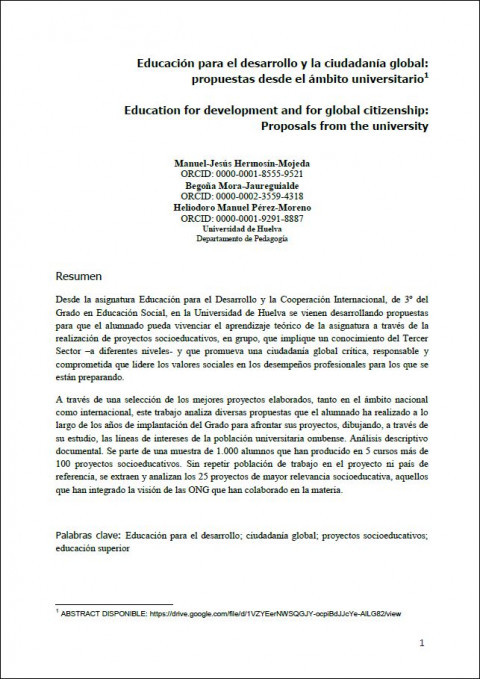 Education for Develpment and for Global Citizenship: Proposals from the University سنة النشر: 2018 المؤلف: Manuel- Jesús Hermosín-Mojeda | Begoña Mora-Jaureguialde | Heliodoro Manuel Pérez-Moreno From the “Education for Development and International Cooperation” course, which is part of the Social Education career at the University of Huelva, students are performing some social activities to experience different theoretical concepts through social-educational projects that the students, in teams, organize and carry out during the semester. These projects promote, committed and responsible global citizens who can promote social changes in the careers they are persuing. Educación para el desarrollo y la ciudadanía global: propuestas desde el ámbito universitario سنة النشر: 2018 المؤلف: Manuel- Jesús Hermosín-Mojeda | Begoña Mora-Jaureguialde | Heliodoro Manuel Pérez-Moreno Desde la asignatura Educación para el Desarrollo y la Cooperación Internacional, de 3º del Grado en Educación Social, en la Universidad de Huelva se vienen desarrollando propuestas para que el alumnado pueda vivenciar el aprendizaje teórico de la asignatura a través de la realización de proyectos socioeducativos, en grupo. Estos proyectos promueven ciudadanos globales críticos, responsables y comprometidas capaces de promover cambios sociales en las carreras para los que se están preparando.