
الموارد
استكشف مجموعة واسعة من الموارد القيمة حول تعليم المواطنة العالمية لتعميق فهمك وتعزيز البحث والمناصرة والتعليم والتعلم.
تم العثور على 1,405 نتيجة
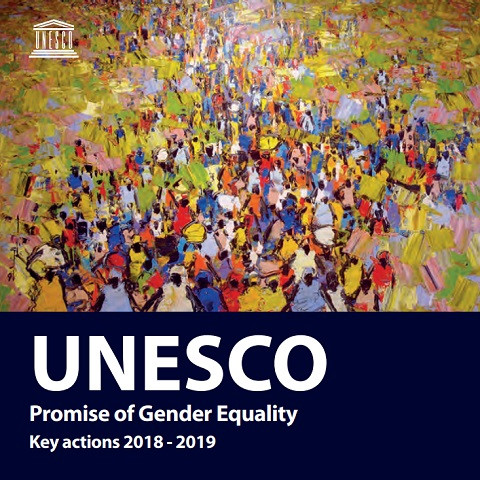 UNESCO: Promise of Gender Equality; Key Actions of 2018 and 2019 سنة النشر: 2020 المؤلف المؤسسي: UNESCO This is the first UNESCO Annual Report on Gender Equality that highlights the key initiatives implemented in 2018-2019. The advancement of gender equality through education, the sciences, culture, information and communication, at the heart of UNESCO’s mandate, aims to equip both women and men to address the challenges of sustainable development in a fast-changing world. UNESCO: La Promesse de l’Egalité des genres; Actions clés de 2018 - 2019 سنة النشر: 2020 المؤلف المؤسسي: UNESCO Ceci est le premier rapport annuel de l’UNESCO sur l’égalité des genres qui met en lumière quelques-unes des initiatives clés mises en place en 2018 - 2019. Les progrès en matière d’égalité des genres par l’éducation, les sciences, la culture, l’information et la communication, au cœur des activités de l’UNESCO, visent à donner aux femmes et aux hommes les moyens de relever les défis du développement durable dans un monde en perpétuelle mutation.
 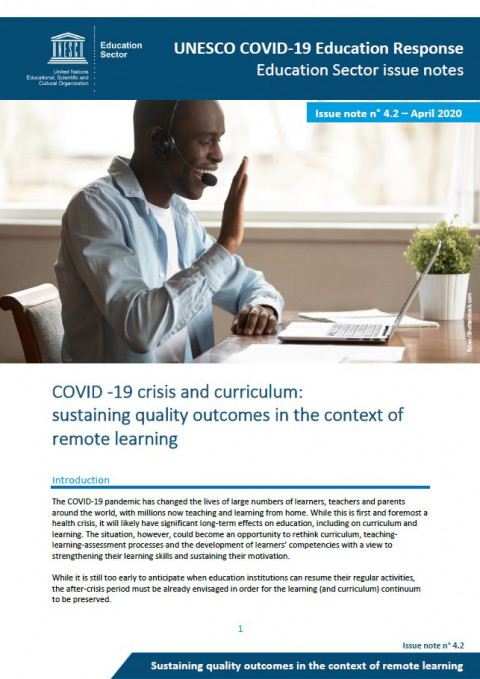 COVID-19 Crisis and Curriculum: Sustaining Quality Outcomes in the Context of Remote Learning (Issue Note no. 4.2 – April 2020) سنة النشر: 2020 المؤلف المؤسسي: UNESCO The COVID-19 pandemic has changed the lives of large numbers of learners, teachers and parents around the world, with millions now teaching and learning from home. While this is first and foremost a health crisis, it will likely have significant long-term effects on education, including on curriculum and learning. The situation, however, could become an opportunity to rethink curriculum, teaching-learning-assessment processes and the development of learners’ competencies with a view to strengthening their learning skills and sustaining their motivation.This crisis will likely provide an opportunity for schools to strengthen their ties with families, and for teachers to communicate and cooperate better with parents in the interest of learners. In the same vein, the crisis means teachers and parents may become more involved in decisions regarding curriculum appropriateness. This can support the development of a learner-centred, participative and inclusive learning paradigm that takes into account the interests of learners, as well as their environments and aspirations. Crisis y currículo durante el COVID-19: mantención de los resultados de calidad en el contexto del aprendizaje remoto (Nota temática No. 4.2 – Abril 2020) سنة النشر: 2020 المؤلف المؤسسي: Organización de las Naciones Unidas para la Educación, la Ciencia y la Cultura (UNESCO) La pandemia del COVID-19 ha cambiado la vida de una gran cantidad de estudiantes, docentes, padres y madres a lo largo del mundo y millones actualmente enseñan y aprenden desde sus hogares. Aunque se trata principalmente de una crisis sanitaria, es probable que tenga importantes secuelas a largo plazo en la educación, incluso en el currículo y el aprendizaje. No obstante, la situación puede transformarse en una oportunidad para reexaminar el currículo, los procesos de evaluación de la enseñanza y del aprendizaje y el desarrollo de las competencias de las y los estudiantes, en vista de fortalecer sus habilidades de aprendizaje y mantener su motivación.Es probable que la crisis ofrezca una oportunidad para que las escuelas fortalezcan sus vínculos con las familias y para que las y los docentes se comuniquen y cooperen mejor con los padres y las madres en beneficio de las y los estudiantes. En la misma línea, la crisis significa que docentes, madres y padres podrían participar más en las decisiones respecto de la idoneidad del currículo. Esto puede servir como apoyo al paradigma de aprendizaje inclusivo, participativo y centrado en la y el estudiante, que considera tanto los intereses de las y los estudiantes como sus entornos y aspiraciones.
  How to Stop Misinformation in Times of Coronavirus? سنة النشر: 2020 المؤلف المؤسسي: United Nations Development Programme (UNDP) | UNESCO Learn how to identify unverified content you receive on your cell phone and avoid spreading information on social media that has not been checked by credible sources. Caring for reliable information is everyone's responsibility, and helps us make better decisions.Learn more about this campaign by UNESCO and UNDP at:https://en.unesco.org/news/disinformation-silent-weapon-times-pandemic
 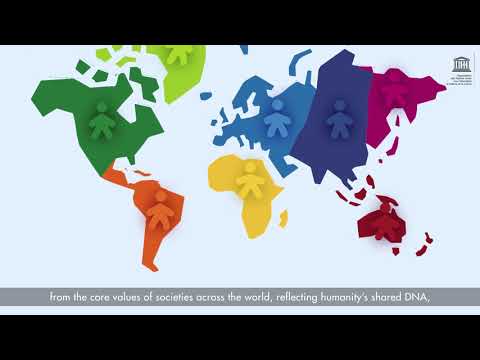 Éducation à la citoyenneté mondiale: Pour une approche locale سنة النشر: 2018 المؤلف المؤسسي: Organisation des Nations Unies pour l'éducation, la science et la culture (UNESCO) Les sociétés à travers le monde ont longtemps vécu selon les principes de la solidarité, le dialogue et le respect de la diversité. Le programme d’éducation à la citoyenneté mondiale (ECM) de l’UNESCO est inspiré de ces savoirs, en inculquant aux apprenants les compétences, les valeurs et les attitudes pour vivre ensemble et construire un monde plus durable et pacifique. L’ECM n’est pas un nouveau concept, mais une aspiration de longue date à travers les continents.
 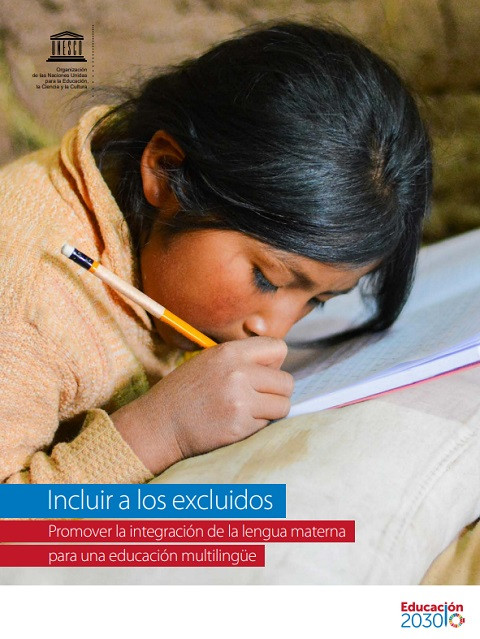 Including the Excluded: Promoting the Integration of the Mother Tongue for a Multilingual Education سنة النشر: 2020 المؤلف المؤسسي: UNESCO This publication presents the advantages of including the mother tongue and promoting multilingual education, as well as guidelines for achieving it. Incluir a los excluidos: Promover la integración de la lengua materna para una educación multilingüe سنة النشر: 2020 المؤلف المؤسسي: Organización de las Naciones Unidas para la Educación, la Ciencia y la Cultura (UNESCO) Esta publicación presenta las ventajas de incluir la lengua materna y promover una educación multilingue, así como orientaciones para lograrlo.
 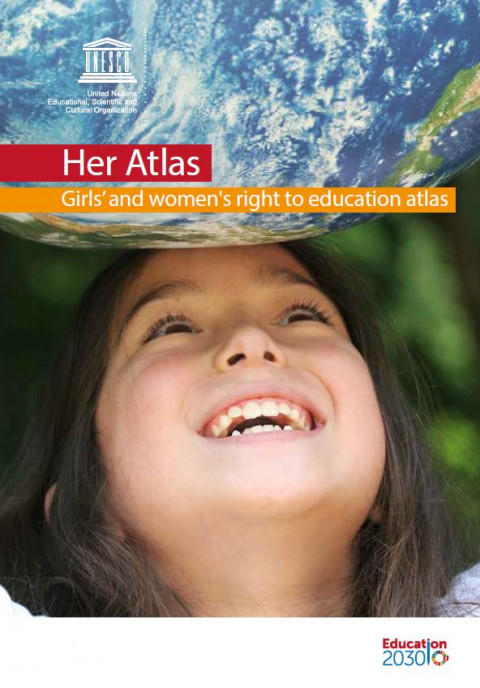 Son Atlas: atlas du droit à l’éducation des filles et des femmes سنة النشر: 2019 المؤلف المؤسسي: Organisation des Nations Unies pour l'éducation, la science et la culture (UNESCO) Son Atlas, l’atlas en ligne du droit des filles et des femmes à l’éducation, a été développé dans le cadre de la campagne de l’UNESCO Son éducation, notre avenir, qui vise à accélérer les efforts en faveur de l'éducation des filles et des femmes en s’appuyant sur des engagements politiques et financiers. Son Atlas vise à mieux faire connaître les constitutions, législations et réglementations nationales relatives aux droits à l’éducation des filles et des femmes afin d’encourager les pays à améliorer leurs cadres juridiques et politiques.
  Notes techniques du secteur de l’éducation: Education en vue du Développement Durable (EDD) سنة النشر: 2013 المؤلف المؤسسي: UNESCO The Education Sector is called to implement a significant and broad mandate, covering many challenging issues in education in a diverse and fast-changing world. More than ever, we need to better focus and ensure greater cohesion in implementing this mandate. This document is part of a series of Technical Notes that have been developed by colleagues in the Education Sector in order to facilitate programme delivery in thematic areas related to the work of the Sector. The Technical Notes are meant to serve as a quick reference tool for UNESCO staff, providing a brief overview including basic knowledge, key priorities for UNESCO and future directions as well as practical information on each topic.