
الموارد
استكشف مجموعة واسعة من الموارد القيمة حول تعليم المواطنة العالمية لتعميق فهمك وتعزيز البحث والمناصرة والتعليم والتعلم.
تم العثور على 882 نتيجة
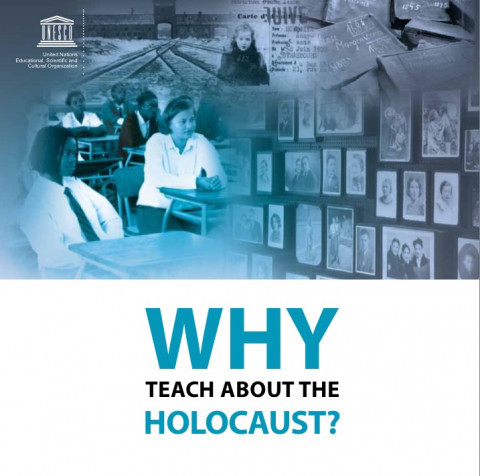 Pourquoi enseigner l'holocauste سنة النشر: 2014 المؤلف المؤسسي: UNESCO The Holocaust was a turning point in human history. Understanding the genocide of the Jewish people and other crimes perpetrated by the Nazi regime remains of great signi cance in the modern world.Regardless of where we live or who we are, learning about this universal history can help engage students in a critical re action about the roots of genocide and the necessity to nurture peace and human rights to prevent such atrocities in the future.This short introduction provides an essential overview on education about the Holocaust that can support policymakers, educators and students alike in their understanding of genocide and why it is vital that we continue to teach about the Holocaust today. ¿Por qué enseñar sobre el holocausto? سنة النشر: 2014 المؤلف المؤسسي: UNESCO The Holocaust was a turning point in human history. Understanding the genocide of the Jewish people and other crimes perpetrated by the Nazi regime remains of great signi cance in the modern world.Regardless of where we live or who we are, learning about this universal history can help engage students in a critical re action about the roots of genocide and the necessity to nurture peace and human rights to prevent such atrocities in the future.This short introduction provides an essential overview on education about the Holocaust that can support policymakers, educators and students alike in their understanding of genocide and why it is vital that we continue to teach about the Holocaust today. Зачем преподавать историю Холокоста? سنة النشر: 2014 المؤلف المؤسسي: UNESCO The Holocaust was a turning point in human history. Understanding the genocide of the Jewish people and other crimes perpetrated by the Nazi regime remains of great signi cance in the modern world.Regardless of where we live or who we are, learning about this universal history can help engage students in a critical re action about the roots of genocide and the necessity to nurture peace and human rights to prevent such atrocities in the future.This short introduction provides an essential overview on education about the Holocaust that can support policymakers, educators and students alike in their understanding of genocide and why it is vital that we continue to teach about the Holocaust today. ما الداعي إلى التعليم بشأن محرقة اليهود سنة النشر: 2014 المؤلف المؤسسي: UNESCO The Holocaust was a turning point in human history. Understanding the genocide of the Jewish people and other crimes perpetrated by the Nazi regime remains of great signi cance in the modern world.Regardless of where we live or who we are, learning about this universal history can help engage students in a critical re action about the roots of genocide and the necessity to nurture peace and human rights to prevent such atrocities in the future.This short introduction provides an essential overview on education about the Holocaust that can support policymakers, educators and students alike in their understanding of genocide and why it is vital that we continue to teach about the Holocaust today. 为什么要进行关于反犹大屠杀的教育? سنة النشر: 2014 المؤلف المؤسسي: 联合国教科文组织 (UNESCO) The Holocaust was a turning point in human history. Understanding the genocide of the Jewish people and other crimes perpetrated by the Nazi regime remains of great signi cance in the modern world.Regardless of where we live or who we are, learning about this universal history can help engage students in a critical re action about the roots of genocide and the necessity to nurture peace and human rights to prevent such atrocities in the future.This short introduction provides an essential overview on education about the Holocaust that can support policymakers, educators and students alike in their understanding of genocide and why it is vital that we continue to teach about the Holocaust today.
 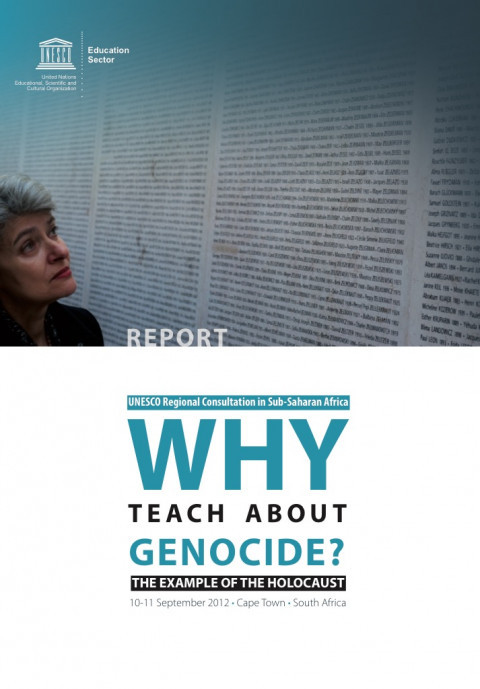 UNESCO Regional consultation in sub-saharan Africa: Why teach about genocide? The example of the Holocaust, 10-11 Septembre 2012, Cape Town, South Africa: report سنة النشر: 2013 المؤلف المؤسسي: UNESCO The rst UNESCO consultation on « Why Teach about Genocide? The Example of the Holocaust » was organized following the UNESCO General Conference resolution 34C/61 on Holocaust Remembrance. The consultation of Member States is part of a series of initiatives launched by UNESCO to promote education about the Holocaust and other genocides, in particular with a view to contributing to the prevention of genocide and mass atrocities and promoting education for peace.The consultation took place in Cape Town, South Africa, on 10-11 September 2012 in the presence of senior representatives from the Ministries of Education of 14 countries in Sub-Saharan Africa. The following countries were represented: BENIN, BURUNDI, DEMOCRATIC REPUBLIC OF THE CONGO, CÔTE D’IVOIRE, ETHIOPIA, REPUBLIC OF MAURITIUS, NAMIBIA, KENYA, RWANDA, SENEGAL, SOUTH AFRICA, TANZANIA, TOGO and ZAMBIA. Experts in Holocaust and genocide studies from various countries and institutions were invited to present key issues throughout the consultation and participate in the discussions. The consultation was supervised by the Education Sector of UNESCO/Division of Education for Peace and Sustainable Development/Section of Education for Peace and Human Rights and UNESCO Regional Bureau for Education in Africa (BREDA, Dakar, Senegal)The main purpose of the meeting was to discuss how the history of the Holocaust, and more generally the history of genocide, could be included in the curricula of participating countries. The meeting also clari ed various conceptual and pedagogical issues, and paved the way for further cooperation between UNESCO and participating Ministries of Education on how to launch new educational programmes in interested countries.
  Права человека: назад в будущее (Курьер ЮНЕСКО no. 4, октябрь-декабрь 2018 года) سنة النشر: 2018 المؤلف المؤسسي: UNESCO Среди авторов этого номера «Курьера ЮНЕСКО» – Морис Добб, Гарольд Дж. Ласки, Бенедетто Кроче, Олдос Хаксли, Ло Чун-Шу, Арнольд Шёнберг и другие выдающиеся деятели прошлого столетия. По случаю 70-летия Всеобщей декларации прав человека, принятой 10 декабря 1948 года, мы решили вернуться в прошлое, чтобы с большей ясностью смотреть в будущее. Поэтому текущий номер так и называется: «Назад в будущее». Представим же, что сейчас вновь 1946 год. Над миром витает жуткий призрак тотальной войны, и международное сообщество испытывает «потребность выступить с совместным заявлением морального характера, в котором оно могло бы в должной мере выразить всеобщее негодование и надежду на лучшее будущее, какой бы утопичной она ни казалась», – поясняет специалист по социальной антропологии Марк Гудэйл во вступительной статье к подготовленной с его помощью рубрике «Широкий обзор». Материалы этой рубрики знакомят читателей с малоизвестным фактом из истории Всеобщей декларации прав человека – всемирным опросом, проведенным ЮНЕСКО по инициативе первого Генерального директора Джулиана Хаксли с целью определения философских принципов, лежащих в основе прав человека. Решение о его проведении было принято на 1-й сессии Генеральной конференции ЮНЕСКО, состоявшейся в ноябре-декабре 1946 года, а сам опрос был проведен годом позже. Руководство этим масштабным проектом осуществлял молодой французский философ Жак Аве. В опросе, призванном заложить основы для размышлений о правах человека, приняли участие яркие представители интеллектуальной элиты послевоенного общества. Несмотря на прошедшие с тех пор 70 лет, поднятые в ходе этого проекта вопросы по-прежнему чрезвычайно актуальны. Столь же актуальны и рисунки нашего гостя, перуанского художника Фернандо Брисе, черпающего вдохновение в «том особом периоде, когда идея прогресса действительно открывала многочисленные перспективы». Этому периоду он посвятил серию под названием The Book of Needs («Книга потребностей»), рисунки из которой виртуозно воспроизводят страницы «Курьера ЮНЕСКО» за 1948-1954 год. Большую часть из них можно увидеть в приложении к текущему номеру журнала.
  Strengthening the Rule of Law Through Education: A Guide for Policymakers سنة النشر: 2019 المؤلف المؤسسي: UN. Office on Drugs and Crime (UNODC) | UNESCO The new joint publication by UNESCO and UNODC Strengthening the Rule of Law through Education: A Guide for Policymakers explores the role that education institutions can play in promoting the rule of law and building new forms of engagement based on global citizenship, human rights and inclusion -- all of which are vital to take forward the Sustainable Development Goal 4 on education, at the heart of the 2030 Agenda for Sustainable Development. Strengthening the Rule of Law through Education: A Guide for Policymakers is intended for education policymakers and other professionals working in the formal education sector, within and outside Ministries of Education, and who are seeking to promote the rule of law and a culture of lawfulness.The guide may also be of interest to professionals working in non-formal education settings or other sectors – namely the justice, social and health sectors - in the area of crime and violence prevention, who are seeking to work more closely with the education sector. In particular, the guide offers:An explanation of key concepts, such as the rule of law and a culture of lawfulness, as well as outlining the role of education in upholding and promoting the rule of law; Guidance on how the education sector is able to strengthen and promote the rule of law, for instance, by speaking to the real learning needs of children and youth, and by ensuring that places of learning “practice what they preach”; A map of the necessary support systems needed to strengthen the rule of law at the school and classroom levels and outside formal education settings, including curricular support, classroom pedagogies, teacher training and development and school-family-community partnerships. Fortalecimiento del estado de derecho mediante la educación: guía para los encargados de la formulación de políticas سنة النشر: 2019 المؤلف المؤسسي: UN. Office on Drugs and Crime (UNODC) | UNESCO La nueva publicación conjunta de la UNESCO y la Oficina de las Naciones Unidas contra la Droga y el Delito (UNODC): Fortalecimiento del estado de derecho mediante la educación: guía para los encargados de la formulación de políticas, explora el rol que pueden jugar las instituciones educativas en la promoción del estado de derecho y en la creación de nuevas formas de participación basadas en ciudadanía global, derechos humanos e inclusión – cuestiones que son vitales para promocionar el 4to Objetivo sobre educación para el Desarrollo Sostenible, en el corazón de la Agenda 2030 para el Desarrollo Sostenible. Fortalecimiento del estado de derecho mediante la educación: guía para los encargados de la formulación de políticas, está dirigido a los creadores de políticas educativas y a otros profesionales que trabajan en el sector formal de educación, dentro o fuera de los Ministerios de Educación, y que estén procurando promocionar el estado de derecho y la cultura de la legalidad.La guía también puede ser de interés para profesionales trabajando en contextos educativos no formales y otros sectores – como ser en los sectores sociales, de justicia o de salud – en las áreas de prevención de violencia y crimen, que estén buscando trabajar más cerca al área educativa. En particular, la guía ofrece: Una explicación de conceptos claves, como ser la cultura de derecho o la cultura de la legalidad, a la vez que detalla el rol de la educación en sostener y promover el estado de derecho;Orientaciones sobre cómo el sector educativo es capaz de fortalecer y promocionar el estado de derecho, por ejemplo, abordando las necesidades reales de niños y jóvenes, y asegurándose que los lugares de enseñanza “practican lo que predicen”;Un mapa de los sistemas de soporte necesarios para fortalecer el estado de derecho en la escuela, a nivel del aula y fuera de los contextos de educación formal, incluyendo soporte curricular, pedagogía de aula, desarrollo y capacitación docente y asociaciones entre la escuela, la familia y la comunidad. تعزيز سيادة القانون عن طريق التعليم: دليل لواضعي السياسات سنة النشر: 2019 المؤلف المؤسسي: UN. Office on Drugs and Crime (UNODC) | UNESCO لمنشور المشترك الجديد لليونسكو ومكتب الأمم المتحدة المعني بالمخدرات والجريمة بعنوان "تعزيز سيادة القانون من خلال التعليم: دليل لواضعي السياسات" يستكشف الدور الذي يمكن أن تلعبه المؤسسات التعليمية في تعزيز سيادة القانون وبناء أشكال جديدة من المشاركة على أساس المواطنة العالمية وحقوق الإنسان والإدماج - - جميعها حيوية للمضي قدمًا في تحقيق الهدف 4 من أهداف التنمية المستدامة بشأن التعليم ، في صميم خطة التنمية المستدامة لعام 2030.تعزيز سيادة القانون من خلال التعليم: دليل صانعي السياسات موجه لواضعي السياسات التعليمية وغيرهم من المهنيين العاملين في قطاع التعليم الرسمي ، داخل وزارات التعليم وخارجها ، والذين يسعون إلى تعزيز سيادة القانون وثقافة احترام القانون.قد يكون الدليل مفيدًا أيضًا للمهنيين العاملين في أماكن التعليم غير النظامي أو القطاعات الأخرى - وبالتحديد قطاعات العدالة والاجتماعية والصحية - في مجال منع الجريمة والعنف ، الذين يسعون إلى العمل بشكل أوثق مع قطاع التعليم.