
الموارد
استكشف مجموعة واسعة من الموارد القيمة حول تعليم المواطنة العالمية لتعميق فهمك وتعزيز البحث والمناصرة والتعليم والتعلم.
تم العثور على 1,402 نتيجة
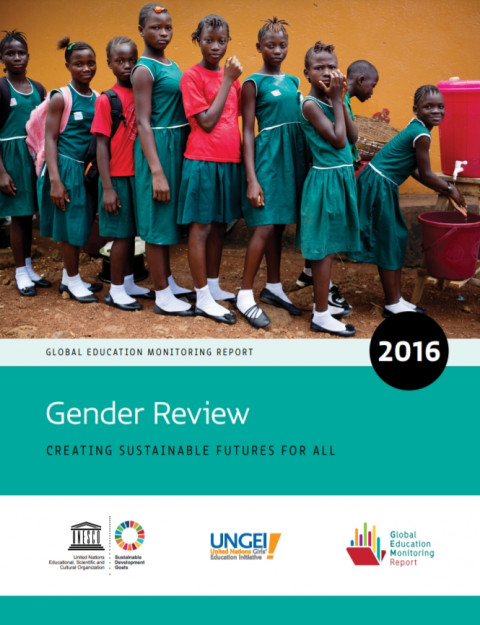 Resumen sobre género: creación de futuros sostenibles para todos; Informe de seguimiento de la educación en el mundo, 2016 سنة النشر: 2016 المؤلف: Sachs, Jeffrey D المؤلف المؤسسي: Global Education Monitoring Report Team Para la nueva agenda internacional de desarrollo sostenible, la educación y la igualdad de género constituyen preocupaciones básicas. El Marco de Acción Educación 2030, suscrito por la comunidad educativa mundial en noviembre del 2015, en sintonía con la agenda para los ODS, reconoce que la igualdad de género está íntimamente ligada al derecho a la educación para todos y que para alcanzar la igualdad de género se requiere un enfoque que “garantice no solo que las niñas, los niños, las mujeres y los hombres obtengan acceso a los distintos niveles de enseñanza y los cursen con éxito, sino que adquieran las mismas competencias en la educación y mediante ella” (UNESCO 2016a, p.28). Todas las mujeres, las niñas, los niños y los hombres han de tener la posibilidad de participar activamente en la sociedad, de que se oigan sus voces y se satisfagan sus necesidades (ONU-Mujeres, 2016a). Para facilitar y alcanzar estos objetivos, es necesario disponer de conocimientos basados en evidencia, acerca de los temas relacionados con el género en el ámbito de la educación y mediante ella. El Resumen sobre Género del Informe de Seguimiento de la Educación en el Mundo (Informe GEM) identifica y se centra principalmente en los desafíos a los que han de hacer frente las niñas y las mujeres a causa de las desventajas globales y desproporcionadas que siguen experimentando en su período de formación y después de él. Pero tiene presente asimismo que los niños y los hombres pueden sufrir desventajas de género, y que la igualdad de género también afecta a los varones, a sus relaciones y al poder. Por tanto, todos debemos participar en lograr la igualdad de género.
  Gender, migration and non-formal learning for women and adolescent girls سنة النشر: 2019 المؤلف: Amy North المؤلف المؤسسي: Global Education Monitoring Report Team Processes of international migration and displacement are highly gendered. Who migrates, and how they experience migration and displacement, is affected by gender norms and relations in both in countries of origin and countries of settlement, the gendered dynamics of conflict and violence, and the gendered nature of global and local labour markets. These gendered dynamics of migration both affect and are affected by education in often complex ways, as education may both facilitate processes of migration, and be enabled or limited by them, and as gendered engagements with education prior to and during migration and settlement may have a significant influenced on how these processes are experienced. This paper is concerned with exploring this gender-migration- education nexus through a focus on the educational engagements and experiences of migrant and refugee women and adolescent girls. It first considers the wider body of research that has explored the relationship between gender, migration and displacement, particularly in relation to the experiences of migrant women and girls, before drawing out some of the key conceptual ideas from this, considering their implications for education, and presenting a conceptual diagram to represent this relationship. It then focuses more specifically on experiences of non-formal education for women and adolescent girls in refugee contexts and in host countries. Finally it identifies a number of key issues and recommendations emerging from this research.
 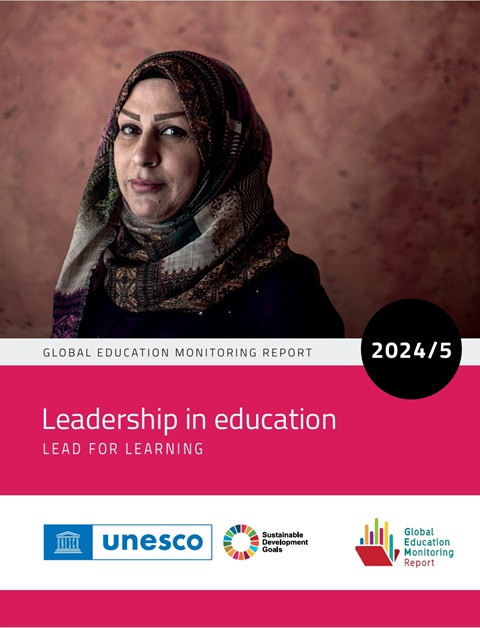 Global Education Monitoring Report 2024/5: Leadership in Education; Lead for Learning سنة النشر: 2024 المؤلف المؤسسي: Global Education Monitoring Report Team Leadership matters in education. Strong leaders are needed to help institutions, systems and societies change for the better. Strong leaders work in collaboration with other actors towards the same goals. At the school level, they are the principals but also those who surround them, in the school and in the community, in positions of responsibility. At the system level, they are civil servants working as district officers, supervisors or planners. At the societal level, they are political leaders, as well as a very broad range of actors who help shape education goals, from unions and researchers to civil society and the media.Entitled Lead for learning, this report argues that, in pursuing specific goals, education leaders are more than just managers. They are change agents, who need the time, trust and support to focus on setting a vision and developing the people they serve and work with. The report calls for investment in and empowerment of school and system leaders. There should be fair hiring processes and growth opportunities that recognize the full scope of leaders’ roles. Moreover, leadership works best when it is shared, empowering others to lead as they can within their roles.There is no one leadership style that works. Different contexts, capacities and personalities mean that styles vary, and rightfully so. This, combined with the different goals that each leader is trying to achieve, means that their impact is hard to fully assess. Yet, all research points towards the critical need for strong leaders to continuously improve education quality. School leaders are second only to teachers for transforming student outcomes. Meanwhile, politicians wield huge influence in making equitable and inclusive education a national priority.Supporting this seventh Global Education Monitoring Report is a new series of country profiles on PEER, an online resource supporting policy dialogue and describing policies and regulations on school principal selection, preparation and development in the world’s education systems.
 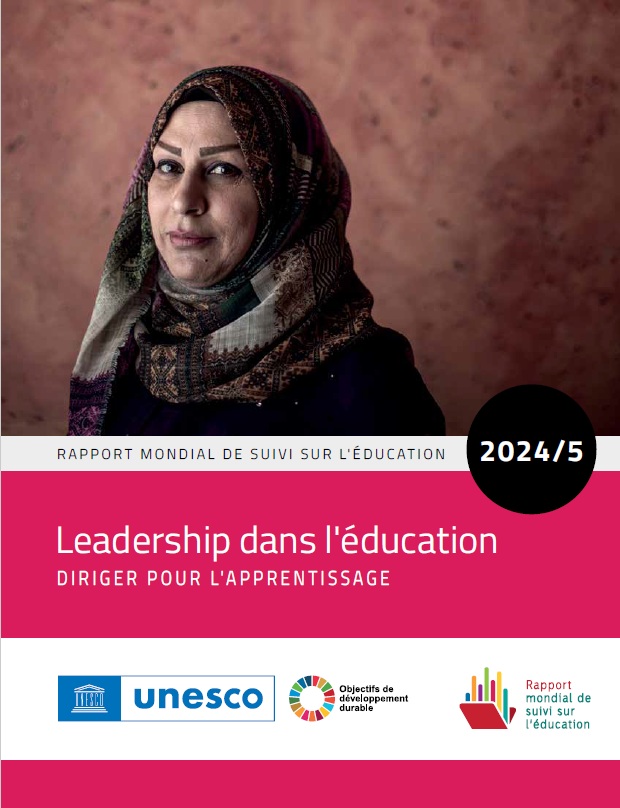 Rapport mondial de suivi sur l'éducation 2024/5, Leadership dans l'éducation : diriger pour apprendre سنة النشر: 2025 المؤلف المؤسسي: Global Education Monitoring Report Team Le Rapport mondial de suivi sur l'éducation 2024/5 évalue les progrès accomplis dans la réalisation des objectifs du Programme 2030 et montre que, si le nombre d'enfants scolarisés et achevant l'enseignement secondaire n'a jamais été aussi élevé, de nombreux domaines connaissent une stagnation. Le leadership joue un rôle central pour y remédier. Aucune école n’améliore les résultats des élèves sans un bon leader pour montrer la voie. Sur la base d’un examen des lois et politiques concernant la sélection, la préparation et les conditions de travail des chefs d'établissement de 211 systèmes éducatifs, le rapport analyse les leviers stratégiques permettant d'attirer et de retenir des leaders de talent.Les possibilités d’exercer un leadership ne se limitent pas aux dirigeants des écoles, elles s’étendent à des personnes qui occupent d’autres postes dans le système éducatif et en dehors de celui-ci, telles que les directeurs adjoints, les enseignants et les élèves lorsque le leadership est partagé, les responsables politiques, la société civile, les organisations internationales, les syndicats et les médias, qui contribuent à définir les objectifs en matière d’éducation.Le rapport préconise que des efforts soient faits pour former des leaders dans quatre dimensions essentielles : fixer des objectifs, donner la priorité à l’apprentissage, encourager la collaboration et faire évoluer les personnes. Pour que ces dimensions se concrétisent, il faut faire confiance aux personnes occupant des postes de direction et leur donner les moyens d’agir ; il faut les recruter grâce à des pratiques d’embauche équitables ; les soutenir dans leur évolution ; et les encourager à mettre en place une culture de collaboration. Le rapport appelle également à investir dans la capacité des responsables de l'éducation à jouer un rôle de leader au sein du système, en mettant particulièrement l'accent sur la direction pédagogique et l'assurance qualité
  Informe de seguimiento de la educación en el mundo, 2024/5: Liderazgo en la educación: liderar por el aprendizaje سنة النشر: 2025 المؤلف المؤسسي: Global Education Monitoring Report Team El Informe de seguimiento de la educación en el mundo 2024-2025 evalúa los avances hacia el logro de las metas de 2030 y muestra que, aunque hay más niños escolarizados y que finalizan la educación secundaria que nunca, en muchos ámbitos hay estancamientos. El liderazgo es fundamental para abordar esta cuestión. Ninguna escuela puede mejorar los resultados de los alumnos sin un buen líder que muestre el camino a seguir. Partiendo de un examen de la legislación y las políticas relativas a la selección, preparación y condiciones laborales de los directores de escuela de 211 sistemas educativos, el informe analiza instrumentos de política para atraer y retener a líderes talentosos.El potencial de liderazgo no se limita a los líderes escolares, sino que abarca también a las personas que ocupan otros puestos en el sistema educativo, así como fuera de él, desde subdirectores, docentes y alumnos, cuando el liderazgo es compartido, hasta líderes políticos, la sociedad civil, organizaciones internacionales, sindicatos y medios de comunicación, que contribuyen a definir los objetivos de la educación.El informe insta a adoptar medidas para que los líderes desarrollen sus capacidades en las cuatro dimensiones fundamentales del liderazgo: establecer expectativas, centrarse en el aprendizaje, fomentar la colaboración y favorecer el perfeccionamiento personal. Para llevar a la práctica estas dimensiones, es esencial confiar en quienes ocupan puestos de liderazgo y empoderarlos; reclutarlos mediante prácticas de contratación justas; brindarles apoyo para que se perfeccionen; y motivarlos a fomentar culturas de colaboración. Asimismo, el informe pide que se invierta en fortalecer las capacidades de los funcionarios de educación para que actúen como líderes del sistema, especialmente en el liderazgo pedagógico y la garantía de la calidad.
  [Summary] Global Education Monitoring Report Summary 2024/5: Leadership in Education; Lead for Learning سنة النشر: 2024 المؤلف المؤسسي: Global Education Monitoring Report Team The 2024/5 Global Education Monitoring Report assesses progress towards the 2030 targets and shows that, while more children are in school and completing secondary education than ever before, there is stagnation in many areas. Leadership is central to addressing this. There are no schools that improve student outcomes without a good leader showing the way. Building on a review of legislation and policies on the selection, preparation and working conditions of school principals in 211 education systems, the report discusses policy levers to attract and retain talented leaders.Leadership’s potential is not limited to school leaders: it extends to individuals in positions elsewhere in the education system as well as outside of it, from assistant principals, teachers and students, when leadership is shared, to political leaders, civil society, international organizations, unions and the media, who help shape education goals.The report calls for efforts to develop leaders in four key leadership dimensions so that they can set expectations, focus on learning, foster collaboration and develop people. For these dimensions to be realized, people in leadership positions should be trusted and empowered; recruited through fair hiring practices; supported to grow; and encouraged to develop collaborative cultures. The report also calls for investment in education officials’ capacity to serve as system leaders, with a particular emphasis on instructional leadership and quality assurance.
  L'enseignement supérieur face au défi de la transition écologique سنة النشر: 2023 المؤلف المؤسسي: Cour des Comptes Les établissements d’enseignement supérieur occupent une place spécifique dans la transition écologique. Représentant près de la moitié des opérateurs de l’État et accueillant un large public, ils ont un impact environnemental substantiel. De nombreuses initiatives ont été prises ces dernières années en la matière et les politiques menées dans les établissements commencent à se mettre en place. Elles sont cependant encore insuffisantes pour atteindre les objectifs affichés, manquant en particulier de nombreux outils pour développer une démarche rigoureuse, cohérente et efficace. L’enseignement supérieur a pourtant un rôle majeur à jouer, non seulement pour réduire sa propre empreinte écologique, mais aussi pour produire, adapter et diffuser les connaissances nécessaires à la réussite de la transition écologique.Higher education institution occupy a specific place in the ecological transition. Representing nearly half of the state operators and catering to a diverse audience, they have a substantial environmental impact. Numerous initiatives have been undertaken in recent years, and policies within these institutions are beginning to take shae. However, they are still insufficient to achieve the stated objectives, notably lacking many tools to develop a rigorous, coherent and effective approach. Higher education has a crucial role to play, not only in reducing its own ecological footprint but also in generating, adapting, and disseminating th knowledge necessary for the success of the ecological transition.
  So That Nature Lives سنة النشر: 2020 المؤلف: Enky Wave المؤلف المؤسسي: National Museum of Natural History | Création Collective In the face of growing environmental collapse, the National History Museum's scientists are speaking out to alert people. The central theme of So that nature lives on is nature: understanding it better to preserve it more effectively. In each 30-minute episode, a researcher shares his or her knowledge and solutions to help us better understand living things and the world around us. Pour que la nature vive سنة النشر: 2020 المؤلف: Enky Wave المؤلف المؤسسي: National Museum of Natural History | Création Collective Face à l’effondrement environnemental croissant, les scientifiques du Muséum National d'Histoire Naturelle prennent la parole pour alerter. Pour que nature vive a pour thème central la nature : mieux la connaître pour mieux la préserver. Dans chaque épisode de 30 minutes, une chercheuse ou un chercheur partage ses connaissances et solutions, pour mieux comprendre le vivant et le monde qui nous entoure.
 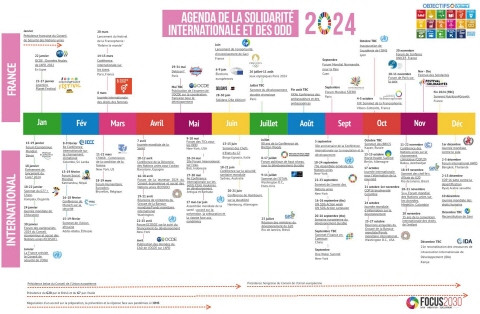 Solidarité Internationale 2024: Les grandes étapes à venir سنة النشر: 2023 المؤلف المؤسسي: Focus 2030 2024 : fin du multilatéralisme ou renouveau ? Les Objectifs de développement durable en suspens. L’année à venir sera l’occasion de mobiliser de manière régulière la communauté internationale autour de nombreux sommets internationaux et rencontres dont les résultats seront susceptibles de changer la face du monde. 2024: End of Multilateralism or Renewal? Sustainable Development Goals in Limbo. The upcoming year will provide a regular platform for mobilizing the international community through numerous international summits and meetings, the outcomes of which have the potential to reshape the world.