
الموارد
استكشف مجموعة واسعة من الموارد القيمة حول تعليم المواطنة العالمية لتعميق فهمك وتعزيز البحث والمناصرة والتعليم والتعلم.
تم العثور على 875 نتيجة
 Ruta educativa: Lecciones aprendidas سنة النشر: 2024 المؤلف المؤسسي: Save the Children El presente informe, elaborado por Save the Children en alianza con HIAS y financiado por ECHO, expone las principales lecciones aprendidas del proyecto Ruta Educativa, que ha tenido como zonas de intervención México, Panamá, Costa Rica, Guatemala, Honduras y El Salvador. El objetivo del proyecto ha sido contribuir a reducir las barreras de acceso a la educación de niños, niñas, adolescentes y familias en movimiento en las rutas migratorias centroamericanas, y en el marco del mismo se ha creado un paquete metodológico que contiene una herramienta de evaluación “HALDO on the move” (Holistic Assessment of Learning and Development Outcomes) que permite a los diferentes actores humanitarios evaluar rápidamente el nivel educativo de los niños, niñas y adolescentes y registrar sus datos en una plataforma con el fin de ofrecer una respuesta de educación en emergencias adaptada a las necesidades de aprendizaje reales, así como lograr una mayor coordinación para promover la continuidad educativa a lo largo de la ruta.
  New Citizenship, Culture of Peace and Democratic Integration: Pedagogical Guidelines and Didactic Proposals سنة النشر: 2015 المؤلف المؤسسي: Argentina. Ministry of Education | Chile. Ministry of Education This document is an input that, in the form of a guide of pedagogical guidelines and teaching proposals, seeks to support the development of the objectives of the New Citizenship, Culture of Peace and Democratic Integration Program, promoted by the Ministry of Education of Argentina and the Ministry of Education of Chile. The first section corresponds to an introductory section, which communicates the principles on which the program is based. The second section is made up of the axes and chapters that structure the guide. Each axis (four in total) is subdivided into two chapters, articulated around the topic that the axis addresses and which is briefly presented at the beginning of it. Nueva ciudadanía, cultura de paz e integración democrática: Lineamientos pedagógicos y propuestas didácticas سنة النشر: 2015 المؤلف المؤسسي: Argentina. Ministry of Education | Chile. Ministry of Education El presente documento es un insumo que, bajo la forma de una guía de lineamientos pedagógicos y propuestas didácticas, busca apoyar el desarrollo de los objetivos del Programa Nueva Ciudadanía, Cultura de Paz e Integración Democrática, que promueven el Ministerio de Educación de Argentina y el Ministerio de Educación de Chile. La primera sección corresponde a un apartado introductorio, que comunica los principios en que se basa el programa. La segunda sección está conformada por los ejes y capítulos que estructuran la guía. Cada eje (cuatro en total) está subdividido en dos capítulos, articulados en torno al tema que el eje releva y que es presentado, brevemente, al inicio de este.
 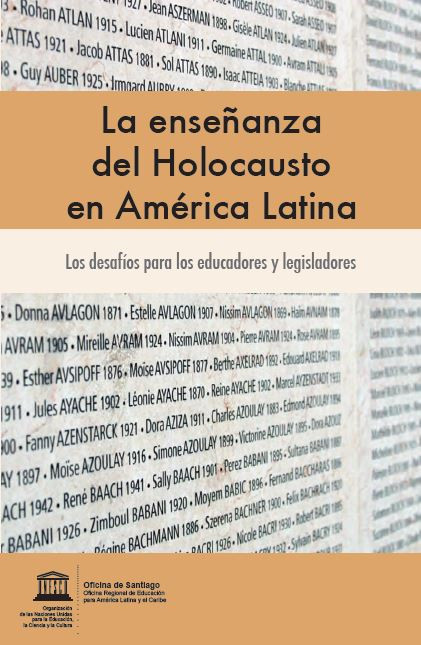 The Teaching of the Holocaust in Latin America the Challenges for Educators and Legislators سنة النشر: 2017 المؤلف: María Celeste Adamoli | Emmanuel Kahan, Pablo Luzuriaga | Ministerio de Educación المؤلف المؤسسي: UNESCO Santiago This book provides an overview of opportunities that may arise from educating about the Holocaust in diverse cultural contexts and educational situations, with a special focus on Latin American countries. We can actually be away from the places where the genocide against the Jewish people was perpetrated, but Latin America is still taking charge of its own past of violence and crimes against humanity. With this publication, Latin American educators will have at their fingertips an updated account of the most outstanding topics that are discussed on pedagogy and policy making. You can also explore how, even today in Europe, education about the Holocaust shapes a culture of memory. On the other hand, you can see how in other places the memory of the Holocaust can be a starting point to relate to other difficult pasts. UNESCO is convinced that the prevention of genocide begins at school. In a world where mass violence is possible, this publication will show the importance of teaching young people about the Holocaust and about other genocides in history. It is a condition to prevent similar crimes from happening in the future. La Enseñanza del Holocausto en América Latina: los desafíos para los educadores y legisladores سنة النشر: 2017 المؤلف: María Celeste Adamoli | Emmanuel Kahan, Pablo Luzuriaga | Ministerio de Educación المؤلف المؤسسي: UNESCO Santiago Este libro proporciona un panorama de oportunidades que pueden surgir de educar sobre el Holocausto en diversos contextos culturales y situaciones educativas, con un foco especial en los países latinoamericanos. Podemos en realidad estar lejos de los lugares donde el genocidio contra el pueblo judío fue perpetrado, pero también América Latina está todavía haciéndose cargo de su propio pasado de violencia y crímenes contra la humanidad. Con esta publicación, los educadores latinoamericanos van a tener al alcance de la mano un recuento actualizado de los temas más destacados que se discuten sobre pedagogía y construcción de políticas. También podrán explorar cómo, todavía hoy en Europa, la educación sobre el Holocausto da forma a una cultura de la memoria. Por otra parte, pueden ver cómo en otros lugares la memoria del Holocausto puede ser un punto de partida para relacionarse con otros pasados difíciles. La UNESCO está convencida de que la prevención del genocidio comienza en la escuela. En un mundo en donde la violencia masiva es posible, esta publicación mostrará lo importante de enseñar a los jóvenes sobre el Holocausto y sobre otros genocidios en la historia. Es una condición para prevenir que crímenes similares sucedan en el futuro.
  World Report on the Culture of Peace: Civil Society Report at Midpoint of the Culture of Peace Decade سنة النشر: 2005 المؤلف المؤسسي: Foundation for a Culture of Peace The year 2005 marks the midpoint of the International Decade for a Culture of Peace and Non-Violence for the Children of the World (2001-2010) as proclaimed by the United Nations General Assembly.The present report has been submitted to the UN Secretary-General for the General Assembly's consideration at its next session under the relevant agenda item which will review the midpoint of the Culture of Peace Decade. This initiative responds to the invitation contained in operative paragraph 10 of General Assembly resolution A/59/143.The report is based on the accounts submitted by 700 organizations from all regions of the world. From the information received, it can be concluded that the culture of peace is advancing.The report provides the first comprehensive view of the progress made by the global movement for a culture of peace, since it was called for in 1999 by General Assembly resolution A/53/243 (annexed to the end of this report). Rapport Mondial de la Culture de la Paix: Rapport de la société civile à mi-parcours de la Décennie de la Culture de Paix سنة النشر: 2005 المؤلف المؤسسي: Foundation for a Culture of Peace L'année 2005 se situe à mi-parcours de la Décennie internationale de la promotion d'une culture de la nonviolence et de la paix au profit des enfants du monde (2001-2010), conformément à la proclamation de l'Assemblée générale de l'Organisation des Nations Unies.Le présent rapport a été présenté au secrétaire général de l'Organisation des Nations Unies pour être étudié lors de la 60e session de l'Assemblée générale, lorsque sera abordé le point de l'ordre du jour relatif aux cinq premières années de la Décennie pour une culture de la paix. Cette initiative répond à l'invitation formulée au paragraphe 10 de la résolution A/59/143 de l'Assemblée générale.Le rapport est élaboré à partir d'informations présentées par 700 organisations provenant de toutes les régions du monde. Toutes les informations reçues permettent de conclure que la culture de la paix progresse.Le rapport fournit le premier panorama exhaustif des progrès réalisés par le mouvement mondial pour une culture de la paix depuis sa proclamation en 1999 par l'Assemblée générale dans sa résolution A/53/243 (en annexe au présent rapport). Informe Mundial de Cultura de Paz: Informe de la sociedad civil en la mitad del Decenio de Cultura de Paz سنة النشر: 2005 المؤلف المؤسسي: Foundation for a Culture of Peace El año 2005 marca la mitad del Decenio Internacional de una cultura de paz y no violencia para los niños del mundo (2001-2010), tal y como proclamó la Asamblea General de las Naciones Unidas.Este informe se ha presentado al Secretario General de las Naciones Unidas para la consideración de la Asamblea General en su 60º periodo de sesiones dentro del punto del orden del día donde se examinarán los primeros cinco años del Decenio de una Cultura de Paz. Esta iniciativa responde a la invitación recogida en el párrafo operativo 10 de la resolución A/59/143 de la Asamblea General.El informe se basa en la información presentada por 700 organizaciones provenientes de todas las regiones del mundo. De toda la información recibida, se puede concluir que la cultura de paz está avanzando.El informe proporciona la primera visión exhaustiva del progreso hecho por el movimiento global por una cultura de paz, desde que fue proclamado en 1999 por la Asamblea General en su resolución A/53/243 (anexada al presente informe). تقرير عن ثقافة السلام في العالم سنة النشر: 2005 المؤلف المؤسسي: Foundation for a Culture of Peace أعلنت الجمعية العامة للأمم المتحدة العقد الدولي من أجل ثقافة للسلام وعدم العنف ضد أطفـال العـالم خلال الفترة 2001 – 2010 قرارها 53/25 بتاريخ 10 نوفمبر 1998 .وعلاوة على ذلك، أقرت الجمعية العامة سنة 1999 إعلان وبرنامج عمل من أجل ثقافة السلام.وفي سنة 2000 أنشئت مؤسسة ثقافة السلام دف الإسهام بناء وتدعيم ثقافة السلام مـن خـلال التفكير، والبحوث، والتعليم، والعمل الموقع. وقد تابعت المؤسسة بنشاط تنفيذ إعلان وبرنامج عمل الأمم المتحدة والأنشطة التي نفذت أثناء العقد الدولي.وبناء على ذلك، أعدت المؤسسة، طبقً للقرار 59 / 143 بتاريخ 15 ديسمبر 2004 التقرير العـالمي الحالي عن ثقافة السلام وقدمته إلى الأمين العام للأمم المتحدة لكي تنظر فيه الجمعية العامة. ويضم هذا الكتيب تقرير اتمع المدني منتصف عقد ثقافة السلام. وهو يتضمن معلومات جمعتها وقدمتها ما يقرب من 700 منظمة على مستوى العالم وهي التي حللت الأنشطة التي نفذت لتعزيز ثقافة السلام وعدم العنف وكذلك التقدم الذي تحقق أثناءالنصف الأول من العقد الدولي.ويوضح الكتيب المعوقات التي اعترضت تنفيذ القيم التي تضمنها الإعلان وبرنامج العمل. كمـا ذكـرت الجمعية العامة مراراً، فإ الدول الأعضاء تزال مدعوة تواصل إعطاء مزيد من التركيز وتوسـيع أنشـطتها الداعمة لثقافة السلام وعدم العنف على المستويات الوطنية، والإقليمية، والدولية.
  Global Citizenship Concepts in the Curricula of Four Countries سنة النشر: 2017 المؤلف: Natalie Browes المؤلف المؤسسي: UNESCO International Bureau of Education (IBE) | APCEIU This report details the presence of Global Citizenship Education (GCED) concepts in the education systems of four countries: Cambodia, Colombia, Mongolia and Uganda. It highlights the main findings of eight reports: four expert reports, which predominately analyse curriculum content, and four situational analysis reports, which take a broader view and detail some of the country-specific challenges and opportunities with regard to GCED. Findings reveal the presence of GCED concepts across the curricula of the four countries. In addition to cognitive content related to GCED, competency-based content is also found present within the curricula of these countries. However, the majority of this content can only be indirectly linked to GCED, and it is better interpreted as part of the more traditional civics or citizenship education approach. As such, it generally lacks a global perspective and does not engage with all key themes of GCED. Furthermore, this content is often concentrated at the lower and upper secondary levels, instead of being equally distributed across all grade levels. This is particularly true in the case of behaviour-based competencies. Findings also reveal challenges beyond the curriculum. These include lack of teacher training and lack of support to implement GCED, which are concerns expressed by stakeholders in all four countries. A lack of GCED content in textbooks and lack of supplementary materials were also found to be issues. The report concludes with recommendations regarding the effective implementation of GCED within curricula. Among others, the report suggests the transversal integration of GCED - across the curriculum at all grade levels, while at the same time, actors from all levels of the education system, ranging from central government to teachers, should be engaged to ensure the use of complementary learning materials, pedagogies and assessment techniques.