
الموارد
استكشف مجموعة واسعة من الموارد القيمة حول تعليم المواطنة العالمية لتعميق فهمك وتعزيز البحث والمناصرة والتعليم والتعلم.
تم العثور على 1,447 نتيجة
 How Can We Talk About Climate Without Turning It Into a Contentious Issue? سنة النشر: 2023 المؤلف: Laurent Cordonier المؤلف المؤسسي: Le Monde How can we tackle the climate issue without talking only to the convinced? Debates on the climate issue run the risk of becoming a highly divisive political issue, hampering much-needed action, warns sociologist Laurent Cordonier in a new episode of “Chaleur humaine”, a weekly podcast for reflection and debate on ways of tackling the climate challenge. Comment parler du climat sans en faire un sujet d'affrontement ? سنة النشر: 2023 المؤلف: Laurent Cordonier المؤلف المؤسسي: Le Monde Comment aborder le sujet du climat sans parler seulement aux convaincus ? Les débats sur la question climatique risquent de devenir un sujet de clivage politique très fort, ce qui entraverait l’indispensable action, prévient le sociologue Laurent Cordonier dans un nouvel épisode du podcast « Chaleur humaine », podcast hebdomadaire de réflexion et de débat sur les manières de faire face au défi climatique.
  女童和妇女教育 国际研讨会总结报告. 中华人民共和国,北京. 2016年6月4—7日 سنة النشر: 2016 المؤلف المؤسسي: National Commission of the People's Republic of China for UNESCO | UNESCO Beijing The International Seminar on Girls’ and Women’s Education, held 4-6 June 2016 in Beijing, explored benefits of education on girls and women along with barriers to the achievement of gender equality in education. It provided a platform for dialogue on the role of education for girls and women, particularly in the context of the 2030 Agenda for Sustainable Development, and specifically in reaching SDG 4 and supporting the achievement of other SDGs. The event also marked the first award ceremony of the UNESCO Prize for Girls’ and Women’s Education, which honoured two laureates for their outstanding innovation and contributions to advancing girls’ and women’s education. This publication presents a synthesis of information that was shared during the seminar’s sessions, and the findings and recommendations originating from the exchanges.
 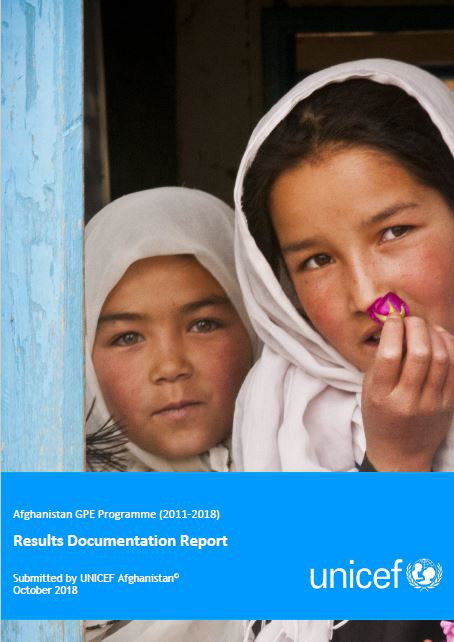 2018 grant completion report. Afghanistan سنة النشر: 2019 المؤلف المؤسسي: UNICEF Afghanistan This is the completion report of GPE’s program in Afghanistan, which ran from 2012 to 2018. Overall, it appears education access and equity has been improved in target districts, and some of these effects promise to persist beyond the program period.Community engagement in schooling has also improved, as well as school performance. Target schools have safer and more conducive learning environments for children, and monitoring of education pathways has also improved.Schools have been reopened, and numbers of female teachers in target areas have grown. Finally, the Ministry of Education and national education sectors have seen advances in institutional capacity, and national aid coordination mechanisms also seem to have improved.
  Pandemic-Related Disruptions to Schooling and Impacts on Learning Proficiency Indicators: A Focus on the Early Grades سنة النشر: 2021 المؤلف: Martin Gustafsson المؤلف المؤسسي: UNESCO Institute for Statistics (UIS) This report focusses on the impacts of the pandemic on learning proficiency, specifically as measured by Sustainable Development Goal (SDG) Indicator 4.1.1. Over the last couple of decades, there has been a growing awareness of how crucial learning proficiency, especially that of younger children, is for human development. The evidence is clear that improvements in proficiency underpin future economic development, and the building of more cohesive and equal societies. The indicators on learning proficiency are among the most discussed indicators within the SDG framework. This report explains the impact of COVID-19 on learning losses for primary-aged children and the need for an effective response.
 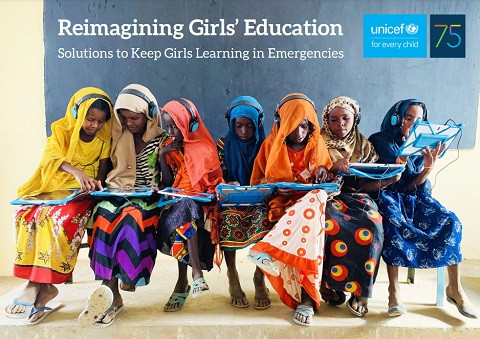 Reimagining Girls’ Education: Solutions to Keep Girls Learning in Emergencies سنة النشر: 2021 المؤلف المؤسسي: United Nations Children's Fund (UNICEF) Reimagining Girls’ Education: Solutions to Keep Girls Learning in Emergencies presents an empirical overview of what works to support learning outcomes for girls in emergencies. Research shows that girls in emergencies are disadvantaged at all stages of education and are more likely to be out-of-school than in non-emergency settings. Girls are also struggling to learn.This solutions book seeks to highlight promising evidence-based actions in education for decision makers who are designing and implementing interventions to support girls’ education in low and middle-income country humanitarian settings and settings where education has been interrupted by the COVID‑19 pandemic. It documents practical examples of approaches that have been or are being tested, and from which lessons can be drawn.The overarching aim is that this evidence be used to inform programming in crises and support diverse stakeholders in mitigating the impact of emergencies on girls’ education.
 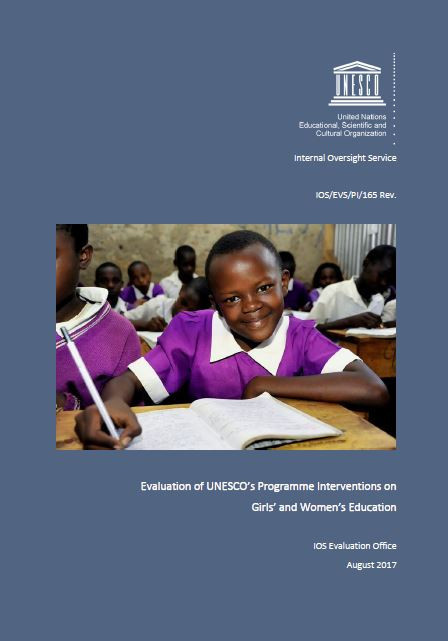 Evaluation of UNESCO's Programme Interventions on Girls' and Women's Education سنة النشر: 2017 المؤلف: Michael Reynolds, Martina Rathner, Estelle Loiseau المؤلف المؤسسي: UNESCO Internal Oversight Service (IOS) Since 2008, Gender Equality has been one of two global priorities for UNESCO. In May 2011, UNESCO launched the Global Partnership for Girls’ and Women’s Education, also known as “Better Life, Better Future”, which aims to increase learning opportunities for adolescent girls and women and to find solutions to some of the biggest obstacles to their education. To further advance the global priority of Gender Equality, since 2015 a dedicated Section of Education for Inclusion and Gender Equality specifically addresses the gender dimensions in education that contribute to differential access, participation, completion, and learning outcomes by boys and girls, and men and women. The evaluation examines UNESCO’s programme interventions in girls’ and women’s education during the period 2015 to 2017, in particular to ascertain the relevance, effectiveness, efficiency and sustainability of initiatives, and to clarify the strategic role and positioning of the Organization in supporting girls’ and women’s education at regional and country levels.The evaluation found that although UNESCO’s efforts for enhancing girls’ and women’s education are clearly aligned to SDG 4 and SDG 5 and also broadly in line with the overall principle of leaving no one behind, there is at times a trade-off between targeting the hardest to reach and other donor priorities, and UNESCO needs to more clearly position its efforts in support of girls’ and women’s education and its niche in the 2030 Agenda. Furthermore, continued efforts are required to scale up and/or replicate small-scale interventions, to better ensure sustainability and to consolidate mechanisms for coordination and information sharing among different interventions to seize synergies and enhance organizational learning.
 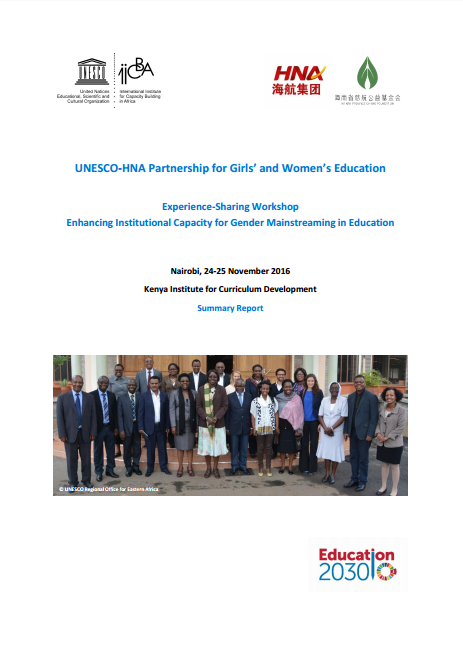 UNESCO-HNA partnership for girls' and women's education: experience-sharing workshop: enhancing institutional capacity for gender mainstreaming in education; summary report سنة النشر: 2016 المؤلف المؤسسي: UNESCO International Institute for Capacity-Building in Africa (IICBA) The first experience-sharing workshop was organised on 24-25 November 2016 in Nairobi, Kenya. The objectives of the workshop were to: v Increase awareness on girls' education activities through South-South interaction. v Exchange experiences and lessons on HFIT project implementation. v Enhance institutional networking and interaction on issues related to girls' education.
  Informe de referente regional 2010: oportunidades de aprendizaje escolar de la ciudadanía en América Latina: currículos comparados سنة النشر: 2010 المؤلف: Cristián Cox Donoso المؤلف المؤسسي: Sistema Regional de Evaluacion y Desarrollo de Competencias Ciudadanas (SREDECC) This report has three purposes, the first, to describe the contexts and challenges of education for citizenship education in Latin America; secondly, to describe the process of implementation and creation of the Latin American version of the International Civic and Citizenship Education Study (ICCS) test and compare the categories of both evaluation tools; lastly, to characterize, in a comparative way, the citizenship education curricula of Colombia, Chile, Guatemala, Mexico, Paraguay, and the Dominican Republic. The results of the report rise from the analysis of secondary sources on the socio-educational contexts in which citizenship education is based upon in Latin America, as well as a comparative analysis of the original educational curricula of the six countries of this project. The structure of the chapters and the sections of this document are arranged according to the referred purposes. The first chapter focuses on the sociocultural context of the educational system that is in charge of shaping citizens. Recent evidence on beliefs and democratic practices in the region will be examined. Later, the evolution of the school systems in the last decade and a half will be described. Finally, in order to establish a “base line” on the role of citizenship education in education policy, first the curricula, pedagogies, and teacher formation and evaluation will be examined. The second chapter focuses on the process of generation of the Latin American evaluative method, part of the ICCS test. Then, in a detailed manner, a comparative analysis of the categories or evaluation criteria of both tests will be presented in order to show the predominant opinion of citizenship education in the 6 countries. Trying to identify certain patterns, the report concludes with a chapter that makes interpretations and projections about the tendencies observed in current curricula and propose new criteria for the development of new education curricula. 2nd European congress on global education: education, interdependence and solidarity in a changing world; final report سنة النشر: 2012 المؤلف المؤسسي: North-South Centre of the Council of Europe | Global Education Network Europe (GENE) | CONCORD Europe | Portuguese Institute of Cooperation and Language | Portuguese NDGO Platform | University of Lisbon | European Commission The 2nd European Congress on Global Education: Education, Interdependence and Solidarity in a Changing World took place on 27 – 28 September 2012 in Lisbon. It was organised by the North-South Centre of the Council of Europe (NSC) in partnership with Global Education Network Europe (GENE) and CONCORD Europe, in cooperation with the Portuguese Institute of Cooperation and Language - Camões, the Portuguese NDGO Platform and the University of Lisbon and with the financial support of the European Commission. This Congress brought together approximately 200 stakeholders in global education, in particular international organisations, governments, parliamentarians, local and regional authorities, civil society organisations, as well as educators from Europe and beyond, using the principle of “quadrilogue” and a holistic approach to global education. This two-day event built on the efforts of the North-South Centre (NSC) and other stakeholders to promote global education since the Maastricht Congress Declaration (2002) which established a European strategy framework for improving and increasing global education in Europe to the year 2015. Thematic dialogue and exchange of ideas and practices together with a reflection on the political dimension of global education contributed to the formulation of a Lisbon Statement and the revision of the proposed Strategic Recommendations for Strengthening Global Education till 2015. The resume of the thematic dialogues, the Lisbon Statement on Global Education and the Strategic Recommendations represent an integral part of this report. This is also complemented with a short concluding section with follow-up proposals.