
الموارد
استكشف مجموعة واسعة من الموارد القيمة حول تعليم المواطنة العالمية لتعميق فهمك وتعزيز البحث والمناصرة والتعليم والتعلم.
تم العثور على 882 نتيجة
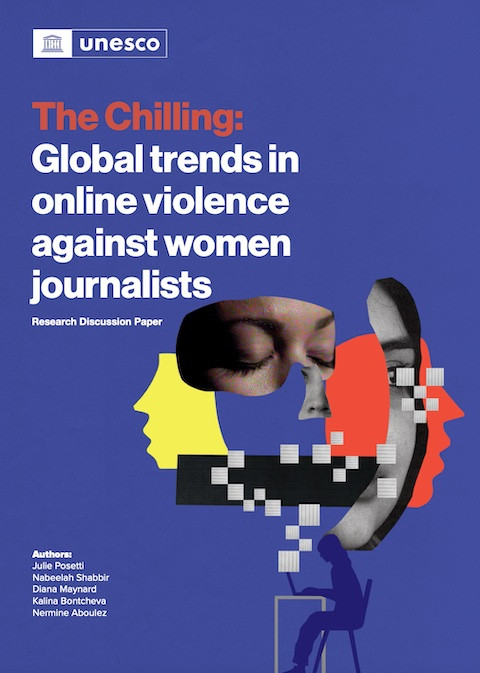 The Chilling: Global Trends in Online Violence Against Women Journalists; Research Discussion Paper سنة النشر: 2021 المؤلف: Julie Posetti | Nabeelah Shabbir | Diana Maynard | Kalina Bontcheva | Nermine Aboulez المؤلف المؤسسي: UNESCO This report demonstrates that online violence against women journalists is a global phenomenon, albeit one with uneven impacts that are heightened at various intersectional points, including racism, religious bigotry, sectarianism, homophobia and disinformation. There is a climate of impunity surrounding online attacks on women journalists which must be more urgently and effectively addressed because impunity emboldens the perpetrators, demoralises the victim, erodes the foundations of journalism, and undermines freedom of expression. For too long, the emphasis has been on making women journalists responsible for their own defence and protection, rather than making the perpetrators and instigators, the platform enablers, and law enforcement and media employers accountable.These methods of attack are growing more sophisticated, and they are evolving with technology. They are also increasingly networked and fuelled by political actors. This points to the need for responses to online violence to grow equally in technological sophistication and collaborative coordination. Another point highlighted by this research: most women journalists do not report or make public the online attacks they experience, in line with low levels of reporting when it comes to violence against women more broadly. Many media employers still appear reluctant to take online violence seriously. This aligns with the evident failure of the internet communications companies - whose social networks, messaging and search services facilitate much of the harassment, intimidation, abuse and threats targeting women journalists - to take effective action to address this freedom of expression and gender equality crisis.
  反击社交媒体上的仇恨言论:当代的挑战 سنة النشر: 2021 المؤلف المؤسسي: 联合国教科文组织 (UNESCO) | Oxford Internet Institute | European Union (EU) 本文件是牛津大学互联网研究所与联合国教科文组织合作开发的一个工具包的组成部分,该工具包包含各种现有的方法、资源及研究项目,旨在监测网络仇恨言论的发生、传播和影响,以及评估反击仇恨言论的能力和做法。
 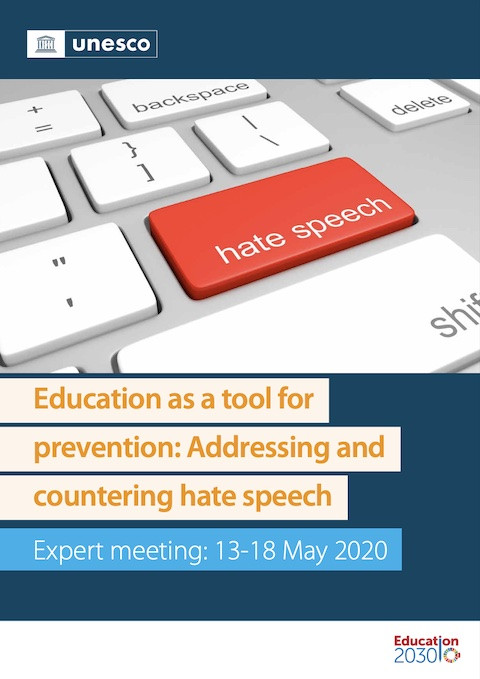 Education as a Tool for Prevention: Addressing and Countering Hate Speech (Expert Meeting: 13-18 May 2020) سنة النشر: 2021 المؤلف المؤسسي: UNESCO Addressing and countering hate speech is a multi-layered endeavour, which includes tackling its root causes and drivers, preventing it from translating into violence and dealing with its wider societal consequences.Within the framework of the Education 2030 Agenda, and more specifically target 4.7 of Sustainable Development Goal 4 (SDG 4), as well as the United Nations Strategy and Plan of Action on Hate Speech – which places specific emphasis on the role of education as a tool for addressing hate speech – UNESCO and the United Nations Office on the Prevention of Genocide and the Responsibility to Protect (OSAPG) convened a series of virtual meetings of experts from 13 to 18 May 2020. This report highlights some of the key discussion areas and unpacks the role of education as a preventive tool. It argues that strengthening educational responses to build the resilience of learners to exclusionary rhetoric and hate speech is paramount for sustainable development and peace for all.
 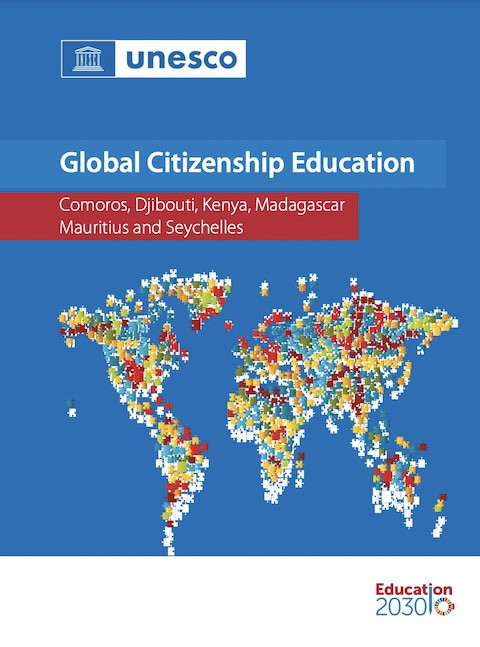 Global Citizenship Education: Comoros, Djibouti, Kenya, Madagascar, Mauritius and Seychelles سنة النشر: 2022 المؤلف المؤسسي: Organización de las Naciones Unidas para la Educación, la Ciencia y la Cultura (UNESCO) This is a collection of papers of a research project undertaken in six countries of the Eastern Africa region, namely, Comoros, Djibouti, Kenya, Madagascar, Mauritius and Seychelles to assess the Understanding and Implementation of SDG 4.7 on Global Citizenship Education (GCED) in each of the six countries.The research findings were shared by each of the six countries in a Webinar hosted by the UNESCO Nairobi Regional Office for Eastern Africa on September 23, 2021. The Webinar Agenda is contained in this publication along with the Opening and Closing Remarks made by UNESCO and Keynote Address by an affiliate UNESCO Chair in Africa.
 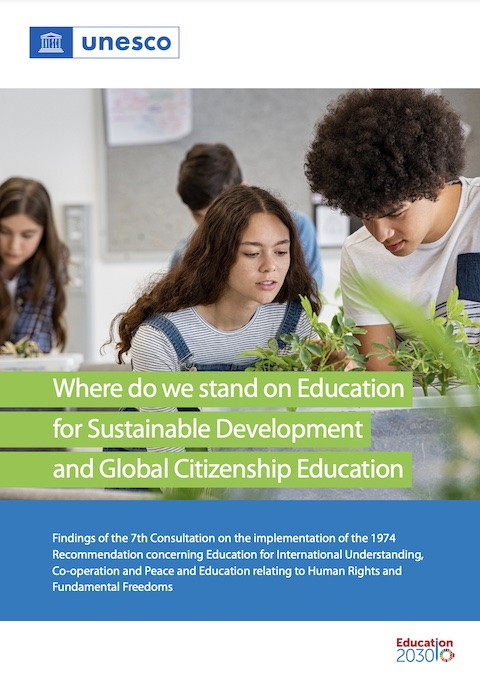 Where Do We Stand on Education for Sustainable Development and Global Citizenship Education: Findings of the 7th Consultation on the Implementation of the 1974 Recommendation Concerning Education for International Understanding, Co-operation and Peace and Education Relating to Human Rights and Fundamental Freedoms سنة النشر: 2022 المؤلف المؤسسي: UNESCO The Recommendation concerning Education for International Understanding, Co-operation and Peace and Education relating to Human Rights and Fundamental Freedoms was adopted by the 18th session of UNESCO’s General Conference in November 1974. Every four years, Member States are invited to report on the measures they have taken to implement the Recommendation in all levels and types of education from pre-primary to tertiary, formal, non-formal and adult education. This document summarizes the results of the 7th consultation on the implementation of the 1974 Recommendation, covering the period 2017-2020. It also contains, for the first time, data for the global indicator adopted by the UN Statistical Commission and the UN General Assembly for the monitoring of Target 4.7 of Sustainable Development Goal for Education.
  UNESCO Futures of Education Report Explained by Members of the International Commission سنة النشر: 2022 المؤلف المؤسسي: UNESCO Initiated by UNESCO, the International Commission on the Futures of Education has prepared a new report on how education can best shape the future of humanity and the planet. In this video, members of the Commission and its chair explain the main recommendations and defining features of their report, Reimagining our futures together: A new social contract for education. The report is part of UNESCO’s Futures of Education initiative which aims to rethink education and shape the future. The initiative is catalyzing a global debate on how knowledge, education and learning need to be reimagined in a world of increasing complexity, uncertainty, and precarity.
 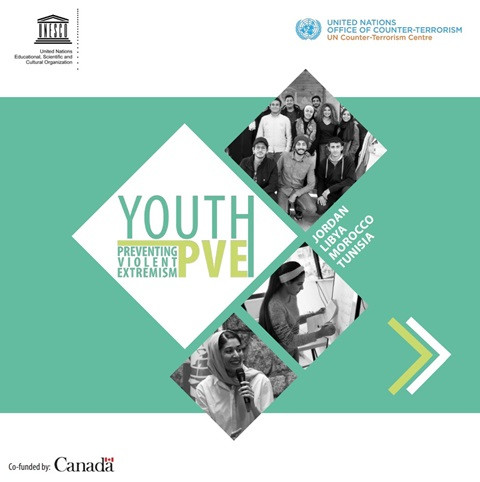 Youth PVE: Preventing Violent Extremism سنة النشر: 2020 المؤلف المؤسسي: UNESCO | UN. Office of Counter-Terrorism (UNOCT) Violent extremism threatens the security and fundamental rights of citizens all over the world, and undermines the attempts of many countries to achieve sustainable peace. Many violent extremist organizations work by recruiting disenfranchised youth and inciting them to commit acts of violence. This project focuses on meaningful youth engagement because we believe that enhancing the resilience of young people will prevent their involvement in violent extremism and instead transform them into agents of positive change. We provide a framework for action that mobilizes UNESCO at multiple levels to provide young people with opportunities, knowledge and capacities to foster dialogue and cooperation in furtherance of PVE.
  3rd Global Forum Against Racism and Discrimination: Final Document سنة النشر: 2024 المؤلف المؤسسي: UNESCO The third edition of the Global Forum against Racism and Discrimination with the theme “Race to the top: putting racial equity and justice at the forefront of development agendas” was held in São Paulo, Brazil, on 29 November 2023 and 1 December 2023. At the invitation of Brazil, in partnership with the Ford Foundation, the Open Society Foundations, the Mover Foundation, Instituto Ibirapitanga, the Global Forum highlighted the importance of placing racial issues at the core of development and implementation strategies, with a view to socioeconomic development. The Global Forum welcomed Ministers, high-ranking officials of national bodies responsible for combating discrimination and promoting equality, mayors of the International Coalition of Inclusive and Sustainable Cities - ICCAR, academics, scientists, civil society actors, NGOs, artists and digital influencers to share good practices, strengthen commitments and discuss effective strategies to combat racism and various forms of discriminations, including recommendations on how to proceed. The Global Forum’s agenda covered several topics, such as co-creating inclusive policies with impacted communities’ inputs; increasing awareness-raising on historical systems such as transatlantic enslavement to better comprehend and dismantle their contemporary legacies such as racism; progress towards gender equality; enhancing the capacities of civil society to be an agent of change; addressing artificial intelligence and its role in perpetuating racism; protecting the rights of indigenous peoples; establishing legal and policy frameworks prioritizing anti-racism and anti-discrimination on a local and global scale; strengthening the roles of cities, civic spaces, artistic and academic communities; enhancing the importance of informed data baseline on equality for governments; and promoting social philanthropy to address racial inequality. The 2023 edition was also marked by the launch of new initiatives. One of the main outcomes of the Global Forum is the establishment of the UNESCO Network of Anti-Racism and Anti-Discrimination Officials aiming to strengthen the development of innovative and inclusive policy solutions for peace, equity and non-discrimination. UNESCO has launched the new UNESCO Anti-Racism Toolkit, the Gender-Based Resilience Framework, the ‘Let’s Talk‘ project with Harvard University to combat prejudice against migrants, and the development of a new joint OECD-UNESCO briefing on combating discrimination against migrants. Volume X of the UNESCO General History of Africa, entitled Africa and its Diasporas, was also launched during the Global Forum. The publication offers a mapping of African diasporas throughout the world, valorizing their contributions to modern societies.
 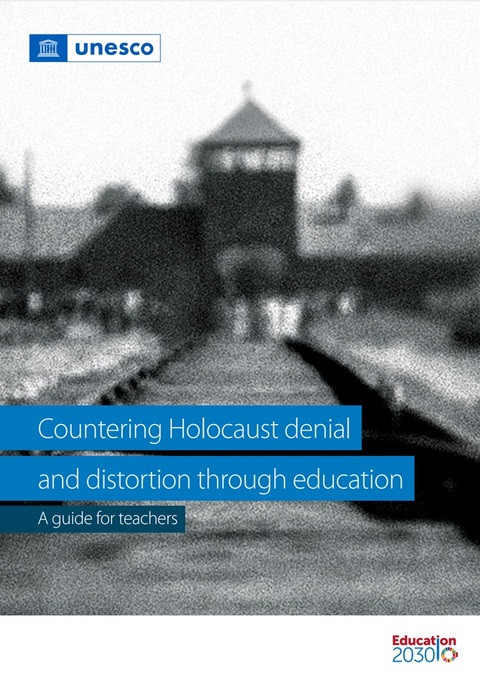 Countering Holocaust Denial and Distortion through Education: A Guide for Teachers سنة النشر: 2025 المؤلف المؤسسي: UNESCO Antisemitic hate speech, disinformation, and conspiracy theories thrive during crises, making it vital for teachers to address these issues in school curricula. Social media has significantly amplified the spread of such harmful content, including Holocaust denial and distortion. These falsehoods, rooted in antisemitic prejudice and conspiratorial thinking, threaten our shared historical memory and promote hatred. To effectively combat these issues, it is essential to have a comprehensive understanding of the Holocaust —how and why the genocide of the Jewish people occurred. This knowledge helps us recognize the causes and risk factors, contributing to the prevention of future atrocity crimes and the fight against antisemitism. In the digital age, it is also imperative to be able to decipher the manipulation of history, and the misrepresentation of the past.The guide provides teachers with the necessary tools and guidance to prevent the spread of Holocaust denial and distortion. It equips teachers with knowledge, teaching principles, and strategies to foster digital literacy, historical understanding, and critical thinking in learners. Aimed primarily at history and social sciences teachers, it outlines key concepts, teaching methods, and approaches to counter Holocaust denial and distortion.
  Countering Holocaust Denial and Distortion through Education: Lesson Activities for Secondary Education سنة النشر: 2025 المؤلف المؤسسي: UNESCO Adaptable lessons to foster critical thinking, empathy and tolerance Holocaust denial rejects historical facts outright, while distortion manipulates the narrative. Both phenomena undermine historical truth, fuel antisemitism, and attack democratic values. By addressing these issues, this set of lesson activities for secondary education seeks to build students’ resilience against falsehoods through fostering critical thinking, empathy, and global citizenship. It was developed by UNESCO and funded by the European Commission to equip educators with tools to confront the dangerous spread of Holocaust denial and distortion. With 12 engaging lessons, students aged 14 to 18 will explore the historical facts of the Holocaust while learning to critically evaluate misinformation in today’s digital world. From analyzing survivor testimonies to deconstructing harmful memes and conspiracy theories, this resource features 12 adaptable lessons that focus on historical literacy, media analysis, and social-emotional competencies. Topics range from identifying denial and distortion, evaluating media and online sources, analyzing primary evidence like survivor testimonies, and understanding the misuse of Holocaust history in memes and conspiracy theories. Activities are scaffolded with questions, examples, and practical exercises to encourage analytical skills and promote meaningful classroom discussions. The lessons also include suggestions for incorporating primary sources, visiting memorial sites, and addressing broader issues of genocide and hate. In doing so, the guide aims to not only preserve Holocaust memory but also strengthen the values of truth, empathy, and tolerance in younger generations.