
الموارد
استكشف مجموعة واسعة من الموارد القيمة حول تعليم المواطنة العالمية لتعميق فهمك وتعزيز البحث والمناصرة والتعليم والتعلم.
تم العثور على 2,781 نتيجة
 Popular Education and Critical Pedagogies in Latin America and the Caribbean: Emancipatory Currents for Public Education in the 21st Century سنة النشر: 2018 المؤلف: Estela Quintar | Inés Cappellacci | Anahí Guelman | Claudia Loyola | María Mercedes Palumbo | Shirly Said | Laura Tarrio | Silvya De Alarcón | Beatriz Areyuana | Fabián Cabaluz | Felipe Zurita | Jonathan Piedrahita | Yicel Giraldo | Cindy Guzmán | Yolanda Pino | Andrés Castaño | Mónica Salazar Castilla | Héctor Fabio Ospina | Piedad Ortega Valencia | María Teresa Cruz Bustamante | Juan Carlos Hernández | Cándida Chávez | Ariana Celeste Aquino | Suyapa Pérez | Danilo R. Streck | Alfonso Torres Carrillo | Alfredo Manuel Ghiso | Oscar Jara Holliday المؤلف المؤسسي: Consejo Latinoamericano de Ciencias Sociales (CLACSO) In the pages and chapters of the book you walk through the corners of Bolivia with indigenous voices and struggles, through a Chile and an Argentina that go through stories, struggles and disputes over public affairs in the midst of hostile contexts, through a Central America (El Salvador, Costa Rica and Mexico) that rescues a tremendous legacy of organizational and revolutionary processes, and for Colombia, which in its fight for peace, collects the voices of organized youth. At the same time, this construction takes up great thinkers and collective actors who have enriched the paths of Popular Education and Critical Pedagogies.Thus, crossed by our Latin American history, by the distressing challenges and tensions that democracies go through today in each of our territories and contexts, by the conservative restorations that condition and surround us, Critical Pedagogies and Popular Education cannot but, according to what we have been seeing, that working in defense of the right to education that seems to be liquefying in several of our countries, they cannot help but put on the attire of a teacher to resist, from the state public school, the right to learn from children and young people and the right to be a teacher, to teach, of thousands of teachers who seem to want to be replaced by “educational leaders” and canned technological programs, with very good dividends for their importers.
  迈向“积极式”:澳大利亚公立中小学教育惩戒新动向 (现代教育论丛; no. 1) سنة النشر: 2022 المؤلف: 尹雅丽;马早明;佘永璇 进入21世纪,在全纳教育理念及社会多方因素的推动下,澳大利亚公立中小学教育惩戒从立法到实践,历经了从肇始于20世纪90年代的“零容忍”到“积极式”的转变。2019年澳大利亚大部分州新修订的《学校纪律政策》作为“积极式”教育惩戒的政策范本,以保障学生个人权利,促进学生人格发展为政策目标,涵盖了纪律准则、纪律改进及多元惩戒三位一体的学校治理方案。作为《学校纪律政策》的延伸,澳大利亚公立中小学探索教育惩戒的实施路径具体包括:创设恢复性环境,开发同侪调解与会议调解项目,逐级划分惩戒事件类型,整体上呈现迈向“积极式”的趋势。“积极式”教育惩戒基于“公平、公正”的育人观、层级化的惩戒措施和恢复性的惩戒保障,映射了澳大利亚公立中小学教育惩戒价值取向的新变化,也开启了澳大利亚公立中小学教育惩戒发展的新方向。
  The Transforming Education Summit: A Toolkit for Education Unions سنة النشر: 2022 المؤلف المؤسسي: Education International (EI) For the first time ever, the Heads of State of the world are meeting to discuss progress in education. Convened by the UN Secretary General, the Transforming Education Summit (TES) is taking place on 19 September 2022 in New York. It is a very important opportunity for us as education unions to make our voices heard.The Summit is a crisis response: it aims to reverse the downward trends that we currently see in education, with deepened and exacerbated inequity, and cuts to education budgets. Not only is the world off track to achieve Sustainable Development Goal 4 (SDG 4), the COVID-19 pandemic has wiped out 20 years of education gains. This is why the UN Secretary-General is calling for urgent action.The Summit is the biggest international education event since the adoption of SDG4 and a significant political opportunity for all EI member organisations. There are multiple ways that education unions can engage in the lead up to the Summit.This toolkit includes EI’s key policy messages for the Summit and aims to support EI member organisations in their advocacy efforts to ensure the Summit has concrete, tangible outcomes that advance teachers’ status and rights and the fulfilment of the right to education for all.
  Delegates Handbook 2022: Seventy-seventh Session of the United Nations General Assembly سنة النشر: 2022 المؤلف المؤسسي: UN. Department for General Assembly and Conference Management (UN. DGACM) The Protocol and Liaison Service contributes to the Delegates’ Handbook, a booklet that contains information of a general nature about United Nations Headquarters and is applicable throughout the current session. Suggestions for changes to the booklet should be addressed to the General Assembly Affairs Branch (room S-30FW; email: gaab<at>un.org). This booklet is also available on the internet at the United Nations Delegates website as well as the General Assembly website, under Resources.
  Challenges of Distance Education Facing Students with Learning Disabilities from the Teachers’ Perspective (Arts for Psychological & Educational Studies; vol. 1, no. 14) سنة النشر: 2022 المؤلف: Abd al-Rahman al-Matroudi | Abdullah Al-Rubaian المؤلف المؤسسي: Dhamar University The current study aimed to identify the challenges of distance education facing students with learning disabilities in the primary schools of Al Qassim region from the teachers’ perspective. The study sample consisted of 92 teachers of learning disabilities (58) males and (34) females. To achieve the study objectives, the descriptive survey method was used by designing a questionnaire to collect the study data. The study revealed many interesting findings, the most important of which is teachers’ insufficient knowledge of the necessary curriculum modifications needed to meet the needs of their students during distance education. The results also revealed statistically significant differences in teachers’ responses to distance education challenges facing students with learning disabilities in the primary schools due to gender differences, in favor of males. Based on these results, it was recommended that effective educational alternatives be provided by educational institutions in the case of communication problems or internet outages. These alternatives would enable students with learning disabilities to continue learning and get the fullest benefits.
  Education Investments in Middle East, Eastern and Southern Africa: Gaps & Opportunities Towards Sustainable Financing Beyond GPE Commitments سنة النشر: 2022 المؤلف المؤسسي: Plan International To achieve the goals of the global and continental agendas of repositioning access, equity, quality education and skills development as key drivers of inclusive growth and sustainable development, African governments must provide a level of predictable and sustainable investment in education. With these strategic investments, African countries can change the status quo, accelerate the pace of catching up with the developed countries and be able to compete in an increasingly technology and knowledge-based world where skills have become the “global currency of the 21st century”. Plan International in Middle East, Eastern and Southern Africa commissioned a study to assess the extent to which the Education Sector budget is adequate, gender-responsive and inclusive and to analyse education budget trends between 2019 and 2021. The focus was to generate concrete evidence regarding trends in education sector budget allocations and expenditure. Furthermore, due to the recent pandemic, the study aimed to compare current and previous allocations to detect trends/patterns in allocations and any reallocations due to COVID-19. Specifically, the study sought to: Analyse allocations (and expenditure) to the education sector with a particular focus on initiatives aimed at supporting the provision of gender-responsive and disability-inclusive education in line with the country policies; Assess the efficiency of resource allocation and use against planned expenditure; and Recommend effective strategies for CSOs and citizens to advocate for education budget increase to or above 20% of the national budget and 6% of GDP. The study focused on 10 countries in the region – Kenya, Uganda, Zambia, Malawi, Zimbabwe, South Sudan, Tanzania, Egypt, Somalia and Rwanda. With a multi-pronged research process of budget tracking and analysis, policy analysis, political economy analysis and varied data collection methods – the research findings and recommendations are ready for wider dissemination and use. تحديات التعليم عن بعد التي تواجه الطلاب الذين يعانون من صعوبات التعلم من منظور المعلمين (الآداب للدراسات النفسية والتعليمية ؛ المجلد 1 ، رقم 14). سنة النشر: 2022 المؤلف: Abd al-Rahman al-Matroudi | Abdullah Al-Rubaian المؤلف المؤسسي: Dhamar University هدفت الدراسة الحالية إلى الكشف عن تحديات التعليم عن بعد التي تواجه الطلاب ذوي صعوبات التعلم بالمرحلة الابتدائية في منطقة القصيم من وجهة نظر المعلمين، في حين تكونت عينة الدراسة من (92) معلمًا من معلمي صعوبات التعلم في المدارس الابتدائية في منطقة القصيم، كان منهم (58) معلما، و(34) معلمة. وتم استخدام المنهج الوصفي المسحي، كما تم تصميم الاستبيان كأداة لجمع بيانات الدراسة. وتوصلت الدراسة إلى العديد من النتائج، من أهمها: عدم كفاية المعرفة من قِبَل معلمي صعوبات التعلم بالتعديلات اللازم إدراجها على المقرر لكي يناسب الطلاب خلال تعليمهم عن بعد. كما أثبتت النتائج وجود فروق دالة إحصائيًا في استجابات المعلمين حول تحديات التعليم عن بعد التي تواجه الطلاب ذوي صعوبات التعلم بالمرحلة الابتدائية ترجع لاختلاف الجنس، والفروق لصالح الذكور. كما قدمت الدراسة في نهايتها، وبناء على نتائجها، العديد من التوصيات لتوفير بدائل تعليمية فعالة من قبل المؤسسات التعليمة في حال مشكلات الاتصال، أو انقطاع الإنترنت تمكن الطلاب ذوي صعوبات التعلم من الاستمرار في التعلم وتحصيل
  서울교육 2021년 여름호 (제63권 통권 243호) سنة النشر: 2021 المؤلف المؤسسي: 서울특별시교육청 교육연구정보원 권두칼럼:포스트 코로나, 휴먼터치(Human touch)의 시대를 기대하다 특별기획: 생명과 지구를 살리는 교육의 대전환 생태문명으로의 전환을 위한 교육, 학교전체적 접근으로생태전환, 학교교육으로 시작합니다해외교육:독일의 지속가능발전교육(ESD)과 기후위기 대응 교육 정책연구:공감 능력 신장을 위한 학교 교육, 어떻게 할 수 있을까? 본 저작물은 서울특별시교육청교육연구정보원에서 2021년 작성하여 공공누리 제 4유형으로 개방한 ‘서울교육 2021년 여름호 (제63권 통권 243호)’ 을 이용하였으며 해당 저작물은 서울특별시교육청교육연구정보원 (www.serii.re.kr)에서 무료로 다운받으실 수 있습니다.
  서울교육 2022년 여름호 (제64권 통권 247호) سنة النشر: 2022 المؤلف المؤسسي: 서울특별시교육청 교육연구정보원 권두칼럼:세계시민으로 사는 길 특별기획: 학교, 세계와 만나다 공존과 상생을 위한 세계시민교육의 전망과 과제세계시민교육, 거대 담론을 넘어 교육자의 일상 속 실천으로 해외교육:프랑스, 왜 다시 시민교육 강화에 나서는가? 정책연구:메타버스의 교육적 활용 방안 - 확장된 학습 공간으로서의 가능성과 한계 본 저작물은 서울특별시교육청교육연구정보원에서 2022년 작성하여 공공누리 제 4유형으로 개방한 ‘서울교육 2022년 여름호 (제64권 통권 247호)’ 을 이용하였으며 해당 저작물은 서울특별시교육청교육연구정보원 (www.serii.re.kr)에서 무료로 다운받으실 수 있습니다.
 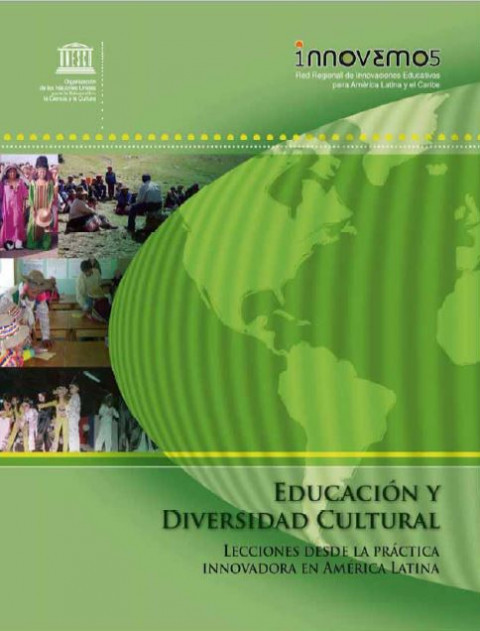 Education and Cultural Diversity Lessons from Innovative Practice in Latin America سنة النشر: 2008 المؤلف: Carolina Hirmas R. المؤلف المؤسسي: UNESCO Santiago This publication, which is the second volume of the collection, is the result of analysis and reflection on a series of innovative educational experiences from several Latin American countries, which respond with pedagogical relevance to the students' cultural context and offer an education oriented towards knowledge, understanding and dialogue between people of different cultures. The significant contribution of the aforementioned experiences lies in the recognition and appreciation of the ethnic and cultural diversity of its students and communities, as a starting point for the development of new learning and affirmation of their identity. In turn, life in educational centers promotes intercultural relations of respect and fraternity in a local and subregional sociogeographic context, characterized by multiculturalism.