
الموارد
استكشف مجموعة واسعة من الموارد القيمة حول تعليم المواطنة العالمية لتعميق فهمك وتعزيز البحث والمناصرة والتعليم والتعلم.
تم العثور على 2,162 نتيجة
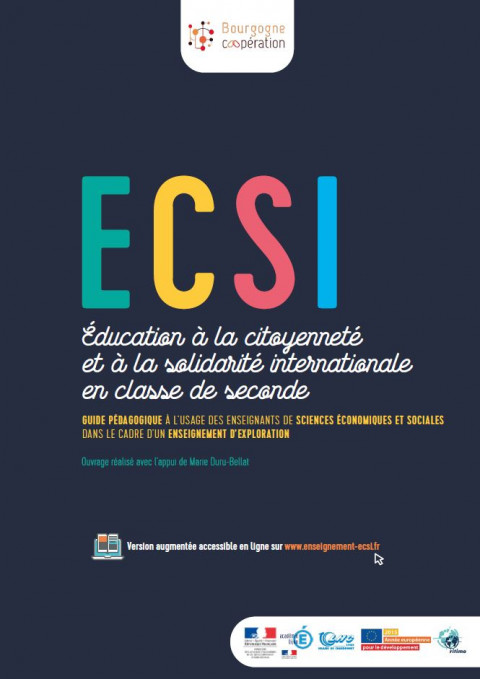 Éducation à la citoyenneté et à la solidarité internationale en classe de seconde : Guide pédagogique à l’usage des enseignants de sciences économiques et sociales dans le cadre d’un enseignement d’exploration سنة النشر: 2016 المؤلف: Denis Bousquet | Hugo Cassagnaud | Benjamin Leger | Agathe Procar المؤلف المؤسسي: Bourgogne Coopération L’éducation met aujourd'hui de plus en plus l’accent sur les valeurs, les attitudes et les compétences des élèves, complétant ainsi une approche fondée sur l'acquisition de connaissances et le développement de capacités cognitives. Partout, dans les institutions, les collectivités locales, les établissements scolaires ou les associations, une attention grandissante est donnée à la compréhension et à la résolution des problèmes mondiaux, qu'ils soient sociopolitiques, économiques, environnementaux ou culturels.Dans ce contexte, l'éducation apparaît comme l'un des piliers du développement des sociétés contemporaines, globalisées et interdépendantes, garant de la promotion des droits de l'homme, de la cohésion sociale ou encore du succès de la lutte contre le réchauffement climatique.Ce guide pédagogique présente le contenu détaillé d'un enseignement dédié à l'éducation à citoyenneté et à la solidarité internationale (ECSI) proposé initialement au lycée Hilaire de Chardonnet de Chalon-sur-Saône.Il s'appuie sur le programme national de l'enseignement d'exploration de sciences économiques et sociales proposé en classe de seconde. Enseigné aux moyens de méthodes spécifiques, il est enrichi par de nombreux outils, ressources et témoignages de chercheurs, de professionnels, de responsables associatifs et d'enseignants.Principalement à destination des enseignants en sciences économiques et sociales, ce guide s'adresse également à tous les enseignants du secondaire qui souhaitent aborder de nouvelles thématiques. Acteurs associatifs, responsables institutionnels ou élus locaux y trouveront une initiative inspirante pour promouvoir l'ouverture au monde et à la citoyenneté.
  Didactique de l’éducation à la citoyenneté سنة النشر: 2016 المؤلف المؤسسي: Haute école pédagogique Vaud L’UER Didactiques des sciences humaines de la HEP Vaud assure l’enseignement et la recherche liés à la didactique de l’éducation à la citoyenneté.Comment concevoir une éducation à la citoyenneté pour tous les élèves, quelles que soient leurs origines et leurs nationalités ? Longtemps limitée à la connaissance des institutions politiques et de leur fonctionnement, l’éducation à la citoyenneté invite aujourd’hui également à former les élèves aux pratiques participatives et délibératives constitutives d’une démocratie. Introduite à l’origine sous le terme d’instruction civique et centrée sur la connaissance des institutions politiques comme principal moteur d’insertion dans la collectivité nationale, l’éducation à la citoyenneté est aujourd’hui bien plus conçue, dans les plans d’études, comme une éducation au pouvoir (son fonctionnement, son exercice) et aux pratiques délibératives. Dans le contexte politique et économique actuel, il semble en effet de moins en moins pertinent d’enseigner une citoyenneté figée autour de règles préétablies et visant l’insertion dans une seule communauté d’appartenance.
  Éducation à la citoyenneté 3e année (Ressources pour l’éducation à la citoyenneté : L’enseignement intentionnel et direct des compétences essentielles à la citoyenneté) المؤلف المؤسسي: Concentus Fondation pour L'education a la citoyennete Les citoyens engagés remettent en question, examinent de manière critique, soutiennent et défendent les droits et responsabilités d’une démocratie sur des plans multiples. Ils travaillent à comprendre les problèmes, dissimulés ou manifestes, qui relèvent des enjeux de la citoyenneté et d’élaborer les plans d’action appropriés pour y apporter des solutions. Ils développent aussi leur compréhension des avantages et de la richesse que la diversité et le multiculturalisme apportent aux Canadiens.Les citoyens engagés s’efforcent d’aborder les questions depuis une variété de points de vue. Les élèves vont commencer à explorer les méthodes de résolution des conflits et à examiner et à pratiquer les actions qui contribuent à la paix et à l’ordre. L’exploration du raisonnement critique dans ce domaine de la citoyenneté encourage les élèves à essayer de comprendre un point de vue différent du leur.
 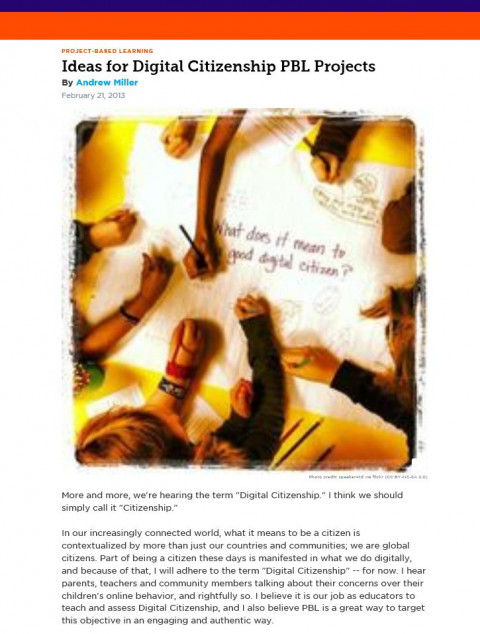 Ideas for Digital Citizenship PBL Projects سنة النشر: 2013 المؤلف: Andrew Miller In our increasingly connected world, what it means to be a citizen is contextualized by more than just our countries and communities; we are global citizens. Part of being a citizen these days is manifested in what we do digitally, and because of that, I will adhere to the term "Digital Citizenship" -- for now. I hear parents, teachers and community members talking about their concerns over their children's online behavior, and rightfully so. I believe it is our job as educators to teach and assess Digital Citizenship, and I also believe PBL is a great way to target this objective in an engaging and authentic way.
 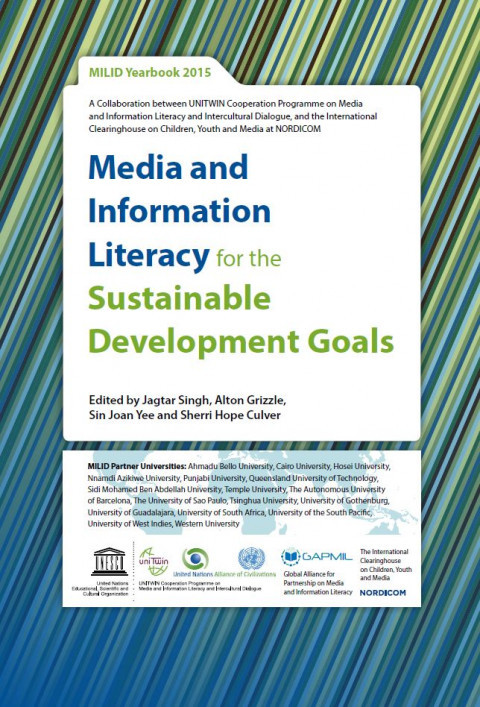 Media and Information Literacy for the Sustainable Development Goals (The MILID Yearbook 2015) سنة النشر: 2015 المؤلف: Jagtar Singh | Alton Grizzle | Sin Joan Yee | Sherri Hope Culver المؤلف المؤسسي: International Clearinghouse on Children, Youth and Media (Sweden) In the year 2000, governments and development partners all over the world agreed on eight global development targets called the Millennium Development Goals (MDGs). The year 2015 is a pivotal year as it marks the end of the period during which the MDGs were to be reached and the year in which new global development targets are to be set. These new targets are referred to as the Post-2015 Sustainable Development Goals (SDGs). This process is in its highest gear with ongoing debates and consultative meetings/initiatives globally both online and offline. While much progress has been made, achievement of the MDGs has been mixed across countries. The centrality of information and communication to development is irrefutable. The MILID Yearbook provides a case for media and information literacy (MIL) as a tool for open and inclusive sustainable development.The 2015 edition of the MILID Yearbook displays how media and information literacy can be helpful in facilitating progress and achievement of the sustainable development goals. It is sincerely hoped that the articles in this yearbook will go a long way to sensitize the stakeholders about the role and value of MIL in sustainable development of one and all across frontiers.
 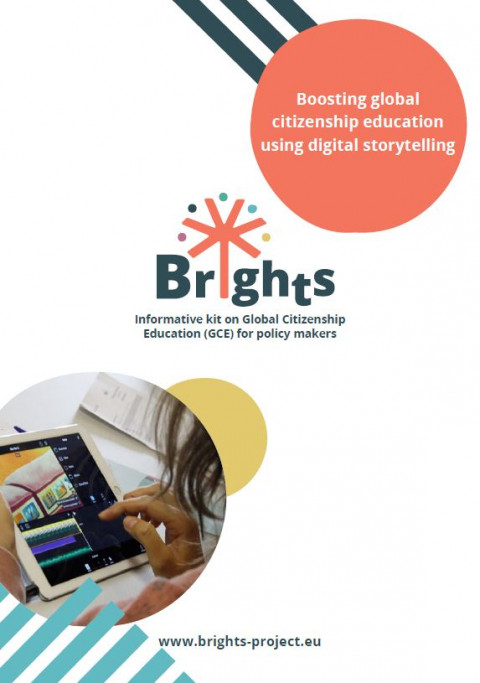 Informative Kit on Global Citizenship Education (GCE) for Policy Makers: Boosting Global Citizenship Education Using Digital Storytelling سنة النشر: 2017 المؤلف المؤسسي: European Union (EU) | European Commission This informative kit aims to equip policy makers with all the necessary knowledge about the role that Global Citizenship Education (GCE) can play in contemporary society. This document will summarize GCE, its principles, capabilities and advantages and will provide best cases regarding its application. The goal is to convince policy makers into adopting GCE in the training and education curricula. Furthermore, it presents the Digital Storytelling (DS) method and its benefits as a tool to teach GCE more effectively.
 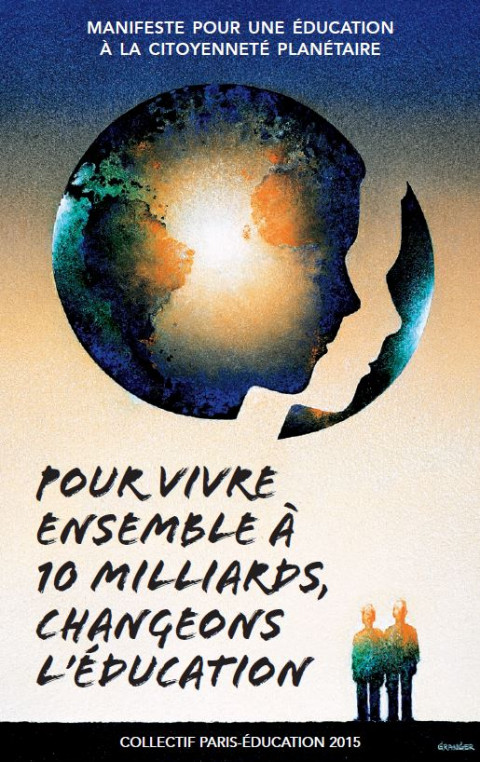 Manifeste pour une éducation à la citoyenneté planétaire: Pour vivre ensemble à 10 milliards, changeons l'éducation سنة النشر: 2015 المؤلف المؤسسي: Collectif Paris-Education 2015 Face à l’ampleur, l’urgence, la diversité et la complexité des problématiques engendrées par le modèle de développement de nos sociétés contemporaines, nous sommes donc obligés, dans l’urgence, de nous pencher sur les questions d’éducation et de formation des générations futures qui devront affronter des réalités biophysiques, économiques et politiques inédites, dont nous commençons à peine à entrevoir l’ampleur. Ce qui est dès lors en jeu, avec l’avenir de l’homme et de la Terre, c’est l’humain, ce qu’il deviendra, ce qu’il sera capable de porter comme projet pour l’humanité.Quelles qualités d’humains devons-nous faire advenir pour que ces réalités inédites puissent être rencontrées demain, sans que l’humanité bascule dans la violence et le dépeçage égoïste de la planète? Quels enfants voulons-nous laisser à notre Terre?Cette urgence impose un changement d’échelle dans la transformation des systèmes éducatifs, des contenus et des méthodes d’enseignement. Malgré la volonté et la compétence de nombreux acteurs de l’école, force est de constater que les actions menées pour une éducation plus en cohérence avec les enjeux climatiques et, plus largement, sociétaux restent à la marge. Elles sont réalisées par des individus clairvoyants. Il est temps d’enclencher la vitesse supérieure.
  Que valent les apprentissages en histoire, géographie et éducation à la citoyenneté ? : Colloque international des didactiques de l'histoire, de la géographie et de l'éducation à la citoyenneté سنة النشر: 2014 المؤلف: Caroline Leininger | Angelina Ogier | Sylvain Genevois المؤلف المؤسسي: Institut national de recherche pédagogique L’histoire et la géographie scolaires, de même que l’éducation à la citoyenneté, sont des domaines sensibles, liés au politique et au contexte social et sociétal dans lequel ils s’inscrivent. Si les recherches en didactique ont constaté dans les années 1990 une grande stabilité de l’histoire et la géographie scolaires, elles interrogent aujourd’hui plus spécifiquement les changements curriculaires et les recompositions qu’ils entraînent (thèmes des deux dernières éditions du colloque (Nantes, 2008, Lausanne 2009). Ces changements découlent de choix politiques et de savoirs universitaires, et redéfinissent le projet de ces disciplines et ses finalités. L'élève devient ainsi à l'issue de sa scolarité : un acteur de la société, un citoyen, un acteur économique, membre de communautés culturelles et politiques, un individu épanoui etc.Ce choix de finalités est aussi un choix de valeurs, explicites ou non dans les prescriptions, assumées ou non par les enseignants, par les élèves, les parents. Ce constat amène à questionner les articulations entre les apprentissages disciplinaires d’une part, et les apprentissages sociaux et politiques d’autre part. Les définitions de ces apprentissages, leur légitimité et leurs évaluations posent également question. Enseignants, décideurs, formateurs, didacticiens peuvent ainsi se demander ce que valent les apprentissages en histoire, en géographie et en éducation à la citoyenneté, tant du point de vue de leur reconnaissance disciplinaire et sociale que du point de vue des valeurs qui leur sont associées. Cet ouvrage cherche à questionner les articulations entre les apprentissages disciplinaires et les apprentissages sociaux et politiques.
 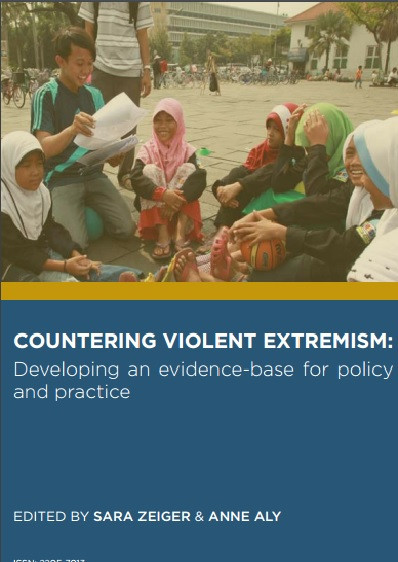 COUNTERING VIOLENT EXTREMISM: Developing an evidence-base for policy and practice سنة النشر: 2015 المؤلف: Sara Zeiger | Anne Aly المؤلف المؤسسي: Hedayah and Curtin University This volume reports on the range of papers presented at the Annual Countering Violent Extremism (CVE) Research Conference 2014 from 7-8 December 2014 in Abu Dhabi, United Arab Emirates. It presents two case studies on engaging with non-state actors within the community, namely families, community leaders and youth. COUNTERING VIOLENT EXTREMISM: Developing an evidence-base for policy and practice سنة النشر: 2015 المؤلف: Sara Zeiger | Anne Aly المؤلف المؤسسي: Hedayah | Curtin University Ce rapport présente une gamme des documents présentés à la Conférence annuelle de recherche sur la lutte contre l’extrémisme violent (CVE), qui a eu lieu du 7 au 8 décembre 2014 à Abou Dhabi, aux Emirats Arabes Unis. Il présente deux études de cas sur l’implication des acteurs non étatiques au sein de la communauté, à savoir les familles, les dirigeants communautaires et les jeunes.