
الموارد
استكشف مجموعة واسعة من الموارد القيمة حول تعليم المواطنة العالمية لتعميق فهمك وتعزيز البحث والمناصرة والتعليم والتعلم.
تم العثور على 3,433 نتيجة
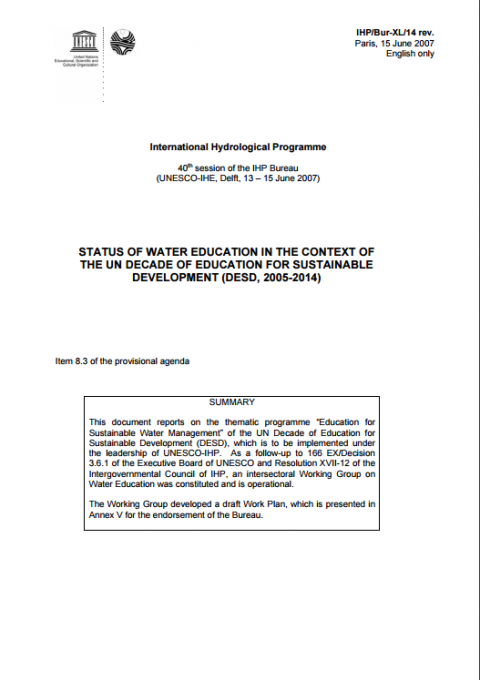 Situation de l'éducation relative à l'eau dans le contexte de la Décennie des Nations Unies pour l'éducation au service du développement durable (DEDD, 2005-2014) سنة النشر: 2007 المؤلف المؤسسي: International Hydrological Programme (IHP) Ce document rend compte du programme thématique «Education pour une gestion durable de l'eau» de la Décennie des Nations Unies pour l'éducation au service du développement durable (DEDD), qui sera mis en œuvre sous la direction du PHI de l'UNESCO. Conformément à la décision 166 EX / 3.6.1 du Conseil exécutif de l'UNESCO et à la Résolution XVII-12 du Conseil intergouvernemental du PHI, un groupe de travail intersectoriel sur l'éducation relative à l'eau a été créé et est opérationnel. Le groupe de travail a élaboré un projet de plan de travail qui est présenté à l'annexe V pour approbation par le Bureau.
  Programa temático propuesto sobre la educación relativa al agua en el marco del Decenio de las Naciones Unidas de la Educación para el Desarrollo Sostenible (2005-2014) سنة النشر: 2006 المؤلف المؤسسي: International Hydrological Programme (IHP) Water education is a very important component of UNESCO’s overall effort in water, including within the International Hydrological Programme. The UNESCO Executive Board has called for a UNESCO-wide strategy for water education at all levels. This document reviews the evolution of water education within UNESCO, and draws attention to the Draft Action Plan for the UN Decade on Education for Sustainable Development (DESD), which includes 12 Thematic Programmes one of which would be devoted to “Education for Sustainable Water Management”. The IHP would be expected to play an important role in such a UNESCO-wide effort for water education. Proposition de programme thématique sur l'éducation relative à l'eau dans le cadre de la décennie des Nations Unies pour L'Education au Service du Développement Durable (DEDD, 2005-2014) سنة النشر: 2006 المؤلف المؤسسي: International Hydrological Programme (IHP) Water education is a very important component of UNESCO’s overall effort in water, including within the International Hydrological Programme. The UNESCO Executive Board has called for a UNESCO-wide strategy for water education at all levels. This document reviews the evolution of water education within UNESCO, and draws attention to the Draft Action Plan for the UN Decade on Education for Sustainable Development (DESD), which includes 12 Thematic Programmes one of which would be devoted to “Education for Sustainable Water Management”. The IHP would be expected to play an important role in such a UNESCO-wide effort for water education. Address by Irina Bokova, Director-General of UNESCO, on the occasion of the Opening Session of the 7th World Environmental Education Congress (WEEC); Marrakech, Morocco, 9 June 2013 سنة النشر: 2013 المؤلف المؤسسي: UNESCO. Director-General, 2009-2017 (Bokova, I.G.) This address was given by Irina Bokova, Director-General of UNESCO on the occasion of the opening session of the 7th World Environmental Education Congress (WEEC). Discours de Mme Irina Bokova, Directrice Générale de l'UNESCO, à l'occasion de la Session d'Ouverture du 7e Congrès Mondial d'Éducation Environnementale (WEEC); Marrakech, Maroc, le 9 Juin 2013 سنة النشر: 2013 المؤلف المؤسسي: UNESCO. Director-General, 2009-2017 (Bokova, I.G.) Cette adresse a été donnée par Irina Bokova, Directrice générale de l'UNESCO à l'occasion de la session d'ouverture du 7e Congrès mondial d'éducation environnementale (WEEC).
  People's Climate Vote 2024 سنة النشر: 2024 المؤلف: Cassie Flynn | Silvia Tovar Jardon | Stephen Fisher | Matthew Blayney | Albert Ward | Hunter Smith | Paula Struthoff | Zoë Fillingham المؤلف المؤسسي: United Nations Development Programme (UNDP) | University of Oxford The Peoples’ Climate Vote is the world’s largest standalone public opinion survey on climate change. It serves as a platform for people to express their concerns and needs on climate change to world leaders. This initiative, carried out by UNDP and the University of Oxford, was launched in 2021 with a first poll that surveyed people across 50 countries through adverts in popular mobile gaming apps. The 2024 survey is bigger in terms of scope: 77 countries, representing 87 percent of the world’s population, were asked their views on climate change. The 15 questions in the 2024 edition have never been put to people in any survey before. They asked how people’s day-to-day lives are impacted by climate change, how they feel it is being addressed in their countries and what they would like the world to do about it. The results give the most comprehensive public account yet of how people feel and respond to climate change. The Peoples’ Climate Vote 2024 results come at a crucial time. Leading scientific bodies warn that climate change is accelerating faster than expected. Meanwhile, global GHG emission levels continue to rise, and international tensions and conflicts are similarly on the increase. With more than half of the world’s population potentially voting in 2024, understanding how citizens are thinking about climate change is more important than ever. The survey’s results can help decision makers navigate this challenging context, and beyond. To explore the data and country results in more detail, please visit: https://peoplesclimate.vote/
 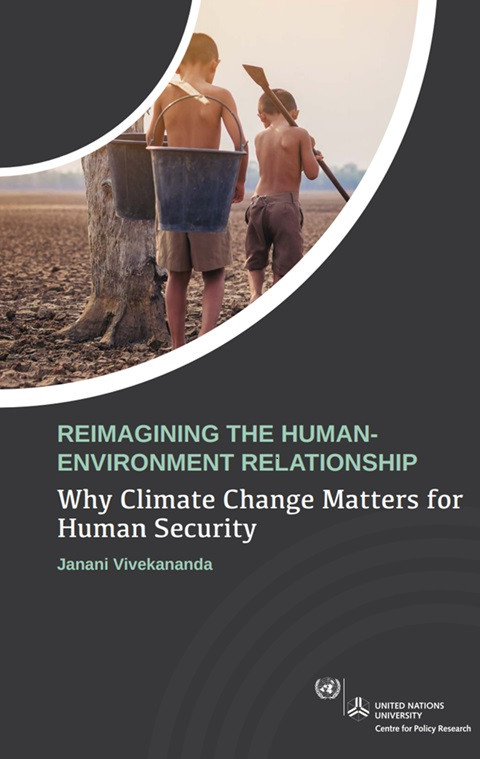 Why Climate Change Matters for Human Security سنة النشر: 2022 المؤلف: Janani Vivekananda المؤلف المؤسسي: United Nations University | United Nations Environment Programme (UNEP) This paper outlines the state of knowledge regarding security risks related to climate change, synthesizing the existing scientific evidence to set out five broad pathways of risk. Climate change itself is rarely a direct cause of conflict. Yet, there is ample evidence that its effects exacerbate important drivers and contextual factors of conflict and fragility, thereby challenging the stability of states and societies. Climate change impacts such as coral bleaching, diversity loss, and erratic rainfall can stress livelihoods and drive displacement, increase resource conflicts, and challenge the security and stability of people and states worldwide. Managing these security risks requires action across the entire impact chain: work to mitigate climate change; reducing its consequences on ecosystems; adapting socioeconomic systems; better management of climate-induced heightened resource competition; and strengthening governance and conflict management institutions. And every dimension of the response must be conflict-sensitive and climate proof. Without the right responses, climate change will mean more fragility, less peace and less security. But this paper sets out illustrative examples of how, with a greater understanding of how climate change interacts with social, political, economic and environmental drivers of conflict and fragility, we will be better placed to make the kind of risk-informed decisions is integral to achieving international peace and security.
 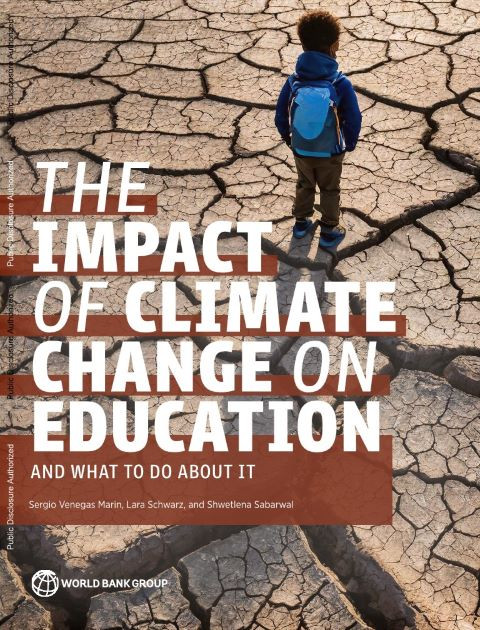 The Impact of Climate Change on Education and What to Do about It سنة النشر: 2024 المؤلف: Sergio Venegas Marin | Lara Schwarz | Shwetlena Sabarwal المؤلف المؤسسي: International Bank for Reconstruction and Development | World Bank Education can be the key to ending poverty in a livable planet, but governments must act now to protect it. Climate change is increasing the frequency and intensity of extreme weather events such as cyclones, floods, droughts, heatwaves and wildfires. These extreme weather events are in turn disrupting schooling; precipitating learning losses, dropouts, and long-term impacts. Even if the most drastic climate mitigation strategies were implemented, extreme weather events will continue to have detrimental impacts on education outcomes.
  Synergy Solutions for a World in Crisis: Tackling Climate and SDG Action Together سنة النشر: 2023 المؤلف المؤسسي: UNFCCC | UN. Department of Economic and Social Affairs (UN. DESA) In May 2023 UNDESA and UNFCCC Secretariat co-convened the Expert Group on Climate and SDG Synergy. The Group consists of 14 renowned experts from diverse thematic and geographic backgrounds who were given the task of developing the First Global Report on Climate and SDG Synergies. This report demonstrates that aggressively acting on climate and development in an integrated and synergistic way is an important opportunity to achieve the course correction the UN Secretary- General has called for. It highlights some of the challenges but also the opportunities if the international community is seriously committed to enhancing these synergies and thereby addressing these challenges. The report is designed to provide a broad overview of available data and evidence, insights from experts on the frontlines, and recommendations for enhancing synergistic action across the 2030 Agenda and the SDGs. This first edition will form the basis for future iterations, which will entail a wider scope of sectors, and thematic areas and deep dives on specific issues pertaining to strengthening and operationalizing synergic climate and SDG actions at all levels.
 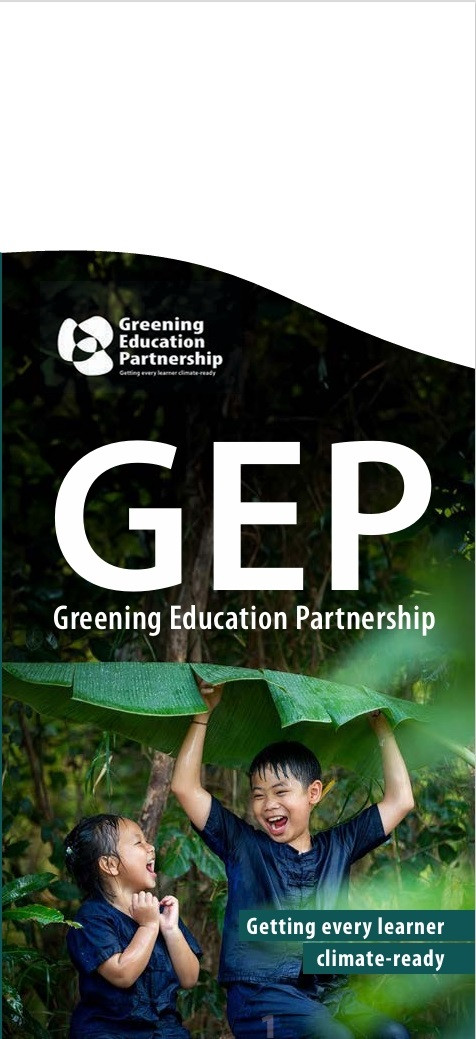 Greening Education Partnership: Getting Every Learner Climate-Ready سنة النشر: 2024 المؤلف المؤسسي: UNESCO Bangkok The UN Secretary-General calls the climate crisis ‘a battle for our lives’, as we still struggle to transform our societies to reach the 1.5°C-degree path recommended by the Paris Agreement. Rapid and radical transformation at all levels and in many aspects of our life is required, with education as a central and powerful means to support the adaptation and strengthening of the resilience of learners and societies. It is also important to ensure that education systems become more resilient to climate change to create safe and climate-proof schools. Building off of the knowledge and practice accumulated in Education for Sustainable Development (ESD), a new Greening Education Partnership aims to deliver strong, coordinated and comprehensive action which will prepare every learner to acquire the knowledge, skills, values, and attitudes to tackle climate change and to promote sustainable development.