
الموارد
استكشف مجموعة واسعة من الموارد القيمة حول تعليم المواطنة العالمية لتعميق فهمك وتعزيز البحث والمناصرة والتعليم والتعلم.
تم العثور على 1,180 نتيجة
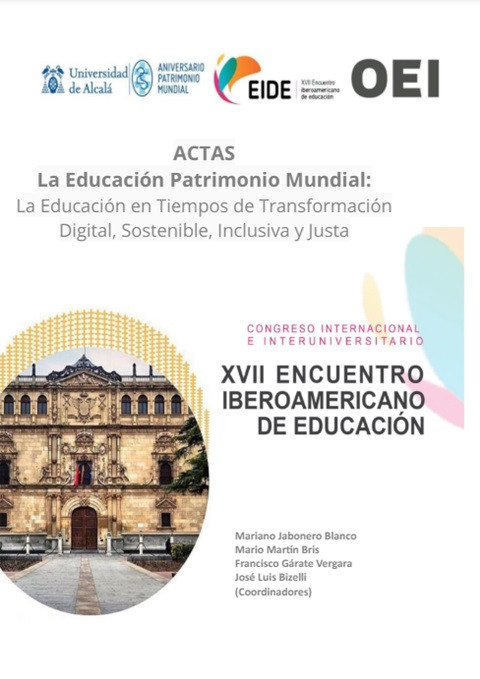 Minutes World Heritage Education: Education in Times of Digital, Sustainable, Inclusive and Fair Transformation سنة النشر: 2024 المؤلف المؤسسي: University of Alcala | Organization of Ibero-American States for Education, Science and Culture (OEI) Document obtained from the XVII International and Interuniversity Congress of the Ibero-American Education Meeting. The University of Alcalá (UAH) in Madrid (Spain) and the Organization of Ibero-American States (OEI) organize the XVII Ibero-American Education Meeting (EIDE 2023) with the purpose of continuing to offer a scientific, rigorous and committed space for discussion and interdisciplinary exchange , interuniversity and international, with the focus on the Ibero-American geographical and cultural context, responding to the need to continue analyzing the educational reality from a global and collaborative perspective, as demanded by all professional and academic fields of education, at a time of great transformation challenges in the digital field, sustainability, inclusion, social justice and interculturality. Actas la educación patrimonio mundial: La educación en tiempos de transformación digital, sostenible, inclusiva y Justa سنة النشر: 2024 المؤلف المؤسسي: University of Alcala | Organización de Estados Iberoamericanos para la Educación, la Ciencia y la Cultura (OEI) Documento obtenido del Congreso Internacional e Interuniversitario XVII Encuentro Iberoamericano de Educación. La Universidad de Alcalá (UAH) en Madrid (España) y la Organización de Estados Iberoamericanos (OEI) organizan el XVII Encuentro Iberoamericano de Educación (EIDE 2023) con el propósito de seguir ofreciendo un espacio científico, riguroso y comprometido de discusión e intercambio interdisciplinar, interuniversitario e internacional, con el foco puesto en el contexto geográfico y cultural iberoamericano, dando respuesta a la necesidad de seguir analizando la realidad educativa desde una perspectiva mundial y colaborativa, como demandan todos los ámbitos profesionales y académicos de la educación , en un momento de grandes retos de transformación en el ámbito digital, la sostenibilidad, la inclusión, la justicia social y la interculturalidad.
  Transforming Education Conference for Humanity: TECH 2017, December 16-18, 2017; Post Event Report سنة النشر: 2018 المؤلف المؤسسي: Mahatma Gandhi Institute of Education for Peace and Sustainable Development (MGIEP) The three-day Transforming Education Conference for Humanity (TECH) 2017 organised by UNESCO Mahatma Gandhi Institute of Education for Peace and Sustainable Development (MGIEP) was held at Novotel Varun Beach, Visakhapatnam City, State of Andhra Pradesh, India from December 16 – 18, 2017. The first edition of TECH focused on digital pedagogies for building peaceful and sustainable societies through 21st century skills, schools and policies, towards achieving the United Nations Sustainable Development Goal 4, Target 7.TECH 2017 was attended by over 1,700 registered participants (including teachers, educators, learners, policy-makers, technology and gaming experts, amongst others) from 75 countries and witnessed highly engaging deliberations on the future of education, particularly on the innovative methods of teaching using technology.The Conference was generously supported by the State Government of Andhra Pradesh, India and the Ministry of Human Resource Development, Government of India and sponsored by Microsoft India (Education Technology Partner), Samsung India, Dassault Systems, Veative (Immersive Learning Partner) and McGraw Hill (Learning Science Partner). The Knowledge Partners of the Conference included NMIMS, Ubisoft, Quebec Government, ISTE, Social Alpha, EDB and IYC.TECH will be held annually over the next five years with a long term aim of affecting global policy change on the usage of digital pedagogies to render quality and inclusive education for all.
 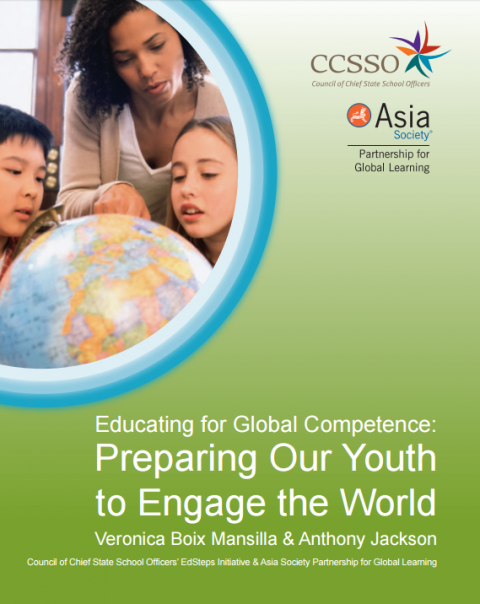 Educating for global competence: preparing our youth to engage the world سنة النشر: 2011 المؤلف: Veronica Boix Mansilla | Anthony Jackson المؤلف المؤسسي: Asia Society | Council of Chief State School Officers (CCSSO) Contemporary societies are marked by new global trends - economic, cultural, technological, and environmental shifts that are part of a rapid and uneven wave of globalization. The growing global interdependence that characterizes our time calls for a generation of individuals who can engage in effective global problem solving and participate simultaneously in local, national, and global civic life. Put simply, preparing our students to participate fully in today's and tomorrow's world demands that we nurture their global competence.This document introduces a definition of global competence developed by the Global Competence Task Force - a group of state education agency leaders, education scholars, and practitioners - under the auspices of the Council of Chief State School Officers EdSteps initiative (CCSSO-EdSteps) and the Asia Society Partnership for Global Learning (see page (iv) for task force participants). The definition builds on seminal work within the states and a broad range of organizations working to advance global knowledge and critical thinking skills. A process of careful articulation and vetting yielded the definition of global competence here proposed:Global competence is the capacity and disposition to understand and act on issues of global significance.Globally competent individuals are aware, curious, and interested in learning about the world and how it works. They can use the big ideas, tools, methods, and languages that are central to any discipline (mathematics, literature, history, science, and the arts) to engage the pressing issues of our time. They deploy and develop this expertise as they investigate such issues, recognize multiple perspectives, communicating their views effectively, and taking action to improve conditions.Educating for Global Competence: Preparing Our Youth to Engage the World is intended for classroom teachers, administrators, informal educators, policymakers, community leaders, researchers, parents, students, and all other stakeholders interested in preparing our youth for the 21st century. Becoming better at education for global competence involves rethinking practices and recognizing that there are no simple recipes for success. As such, this book is meant to be used flexibly - browse, make connections, and concentrate on the chapters that you find most pertinent to your work. Experiment with ideas, challenge concepts, and share with colleagues. Ultimately this book must work for you. It is meant to be read in the way that best meets your needs, inspires your curiosity, and proves fruitful in the classroom.Chapter one offers a rational for global education in our nation and worldwide. Chapter two introduces a conceptual framework for global competence and explains the key role of disciplinary and interdisciplinary foundations in student learning. Chapter three, four, five and six focus, respectively, on four core capacities associated with global competence: investigating the world, recognizing perspectives, communicating ideas, and taking action. Chapter seven considers core principles of instruction for teaching global competence. Chapter eight looks at what students and education institutions can do to promote global competence - and how they might create a culture of global competence for youth and adults. Finally, chapter nine places global competence in the larger framework of public education systems in and beyond the United States. Eduquer pour compétence globale: préparer nos jeunes à engager le monde سنة النشر: 2011 المؤلف: Veronica Boix Mansilla | Anthony Jackson المؤلف المؤسسي: Asia Society | Council of Chief State School Officers (CCSSO) Les sociétés contemporaines sont marquées par de nouvelles tendances mondiales - changements économiques, culturels, technologiques et environnementaux qui font partie d'une vague rapide et inégal de la mondialisation. L'interdépendance mondiale croissante qui caractérise notre temps appelle à une génération de personnes qui peuvent se livrer à la résolution de problème mondial efficace et participer simultanément à la vie civique locale, nationale et mondiale. Simplement, la préparation de nos étudiants de participer pleinement au monde les exigences d'aujourd'hui et de demain que nous entretenons leur compétence mondiale. Ce document présente une définition de la compétence globale développée par le Groupe de travail mondial Compétence - un groupe de chefs d'Etat de l'agence de l'éducation, spécialistes de l'éducation, et les praticiens - sous les auspices du Conseil de l'école Chief State initiative des officiers de EdSteps (CCSSO-EdSteps) et la Asia Partnership Society for global Learning (voir page (iv) pour les participants du groupe de travail). La définition se fonde sur le travail séminal dans les états et un large éventail d'organisations de travail pour faire avancer les connaissances mondiales et de la pensée critique. Un processus d'articulation minutieuse et vetting a abouti à la définition de la compétence globale proposée ici: la compétence globale est la capacité et la disposition pour comprendre et agir sur les questions d'importance mondiale. Globalement les personnes compétentes sont au courant, curieux et intéressés à en apprendre sur le monde et comment il fonctionne. Ils peuvent utiliser les grandes idées, des outils, des méthodes et des langues qui sont au cœur de toutes les disciplines (mathématiques, la littérature, l'histoire, la science et les arts) pour engager les questions pressantes de notre temps. Ils déploient et développer cette expertise comme ils enquêtent sur ces questions, reconnaissent de multiples points de vue, de communiquer leurs points de vue de manière efficace, et prendre des mesures pour améliorer les conditions. Eduquer pour Global Competence: Préparer les jeunes d'engager le monde est destiné aux enseignants, administrateurs, éducateurs informels, les décideurs, les leaders communautaires, les chercheurs, les parents, les étudiants et toutes les autres parties intéressées à préparer nos jeunes pour le 21e siècle. Devenir meilleur à l'éducation pour la compétence globale implique de repenser les pratiques et en reconnaissant qu'il n'y a pas de recettes simples pour le succès. En tant que tel, ce livre est destiné à être utilisé avec souplesse - parcourir, faire des liens, et de se concentrer sur les chapitres que vous trouverez les plus pertinents pour votre travail. Expérience avec des idées, des concepts de défi, et de partager avec des collègues. En fin de compte ce livre doit travailler pour vous. Il est destiné à être lu de la manière qui répond le mieux à vos besoins, inspire votre curiosité, et prouve fructueuse dans la salle de classe. Le premier chapitre offre un rationnel pour l'éducation mondiale dans notre pays et dans le monde. Le deuxième chapitre présente un cadre conceptuel pour la compétence globale et explique le rôle clé des fondations disciplinaires et interdisciplinaires dans l'apprentissage des élèves. Chapitre trois, quatre, cinq et six focus, respectivement, sur quatre capacités essentielles associées à la compétence mondiale: enquête dans le monde, reconnaissant les perspectives, communiquer des idées, et de prendre des mesures. Le chapitre sept considère les principes de base de l'enseignement pour l'enseignement de la compétence globale. Chapitre huit examine ce que les étudiants et les établissements d'enseignement peuvent faire pour promouvoir la compétence globale - et comment ils pourraient créer une culture de compétence globale pour les jeunes et les adultes. Enfin, le chapitre neuf places compétence globale dans le cadre plus large des systèmes d'éducation du public dans et au-delà des États-Unis.
  Curriculum in Transformation Mode: Rethinking Curriculum for the Transformation of Education and Education Systems سنة النشر: 2023 المؤلف: Renato Opertti المؤلف المؤسسي: UNESCO International Bureau of Education (IBE) Through these pages, Renato Opertti shares a series of reflections that invite us to revisit the curriculum as an opportunity and lever for societies to express their visions and aspirations. Curriculum can serve to position education as the pillar of a renewed social contract grounded on the welfare of all learners as persons and supporting societies and communities give effect to sustainable and better futures for the younger generations. To do so, we need to re-conceptualize curriculum at large: from a mere specification of frequently fragmented learning contents to its understanding as both a process and product of public policy developments in which diversity of stakeholders own and take responsibility for education as a global common good. Curriculum and pedagogy, by going hand-inhand, and supported by effective teaching, learning and assessment processes, can play a key role in fulfilling the right to education for every learner equally, according to their own individual needs. Key ideas in this book help us to rethink curriculum with future-oriented approaches, entailing a stronger involvement of younger generations in the decision-making process and a careful attention to vulnerability and disadvantaged groups. A curriculum that embraces individuality and diversity within collaborative and caring learning settings, nurtures freedom and autonomous thinking, connects meaningfully the global and the local, and assumes the hybridization of education. The book also delves into perspectives for educational transformation prioritizing the development of learners’ foundational and transformative competencies as the barometer of a progressive curriculum. Crucially, this entails rethinking the mindsets and practices of education systems in light of the interconnected challenges posed by the Fourth Industrial Revolution, post COVID-19, generative AI and the sustainability of the planet and the world.
  Learning to live together: have we failed? A summary of the ideas and contributions arising from the forty-sixth session of UNESCO's International Conference on Education, Geneva, 5-8 September 2001 سنة النشر: 2003 المؤلف المؤسسي: UNESCO International Bureau of Education (IBE) | UNESCO Brasilia The present book is based mainly on the work of the forty-sixth session of the International Conference on Education (ICE), organized by UNESCO’s International Bureau of Education (IBE) and held in Geneva from 5 to 8 September 2001. The theme of the conference was ‘Education for All for Learning to Live Together: Contents and Learning Strategies - Problems and Solutions’. Unless stated otherwise, the numerous quotations chosen to illustrate the points made in this book are from ICE documents and contributions. The Conclusions and Proposals for Action adopted by the 2001 ICE are provided in Chapter V.The ICE is the only regularly occurring event during which Ministers of Education from all over the world can meet. It therefore serves as a unique and highly appreciated international forum for high-level dialogue on educational issues and their policy implications.The 2001 ICE brought together over 600 participants from 127 countries, including in particular 80 Ministers and 10 Vice-Ministers of Education, as well as representatives of intergovernmental and non-governmental organizations. The themes of the 2001 ICE were, and still are, very relevant all over the world: those in charge of education have become well aware of the necessity and complexity of living together, as well as of the role and limits of education in this respect.The ICE was inspired by abundant literature dealing with the principle issues that participants debated, including: Preparatory reports; National reports presented by the Member States; Examples of initiatives and good practice (including those presented at the conference as video case studies); Messages from Ministers of Education attending the Conference; And contributions from the numerous researchers, experts, educationists and decision makers at all levels of education who also participated in the Netforum between April and August 2001. More information and opinions on the vast issue of Education for All for Learning to Live Together were added during the Conference itself, in the form of keynote addresses, presentations and debates during the two plenary sessions, six thematic workshops and the special session devoted to partnerships with civil society.The present book draws on this wealth of experience, research, opinions, ideas and visions of the future. It seeks to contribute to bringing the debate on Education for All for Learning to Live Together closer to actors of the global educational community. By setting out ins concise way the key issues and proposed actions, and illustrating them with concrete examples, numerous quotations and a number of questions, this book is intended particularly for teacher trainers, teachers themselves and their professional organizations, as well as for all actors in civil society who endeavour to improve the quality of education, to encourage dialogue and to foster in this way the capacity for living together.Neither a ‘conference report’ nor a scientific or academic work, this book is intended to be a sort of ‘gallery of photographs’ of the forty-sixth session of the ICE – its atmosphere of dialogue, the themes of its debates, and the first-hand descriptions and experiences exchanged. Far from prescribing norms or standards, it intends to share information, ideas and practices, rather like the ICE itself, in a spirit of exchange and dialogue. Learning to live together: have we failed? A summary of the ideas and contributions arising from the forty-sixth session of UNESCO's International Conference on Education, Geneva, 5-8 September 2001 سنة النشر: 2003 المؤلف المؤسسي: UNESCO International Bureau of Education (IBE) | UNESCO Brasilia Le présent ouvrage repose principalement sur les travaux de la quarante-sixième session de la Conférence Internationale sur l'Éducation (CIE), organisée par le Bureau International d'Éducation (BIE) de l'UNESCO et tenue à Genève du 5 au 8 Septembre 2001. Le thème de la conférence était ‘L'éducation pour tous pour apprendre à vivre ensemble: contenus et stratégies d'apprentissage - problèmes et solutions’. Sauf indication contraire, les nombreuses citations choisies pour illustrer les points soulevés dans ce livre sont des documents de l'CIE et les contributions. Les Conclusions et Propositions d'Action adoptées par la CIE de 2001 sont présentés au Chapitre V.L'CIE est l'événement qui se produit seulement régulièrement au cours de laquelle les ministres de l'éducation de partout dans le monde peuvent se rencontrer. Il sert donc comme un forum international unique et très apprécié pour le dialogue de haut niveau sur les questions d'éducation et de leurs implications politiques.La CIE de 2001 a réuni plus de 600 participants de 127 pays, y compris en particulier 80 inistres et 10 Vice-Ministres de l'Éducation, ainsi que des représentants d'organisations intergouvernementales et non gouvernementales. Les thèmes de la CIE 2001 étaient, et sont encore, très pertinent partout dans le monde: les responsables de l'éducation ont pris conscience de la nécessité et de la complexité de vivre ensemble, ainsi que du rôle et des limites de l'éducation à cet égard .L'CIE a été inspiré par une abondante littérature portant sur les principaux points de débat, y compris:Rapports Préparatoires;Les rapports nationaux présentés par les États membres;Exemples d'initiatives et bonnes pratiques (y compris celles qui sont présentées à la conférence que des études de cas vidéo);Messages des Ministres de l'Éducation présents à la Conférence;Et les contributions des nombreux chercheurs, des experts, des éducateurs et des décideurs à tous les niveaux de l'éducation qui a également participé à l'Netforum entre Avril et Août de 2001. Plus d'informations et d'opinions sur la grande question de l'éducation pour tous pour apprendre à vivre ensemble ont été ajoutés au cours de la Conférence elle-même, sous la forme de discours d'ouverture, des présentations et des débats au cours des deux sessions plénières, six ateliers thématiques et la session extraordinaire consacrée aux partenariats avec la société civile.Le présent ouvrage se fonde sur cette richesse de l'expérience, de la recherche, des opinions, des idées et des visions de l'avenir. Elle vise à contribuer à ramener le débat sur l'éducation pour tous pour apprendre à vivre ensemble plus près des acteurs de la communauté éducative mondiale. En énonçant ins de manière concise les questions clés et les actions proposées, et en les illustrant par des exemples concrets, de nombreuses citations et un certain nombre de questions, ce livre est particulièrement destiné aux formateurs d'enseignants, les enseignants eux-mêmes et leurs organisations professionnelles, ainsi que pour tous les acteurs dans la société civile qui s'efforcent d'améliorer la qualité de l'éducation, d'encourager le dialogue et de favoriser ainsi la capacité de vivre ensemble.Ni un ‘rapport de la conférence’, ni une œuvre scientifique ou universitaire, ce livre est destiné à être une sorte de «galerie de photos» de la quarante-sixième session de la CIE - son atmosphère de dialogue, les thèmes de ses débats, et la descriptions et les expériences de première main échangées. Loin de prescrire des normes ou des normes, elle a l'intention de partager des informations, des idées et des pratiques, un peu comme l'CIE lui-même, dans un esprit d'échange et de dialogue. Aprender a vivir juntos: ¿hemos fracasado? Síntesis de las reflexiones y los aportes surgidos durante la 46a Conferencia Internacional de Educación de la UNESCO, Ginebra, 5-8 de septiembre de 2001 سنة النشر: 2003 المؤلف المؤسسي: UNESCO International Bureau of Education (IBE) | UNESCO Brasilia The present book is based mainly on the work of the forty-sixth session of the International Conference on Education (ICE), organized by UNESCO’s International Bureau of Education (IBE) and held in Geneva from 5 to 8 September 2001. The theme of the conference was ‘Education for All for Learning to Live Together: Contents and Learning Strategies - Problems and Solutions’. Unless stated otherwise, the numerous quotations chosen to illustrate the points made in this book are from ICE documents and contributions. The Conclusions and Proposals for Action adopted by the 2001 ICE are provided in Chapter V.The ICE is the only regularly occurring event during which Ministers of Education from all over the world can meet. It therefore serves as a unique and highly appreciated international forum for high-level dialogue on educational issues and their policy implications.The 2001 ICE brought together over 600 participants from 127 countries, including in particular 80 Ministers and 10 Vice-Ministers of Education, as well as representatives of intergovernmental and non-governmental organizations. The themes of the 2001 ICE were, and still are, very relevant all over the world: those in charge of education have become well aware of the necessity and complexity of living together, as well as of the role and limits of education in this respect.The ICE was inspired by abundant literature dealing with the principle issues that participants debated, including: Preparatory reports;National reports presented by the Member States;Examples of initiatives and good practice (including those presented at the conference as video case studies);Messages from Ministers of Education attending the Conference;And contributions from the numerous researchers, experts, educationists and decision makers at all levels of education who also participated in the Netforum between April and August 2001.More information and opinions on the vast issue of Education for All for Learning to Live Together were added during the Conference itself, in the form of keynote addresses, presentations and debates during the two plenary sessions, six thematic workshops and the special session devoted to partnerships with civil society.The present book draws on this wealth of experience, research, opinions, ideas and visions of the future. It seeks to contribute to bringing the debate on Education for All for Learning to Live Together closer to actors of the global educational community. By setting out ins concise way the key issues and proposed actions, and illustrating them with concrete examples, numerous quotations and a number of questions, this book is intended particularly for teacher trainers, teachers themselves and their professional organizations, as well as for all actors in civil society who endeavour to improve the quality of education, to encourage dialogue and to foster in this way the capacity for living together.Neither a ‘conference report’ nor a scientific or academic work, this book is intended to be a sort of ‘gallery of photographs’ of the forty-sixth session of the ICE – its atmosphere of dialogue, the themes of its debates, and the first-hand descriptions and experiences exchanged. Far from prescribing norms or standards, it intends to share information, ideas and practices, rather like the ICE itself, in a spirit of exchange and dialogue.
  Homegrown terrorism and transformative learning: an interdisciplinary approach to understanding radicalization سنة النشر: 2010 المؤلف: Alex S. Wilner | Claire-Jehanne Dubouloz Since 2001, a preponderance of terrorist activity in Europe, North America and Australia has involved radicalized Westerners inspired by Al Qaeda. Described as ‘homegrown terrorism’, perpetrators are citizens and residents born, raised, and educated within the countries they attack. While most scholars and policy-makers agree that radicalization plays a central role in persuading Westerners to embrace terrorism, little research properly investigates the internal and cognitive processes inherent to radicalization. Transformative learning theory, developed from the sciences in education, health and rehabilitation, provides an unconventional and interdisciplinary way to understand the radicalization process. The theory suggests that sustained behavioural change can occur when critical reflection and the development of novel personal belief systems are provoked by specific triggering factors.