
الموارد
استكشف مجموعة واسعة من الموارد القيمة حول تعليم المواطنة العالمية لتعميق فهمك وتعزيز البحث والمناصرة والتعليم والتعلم.
تم العثور على 1,407 نتيجة
 Рекомендация об обучении и образовании взрослых سنة النشر: 2016 المؤلف المؤسسي: Организация Объединенных Наций по вопросам образования, науки и культуры (UNESCO) | UNESCO Institute for Lifelong Learning (UIL) Рекомендация об обучении и образовании взрослых была принята на 38-й сессии Гене-ральной конференции ЮНЕСКО в ноябре 2015 г. Данная рекомендация направлена на поддержку осуществления рамочной программы действий «Образование-2030», она учитывает глобальные тенденции и будет способствовать трансформации обучения и образования взрослых и расширению равных возможностей в этой области.Рекомендация 2015 г. подходит к ООВ комплексно и системно и определяет три основные области обучения и приобретения навыков: грамотность и базовые навыки, непрерывное повышение образовательных и профессиональных навыков и либеральное, народное и общинное образование и гражданские навыки. В ней также описываются пять сквозных направлений деятельности: политика, управление, финансирование, участие, инклюзивность и равенство, а также качество. Данные области деятельности уже представлялись международному сообществу в Беленских рамках действий, принятых на КОНФИНТЕА в 2009 г. в качестве инструмента для содействия государствам-членам в совершенствовании ООВ. Такой комплексный и согласованный подход к ООВ поможет государствам-членам обеспечить всеохватное и справедливое качественное образование и поощрение возможности обучения на протяжении всей жизни для всех (цель 4 в области устойчивого развития).
  How Can a Lifelong Learning Perspective Enhance the Relevance and Impact of the 1974 Recommendation?: Thematic Paper سنة النشر: 2022 المؤلف المؤسسي: UNESCO Institute for Lifelong Learning (UIL) Lifelong learning is rooted in the integration of learning with participation in society. It includes learning activities for people of all ages, in all life-wide contexts and spaces (family, school, community, workplace and more), and through a variety of modalities (formal, non-formal and informal).The purpose of this background paper is to propose ways in which the significance of lifelong learning can be reflected in the revision of the 1974 Recommendation concerning Education for International Understanding, Cooperation and Peace and Education relating to Human Rights and Fundamental Freedoms. It does this by recalling previous international contributions to the promotion of lifelong learning, including the landmark publications Learning to Be: The World of Education Today and Tomorrow (Faure et al., 1972) and Learning: The Treasure Within (Delors et al., 1996), which show the benefits of lifelong learning not only for employment but for the whole life of an individual and their participation in society.
  CONFINTEA VII Marrakech Framework for Action: Harnessing the Transformational Power of Adult Learning and Education سنة النشر: 2022 المؤلف المؤسسي: UNESCO Institute for Lifelong Learning (UIL) This Marrakech Framework for Action is an outcome of the the Seventh International Conference on Adult Education (CONFINTEA VII) held in Marrakech, Kingdom of Morocco, and online, from 15 to 17 June 2022. 성인학습∙교육의 변혁적 힘을 활용하기 위한 제7차 세계성인교육회의 마라케시 실행계획 سنة النشر: 2022 المؤلف المؤسسي: UNESCO Institute for Lifelong Learning (UIL) 2022년 6월 15일부터 17일까지 모로코 마라케시에서 제7차 세계성인교육회의(CONFINTEA VII)가 개최되었다. 회의 결과문서인 '마라케시 실행계획(Marrakech Framework for Action)'은 성인학습·교육(ALE)이 평생학습의 핵심 요소이며, 성인학습·교육을 포함하여 교육이 기본적 인권이며 공공의 노력이자 공동재임을 확인하고 있다. Recommendation on Adult Learning and Education, 2015 سنة النشر: 2016 المؤلف المؤسسي: UNESCO | UNESCO Institute for Lifelong Learning (UIL) The Recommendation on Adult Learning and Education was adopted at the 38th Session of the UNESCO General Conference in November 2015. The Recommendation supports the Education 2030 Framework for Action, reflects global trends, and will guide the transformation and expansion of equitable learning opportunities for youth and adults. The 2015 Recommendation takes a comprehensive and systematic approach to ALE, defining three key domains of learning and skills: literacy and basic skills; continuing education and vocational skills; as well as liberal, popular and community education and citizenship skills.It also describes five transversal areas of action: policy; governance; financing; participation, inclusion and equity; and quality. These areas of action were already introduced to the international community in the Belém Framework for Action, adopted at CONFINTEA in 2009 as a means of guiding Member States in improving ALE. This integrative and consistent approach to ALE will help Member States to ensure inclusive and equitable quality education and promote lifelong learning opportunities for all (Sustainable Development Goal 4).
 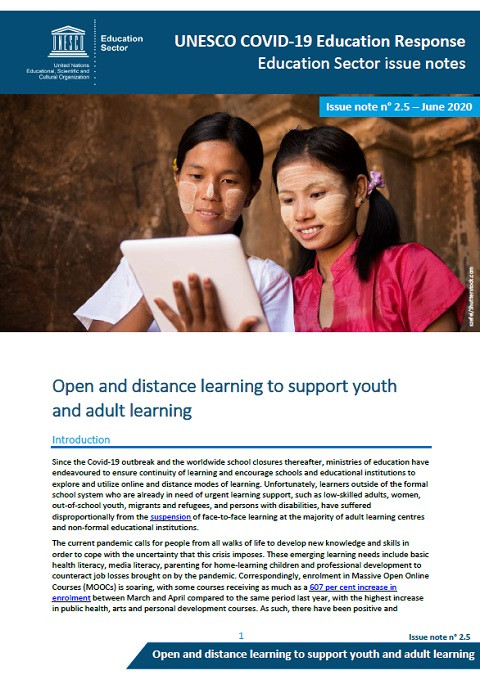 UNESCO COVID-19 Education Response: Open and Distance Learning to Support Youth and Adult Learning (Education Sector Issue Note; No. 2.5 – June 2020) سنة النشر: 2020 المؤلف المؤسسي: UNESCO Institute for Lifelong Learning (UIL) A new UNESCO issue note, produced by the UNESCO Institute for Lifelong Learning (UIL), aims to support education policy-makers and planners in ensuring open and distance learning to support youth and adult learning in the context of the current pandemic, now and in its aftermath.Since the COVID-19 outbreak and the worldwide school closures that followed, ministries of education have endeavoured to ensure continuity of learning and encourage schools and educational institutions to explore and utilize online and distance modes of learning. Unfortunately, learners outside of the formal school system who are already in need of urgent learning support, such as low-skilled adults, women, out-of-school youth, migrants and refugees, and persons with disabilities, have suffered disproportionally from the suspension of face-to-face learning at the majority of adult learning centres and non-formal educational institutions.The current pandemic calls for people from people from all socio-economic backgrounds, wherever they live in the world, to develop new knowledge and skills in order to cope with the uncertainty that this crisis imposes. These learning needs include basic health literacy, media literacy, parenting for home-schooling children and professional development to counteract job losses brought on by the pandemic. Correspondingly, enrolment in massive open online courses (MOOCs) is soaring. As such, there have been positive and demand-driven trends in exploring alternative options, such as open and distance learning (ODL), to ensure the continuity and expansion of non-formal education and adult learning.This issue note takes stock of opportunities and challenges in using ODL, both online and offline as defined in the UNESCO Issue Note on Distance Learning Strategies, for youth and adult learners outside the formal education system. After examining key issues and illustrating promising cases from public and private sectors, it provides key messages for policy interventions to support inclusive lifelong learning for youth and adults during and after the current pandemic.UNESCO Education Sector’s issue notes cover key topics related to the COVID-19 education response.
 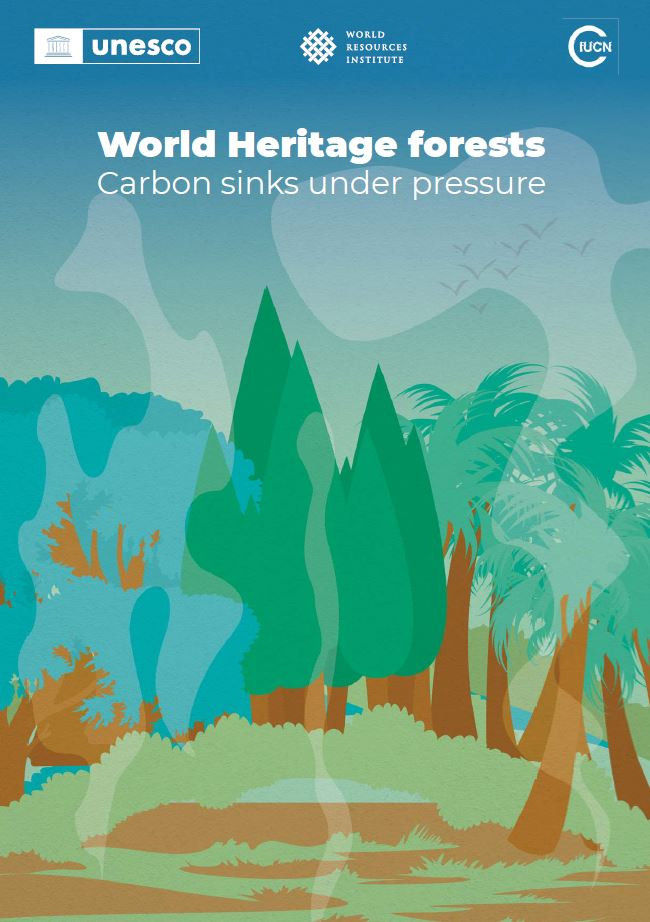 World Heritage Forests: Carbon Sinks Under Pressure سنة النشر: 2021 المؤلف: Tales Carvalho Resende | David Gibbs | Nancy Harris | Elena Osipova المؤلف المؤسسي: UNESCO | International Union for Conservation of Nature (IUCN) | World Resources Institute This report provides the first global scientific assessment of greenhouse gas emissions and sequestration in forests found in UNESCO World Heritage sites.World Heritage forests, whose combined area of 69 million hectares is roughly twice the size of Germany, are some of the most biodiversity-rich habitats on Earth and play a crucial role in climate regulation by absorbing carbon dioxide (CO2) from the atmosphere. However, these forests are under increasing anthropogenic pressures, including climate change.By combining remote sensing data with site-level monitoring, this report has quantified the climate benefits of World Heritage forests for the first time, assessed the impacts on carbon of common threats to World Heritage forests and identified sites that are net carbon sources. It therefore provides information to facilitate dialogues between policymakers and local stakeholders for the development of effective solutions aimed at maintaining the continuing role of World Heritage forests as sinks and stable carbon stores for future generations.
 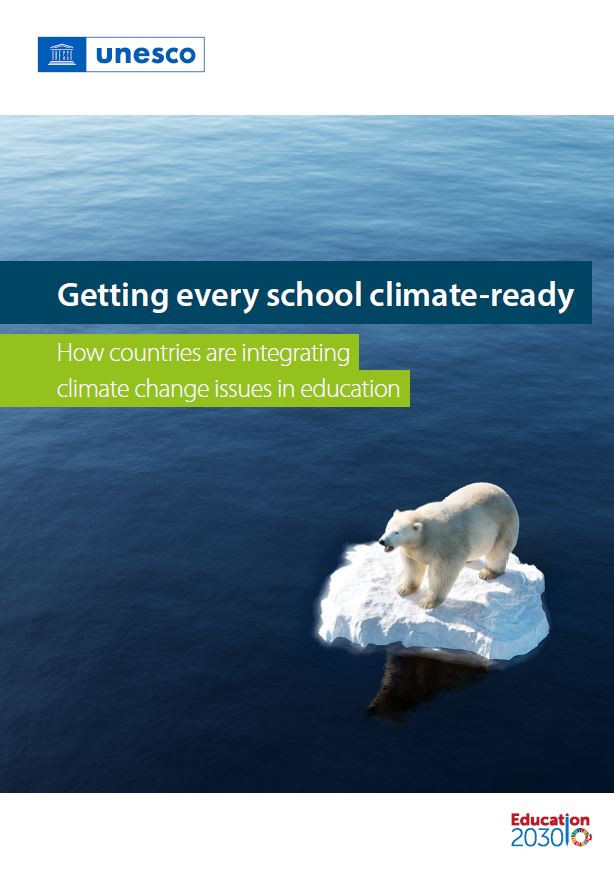 Getting Every School Climate-ready: How Countries are Integrating Climate Change Issues in Education سنة النشر: 2021 المؤلف المؤسسي: UNESCO This document summarizes the findings of selected studies by UNESCO and its partners on how climate change issues are integrated in education.These findings shed light on four key questions: where do we stand on climate change education; what do teachers say; what are the examples of country good practices on climate change education; and what does inter-ministerial collaboration on education for sustainable development look like?
  Media and Information Literate Citizens: Think Critically, Click Wisely! سنة النشر: 2021 المؤلف: Alton Grizzle | Carolyn Wilson | Ramon Tuazon | C.K. Cheung | Jesus Lau | Rachel Fischer | Dorothy Gordon | Kwame Akyempong | Jagtar Singh | Paul R. Carr | Kristine Stewart | Samy Tayie | Olunifesi Suraj | Maarit Jaakkola | Gina Thésée | Curmira Gulston المؤلف المؤسسي: UNESCO Content providers such as libraries, archives, museums, media and digital communications companies can enable inclusive and sustainable development. However, they do not always live up to these ideals, which creates challenges for the users of these services. Content providers of all types open up new opportunities for lifelong learning. But at the same time, they open up challenges such as misinformation and disinformation, hate speech, and infringement of online privacy, among others.Media and information literacy is a set of competencies that help people to maximize advantages and minimize harms. Media and information literacy covers competencies that enable people to critically and use of digital technologies. Capacities in these areas are indispensable for all citizens regardless of their ages or backgrounds.This pioneering curriculum presents a comprehensive competency framework of media and information pedagogical suggestions. It features various detailed modules covering the range of competencies needed to navigate today’s communications ecosystem. This resource links media and education, education for sustainable development, cultural literacy and the exponential information literacy curriculum, everyone can become media and information literate as well as peer-educators of media and information literacy.
  Citoyens éduqués aux médias et à l’information : penser de manière critique, cliquer à bon escient ! سنة النشر: 2023 المؤلف: Alton Grizzle | Carolyn Wilson | Ramon Tuazon | C.K. Cheung | Jesus Lau | Rachel Fischer | Dorothy Gordon | Kwame Akyempong | Jagtar Singh | Paul R. Carr | Kristine Stewart | Samy Tayie | Olunifesi Suraj | Maarit Jaakkola | Gina Thésée | Curmira Gulston المؤلف المؤسسي: Organisation des Nations Unies pour l'éducation, la science et la culture (UNESCO) Pouvons-nous améliorer nos sociétés en cliquant à bon escient ?Les fournisseurs de contenus que sont les bibliothèques, les archives, les musées, les médias et les entreprises de communication numérique, entre autres, peuvent favoriser un développement inclusif et durable. Cependant, ils ne sont pas toujours à la hauteur de cet idéal, ce qui pose des difficultés aux utilisateurs de ces services.Les fournisseurs de contenus de tous types ouvrent de nouvelles opportunités d’apprentissage tout au long de la vie. Mais dans le même temps, ils ouvrent aussi la porte aux problèmes que sont la mésinformation, la désinformation, les discours de haine et la violation de la confidentialité en ligne, entre autres.L’éducation aux médias et à l’information est un ensemble de compétences qui permet d’optimiser les avantages et de minimiser les préjudices. L’éducation aux médias et à l’information couvre les compétences qui permettent à chacun d’interagir de façon critique et efficace avec le contenu des communications, les institutions qui fournissent ce contenu et les technologies numériques. Les capacités dans ces domaines sont indispensables pour tout citoyen, quel que soit son âge ou son origine.Ce programme novateur présente un cadre de compétences complet en matière d’éducation aux médias et à l’information, ainsi que des suggestions pédagogiques structurées pour les éducateurs et les apprenants. Il se compose de plusieurs modules détaillés couvrant l’éventail des compétences nécessaires pour évoluer dans l’écosystème des communications d’aujourd’hui. Cette ressource relie l’éducation aux médias et à l’information à des questions émergentes telles que l’intelligence artificielle, l’éducation à la citoyenneté numérique, l’éducation en vue du développement durable, l’éducation culturelle et l’augmentation exponentielle de la mésinformation et de la désinformation. En utilisant ce programme d’éducation aux médias et à l’information de façon efficace, chacun peut s’éduquer aux médias et à l’information, voire devenir pair éducateur dans ce domaine.