
الموارد
استكشف مجموعة واسعة من الموارد القيمة حول تعليم المواطنة العالمية لتعميق فهمك وتعزيز البحث والمناصرة والتعليم والتعلم.
تم العثور على 518 نتيجة
 Curriculum development and review for democratic citizenship and human rights education سنة النشر: 2015 المؤلف: Felisa Tibbitts المؤلف المؤسسي: Council of Europe Education for democratic citizenship and human rights education (EDC/HRE) are educational areas that contribute fundamentally to our ability to live together in communities, in countries and as neighbours across national borders. They also help to enable a flourishing global community. The wider aim of EDC/HRE is the establishment of sustainable and participative forms of democracy based on respect for human rights and good governance. As such, EDC/HRE is a public good and an ongoing investment for producing societies characterised by human rights principles such as non-discrimination, inclusion and participation, and the rule of law. The central purpose of this resource is to support the development of education policies and curricula in schools that support and promote young people’s participation in democratic life. As such, EDC/HRE is inevitably in an ongoing state of development and review. This resource aims to support the work of education leaders and curriculum developers in integrating EDC/HRE within curriculum systems and to encourage the engagement of stakeholders in supporting such efforts. Élaboration et examen d'un curriculum pour la citoyenneté démocratique et l'éducation aux droits de l'homme سنة النشر: 2015 المؤلف: Felisa Tibbitts المؤلف المؤسسي: Conseil de l'Europe La plupart des jeunes grandissent en apprenant les leçons de vie des soins, de la solidarité, de la responsabilité et de la justice en s'engageant quotidiennement auprès des familles, des amis, des écoles et des institutions communautaires. L'éducation à la citoyenneté démocratique et l'éducation aux droits de l'homme (EDC / EDH) sont des domaines éducatifs qui contribuent fondamentalement à notre capacité à vivre ensemble dans les communautés, dans les pays et comme voisins à travers les frontières nationales. Ils aident également à favoriser une communauté mondiale florissante. L'objectif plus large d'EDC / EDH est l'instauration de formes de démocratie durables et participatives fondées sur le respect des droits de l'homme et la bonne gouvernance. À ce titre, l'EDC / EDH est un bien public et un investissement permanent pour des sociétés productrices caractérisées par des principes relatifs aux droits de l'homme tels que la non-discrimination, l'inclusion et la participation et l'état de droit. L'objectif central de cette ressource est d'appuyer l'élaboration de politiques et de programmes éducatifs dans les écoles qui soutiennent et encouragent la participation des jeunes à la vie démocratique. À ce titre, EDC / EDH est inévitablement dans un état de développement et d'examen permanent. Cette ressource vise à appuyer le travail des leaders de l'éducation et des concepteurs de programmes d'études pour intégrer EDC / EDH dans les systèmes curriculaires et encourager l'engagement des parties prenantes à soutenir ces efforts. Разработка и пересмотр учебных программ по воспитанию демократической гражданственности и образованию в области прав человека سنة النشر: 2015 المؤلف: Felisa Tibbitts المؤلف المؤسسي: Council of Europe Воспитание демократической гражданственности и образование в об-ласти прав человека необходимы для построения мирного, устойчивого и инклюзивного общеcтва, основанного на уважении прав человека каждой личности. Повышение качества образовательной политики в сфере воспитания демократической гражданственности и образования в области прав человека является важнейшим направлением работы Совета Европы, Организации Объединенных Наций по вопросам образования, науки и культуры, Бюро по демократическим институтам и правам человека Организации по бе-зопасности и сотрудничеству в Европе и Организации американских государств. Эти организации совместно подготовили настоящую публикацию, с тем чтобы оказать поддержку государствам-членам и государствам-участникам в выпол-нении ими своих обязательств, касающихся содействия образованию в области прав человека и демократической гражданственности и улучшения доступа к качественному образованию для всех лиц. Помимо этого, данная публикация является вкладом в глобальную инициативу Генерального секретаря ООН Пан Ги Муна «Образование прежде всего», начатую в 2012 году. Эта инициатива определила содействие воспитанию глобальной гражданственности как один из трех важнейших приоритетов образования, тем самым создав дополнитель-ный стимул для действий в данной области и послав ясный сигнал о поддержке работникам сферы образования во всем мире.
  Higher Education's Response to the COVID-19 Pandemic: Building a More Sustainable and Democratic Future (Council of Europe Higher Education Series; No. 25) سنة النشر: 2021 المؤلف: Sjur Bergan | Tony Gallagher | Ira Harkavy | Ronaldo Munck | Hilligje van’t Land المؤلف المؤسسي: Council of Europe Public health was the immediate concern when the Covid-19 pandemic struck in Asia, then in Europe and other parts of the world. The response of our education systems is no less vital. Higher education has played a major role in responding to the pandemic and it must help shape a better, more equitable and just post-Covid-19 world. This book explores the various responses of higher education to the pandemic across Europe and North America, with contributions also from Africa, Asia and South America.The book describes the various ways in which higher education is facing the Covid-19 pandemic. It is designed to help universities, specifically their staff and students as well as their partners, contribute to a more sustainable and democratic future.
  Research Report: A Comparative Study on Hybrid Learning in Schools سنة النشر: 2024 المؤلف المؤسسي: UNESCO International Bureau of Education (IBE) During the COVID-19 lockdown, policymakers and educators faced an unprecedented challenge disrupting all levels of education. The initial optimism about replacing physical classes with virtual lessons diminished as complex interconnected issues emerged. To address the need for continuous and sustainable learning, school systems implemented variations of hybrid learning during the pandemic, seeking to integrate physical and virtual classes. These approaches prompted this comparative study led by UNESCO-IBE. The initial phase of this study involved collecting and analysing data on hybrid strategies from six countries. The research aimed to examine factors influencing hybrid learning implementation during the lockdown, with a subsequent focus on developing and validating a practical Hybrid Learning Framework for Schools. The cross-case analysis was designed not to rank or compare, but to understand and connect different scenarios and contexts. Phase I focuses on current hybrid learning practices and influencing factors, while Phases II and III will concentrate on using the information gathered to create and validate a Hybrid Learning Framework for Schools. Hybrid learning is not just a response to pandemics but also serves as a viable solution for other scenarios where full school attendance is difficult. Aligned with UNESCO-IBE’s overarching vision of a comprehensive, personalized, and democratized curriculum accessible to all, hybrid learning facilitates inclusive education across diverse regions, overcoming geographical and temporal limitations. The approach aims to unlock the unique potential of every learner, fostering a more flexible educational environment.Published in February 2024 by the UNESCO International Bureau of Education (IBE) with support from the European Union.
  Adult education and development: global citizenship education (no 82, 2015) سنة النشر: 2015 المؤلف المؤسسي: DVV International Issue 82/2015 of the international journal Adult Education and Development (AED) explores the topic global citizenship education.In the international debates, we are witnessing a growing interest in the concept of global citizenship education. It is one of the three pillars of the Global Education First Initiative (GEFI) launched by the United Nations Secretary-General in 2012 and is being internationally promoted by the work of UNESCO. According to the GEFI, education that fosters global citizenship “must fully assume its central role in helping people to forge more just, peaceful, tolerant and inclusive societies”. The 2030 Agenda for Sustainable Development, adopted by the United Nations General Assembly in September 2015, refers to global citizenship as one tool to “ensure that all learners acquire the knowledge and skills needed to promote sustainable development”.The ambitions are high, but the concrete understanding of global citizenship education and its implications differ widely. Is it just another abstract concept? What meaning can the word citizenship have if it does not refer to a specific nation? What do people in different parts of the world understand by global citizenship? And how can global citizenship education be put into practice?Adult Education and Development decided to engage in the debate and invited authors from different regions, backgrounds and disciplines to share their thoughts and experiences on the topic and related questions such as identity, migration, peace, the meaning of citizenship, globalisation and sustainable development.Irina Bokova, Director-General of UNESCO, explains the organisation’s understanding of global citizenship education, and why adult education and “learning beyond the classrooms” are crucial when it comes to promoting global citizenship. Canadian author and journalist Doug Saunders (“Arrival City: How the Largest Migration in History Is Reshaping Our World”) talks about the challenges and opportunities of what he refers to as the last great human migration, that from the countryside to the cities, and about the positive role adult education can play during this transition.In the section “Citizens’ voices” people from all over the world talk about what global citizenship means to them and in what ways they see themselves as global citizens. And photographer Viktor Hilitksi travelled through Belarus and captured with his camera how villages rediscover their local traditions and cultures. L'éducation des adultes et le développement: l'éducation à la citoyenneté mondiale (82, 2015) سنة النشر: 2015 المؤلف المؤسسي: DVV International Problème 82/2015 de la revue internationale d'Éducation des Adultes et le Développement (EAD) explore l'éducation à la citoyenneté mondiale sujet.Dans les débats internationaux, nous assistons à un intérêt croissant pour le concept d'éducation à la citoyenneté mondiale. Il est l'un des trois piliers de la Première Initiative Mondiale pour l'éducation globale avant tout(GEFI) lancé par le Secrétaire général des Nations Unies en 2012 et est internationalement promu par le travail de l'UNESCO. Selon le GEFI, l'éducation qui favorise la citoyenneté mondiale "doit assumer pleinement son rôle central en aidant les gens à forger plus justes, des sociétés pacifiques, tolérantes et inclusives". L'Agenda 2030 pour le développement durable, adoptée par l'Assemblée générale des Nations Unies en Septembre 2015, se réfère à la citoyenneté mondiale comme un outil pour «faire en sorte que tous les apprenants à acquérir les connaissances et les compétences nécessaires pour promouvoir le développement durable». Les ambitions sont élevées, mais la compréhension concrète de L'éducation à la citoyenneté Mondiale (ECM) et ses implications diffèrent largement. Est-il juste un autre concept abstrait? Quel sens le mot citoyenneté peut avoir si elle ne se réfère pas à une nation spécifique? Que font les gens dans différentes parties du monde à comprendre par la citoyenneté mondiale? Et comment L'éducation à la citoyenneté Mondiale (ECM) être mis en pratique? Education des adultes et développement ont décidé de participer au débat et a invité les auteurs de différentes régions, milieux et disciplines à partager leurs réflexions et expériences sur le sujet et les questions connexes telles que l'identité, la migration, la paix, le sens de la citoyenneté, la mondialisation et le développement durable. Irina Bokova, Directrice générale de l'UNESCO, explique la compréhension de l'organisation de l'éducation à la citoyenneté mondiale, et pourquoi l'éducation des adultes et de «l'apprentissage au-delà des salles de classe" sont cruciales en matière de promotion de la citoyenneté mondiale. auteur canadien et journaliste Doug Saunders ( «Ville d'arrivée: Comment la plus grande migration dans l'histoire remodèle notre monde») parle des défis et des possibilités de ce qu'il désigne comme la dernière grande migration humaine, que de la campagne vers les villes, et sur le rôle positif l'éducation des adultes peut jouer au cours de cette transition. Dans la section «voix des citoyens" les gens de partout dans le monde parlent de ce que signifie la citoyenneté mondiale pour eux et de quelle manière ils se considèrent comme des citoyens du monde. Et le photographe Viktor Hilitksi a voyagé à travers le Bélarus et capturé avec sa caméra comment les villages redécouvrent leurs traditions et cultures locales. Educación de adultos y desarrollo: La educación para la ciudadanía mundial (no 82, 2015) سنة النشر: 2015 المؤلف المؤسسي: DVV International Issue 82/2015 of the international journal Adult Education and Development (AED) explores the topic global citizenship education.In the international debates, we are witnessing a growing interest in the concept of global citizenship education. It is one of the three pillars of the Global Education First Initiative (GEFI) launched by the United Nations Secretary-General in 2012 and is being internationally promoted by the work of UNESCO. According to the GEFI, education that fosters global citizenship “must fully assume its central role in helping people to forge more just, peaceful, tolerant and inclusive societies”. The 2030 Agenda for Sustainable Development, adopted by the United Nations General Assembly in September 2015, refers to global citizenship as one tool to “ensure that all learners acquire the knowledge and skills needed to promote sustainable development”.The ambitions are high, but the concrete understanding of global citizenship education and its implications differ widely. Is it just another abstract concept? What meaning can the word citizenship have if it does not refer to a specific nation? What do people in different parts of the world understand by global citizenship? And how can global citizenship education be put into practice?Adult Education and Development decided to engage in the debate and invited authors from different regions, backgrounds and disciplines to share their thoughts and experiences on the topic and related questions such as identity, migration, peace, the meaning of citizenship, globalisation and sustainable development.Irina Bokova, Director-General of UNESCO, explains the organisation’s understanding of global citizenship education, and why adult education and “learning beyond the classrooms” are crucial when it comes to promoting global citizenship. Canadian author and journalist Doug Saunders (“Arrival City: How the Largest Migration in History Is Reshaping Our World”) talks about the challenges and opportunities of what he refers to as the last great human migration, that from the countryside to the cities, and about the positive role adult education can play during this transition.In the section “Citizens’ voices” people from all over the world talk about what global citizenship means to them and in what ways they see themselves as global citizens. And photographer Viktor Hilitksi travelled through Belarus and captured with his camera how villages rediscover their local traditions and cultures.
  Gender, Climate & Security: Sustaining Inclusive Peace on the Frontlines of Climate Change سنة النشر: 2020 المؤلف المؤسسي: United Nations Environment Programme (UNEP) | United Nations Entity for Gender Equality and the Empowerment of Women (UN Women) | United Nations Development Programme (UNDP) Climate change is a defining threat to peace and security in the 21st century – its impacts felt by everyone, but not equally. Gender norms and power dynamics shape how women and men of different backgrounds experience or contribute to insecurity in a changing climate. Grounded in a series of case studies from research and programming experience, this report offers a comprehensive framework for understanding how gender, climate and security are inextricably linked. The report assesses entry points for action across existing global agendas and suggests concrete recommendations for how policymakers, development practitioners and donors can advance three inter-related goals: peace and security, climate action and gender equality.
 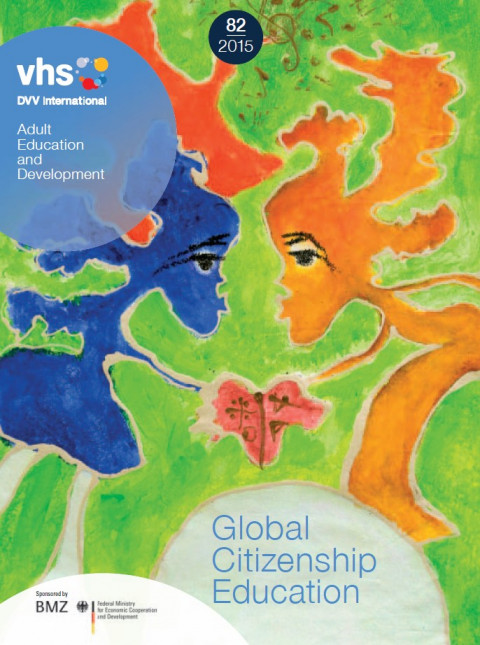 Adult education and development: global citizenship education (no 82, 2015) سنة النشر: 2015 المؤلف المؤسسي: DVV International Issue 82/2015 of the international journal Adult Education and Development (AED) explores the topic global citizenship education. In the international debates, we are witnessing a growing interest in the concept of global citizenship education. It is one of the three pillars of the Global Education First Initiative (GEFI) launched by the United Nations Secretary-General in 2012 and is being internationally promoted by the work of UNESCO. According to the GEFI, education that fosters global citizenship “must fully assume its central role in helping people to forge more just, peaceful, tolerant and inclusive societies”. The 2030 Agenda for Sustainable Development, adopted by the United Nations General Assembly in September 2015, refers to global citizenship as one tool to “ensure that all learners acquire the knowledge and skills needed to promote sustainable development”. The ambitions are high, but the concrete understanding of global citizenship education and its implications differ widely. Is it just another abstract concept? What meaning can the word citizenship have if it does not refer to a specific nation? What do people in different parts of the world understand by global citizenship? And how can global citizenship education be put into practice? Adult Education and Development decided to engage in the debate and invited authors from different regions, backgrounds and disciplines to share their thoughts and experiences on the topic and related questions such as identity, migration, peace, the meaning of citizenship, globalisation and sustainable development. Irina Bokova, Director-General of UNESCO, explains the organisation’s understanding of global citizenship education, and why adult education and “learning beyond the classrooms” are crucial when it comes to promoting global citizenship. Canadian author and journalist Doug Saunders (“Arrival City: How the Largest Migration in History Is Reshaping Our World”) talks about the challenges and opportunities of what he refers to as the last great human migration, that from the countryside to the cities, and about the positive role adult education can play during this transition. In the section “Citizens’ voices” people from all over the world talk about what global citizenship means to them and in what ways they see themselves as global citizens. And photographer Viktor Hilitksi travelled through Belarus and captured with his camera how villages rediscover their local traditions and cultures.