
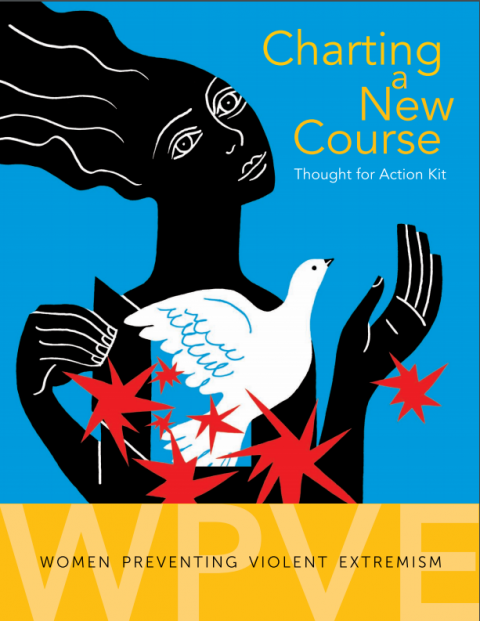
Women Preventing Violent Extremism Thought for Action Kit
- Corporate Author
- United States Institute of Peace (USIP)
- Collation
- 40p
- Resource Language
- English
- Year of publication
- 2015
- Keyword
- Preventing violent extremism
- Resource Type
- Curriculum, teaching-learning materials and guides
- Region
- Global
- Place of publication
- Washington, D.C.
- eBook URL
- [E-BOOK]
United Nations Security Council Resolution (UNSCR) 1325 (2000) was groundbreaking in that it provided strong support for greater attention to the role of women in international peace and security. It acknowledges the inordinate impact of violent conflict on women and recognizes that women’s empowerment and gender equality are critical to international peace and security. The UN Security Council fully recognizes the critical link between the Women, Peace and Security agenda as laid out in UNSCR 1325 and the role women could and should play in preventing violent extremism. This document has three sections. The first section examines the question of gender and why it is important to consider both men and women, and the dynamics of gender roles in society when addressing violent extremism. The second section deals specifically with women and the underlying forces of extremist violence. It invites thinking about women as actors in preventative efforts as well as perpetrators of terrorist acts. Finally, the third section raises issues related to the various ways in which to engage communities, including members of the security sector. Each section opens with a brief introductory background, followed by short essays by some of the leading experts in this field. Each section also includes practical exercises that may prove useful for training and further dialogue.
Related Resources
-
 Addressing Violent Pasts through Education: A Policy Guide
 -
 The Representation of Jews, Judaism and Antisemitism in School Textbooks and Curricula in Europe
 -
 Strategies to Counter Antisemitism: A Handbook for Educators
 -
 Addressing Antisemitism Through Education: A Survey of Teachers’ Knowledge and Understanding