
News
Follow the newest trends and news in GCED.
1,676 Results found
 Learning, Innovating, Acting: Building a Sustainable Future 6 April 2026 On 24 March, a UNESCO Campus was held focusing on innovation and sustainable development, giving students and experts with a platform to exchange ideas and experiences.26 March 2026 - Last update: 31 March 2026UNESCO Campus gathered students from different schools around the world: 76 students took the floor during the exchange from Benin, India, Nigeria and United Kingdom. Moreover, 13 classes connected from all around the world attended the event. The students engaged with experts from UNESCO and civil society on the role of innovation in driving concrete actions to build more responsible and inclusive societies. The session was organized with the support of TECH4ALL by Huawei and in collaboration with 6C-Conseil.Acting starts with learningTo open the discussion, William Savard, Project Assistant in the Education for Sustainable Development sector at UNESCO, recalled that sustainable development means meeting present needs without compromising the ability of future generations to meet theirs. It is based on three pillars: economic, environmental and social, aiming to ensure well-being for all.He underlined that past exploitation of natural resources has contributed to current challenges such as climate change and biodiversity loss. In this context, education remains essential, but climate issues are still not sufficiently integrated into learning systems. In this context, the key role of young people is to become drivers of change.The need for responsible and inclusive innovationOnce equipped with knowledge the next step is innovation, Ayumi Moore Aoki, Founder and CEO of Women in Tech, encouraged students to reflect on “smart” innovation that serves the common good. According to her, the value of technology should not be measured simply by its performance, but also by its impact on society.She insisted that innovation must be inclusive and ethical. Technologies that only benefit already privileged groups risk widening inequalities. It is therefore important to question their environmental cost, accessibility and long-term effects.Education plays a key role in this process, helping young people use technology responsibly and understand both its potential and its limits.Engaging for active citizenshipJelena Zelenovic, Programme Specialist in Global Citizenship and Peace Education at UNESCO, highlighted the importance of global citizenship by being an active citizen means feeling part of a shared world and acting for the common good.She pointed out that education must be accessible to all to prepare future innovators. Beyond knowledge, it should foster critical thinking, empathy and a sense of responsibility. Innovation is not only technological; it arises from everyday actions and new ways of thinking.She also mentioned the importance of both individual and collective engagement in addressing environmental, economic and social challenges within the framework of education for sustainable development. Through concrete initiatives, citizens can contribute to a more inclusive and sustainable world.The UNESCO Campus allows students to take inspiration from these exchanges and leave with practical ideas.
  Escalation in the Middle East reverses more than a year of economic growth in the Arab States region, according to new UN Development Programme assessment 5 April 2026 March 31, 2026New estimates by the United Nations Development Programme (UNDP) suggest the military escalation in the Middle East, now into its fifth week, may cost economies in the region from 3.7 to 6.0 percent of their collective Gross Domestic Product (GDP). This represents a staggering loss of US$120-194 billion and exceeds the cumulative regional GDP growth achieved in 2025. Coupled with an estimated rise in unemployment of up to 4 percentage points or 3.6 million jobs lost—more than the total jobs created in the region in 2025, these reversals will push up to 4 million people into poverty. The assessment — “Military Escalation in the Middle East: Economic and Social Implications for the Arab States region” — exposes the concerning reality of structural vulnerabilities characteristic to the region, which enable a short‑lived military escalation to generate profound and widespread socio‑economic impacts that may persist over a long-term.“This crisis rings alarm bells for countries of the region to fundamentally reevaluate their strategic choices of fiscal, sectoral, and social policies, representing an important turning point in the development trajectory of the region,” said Abdallah Al Dardari, UN Assistant Secretary General and Director of the Regional Bureau for Arab State in UNDP. “Our findings underline the pressing need to strengthen regional collaboration to diversify economies—beyond reliance on growth driven by hydrocarbons, and to expand production bases, secure trade and logistics systems, and broaden economic partnerships, to reduce exposure to shocks and conflicts.”The assessment employs Computable General Equilibrium modelling to capture the magnitude of disruptions caused by a four-week conflict, and models its effects through key transmission channels, including increased trade costs, temporary productivity losses, and localized capital destruction. It conducted five simulation scenarios, representing escalating levels of conflict scenarios, ranging from a “moderate disruption,” where trade costs increase by tenfold, to an “extreme disruption and energy shock,” where trade costs increase a hundred-fold, intensified by a stop of hydrocarbon production.The findings highlight that impacts are not uniform, varying significantly across the region due to structural characteristics of its main subregions. Estimates suggest that the largest macroeconomic losses are concentrated in Gulf Cooperation Council and the Levant subregions, where strong exposure to trade disruptions and energy market volatility drives significant declines in output, investment, and trade. Both subregions stand to lose 5.2-8.5 percent and 5.2-8.7 percent of their GDP, respectively. Increases in poverty rates are concentrated in the Levant and Least Developed Arab Countries, where baseline vulnerability is highest and shocks translate more strongly into welfare losses. In North Africa, impacts remain moderate but still significant in absolute terms. In the Levant the crisis is expected to increase poverty by 5 percent, pushing an additional 2.85-3.30 million people into poverty—accounting for over 75 percent of the rise in poverty across the region. Across the region, human development as measured by the Human Development Index (HDI) is expected to decline by approximately 0.2 to 0.4 percent, corresponding to a setback of roughly half a year to nearly one year of human development progress.
 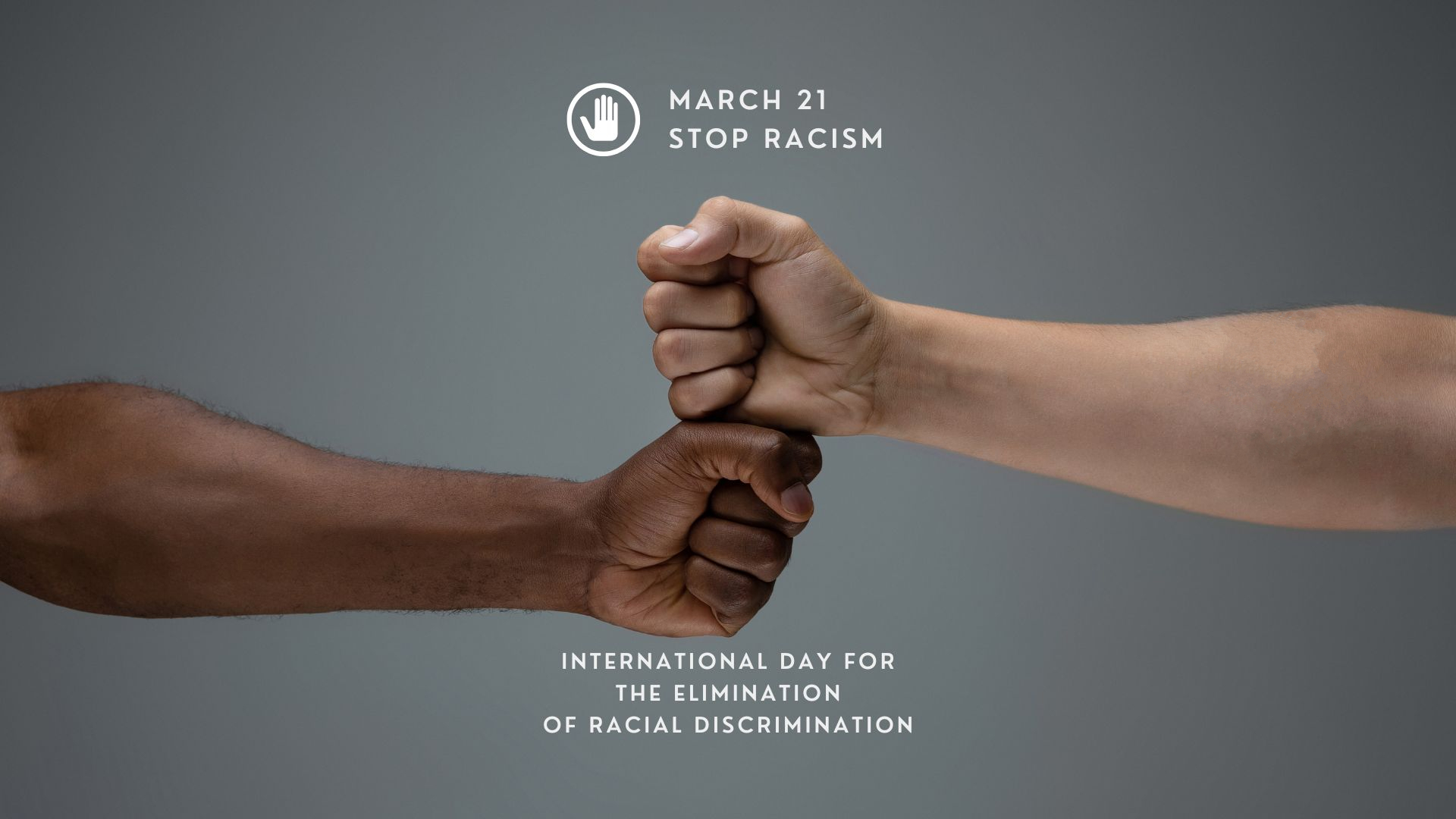 CERD-ECRI joint statement International Day for the Elimination of Racial Discrimination 29 March 2026 Strasbourg | 20 march 2026Michał Balcerzak, Chairperson of the Committee on the Elimination of Racial Discrimination (CERD), the United Nations anti-racism body, and Bertil Cottier, Chair of the European Commission against Racism and Intolerance (ECRI), the Council of Europe’s anti-racism body, call for renewed commitment to address racism and racial discrimination in and through school education. The exposure of new generations of children and young people to structural or institutional forms of racism and inequalities in access to education and in the school environment remains a critical issue in various parts of the world, including Europe, in societies that can be described as increasingly polarised. While educational systems can play a pivotal role in preventing and combating racism and various forms of racial discrimination, those systems may not only mirror, but also perpetuate racism and inequalities in the society at large. Michał Balcerzak, Chairperson of CERD, said “Education is one of the most powerful tools available to States to dismantle racial discrimination at its roots, yet too often we see that schools continue to reproduce patterns of exclusion and inequality rather than transform them. Under Article 7 of the International Convention on the Elimination of All Forms of Racial Discrimination, States parties have a clear and immediate obligation to ensure that education systems are inclusive, equitable and free from both direct and indirect discrimination. This requires not only eliminating segregation in all its forms, but also addressing structural inequalities, equipping teachers to respond to racism, and embedding human rights, equality and diversity as core components of curricula.” “Through its country monitoring work, ECRI has kept a watchful eye on the situation of children belonging to groups of concern to CERD and ECRI in schools. It stressed the importance of ensuring that school environment is free of racism and racial discrimination and that children and young people are effectively protected against racially-motivated bullying and cyberbullying”, said Bertil Cottier, ECRI’s Chair. “It has become vital for schools to build future generations’ resistance to racism through teaching on equality and diversity addressed to all children. School curricula should pay sufficient attention to diversity and to transmitting knowledge and awareness of the history of racism and racial discrimination, including the understanding of the continued impact of colonialism and slavery on structural inequalities in contemporary societies”, he continued. It is also crucial for the states to ensure equal access to quality education and eradicate all forms of direct and indirect discrimination in schooling. In this context, CERD and ECRI are deeply concerned about the persistent phenomenon of de facto school segregation which impacts Roma children and children with migration backgrounds. Such segregation generates patterns of social exclusion. Both CERD and ECRI have therefore repeatedly called on governments to take decisive measures to ensure that school segregation is prohibited and effectively eliminated. On this International Day for the Elimination of Racial Discrimination, the Chairperson of CERD and the Chair of ECRI urge States parties to the International Convention on the Elimination of All Forms of Racial Discrimination and Council of Europe member states to redouble their efforts to address racism and racial discrimination in and through school education, notably by urgently acting on CERD and ECRI recommendations in this area. They call on governments to take all measures at their disposal to ensure that education is used as an effective tool of elimination of racial discrimination and empowering children and young people belonging to racialised communities in the continued effort to develop just, equal and peaceful democratic societies for the next generations.The Committee on the Elimination of Racial Discrimination (CERD) is the United Nations treaty body that monitors the implementation of the International Convention on the Elimination of All Forms of Racial Discrimination by its 182 States parties. It is composed of 18 independent experts. The European Commission against Racism and Intolerance (ECRI) is a specialised human rights expert body that monitors action against racism and intolerance across the 46 member states of the Council of Europe. It is composed of 46 independent experts from each member state and two independent observers from observer states to the Council of Europe. All 46 member states of the Council of Europe are parties to the International Convention on the Elimination of All Forms of Racial Discrimination. The United Nations designated 21 March the International Day for the Elimination of Racial Discrimination in 1966, in memory of the 69 people killed by police officers six years earlier in Sharpeville, South Africa, during a peaceful demonstration to protest against the apartheid “pass laws”.
 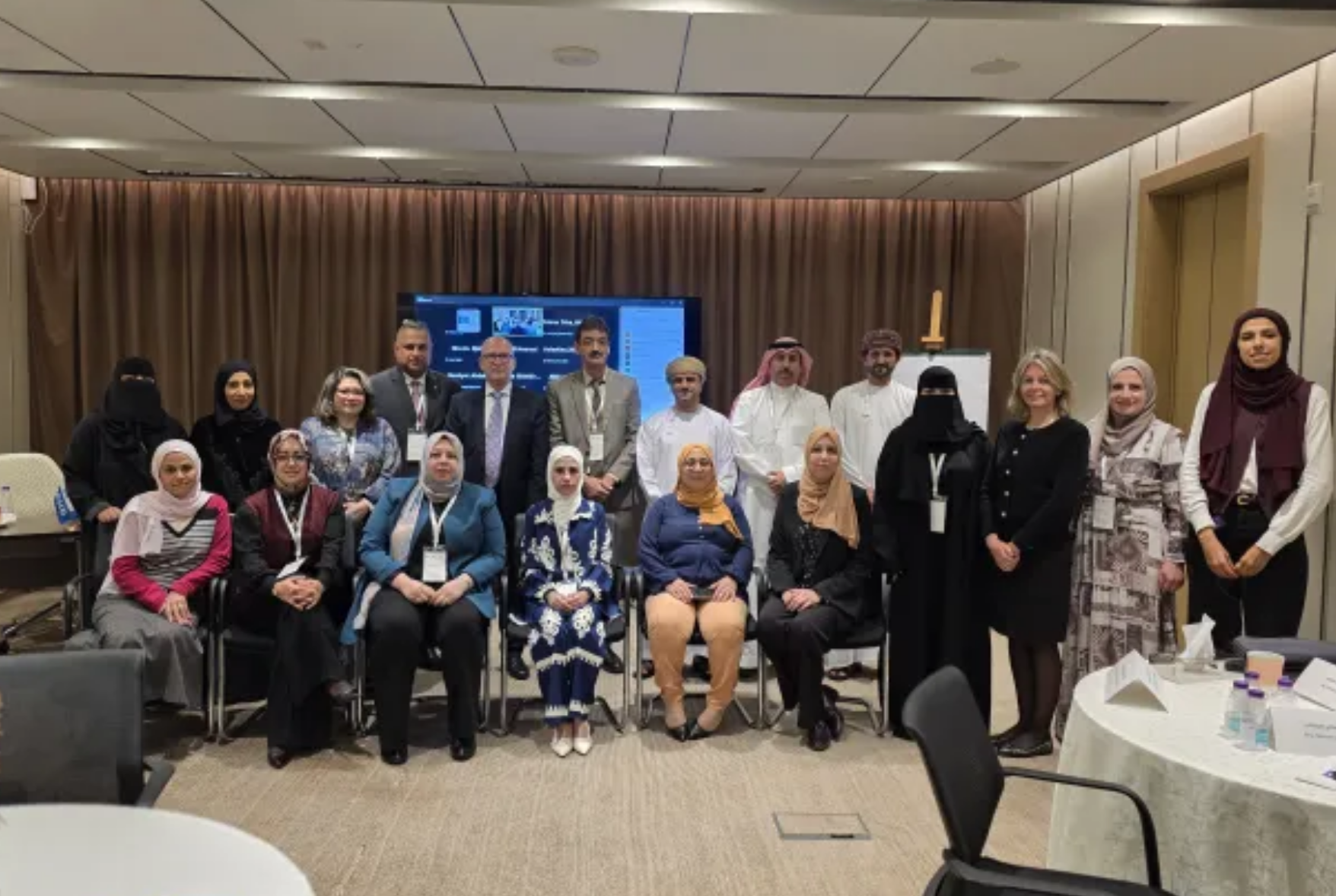 Regional Workshop in Saudi Arabia to Strengthen the Capacity of Arab Statisticians to Monitor SDG 4 Indicators 21 March 2026 26 February 2026The regional workshop on capacity building for Arab statisticians on SDG 4 indicators was concluded in Dammam. The workshop was organized by the UNESCO Regional Office in Beirut in collaboration with the UNESCO Regional Center for Quality and Excellence in Education (RCQE) and the UNESCO Institute for Statistics (UIS). Representatives from Ministries of Education and National Statistical Offices across Arab countries participated, as part of ongoing regional efforts to improve the quality of education data and ensure its alignment with international standards.The workshop was convened in response to a growing need to strengthen Arab countries’ capacities to monitor progress in education, particularly in light of challenges related to fragmented data sources, inconsistencies in national methodologies, and gaps in aligning local frameworks with global requirements. The workshop adopted an interactive training methodology that combined practical exercises, peer learning, and direct dialogue with experts from the UNESCO Institute for Statistics.The workshop represented a pivotal opportunity to acquire in-depth expertise in analyzing education data and applying rigorous methodologies for calculating SDG 4 indicators. This included strengthening participants’ understanding of the application of the International Standard Classification of Education (ISCED 2011) and improving its alignment with national programmes. Participants were also introduced to tools for measuring learning outcomes and education expenditure statistics, in addition to discussing the optimal use of household surveys in monitoring processes.Beyond the technical sessions, bilateral meetings between national statisticians and the UNESCO Institute for Statistics provided space to address country-specific challenges, including those faced by countries experiencing exceptional circumstances that affect their capacity to collect education data. These discussions contributed to developing realistic approaches to support such countries and strengthen national coordination mechanisms.The workshop also reinforced regional cooperation, with participants agreeing on a set of steps aimed at improving the education data architecture in the Arab region. Key directions and agreed recommendations included:Establishing national task forces that include all stakeholders involved in education data, in order to strengthen coordination and ensure regular data flow.Updating education programme lists in accordance with ISCED to ensure accurate regional and international comparisons.Strengthening communication with the UNESCO Institute for Statistics to ensure the timely submission of required data through annual survey questionnaires.Engaging Ministers of Education and Ministers of Finance through regional advocacy to lay the foundation for a shared commitment to improving education financing data management.Participants also agreed to enhance joint Arab coordination in preparation for the meeting of the Education Data and Statistics Commission to be held in Montreal in April 2026. This will include convening a unified Arab consultative meeting to discuss the agenda and coordinate a regional position, followed by a subsequent meeting to present outcomes to national statisticians.This workshop, the second in a series of regional training workshops, marked an important step toward empowering Arab countries to improve the quality of their education data and leverage it for policymaking, thereby advancing progress toward achieving SDG 4 by 2030. At the close of the workshop, participants emphasized the importance of sustaining such initiatives, given their direct impact on strengthening data systems and guiding education-related decision-making at both national and regional levels.
  UNESCO Launches New Programme to Address Racism in and through Education in Europe 21 March 2026 While racist ideologies and discrimination continue to be a global problem and are still widespread in our societies, racism and discrimination are not inevitable: education plays a key role in its prevention by fostering equality, inclusion and respect for diversity, and by empowering the young generations to become agents of change and act as responsible global citizens.20 March 2026To face this urgent challenge, UNESCO has launched a two-year project in 2026 aimed at addressing racism in and through education in Europe, in partnership with the Office for Democratic Institutions and Human Rights (OSCE/ODIHR). The project is funded by the European Commission.Throughout history, racism and intolerance have been major drivers of war and destruction. Racism is, above all, a profound attack on universal values of human rights and a deliberate attempt to destroy our sense of a shared humanity. UNESCO’s approachAs highlighted in the UNESCO 2023 Recommendation on Education for Peace, Human Rights and Sustainable Development, peace cannot be reduced to the absence of physical conflict alone. Peace begins with a reinvigorated social contract that embeds diversity, mutual understanding and solidarity across societies.In this context and in synergy with the Anti-Racism Strategy 2026 of the European Commission, UNESCO will support, through this project, education systems in preventing racism and fostering inclusive and equitable learning environments.This will be done through these principles and actions:Listen to those most impacted by racism to pave the way forwardThrough a global consultation process, UNESCO will bring together key stakeholders in the field of anti-racism education and include representatives from vulnerable groups and victims of racism. The aim is to create a dynamic space for dialogue and exchange where civil society organizations, academic networks, equality bodies, governmental agencies and ministries of education can come together to map out the challenges, the needs and the solutions to prevent and eradicate racism.Address racism by approaching each form of hatred on its own termsUNESCO will address each form of racism on its own terms, as racism is not abstract, and affects real persons and communities in distinctive ways. To understand and address distinct manifestations of racism, UNESCO will look at the specific histories and causes behind each type of hatred, including against people of African descent, Muslims, Roma or Jews.Preventing racism works best through two steps: first, by challenging and deconstructing the nature of the "othering" that is used to justify inequality; and second, by developing targeted interventions anchored in the particular historical contexts, lived experiences, and structural dynamics that shape each form of racism. In that way responses follow universal human rights and equality principles but also fit and respond to each situation.Update educational responses to new and evolving forms of racismRacism mutates, like a virus, and exploits new technology to spread faster than before. Educational systems are often ill-equipped to deal with these new challenges. UNESCO will set out to equip educators with the tools that are necessary to build learners’ resilience to polarizing racist narratives on social media, amplified by powerful algorithms, deepfakes and misinformation, by building on its tested Media and Information Literacy (MIL), digital competencies frameworks and previous work on the ethics of Artificial Intelligence (AI).Teach about contemporary racism by integrating education about the historical legacies of racismUNESCO has been pioneering innovative and human rights-centered approaches to teaching about violent pasts as crucial investments into sustainable peace. Through programmes such as : Routes of Enslaved Peoples, the General History of Africa and Holocaust Education, UNESCO promotes a historically grounded education approach that encourages learners to critically examine the roots of racism and to recognize how historical injustices continue to influence contemporary societies.The efforts to deconstruct the pervasive myths and stereotypes that underpin racial discrimination have been embedded since its inception into UNESCO’s core mandate. In the 1950s, UNESCO launched a global programme against racism, led by world-renowned intellectuals such as Claude Levi-Strauss, resulting in a series of landmark statements on racism that reiterated the organization’s fundamental values: we all share a common humanity, and preserving it requires a constant vigilance and commitment to address racism at all levels of society. Global citizenship and peace educationUnmasking racism: Guidelines for educational materialsCountering hate speechAddressing antisemitism through educationTeaching about the Holocaust and genocide
 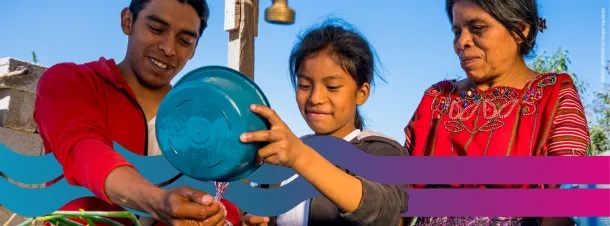 World Water Day 2026 in Latin America and the Caribbean 21 March 2026 "Where Water Flows, Equality Grows"Presentation of the United Nations World Water Development Report19 March 2026World Water Day (22 March) is an official United Nations observance established in 1993 to promote the importance of freshwater and raise awareness of global water challenges.One of its core objectives is to support the achievement of Sustainable Development Goal (SDG) 6: ensuring water and sanitation for all by 2030.The 2026 campaign is framed by the theme “Where Water Flows, Equality Grows”, highlighting the link between water, sanitation, and gender, and underscoring that women and girls face the greatest inequalities related to water resources.Water-related challenges disproportionately affect women and girls due to deeply rooted gender roles, inadequate infrastructure, underrepresentation, limited financing, restrictive social norms, and systemic inequalities.The 2026 World Water Day campaign advocates for a rights-based approach in which women have equal voice, leadership, and opportunities in water-related decision-making, ensuring that water becomes a driving force for a healthier, more prosperous, and more gender-equal future for all.The United Nations World Water Development Report 2026: "Water for All People: Equal Rights and Opportunities”, prepared by UNESCO’s World Water Assessment Programme (WWAP), was launched on 19 March 2026.The report focuses on water and gender, in alignment with the global theme of World Water Day. Its publication offers a strategic opportunity to highlight key data on the situation of women and girls regarding access to water and sanitation, both globally and regionally.Access the WWDR 2026 here
 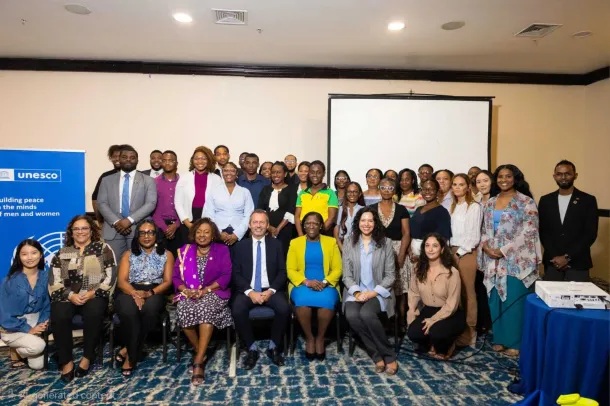 UNESCO Promotes Safe and Inclusive AI for Women in the Caribbean 19 March 2026 The UNESCO Office for the Caribbean hosted on 9 March 2026 the “AI & I: Shaping a Safer Digital Caribbean” workshop in Kingston, Jamaica, within the framework of the International Women’s Day observance.18 March 2026 - Last update: 23 March 2026The UNESCO Office for the Caribbean hosted on 9 March 2026 the “AI & I: Shaping a Safer Digital Caribbean” workshop in Kingston, Jamaica, within the framework of the International Women’s Day observance.Technology-facilitated gender-based violence, known as TFGBV, including harassment, impersonation, and image-based abuse, disproportionately harms women and girls, limiting their safety and participation online.Moreover, generative artificial intelligene (AI) can worsen these risks by, for instance, amplifying gender bias and enabling harms such as deepfakes, misinformation, and non-consensual content, reinforcing inequalities.Strengthening women’s awareness and skills is thus essential. In this context, the one-day session offered hands-on insights into how AI can both advance gender equality and contribute to risks such as TFGBV.More than 50 participants from government institutions, youth organizations, and other critical stakeholders took part in thought-provoking discussions concerning the impact of AI and emerging technologies.This workshop was a targeted capacity development initiative to equip stakeholders with the knowledge and tools needed to engage with AI‑enabled technologies safely and confidently, underpinned by UNESCO-led research.The workshop had a hands‑on, participatory approach emphasizing a practical application, peer learning, and critical thinking, in alignment with UNESCO’s Recommendation on the Ethics of Artificial Intelligence.Topics explored included why AI matters for women, the role of digital platforms in gender-based violence, opportunities and gendered risks of generative AI, as well as online safety, privacy, and ethical AI principles.During the workshop, Nicole Walford, Deputy Executive Director of the Broadcasting Commission Jamaica delivered insights on how algorithms can apply harm, highlighting the urgent need to protect women and girls within an increasingly AI-driven media environment."Technology reflects the hands that build it and the society that feeds it data. If we are not careful, AI will not just mirror our existing inequalities; it will magnify them."The Honourable Olivia Grange, Minister of Culture, Gender, Entertainment and Sport of Jamaica"The pursuit of equality must extend into every space where women live, work, and where they connect and express themselves - including the digital world." For Eric Falt, Regional Director and Representative of UNESCO
  UNESCO Partners with Australia on New National Education Strategy to Address Antisemitism in Schools 18 March 2026 A new teacher-training programme piloted by UNESCO and Australian partners is part of the country’s coordinated plan to tackle growing antisemitism in schools.17 March 2026 - Last update: 18 March 2026A photo circulates in a school group chat: a Jewish student’s face defaced with the words “gas inhaler.” In a classroom, a child casually tells a peer to “die in a gas chamber.” In a bathroom stall, someone has scrawled “Burn the Jews.” In another school, a Jewish student is assaulted, filmed, and humiliated online.These are examples of real incidents reported in Australian schools in the past two years. Behind each one is a young person learning, or absorbing, messages about prejudice, power and belonging. How schools respond in these moments matters profoundly.Alarming increase in antisemitismRecent data from the Executive Council of Australian Jewry reflect an alarming scale of antisemitism across the country: in the 12 months to October 2025 there were 1,654 reported anti-Jewish incidents nationally, which is nearly five times higher than average before October 2023. The incidents were ranging from verbal abuse and threats to arson attacks on Jewish sites.The December 2025 attack at Bondi Beach, when gunmen murdered 15 people during a Hannukah celebration has further had a profound and unsettling impact on Jewish students and school communities across Australia.In response to this urgent challenge, the country has planned to develop a coordinated national approach to addressing antisemitism in Australian schools. In this context, a new context-relevant teacher training programme will be piloted to support schools to respond to rising levels of antisemitism, as well as to intolerance and prejudice more broadly. The project is being implemented in partnership with the Office of Special Envoy on Combatting Antisemitism, which is providing funding."Education is one of the most powerful tools we have to prevent hatred before it takes root. UNESCO is proud to support Australia’s efforts to equip teachers with the knowledge, critical thinking skills and historical understanding needed to recognize and challenge antisemitism. By strengthening education on antisemitism, we help young people understand the real consequences of prejudice and build more inclusive and resilient societies." Stefania Giannini, Assistant Director-General for EducationEmpowering educatorsRecognizing that antisemitism has distinct myths, narratives and online pathways that require specialized knowledge and targeted educational responses, over the next two years of the project, UNESCO will empower Australian teachers through different initiatives.For teachers and school principals, a six-month professional learning programme will strengthen:Content knowledge about historical and modern antisemitism.Self-reflection and professional responsibility in human rights contexts.Practical pedagogical skills to manage sensitive conversations and respond effectively to incidents.Educators will not only learn to recognize antisemitic myths, but also to teach critical media literacy, foster ethical reasoning and create inclusive school climates.The programme will also provide curriculum-aligned resources embedded in existing subjects such as history, civics and citizenship, and literature. Students will ultimately gain literacy about contemporary antisemitism, resilience to misinformation, intercultural understanding and the capacity to act as responsible citizens."Education is where the work of addressing antisemitism must begin. Our responsibility is not only to respond to incidents, but to build school communities where Jewish students feel safe, visible and respected, and where every student is equipped to stand against antisemitism in all its forms." Jillian Segal, Australia’s Special Envoy to Combat AntisemitismA national approach rooted in human rights educationThe training programme will officially be launched at a Policy Dialogue event about the National Approach to Addressing Antisemitism in Australian Schools, in Australia on 17 March 2026.The National Approach is a system-wide initiative designed to strengthen institutional capability, educator confidence and student resilience to hate narratives, piloted first in partnership with the Departments of Education of New South Wales and Victoria before being extended nationally. It equips schools to design coherent prevention and incident-response frameworks, by balancing restorative and disciplinary approaches that are built on UNESCO’s training curriculum on Addressing Antisemitism in Schools. It embeds antisemitism education within anti-racism policies and professional practice for a sustained commitment.The project is developed in the context of UNESCO’s work in support of Global Citizenship Education (GCED). This is an educational approach that nurtures a sense of belonging to a common humanity through promoting values, attitudes and skills that are based on and instil respect for human rights, gender equality, and social justice. It aims to empower learners of all ages to assume active roles, both locally and globally, in building more peaceful, tolerant, inclusive and secure societies.
 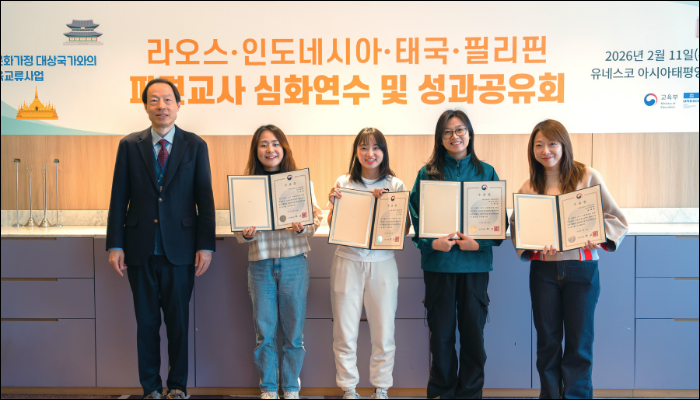 APCEIU Holds Post-programme Workshop for 2025 APTE Outbound Teachers 17 March 2026 The Asia-Pacific Centre of Education for International Understanding (hereinafter ‘APCEIU’) successfully held the Post-programme Workshop and Final Presentation for the Second-Half Outbound Teachers of the 2025 Asia-Pacific Teacher Exchange Programme for Global Education (hereinafter ‘APTE’) from 11 to 13 February 2026.The event brought together 19 teachers who had been dispatched to Lao PDR, Indonesia, Thailand, and the Philippines in the second half of 2025. The workshop provided an opportunity for participants to share their overseas teaching experiences and reflect on how their Global Citizenship Education (GCED) practices could be further integrated into their schools upon returning to Korea.The three-day programme took place at APCEIU and The Link Seoul, followed by a home-based learning period during which participants continued their assignments. The workshop featured sessions designed to strengthen teachers’ understanding of GCED and multicultural education and explore practical approaches for classroom implementation.Guest lectures by educators working with multicultural student populations in Korean schools drew particular interest from participants. These sessions introduced practical teaching approaches—from the use of AI and EdTech to arts-based learning—that support inclusive classrooms and engagement among students from diverse cultural and linguistic backgrounds.Participants also explored exemplary post-programme initiatives presented by an APTE alumnus, demonstrating how overseas teaching experiences can lead to sustained educational activities in schools and local communities. Small-group reflection sessions further provided space for participants to discuss changes in their perspectives before and after their assignments and exchange insights from their teaching experiences across different countries.During the workshop, participants also developed country-specific local culture manuals for future programme participants. Based on their firsthand experiences in partner schools and communities, the teachers compiled practical information on educational environments and cultural contexts in each country to support future APTE participants.The Final Presentation, held on 12 February, showcased the teachers’ activities and GCED practices carried out in partner schools. Approximately 50 participants attended the event, including officials from provincial and metropolitan offices of education and representatives from the Ministry of Education of the Republic of Korea.The event opened with congratulatory remarks from Director Choi Ha-young of the Ministry of Education and Director Lim Hyun Mook of APCEIU. Teachers presented their educational activities, shared key outcomes from their assignments, and introduced follow-up initiatives they plan to implement in their schools.The APTE programme, organized by the Ministry of Education of the Republic of Korea and implemented by APCEIU, dispatches Korean teachers to partner countries while inviting teachers from those countries to Korean schools. Through these exchanges, the programme promotes mutual understanding among participating countries and advances the values of Global Citizenship Education.
 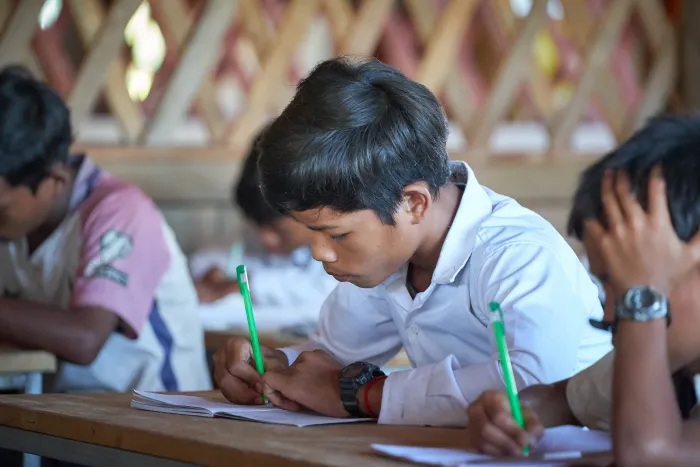 UNESCO Launches New Online Course to Help Educators Teach About Histories of Violence 28 February 2026 Understanding violent pasts is essential to understanding the world we live in today. The histories of genocide, war, colonialism, enslavement and other forms of mass violence shape contemporary societies. Their legacies are visible in present day inequalities, social divisions, political tensions and cultural attitudes.27 January 2026When these histories are simplified or ignored in educational settings, learners lose the opportunity to process them, to recognize how the past continues to influence the present, to think critically about injustice, and to actively contribute to building peace.Launched on the International Day of Commemoration in Memory of the Victims of the Holocaust, the online course on Teaching and Learning about Histories of Violence has been developed to support educators in addressing these complex topics thoughtfully and responsibly. This global, and free-to-access course offers a foundation in key concepts, including the idea that violence is not only physical but can also be structural and cultural. This wider understanding helps learners recognise how discrimination, prejudice and exclusion can lay the groundwork for physical harm, and how such systems may persist long after the direct violence has ceased. The online course is launched alongside UNESCO’s policy guide to support ministries of education on how to address local histories of violence in education systems.© UNESCOEducators must be aware not only of what to teach, but how to teach about histories of violence. The course introduces methods such as working with primary sources, analyzing historical narratives and using testimonies to foreground lived experience. It pays particular attention to the facilitation of challenging discussions, offering guidance on how to create brave and respectful classroom environments where students can express ideas, question assumptions and encounter difficult emotions safely.By weaving together knowledge, pedagogy and reflection, history education can be a space where difficult pasts are examined with care and purpose, to promote learning that builds empathy, strengthens critical understanding and contributes to a culture of human rights, social cohesion and peace.What UNESCO does to promote education about violent pastsEducation about the Holocaust and violent pasts is part of UNESCO’s work in promoting Global citizenship education (GCED), which aims to support learners of all ages to become ethical, empathetic and respectful human beings who can adapt to the world rapidly moving forward, even amidst its most complex challenges and threats.The overall framework for GCED is the UNESCO Recommendation on Education for Peace and Human Rights, International Understanding, Cooperation, Fundamental Freedoms, Global Citizenship and Sustainable Development, that seeks to build more peaceful, just, and sustainable societies through education.UNESCO works with countries and partners to develop programmes that foster understanding of the causes and consequences of the Holocaust, violent pasts and how genocides happen, to encourage a constructive engagement in today’s societies. It provides guidance and tools to support textbook and curriculum revision, develop and revise policies, promote appropriate and relevant pedagogies, and enhance cooperation between formal and non-formal sectors of education, including with museums and memorials. UNESCO also creates Chairs in universities to sustain research and education about the history and the prevention of extreme forms of violence. The Organization’s work on the legacies of violence spans across its areas of expertise. Several memorial sites have been inscribed on the UNESCO World Heritage list, starting with the former Nazi German concentration and extermination camp Auschwitz-Birkenau in 1979, and continued more recently with the inscription of three memorial sites of the 1994 genocide against the Tutsi in Rwanda, as well as three historical sites of the crimes committed by the Khmer rouge regime in Cambodia. This work is complimented by UNESCO’s Memory of the World Programme that recognizes significant documentary heritage and includes collections of historical records that bear witness to past crimes.