
News
Follow the newest trends and news in GCED.
1,676 Results found
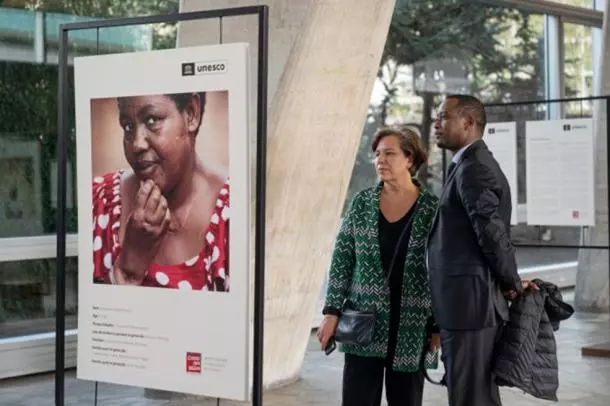 “A scar in history”: UNESCO opens a photo exhibition on the Genocide against the Tutsi in Rwanda 27 August 2024 “We knew our destiny would be grim, but we didn’t expect to be exterminated by our own neighbours”. This is an excerpt from Gaudance’s testimony. She is a survivor of the 1994 Genocide against the Tutsi in Rwanda. Her story, together with her portrait, is part of the photo exhibition “Une cicatrice dans l'histoire" (A scar in history)” that UNESCO organized between 12-21 April 2023 to commemorate the 29th anniversary of the Genocide and pay tribute to survivors along with their compatriots who bravely resisted. Conceived by the Camp des Milles Foundation – Memory and Education, the exhibition features 14 portraits captured by the acclaimed French photographer Stéphane Dumont de Sauret and accompanied by personal testimonies. It was officially presented to the public on 13 April 2023 in partnership with the Permanent Delegation of Rwanda to UNESCO, the Camp des Milles Foundation and Ibuka France. “These photos are powerful reminders of the persisting challenges in the fight to prevent mass atrocity crimes. For the exhibition heroes, genocide left indelible marks on their lives, souls and bodies. But through education and remembrance, we can begin to heal these scars,” said UNESCO Director-General Audrey Azoulay during her visit to the exhibition on 19 April. The exhibition opening took place in the presence of UNESCO Assistant Director-General for Culture Ernesto Ottone; H.E. Mr François Nkulikiyimfura, Ambassador Extraordinary and Plenipotentiary, Permanent Delegate of Rwanda to UNESCO; and Marcel Kabanda, President of Ibuka France. Dafroza Gauthier, Co-founder of the Collective of Civil Plaintiffs to Rwanda, who dedicated her life to seeking justice for genocide survivors, and Nicolas Sadoul, Director of the Camp des Milles Foundation, both behind the conception of the exhibition, shared how it was brought to life ten years ago. They stressed the continued importance of keeping the stories of survivors alive and teaching current and future generations to cherish and protect human dignity. “I have lost all my family”: stories of genocide survivors Epiphanie, Gaudance, Cassier, Ernestine and other survivors whose stories are in the spotlight of the exhibition witnessed unimaginable violence, because they were Tutsi. Many of them lost their families during the Genocide and were on the verge of death themselves. Their stories are of pain, suffering, survival, despair, hope, strength and resilience of the human spirit in the face of unimaginable horrors. “I studied at the private school … because Tutsi were not admitted to public schools,” remembers Ernestine, who never graduated. “I feel sad: the disability caused by my injuries has prevented me from having a family,” says Epiphanie, the sole survivor of the family of 12. Maurice, who was five during the Genocide, recalls how he and his little brother were saved: “[A] Hutu neighbour explained to my mother that the little Tutsi girls would not be killed but spared for future “breeding” purposes. As there were no little girls in our house, he gave my mother two red dresses.” 100 days of remembrance The 1994 Genocide against the Tutsi in Rwanda remains a haunting scar on humanity's conscience. In just 100 days, more than 800,000 members of the Tutsi minority were murdered by the Hutu extremist-led government. This period also saw the killing of moderate Hutu and those who stood against the genocide. Every year, 7 April marks the beginning of a 100-day mourning followed by remembrance events in Rwanda and around the world under the slogan “Kwibuka” (“to remember”). UNESCO joins yearly commemorations of the International Day of Reflection about the Genocide against the Tutsi in Rwanda and works systematically with policy-makers, educators and civil society worldwide to advance education about genocide and promote its importance for conflict transformation and sustainable peace. Learn more about UNESCO’s programmes to educate about the history of genocide. URL: https://www.unesco.org/en/articles/scar-history-unesco-opens-photo-exhibition-genocide-against-tutsi-rwanda?hub=70962
 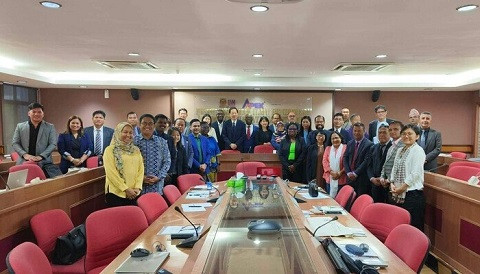 2024년도 세계시민교육 협력센터 센터장 회의, 제 2회 세계시민교육 협력센터 국제 컨퍼런스와 함께 말레이시아 페낭에서 동시 개최 27 August 2024 From 6 to 8 August, 2024, the Global Citizenship Education Cooperation Centre (GCC) Malaysia at Universiti Sains Malaysia (USM) hosted the 2nd GCC International Conference on Global Citizenship Education (GCED) alongside the GCC Directors’ Meeting 2024, in Penang, Malaysia. The event was co-organised with the Asia-Pacific Centre of Education for International Understanding (APCEIU) and drew over 200 participants from around the world, the GCC Programme and the GCED Curriculum Development & Integration Project (CDI) Partners. GCC-Malaysia, established at USM in 2021 through a MOU with APCEIU, began as one of APCEIU’s first GCC Programme partners and has been playing an active role since its establishment. This year is particularly special for GCC-Malaysia, as they were hosting the GCC Directors’ Meeting 2024, the 2nd GCC International Conference on GCED, and the GCED CDI Partners’ Meeting 2024 all together right here in Penang. The first day of the event kicked off with the GCC Directors’ Meeting 2024. Despite the early morning start, the atmosphere was vibrant as participants from around the world eagerly shared their GCC’s activities and engaged in meaningful discussions. The meeting began with welcoming remarks from Dr. Hyun Mook Lim, Director of APCEIU, followed by congratulatory remarks from Dr. Rohizani Yaakub, Director of GCC-Malaysia. In the first session, representatives from GCCs in Thailand, Cambodia, the Philippines, and Lao PDR presented their achievements and challenges from the past year. Dr. Athapol Anunthavorasakul, Director of GCC-Thailand at Chulalongkorn University, shared insights on their GCED Teacher Educator Training workshops, which involved 270 teachers across 90 schools. Dr. Neau Vira, Vice-Director of GCC-Cambodia at the National Institute of Education, discussed their capacity building workshops and the ongoing monitoring and onsite visits at teacher training centres. And Dr. Rowena Hibanada, Director of GCC-Philippines at Philippine Normal University, highlighted the establishment of GCC Regional Hubs in 23 higher education institutions, while Dr. Kiengkay Ounmany, Director of GCC-Lao PDR and Dr. Soubin Sisavath, Visiting Lecturer, Faculty of Language Education, National University of Laos, presented their activities including the result of the GCED Need Assessment at teacher training centres in Laos PDR they conducted in 2023. The second session featured presentations from GCC representatives in Indonesia, Malaysia, Nepal and Bangladesh. Dr. Ace Suryadi, Deputy Director of GCC-Indonesia at Universitas Pendidikan Indonesia, shared their activities including the online learning platform and webinar series. Dr. Rohizani Yaakub, Director of GCC-Malaysia shared their activities including face-to-face workshops for teachers, school principals, and counsellors in Malaysia. Representing GCC-Nepal, a new member of the GCC Programme, Mr. Jayaram Adhikari, Deputy Director General of the Center for Education and Human Resource Development (CEHRD), outlined GCC-Nepal’s future goals and strategies. And lastly, on behalf of representatives from GCC-Bangladesh at National Academy for Educational Management (NAEM) who could not attend the meeting due to the recent national unrest in Bangladesh, Mr. Raju Das, National Programme officer at UNESCO Dhaka Office, delivered a presentation on GCC-Bangladesh’s expected outcomes and key strategies for this year. Following the GCC Directors’ Meeting, representatives from across the globe had the opportunity to visit GCC-Malaysia, situated on the campus of USM. During the visit, Dr. Rohizani Yaakub, Director of GCC-Malaysia, led a tour of the centre. As part of the tour, she also took the time to introduce APCEIU’s GCED materials, which were thoughtfully displayed for the participants. In the afternoon of the same day, the 2nd GCC International Conference on GCED commenced with an official Opening Ceremony. The event began with an inspiring speech by Professor Dato’ Seri Ir. Dr. Abdul Rahman Mohamed, Vice-Chancellor of USM, followed by congratulatory remarks from Dr. Hyun Mook Lim. The ceremony was graced by the presence of distinguished guests, including Associate Professor Dr. Rahimi Che Aman, Dean of the School of Educational Studies and Dr. Rohizani Yaakub, Director of GCC-Malaysia, along with other esteemed academicians, research officers, and representatives from GCCs and the GCED CDI Project. Concurrently, multiple poster presentations showcasing GCCs from various countries were on display outside the ceremony hall. The first day concluded with a delightful conference dinner organised by GCC-Malaysia, where participants had the opportunity to experience Malaysia’s traditional cuisine and enjoy cultural performances, deepening their appreciation of Penang's rich history and culture. On the second day of the Conference, the first keynote session, titled "Focus of GCED in Today’s World," was delivered by Dr. Hyun Mook Lim. This was followed by the second keynote session, "The Need for Global Citizenship Education to Address Current Global Challenges," presented by Professor Dato’ Dr. Sivamurugan Pandian from USM's School of Social Sciences. After the keynote addresses, a series of paper presentations on GCED were held across various lecture rooms at USM, featuring contributions from academics from Malaysia and around the globe. Representatives from GCC-Thailand, GCC-Philippines, GCC-Indonesia, Arts-ED (GCED CDI Project in Malaysia), and NaCCA (GCED CDI Project in Ghana) also shared their project experiences and research findings. This provided participants with a rich opportunity to present their insights and exchange knowledge on GCED with fellow passionate attendees. In the afternoon, Arts-ED, APCEIU’s GCED CDI Project partner in Malaysia, based in Penang, conducted a community-based learning workshop for all GCC and GCED CDI Project partners. Renowned for its approach to GCED through community-based learning, Arts-ED has been a key promoter of cultural sustainability in the region. They began with an introduction to the concept of community-based learning, followed by hands-on activities typically conducted with students, enabling participants to gain a deeper understanding of the concept. The day concluded with a guided walk through George Town, the capital of Penang and a UNESCO World Heritage site, where diverse cultures coexist in harmony. There, participants engaged in real-life community-based learning activities while experiencing the vibrant streets of George Town. On the last day of the Conference, participants had another opportunity to present their findings across multiple lecture rooms. The Conference concluded with a Closing Ceremony, present were Dr. Hyun Mook Lim, Director of APCEIU, Associate Professor Dr. Rahimi Che Aman, Dean of the School of Educational Studies, Dr. Rohizani Yaakub, Director of GCC-Malaysia, along with other academicians, research officers, and representatives of GCCs and GCED CDI Project. During the entire Conference, more than 80 papers were presented by participants. It offered a vibrant platform for individuals passionate about GCED to connect, exchange ideas, and share their latest research. As highlighted during the event, the Conference served as a gathering place for GCED advocates from different countries to learn from one another and recognise that they are part of a larger, supportive community. URL: https://www.unescoapceiu.org/post/5151
 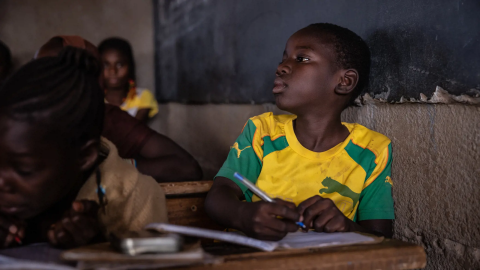 The launch of the new strategy paper on Global Citizenship Education 26 August 2024 The Belgian presidency of the Council of the European Union takes advantage of the launch of the new strategy paper on Global Citizenship Education (GCED) to reiterate the importance of the levers to be used at the European level to move forward the agenda for the defence of human rights, the environment and the reduction of inequalities in the world. This 22 April is marked by the launch of the Belgian strategy paper on Global Citizenship Education (GCED). The Belgian presidency of the Council of the EU attaches great importance to education and international cooperation. It is in this context that education for global citizenship comes into play, as it lies at the intersection of the two. It also has a direct link with policy coherence on development, culture, youth and lifelong learning. The aim of the event organised today is therefore to highlight the importance of education for global citizenship within international cooperation. "This new strategy paper confirms the central role that education plays in strengthening support for international solidarity. Global citizenship education enables us to see the world from a different perspective. It allows us to empathise with situations and people from very different backgrounds or environments, or whom we do not fully understand. And this is necessary. After all, today's big challenges transcend our borders: the climate crisis, human rights coming under pressure, the threat of war and violence, inequality, migration.... Now that fake news is rampant on social media, and extremists are out to divide and undermine solidarity between people, it is all the more important that citizens - and young people in particular - have access to knowledge and information that enables them to develop an open mind, a critical eye AND avenues for solutions in international solidarity", presented the Belgian Minister for Development Cooperation. Testimonies illustrated the impact of global citizenship education, and Belgian and European players in the sector commented on the importance of this note. Experts in international relations, economics, inclusion and global citizenship will also debate the limits of current paradigms and the possible and necessary alternatives for a just and sustainable world. The event is co-organised with the Global Education Network Europe (GENE), which has been proactively involved in drafting the new strategic note and which is made up of representatives of European ministries and agencies responsible at national level for policy development, funding and support in the field of global education. Global Citizenship Education According to the European Declaration on Global Education to 2050, which was approved in Dublin in 2022, global education is defined as "education that enables people to reflect critically on the world and their place in it; to open their eyes, hearts and minds to the reality of the world at local and global level. It empowers people to understand, imagine, hope and act to bring about a world of social and climate justice, peace, solidarity, equity and equality, planetary sustainability, and international understanding. It involves respect for human rights and diversity, inclusion, and a decent life for all, now and into the future. Global Education encompasses a broad range of educational provision: formal, non-formal and informal; life-long and life-wide. We consider it essential to the transformative power of, and the transformation of, education". (Read the text of the declaration). URL: https://belgian-presidency.consilium.europa.eu/en/news/the-launch-of-the-new-strategy-paper-on-global-citizenship-education/
 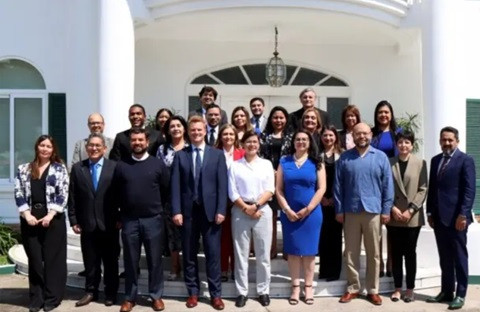 AI in the Courtroom: Colombian Constitutional Court's Landmark Ruling Cites UNESCO’s AI Tools 26 August 2024 Judges and Directors of National Judicial Training institutions from 18 countries in Latin America and the Caribbean as participants at the AI and the Rule of Law Training organized by UNESCO from 15 to 17 November 2023, at the Inter-American Court of Human Rights in Costa Rica. In a groundbreaking decision, the Colombian Constitutional Court has issued a ruling with significant implications for the use of artificial intelligence (AI) within the country’s judicial system. The decision was prompted by a recent ruling in Colombia where the judge used ChatGPT to rule on whether a child with disabilities had to pay a fee to a health insurance company to access medical treatment, where the Court ruled that the child was exempt from paying the fees. Nonetheless, the use of ChatGPT, with widely known problems like hallucinations and bias, by the judge to reason in a matter related to the fundamental right to health raised alarm bells on whether such AI tools can be used for legal reasoning. Emphasizing Human Oversight in AI Use in the Judiciary The Constitutional Court highlighted the importance of AI as a tool for managing tasks and assisting in drafting judicial decisions. However, it stressed that judges should not overly rely on AI systems, as this could compromise the right to due process and the judiciary's independence and integrity. The court's decision underscored the necessity for judges to make value judgments, a task that cannot be delegated to machines. Citing the UNESCO Recommendation on the Ethics of AI, the Court's ruling extends far beyond this individual case and laid out principles for AI use, that will have far reaching impact on other similar cases within the Colombian judiciary and beyond. In its ruling, the Court integrates several important principles, such as transparency, privacy, the non-substitution of human rationality, verification, and alignment with best practices and collective standards.Agneris SampieriPolicy Analyst for Latin America, Access Now The Constitutional Court warns … when human beings simply copy and paste information without a review, it cannot only be incorrect or inaccurate, but false (...) a judge must make value judgments, that cannot be done by a machine.Prof. Juan David GutiérrezAssociate Professor, Universidad de los Andes Court highlights UNESCO’s Global Toolkit on AI and the Rule of Law The Constitutional Court noted that UNESCO’s Global Toolkit on AI and the Rule of Law, “supplies elements of great value through guidance on laws, principles, norms and international jurisprudence of human rights relevant to the ethical use of AI, in order to mitigate its possible risks to human rights”. Notably, during the hearings for the case, the Court invited testimonies from Prof. Juan David Gutiérrez and Agneris Sampieri, who are part of the UNESCO Network of Experts on AI and the Rule of Law and had delivered a training on AI and the Rule of Law based on UNESCO’s Toolkit to judges from 18 Latin American countries at the Inter-American Court of Human Rights in November 2023. Call for Comprehensive Guidelines on AI The court directed the Consejo Superior de la Judicatura, Colombia's judiciary governing body, to create training spaces that promote learning about AI in the judicial context, along with its risks and benefits, all with a rights-based perspective. Further, the court has directed the Consejo Superior de la Judicatura to publish comprehensive guidelines for AI use within the next four months. These guidelines should align with national and international best practices, ensuring the responsible and ethical use of AI while respecting human rights. UNESCO is actively involved in fostering responsible AI use in the judiciary. It has developed draft Guidelines on the Use of AI in Courts and Tribunals, currently open for public consultation. These guidelines aim to create robust AI governance frameworks that respect human rights and uphold the rule of law, inviting contributions from judiciary actors, legal professionals, academics, and the public.This ruling by the Colombian Constitutional Court marks a significant step in integrating AI into judicial processes while safeguarding fundamental human rights and judicial integrity. UNESCO will continue support the judiciary in Latin America with trainings for judges at the regional and national level. The next training will be held in Paraguay in partnership with the Supreme Court of Justice. URL: https://www.unesco.org/en/articles/ai-courtroom-colombian-constitutional-courts-landmark-ruling-cites-unescos-ai-tools?hub=701
 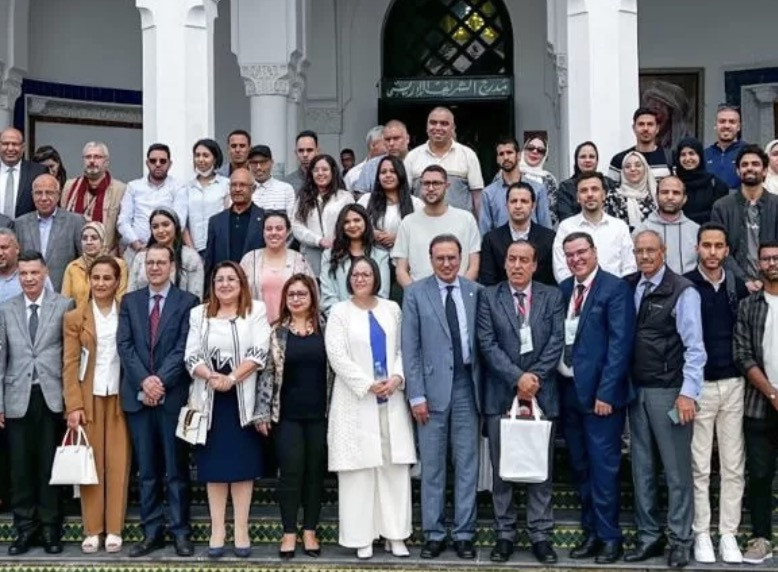 اختتام المؤتمر الدولي حول التعلم من خلال الخدمة والمشاركة المجتمعية 13 August 2024 Dr. Abdelilah Benarafa, Deputy Director General of the Islamic World Educational, Scientific and Cultural Organization (ICESCO), participated on Monday (May 13, 2024) in the Fourth International Symposium on Social Sciences Spring, entitled: “Migration and Values in the Context of Risk and Uncertainty: What Contribution of Social Sciences?”, organized by the Faculty of Arts and Humanities at Mohammed V University in Rabat, Al Akhawayn University, the Council of the Moroccan Community Abroad, and the Ibn Khaldoun Center for Migration and Citizenship Studies, and witnessed a high-level presence of officials, prominent figures and specialized researchers.Dr. Benarafa delivered ICESCO’s speech during the opening session of the symposium, which is held over three days at the Faculty of Arts and Humanities at Mohammed V University in Rabat, where he addressed the phenomenon of migration and its significant role in value changes and enhancing cultural cross-fertilization between different ethnicities, thus contributing to building civilization as a physical embodiment of this cultural and value-based blending and fusion.The Deputy Director General of ICESCO highlighted the “World Day of Mercy” initiative, issued within the recommendations of the International Conference on “Civilizational Values in the Prophet’s Biography” organized by ICESCO, and approved by the Conference of Foreign Ministers of the Member States of the Organization of Islamic Cooperation in March 2022, and then submitted this initiative to the United Nations General Assembly to allocate a World Day of Mercy on April 21 of each year. He also referred to the cooperation and partnership agreement signed by ICESCO and the International Organization for Migration to implement a set of programs, projects and activities in areas related to migrants, and to raise awareness of the contents of international conventions for safe and regular migration in order to achieve the goals of sustainable development. URL:https://icesco.org/ar/2024/05/14/الإيسيسكو-تشارك-في-الندوة-الدولية-لرب/
 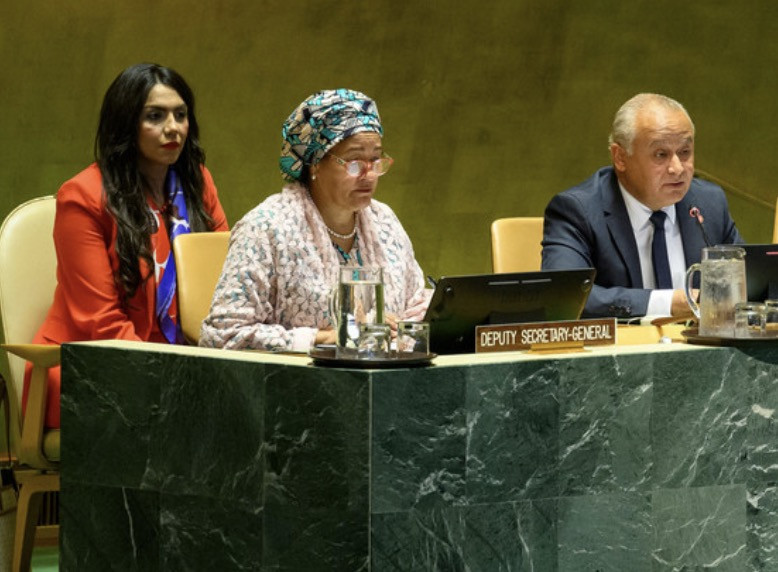 المؤتمر الدولي للأنثربولوجيا الإنسانية 2024 13 August 2024 Mohammed’s remarks came in her speech at the opening session of the 17th Conference of States Parties to the Convention on the Rights of Persons with Disabilities, which kicked off on Tuesday and will continue until June 13. The conference focuses on three main areas: international cooperation to promote and transfer technological innovations for an inclusive future, persons with disabilities in situations of risk and humanitarian emergencies, and promoting their rights to decent work and sustainable livelihoods.The conference’s broad theme is “Rethinking the inclusion of persons with disabilities in the current international context and in preparation for the Summit of the Future.”The Deputy Secretary-General said that persons with disabilities in humanitarian emergencies such as natural disasters and armed conflicts continue to be left behind. She added that 39 per cent of persons with disabilities “face significant difficulty, or are simply unable to evacuate in situations of risk or humanitarian emergencies. This is unacceptable,” noting that this percentage has remained almost unchanged since 2015.She said that persons with disabilities must be included in disaster planning and preparedness, as well as in processes aimed at mitigating the risks and barriers they face.She stressed that "children with disabilities are particularly vulnerable, and face grave risks if they are left behind. As we saw years ago in Sierra Leone, and as we see today in Gaza." Investing in TechnologyOn technology and persons with disabilities, the UN official said that the global need for assistive technology remains largely unmet, as 2.5 billion people worldwide need to use at least one type of assistive technology.She called for a significant increase in investments in assistive technologies that enable persons with disabilities to access education, earn a living and fully participate in their communities.She also pointed out that with regard to decent work, “persons with disabilities faced greater risks of poverty and continued marginalization in their societies,” calling for ensuring their equality and right to decent work and equal opportunities in employment.In concluding her speech, the Deputy Secretary-General recalled “the fierce conflicts affecting our world today, in Sudan, Ukraine and Palestine.”She warned that these conflicts continue to cause unimaginable suffering, especially for women, children and persons with disabilities. She renewed the call for “an immediate humanitarian ceasefire in Palestine.”Courage and determinationThe President of the United Nations General Assembly, Dennis Francis, addressed the gathering via video message at the opening session, noting that there are more than 1.3 billion people with disabilities worldwide, “who are among the most vulnerable, suffering disproportionate levels of poverty, marginalization and discrimination.”But he also noted that there are many positive examples of what people with disabilities are doing, “who continue to inspire us with their courage and determination, and remind us of what can be achieved when they are empowered and supported to reach their full potential.”He stressed that with 190 countries joining the Convention on the Rights of Persons with Disabilities, its near-universal ratification reflects growing global solidarity with and commitment to their rights.Francis called on all governments and stakeholders to mainstream the rights of persons with disabilities, to integrate their views into all policy design and implementation, to work with persons with disabilities to create and deliver solutions in every country and community, and to act urgently to uphold their rights."A unique opportunity"Tunisian Ambassador to the United Nations and President of the 17th Conference of States Parties to the Convention on the Rights of Persons with Disabilities, Tarek Adab, said that there is much that needs to be done, and can be done, to make a difference in the lives of more than 1.3 billion people with disabilities around the world.He stressed that the conference will provide "a unique opportunity for us to collectively reflect on experiences and lessons learned over time, and to identify gaps in the implementation of the Convention and the 2030 Agenda by strengthening efforts to promote the inclusion of persons with disabilities."He pointed out that this year's conference is particularly important given the current international situation, the challenges that exist and are emerging, and before the Future Summit next September. He paid tribute to persons with disabilities, "who continue to amaze and inspire us with their will to live, their challenge to all difficulties, and their achievements and positive energy." Opportunities and risksFor her part, Heba Hagras, Special Rapporteur on the rights of persons with disabilities, stressed that there is much to be done, especially in light of the global challenges of armed conflict, climate change and economic crisis.She added that “the world is changing rapidly on many fronts. This creates opportunities and risks for protecting and exercising the rights of persons with disabilities in line with the Convention on the Rights of Persons with Disabilities, or whether it will lead to regression and exclusion.”She pointed out that the rapid development of new technologies, including artificial intelligence, can be a radical change for the rights of persons with disabilities, “but only if they are included in design and regulations to prevent discriminatory effects.”She stressed that much of her future substantive work that she will focus on will be in the field of transformative and systemic changes, noting that there is a close link between the Convention on the Rights of Persons with Disabilities and the Sustainable Development Goals.She stated that her first report, which she will submit to the United Nations General Assembly later this year, will address the inclusion and participation of persons with disabilities in the Sustainable Development Goals and related discussions.An opportunity for change and breaking barriersKhadija Jellouli, a young woman from Tunisia, spoke about her experience to the audience at the opening session. She is the CEO of Hokar, a startup dedicated to improving people’s lives by providing convenient, accessible and sustainable electric mobility solutions.“Growing up, I faced physical limitations that could have marginalized me. But I refused to accept those limitations. Instead, I turned my unique perspective into an opportunity for change,” said Khadija, who is a person with a disability.She stressed that the message she is sending to the audience “speaks to the essence of our common humanity. And the importance of breaking barriers to inclusion in social life.”She stressed that in order to create a more just and equitable society, startups like Hokar must be supported to be changemakers and advocates for inclusion. “We must not make inclusion a dream, but a reality where no one is left behind,” she added. URL:https://news.un.org/ar/story/2024/06/1131686
 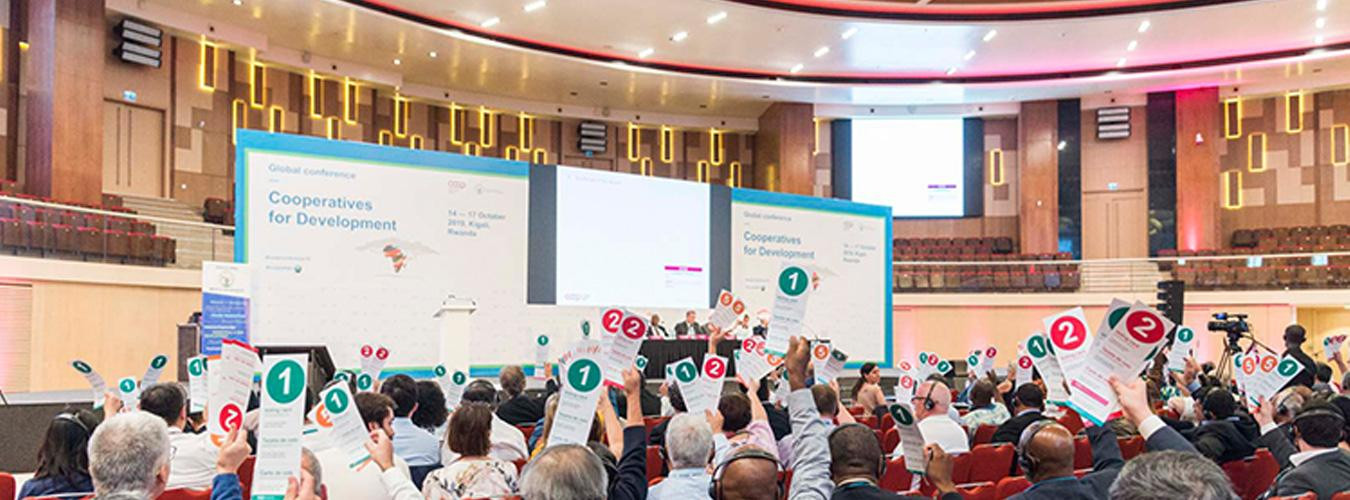 اليوم الدولي للتعاونيات 13 August 2024 Cooperatives Building a Better Future for AllThis year on July 6, cooperatives around the world will celebrate the International Day of Cooperatives with the theme "Cooperatives Building a Better Future for All". Cooperatives will have the opportunity to showcase their current and historical contributions to building a sustainable future, accelerating efforts to implement the Sustainable Development Goals (SDG) by 2030. The theme aligns well with the objectives of the upcoming UN Summit of the Future whose theme is "Multilateral solutions for a better tomorrow".For the 2024 #CoopsDay, cooperatives can showcase their high standards for inclusive and sustainable growth, and service as stewards for protecting the environment and fighting climate change. Through democratic governance and shared ownership, cooperatives set an example for peace and stability, bringing people from diverse backgrounds together on equal terms, and fostering understanding and respect.The 2023 UN Secretary-General Report on Cooperatives in Social Development acknowledged that cooperatives have a track record of promoting the economic and social development of all people including marginalized groups. This day will build the momentum towards the 2025 International Year of Cooperatives, which was declared by the UN last year.The Co-operatives MovementCo-operatives have been acknowledged as associations and enterprises through which citizens can effectively improve their lives while contributing to the economic, social, cultural and political advancement of their community and nation. The co-operative movement has been also recognized as a distinct and major stakeholder in both national and international affairs.Co-operatives' open membership model affords access to wealth creation and poverty elimination. This results from the co-operative principle of members' economic participation: 'Members contribute equitably to, and democratically control, the capital of their co-operative.' Because co-operatives are people-centred, not capital-centred , they do not perpetuate, nor accelerate capital concentration and they distribute wealth in a more fair way.Co-operatives also foster external equality. As they are community-based, they are committed to the sustainable development of their communities - environmentally, socially and economically. This commitment can be seen in their support for community activities, local sourcing of supplies to benefit the local economy, and in decision-making that considers the impact on their communities.Despite their local community focus, co-operatives also aspire to bring the benefits of their economic and social model to all people in the world. Globalization should be governed by a set of values such as those of the co-operative movement; otherwise, it creates more inequality and excesses that render it unsustainable.The cooperative movement is highly democratic, locally autonomous, but internationally integrated, and a form of organization of associations and enterprises whereby citizens themselves rely on self-help and their own responsibility to meet goals that include not only economic, but also social and environmental objectives, such as overcoming poverty, securing productive employment and encouraging social integration. URL: https://www.un.org/en/observances/cooperatives-day
  UNESCO Enhances Digital Capacities of Teachers to Foster inclusive and Equitable Education Systems in Asia-Pacific 13 August 2024 A recent webinar aimed to improve teaching practices with innovative digital technologies. 9 August 2024 As the Asia-Pacific region rapidly embraces digital transformation, the integration of Open Educational Resources (OER) is crucial in equipping educators with the necessary skills and resources to deliver inclusive and equitable education – thereby fostering sustainable development and innovation.With the support of the Japanese Fund-in-Trust (JFIT) for the Promotion of Education in Asia-Pacific (Ministry of Education, Culture, Sports, Science and Technology, or ‘MEXT’, of Japan), the webinar, ‘Empowering Tomorrow's Educators with Open Educational Resources’, was conducted by the UNESCO Regional Office in Bangkok and the Southeast Asian Ministers of Education Regional Center for Educational Innovation and Technology (SEAMEO INNOTECH), on 18 June 2024. This was the second in a series of such webinars planned under UNESCO’s current project, ‘Preparing teachers who can innovate using digital technology’. SEAMEO INNOTECH Highlights of the Webinar ‘Empowering Tomorrow’s Educators’ attracted more than 220 participants from South-East Asia, a majority from Thailand and the Philippines, the two beneficiary countries of the JFIT project, to date. Opening remarks were provided by Dr. Leonor Magtolis Briones, Director of SEAMEO INNOTECH, who who emphasized the crucial role of Open Educational Resources (OER) in promoting inclusive and equitable education in the Asia-Pacific region. Highlighting the adaptability of OER to digital transformation, Dr. Briones underscored how these resources help keep teachers' skills and knowledge up to date, foster innovation, and support resilient educational systems. Dr. Briones also highlighted the importance of OER in bridging educational disparities and enhancing teachers’ continual professional development. Dr. Briones’s remarks were followed by presentations by guest speakers Jiao Yanwen and Sit Fung, both of the International Centre for Higher Education Innovation under the auspices of UNESCO (UNESCO-ICHEI). Jiao Yanwen provided a comprehensive introduction to UNESCO-ICHEI and the International Institute of Online Education (IIOE). He reviewed these organizations’ missions to leverage new technology to empower higher education innovation; their achievements in expanding global partnerships to 38 countries and 12 national centers; their ongoing projects; and their joint research on the digital transformation of higher education. Sit Fung, who currently leads the International Institute of Online Education (IIOE) Operation Centre at UNESCO-ICHEI, spoke on how the IIOE platform supports educators through AI-powered tools and resources, such as through the IIOE 1+X GenAI Course Series, comprising certification-based courses aligned with the IIOE Higher Education Teaching Personnel Digital Competency Reference Framework, version 1.0. Each IIOE course is designed to provide a personalized knowledge service; in addition, the AI-powered IIOE platform can support a full course of education and training. The presentations gave rise to discussion on how IIOE can serve as a catalyst for enhancing teachers' ICT capacity and enhance overall educational quality in the South-East Asia region. Participants were enthusiastic about the potential of the IIOE platform to drive digital transformation at their respective institutions and expressed an interest in exploring further collaboration towards utilizing the platform's resources, improving their own teaching pedagogies, and integrating innovative digital technologies in their teaching as efficiently and effectively as possible. URL: https://www.unesco.org/en/articles/unesco-enhances-digital-capacities-teachers-foster-inclusive-and-equitable-education-systems-asia
  Lebanon joins the Global Partnership for Education 11 August 2024 WASHINGTON D.C./Beirut, April 25, 2024 – The Global Partnership for Education (GPE) has welcomed Lebanon as its latest partner country today.“GPE is delighted to welcome Lebanon as a new partner committed to quality and inclusive education,” said Laura Frigenti, GPE Chief Executive Officer. “Education is an essential pillar of growth, peace and security. This is why GPE has long stood by countries impacted by conflict and crises. Our partnership will reinforce Lebanon’s capacity to provide education to all children on its territory, including refugees, so they can contribute to a better tomorrow.”“Lebanon has been facing multiple crises that have taken a toll on children’s access to education - the cornerstone of recovery and prosperity,” said Dr. Abbas el Halabi, Lebanon’s Minister of Education and Higher Education. “Joining GPE is a significant milestone on our journey to advance education opportunities for children in Lebanon and to address our country’s challenges.”Over the past decade, Lebanon has faced many challenges, significantly affecting the education sector. The refugee crisis, Covid-19 pandemic, Beirut Port blast and economic decline have greatly impacted children’s access to learning, with dire long-term consequences for their future and that of the country.With support from GPE, and following inclusive consultations with relevant stakeholders, including civil society, the Ministry of Education will implement a four-year education sector plan focusing on improving early childhood education and enrolment, keeping children in schools and providing learning opportunities for those who are out of school. Ultimately, the education reforms aim at creating a future workforce that can contribute to economic recovery and growth and fairer society.Lebanon is eligible for a GPE Multiplier grant and a system capacity grant. ******About the Global Partnership for EducationGPE is a shared commitment to ending the world’s learning crisis. We mobilize partners and funds to support nearly 90 lower-income countries to transform their education systems so that every girl and boy can get the quality education they need to unlock their full potential and contribute to building a better world.www.globalpartnership.orgMedia contactTamara Kummer, GPE Head of Communicationstkummer@globalpartnership.org Tel: +1 202 948 5395 Focus areas: GovernanceRegions and countries: Middle East and North Africa; Lebanon URL: https://www.globalpartnership.org/news/lebanon-joins-global-partnership-education
 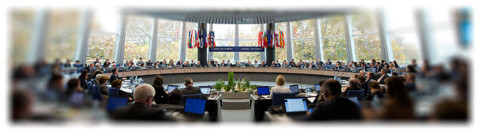 2025 European Year of Digital Citizenship Education 9 August 2024 On September 29, at the 26th session of the Council of Europe Standing Conference of Ministers of Education, the Ministers of Education declared 2025 as the European Year of Digital Citizenship Education The European Year of Digital Citizenship Education (DCE) will provide a platform for member states to set common goals, exchange sense-making practices, measure achievements and define together a road map for the future. It will concert the efforts of stakeholders to create initiatives to make learners more aware of the changes that digital technology is bringing to the world, to see more clearly the positives of the online environments they choose to move in, and improve their knowledge and skills to avoid the downsides. Moreover, it will highlight ways and advantages of participating in a culture of democracy and the importance of living peacefully together with others in culturally diverse democratic societies.The objectives of the European Year shall be: Awareness Raising: Enhance understanding of digital citizenship and its importance in a democratic society Mainstreaming DCE in education and training: Promote the integration of digital citizenship in formal and non-formal education Stakeholder Engagement: Involve diverse stakeholders in promoting DCE (grant scheme and private sector International collaboration: Facilitate exchange and collaboration, for example via sharing sense-making practices. The European Year will encourage member states to analyse their needs to create targeted campaigns on a national scale, with support and guidance from the Council of Europe and other major institutions.Key stakeholders in public, private and civil sectors will work collaboratively towards common goals. URL: https://www.coe.int/en/web/digital-citizenship-education/2025-european-year-of-dce