
Resources
Explore a wide range of valuable resources on GCED to deepen your understanding and enhance your research, advocacy, teaching, and learning.
2 Results found
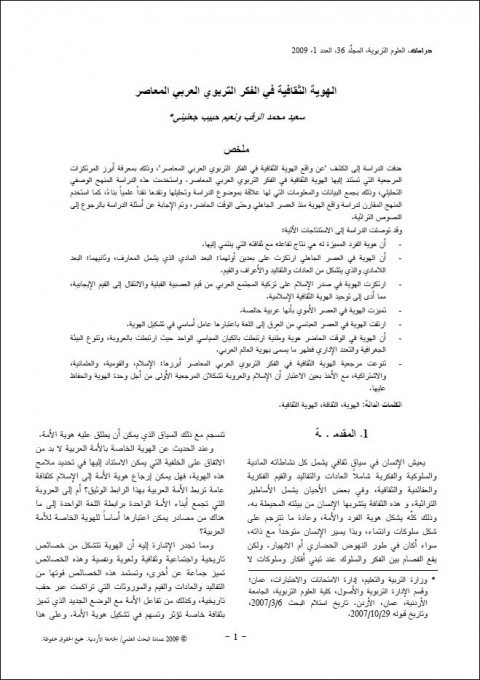 الهوية الثقافية في الفكر التربوي العربي المعاصر Year of publication: 2009 Author: الرقب، سعيد محمد Corporate author: University of Jordan هدفت الدراسة إلى الكشف عن واقع الهوية الثقافية في الفكر التربوي العربي المعاصر، وذلك بمعرفة أبرز المرتكزات المرجعية التي تستند إليها الهوية الثقافية في الفكر التربوي العربي المعاصر. وقد توصلت الدراسة إلى الاستنتاجات التالية: 1) أنّ هوية الفرد المميزة له هي نتاج تفاعله مع ثقافته التي ينتمي إليها. 2) أنّ الهويّة في العصر الجاهلي ارتكزت على بعدين أوّلهما: البعد المادي الذي يشمل المعارف، وثانيهما: البعد اللامادي والذي يتشكل من العادات والتقاليد والأعراف والقيم. 3) إرتكزت الهوية في صدر الإسلام على تزكية المجتمع العربي من قيم العصبية القبلية والانتقال إلى القيم الإيجابية، مما أدى إلى توحيد الهوية الثقافية الإسلامية. 4) تميّزت الهوية في العصر الأموي بأنّها عربية خالصة. 5) ارتفعت الهوية في العصر العباسي من العِرق إلى اللغة باعتبارها عاملاً أساسياً في تشكيل الهوية. 6) أنّ الهوية في الوقت الحاضر هوية وطنية ارتبطت بالكيان السياسي الواحد حيث ارتبطت بالعروبة، وتنوع البيئة الجغرافية والتعدد الإداري فظهر ما يسمّى بهويّة العالم العربي. 7) تنوّعت مرجعيّة الهوية الثقافيّة في الفكر التربوي المعاصر أبرزها: الإسلام، والقوميّة، والعلمانيّة، والاشتراكية، مع الأخذ بعين الاعتبار أنّ الإسلام والعروبة يُشكلان المرجعيّة الأولى من أجل وحدة الهويّة والحفاظ عليها. Cultural Identity in Contemporary Arab Educational Thought Year of publication: 2009 Author: الرقب، سعيد محمد Corporate author: University of Jordan The study aimed at revealing the reality of the “Cultural Identity” in the contemporary Arab thought, by tracing the most important references that the” Cultural Identity” stemmed from This study followed a descriptive analytic method: information and data related to the study were gathered, analysed and evaluated. The comparative method is used as well to study the reality of “the Identity”, from Pre-Islam era till present.The study concluded the followings: 1. A person’s Identity that distinguishes him is a result of his interaction with his culture that he belongs to. 2. In pre-Islam era, the identity was based on two dimensions: the first was physical and this included knowledge; the second was non-physical and was formulated from habits, traditions, customs, and values. 3. In the Early Islamic period, identity was based on the elimination of tribal fanatical values and on the transformation into positive values. That lead to the unification of the Islamic cultural identity. 4. In the Umayyad period, the identity was featured by its pure Arab identity. 5. In the Abbasid period, the identity elevated from the ethnic level to the language level which is considered as integral factor for identity formulation. 6. At present, “the Identity” is a national one aligned with the one political status, and connected with Arabism, the varied geographical environments and the administrative diversity, and hence appeared what is called the 'identity of the Arab World'. 7. The references of the “cultural identity” in the modern educational thought are multi, the most prominent of these elements are Islam, nationalism, secularism and socialism, while taking into consideration that Islam and Arabism are the first references for the unification and preservation of the identity.