
Resources
Explore a wide range of valuable resources on GCED to deepen your understanding and enhance your research, advocacy, teaching, and learning.
2 Results found
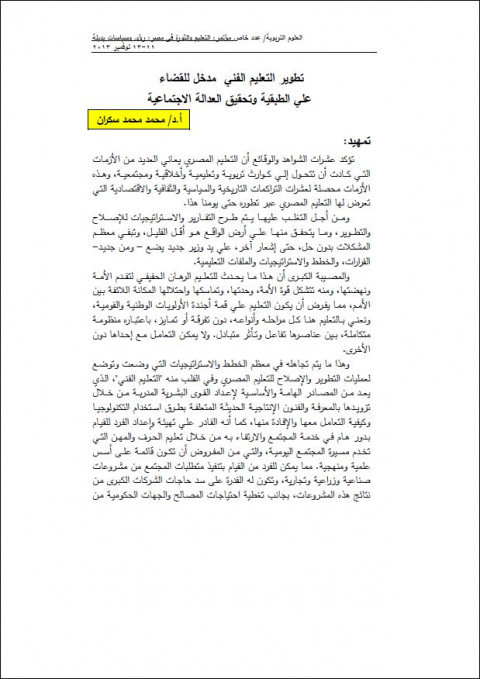 تطوير التعليم الفني : مدخل للقضاء على الطبقية وتحقيق العدالة الاجتماعية Year of publication: 2013 Author: سكران، محمد محمد Corporate author: Cairo University عرضت هذه الورقة لواقع التعليم الفني في مصر باعتباره يعاني وضعا مأساويا بسبب ظروف نشأته وموقعه بين نظم تعليمية لم تفسح للتعليم الفني مكانا فيها. من المشكلات التي تواجهه: 1) البطالة التي يعاني منها 80 % من خريجي هذه المدارس. 2) القصور الواضح في الإمكانيات المادية والبشرية، والنقص الواضح في المعدات والاعتماد في تدريب المجالات التطبيقية على الحفظ والاستظهار، وعدم الربط بين النظرية والتطبيق. 3) عدم وجود المشاركة والتنسيق بين التعليم الفني والمؤسسات الإنتاجية والخدمية، والعجز الشديد في العديد من التخصصات التي يحتاجها سوق العمل. 4) الغياب الواضح للقطاع الخاص في هذا النوع من التعليم. كما عرضت الورقة لبعض المقترحات التي يمكن أن تغير في الحد من الطبقية وتحقيق العدالة الاجتماعية للتعليم الفني في مصر، ومن هذه المقترحات: 1) ضرورة العمل على إعادة صياغة الأهداف الأساسية للتعليم الثانوي الفني في ضوء العوامل الاقتصادية والاجتماعية والسياسية المؤثرة في توجهات التنمية. 2) إعادة النظر في سياسة مؤسسات التعليم الثانوي الفني بحيث تتحول من مؤسسات تعليمية تقليدية إلى مؤسسات تعليمية إنتاجية وذلك من خلال تزويدها بالوسائل التعليمية الحديثة والاهتمام بالتأهيل والتدريب. 3) ضرورة الربط بين التخطيط للتعليم الفني والتخطيط للتنمية الاقتصادية والاجتماعية. 4) مواكبة سياسات وبرامج التعليم الفني للتقدم التكنولوجي المعاصر. Developing Vocational Education: An Introduction to Abolish Classism and Realize Social Justice Year of publication: 2013 Author: سكران، محمد محمد Corporate author: Cairo University The paper deals with technical education in Egypt that is going through a tragic situation due to its founding circumstances and its position among the education systems that do not allow technical education a space. The problems facing technical education include: 1) 80% unemployment among its graduates; 2) the obvious shortcomings in financial and human capacities, the obvious shortage in equipment, the relying on rote learning and the failure to connect theory to practice. 3) the lack of participation and coordination between technical education and institutions of production and services and the severe deficit in in the specializations that the labor market needs. 4) the clear absence of the role of the private sector in this type of education. The paper also presents some suggestions that could put a limit to class aspect in and create social justice for the technical education. The suggestions include: 1) the necessity to redefine the basic objectives of technical secondary education in light of the economic, social and political factors that influence the directions of development; 2) Reconsider the policies of the institutions of technical secondary education in order to transform them from traditional education institutions to productive technical ones by providing them with modern teaching means and attending to training and qualification; 3) the nescessity to connect technical education planning to the economic and social planning; 4) coping with the policies and programs of the of contemporary technological advancement.