
Resources
Explore a wide range of valuable resources on GCED to deepen your understanding and enhance your research, advocacy, teaching, and learning.
2 Results found
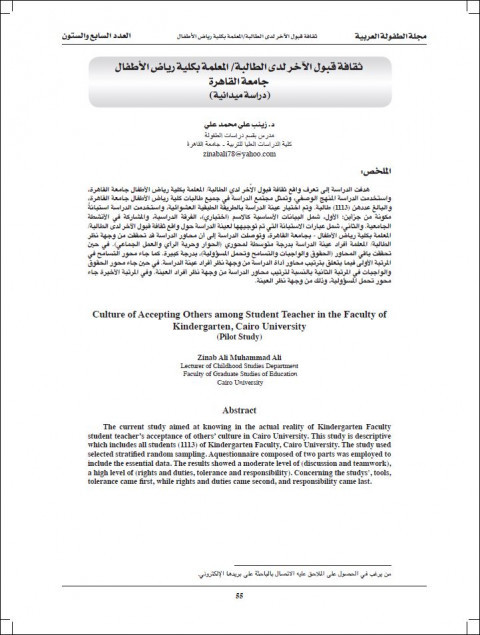 ثقافة قبول الآخر لدى الطالبة/ المعلمة بكلية رياض الأطفال - جامعة القاهرة: دراسة ميدانية Year of publication: 2016 Author: علي، زينب علي محمد Corporate author: Kuwait Society for the Advancement of Arab Children (KSAAC) هدفت الدراسة إلى تعرف واقع ثقافة قبول الاًخر لدي الطالبة/ المعلمة بكلية رياض الأطفال - جامعة القاهرة. استخدمت الدراسة المنهج الوصفي، وتمثل مجتمع الدراسة في جميع طالبات كلية رياض الأطفال جامعة القاهرة، والبالغ عددهن (1113) طالبة. تم اختيار عينة الدراسة بالطريقة الطبقية العشوائية، واستخدمت الدراسة استبانةً مكونة من جزأين: الأول، شمل البيانات الأساسية كالاسم (اختياري)، الفرقة الدراسية، والمشاركة في الأنشطة الجامعية. والثاني، شمل عبارات الاستبانة التي تم توجيهها لعينة الدراسة حول واقع ثقافة قبول الآخر لدى الطالبة/ المعلمة بكلية رياض الأطفال. توصلت الدراسة إلى أن محاور) بدرجة كبير. كما جاء محور التسامح في المرتبة الأولى فيما يتعلق بترتيب محاور أداة الدراسة من وجهة نظر أفراد عينة الدراس. في حين جاء محور الحقوق والواجبات في المرتبة الثانية بالنسبة لترتيب محاور الدراسة من وجهة نظر أفراد العينة. وفي المرتبة الأخيرة جاء محور تحمل المسؤولية، وذلك من وجهة نظر العينة. Culture of Accepting Others among Student Teacher in the Faculty of Kindergarten, Cairo University: Pilot Study Year of publication: 2016 Author: علي، زينب علي محمد Corporate author: Kuwait Society for the Advancement of Arab Children (KSAAC) The study aimed at knowing in the actual reality of accepting the others’ culture by the students/ teachers of the Kindergarten Faculty at Cairo University. This study is descriptive and includes all students (1113) of the Kindergarten Faculty. The study used selected stratified random sampling. A questionnaire composed of two parts was employed to include the essential data. The results showed a moderate level of 'discussion and teamwork', a high level of 'rights and duties, tolerance and responsibility'. Concerning the study’s tools, tolerance came first, while rights and duties came second, and responsibility came last.