
Resources
Explore a wide range of valuable resources on GCED to deepen your understanding and enhance your research, advocacy, teaching, and learning.
2 Results found
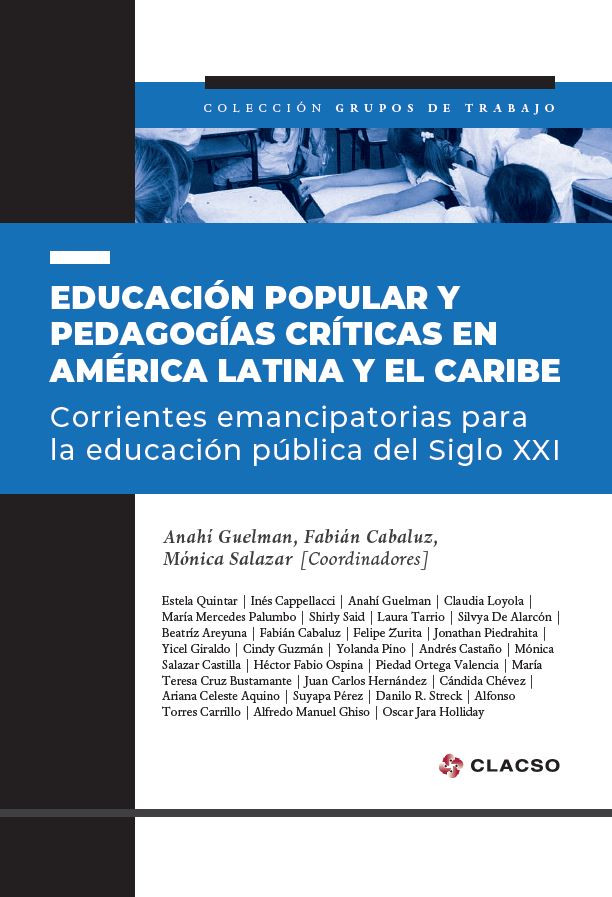 Educación popular y pedagogías críticas en América Latina y el Caribe: Corrientes emancipatorias para la educación pública del Siglo XXI Year of publication: 2018 Author: Estela Quintar | Inés Cappellacci | Anahí Guelman | Claudia Loyola | María Mercedes Palumbo | Shirly Said | Laura Tarrio | Silvya De Alarcón | Beatriz Areyuana | Fabián Cabaluz | Felipe Zurita | Jonathan Piedrahita | Yicel Giraldo | Cindy Guzmán | Yolanda Pino | Andrés Castaño | Mónica Salazar Castilla | Héctor Fabio Ospina | Piedad Ortega Valencia | María Teresa Cruz Bustamante | Juan Carlos Hernández | Cándida Chávez | Ariana Celeste Aquino | Suyapa Pérez | Danilo R. Streck | Alfonso Torres Carrillo | Alfredo Manuel Ghiso | Oscar Jara Holliday Corporate author: Consejo Latinoamericano de Ciencias Sociales (CLACSO) En las páginas y capítulos del libro se camina por los rincones de Bolivia con las voces y luchas indígenas, por un Chile y una Argentina que atraviesan historias, luchas y disputas por lo público en medio de contextos hostiles, por una Centroamérica (El Salvador, Costa Rica y México) que rescata un tremendo legado de procesos organizativos y revolucionarios, y por Colombia, que en su lucha por la paz, recoge las voces de jóvenes organizados. A su vez esta construcción retoma grandes pensadores/as y actores colectivos que han enriquecido los caminos de la Educación Popular y las Pedagogías Críticas. Así, atravesados por nuestra historia latinoamericana, por los angustiantes desafíos y tensiones por los que hoy pasan las democracias en cada uno de nuestros territorios y contextos, por las restauraciones conservadoras que nos condicionan y rodean, las Pedagogías Críticas y la Educación Popular no pueden menos, de acuerdo a lo que venimos viendo, que trabajar en la defensa del derecho a la educación que parece licuarse en varios de nuestros países, no pueden menos que ponerse el atuendo de maestro para resistir desde la escuela pública estatal, el derecho a aprender de niños, niñas y jóvenes y el derecho a ser docente, a enseñar, de miles de maestros y profesores que parecen querer ser sustituidos por “líderes educativos” y programas tecnológicos enlatados, con muy buenos dividendos para sus importadores. Popular Education and Critical Pedagogies in Latin America and the Caribbean: Emancipatory Currents for Public Education in the 21st Century Year of publication: 2018 Author: Estela Quintar | Inés Cappellacci | Anahí Guelman | Claudia Loyola | María Mercedes Palumbo | Shirly Said | Laura Tarrio | Silvya De Alarcón | Beatriz Areyuana | Fabián Cabaluz | Felipe Zurita | Jonathan Piedrahita | Yicel Giraldo | Cindy Guzmán | Yolanda Pino | Andrés Castaño | Mónica Salazar Castilla | Héctor Fabio Ospina | Piedad Ortega Valencia | María Teresa Cruz Bustamante | Juan Carlos Hernández | Cándida Chávez | Ariana Celeste Aquino | Suyapa Pérez | Danilo R. Streck | Alfonso Torres Carrillo | Alfredo Manuel Ghiso | Oscar Jara Holliday Corporate author: Consejo Latinoamericano de Ciencias Sociales (CLACSO) In the pages and chapters of the book you walk through the corners of Bolivia with indigenous voices and struggles, through a Chile and an Argentina that go through stories, struggles and disputes over public affairs in the midst of hostile contexts, through a Central America (El Salvador, Costa Rica and Mexico) that rescues a tremendous legacy of organizational and revolutionary processes, and for Colombia, which in its fight for peace, collects the voices of organized youth. At the same time, this construction takes up great thinkers and collective actors who have enriched the paths of Popular Education and Critical Pedagogies.Thus, crossed by our Latin American history, by the distressing challenges and tensions that democracies go through today in each of our territories and contexts, by the conservative restorations that condition and surround us, Critical Pedagogies and Popular Education cannot but, according to what we have been seeing, that working in defense of the right to education that seems to be liquefying in several of our countries, they cannot help but put on the attire of a teacher to resist, from the state public school, the right to learn from children and young people and the right to be a teacher, to teach, of thousands of teachers who seem to want to be replaced by “educational leaders” and canned technological programs, with very good dividends for their importers.