
Resources
Explore a wide range of valuable resources on GCED to deepen your understanding and enhance your research, advocacy, teaching, and learning.
13 Results found
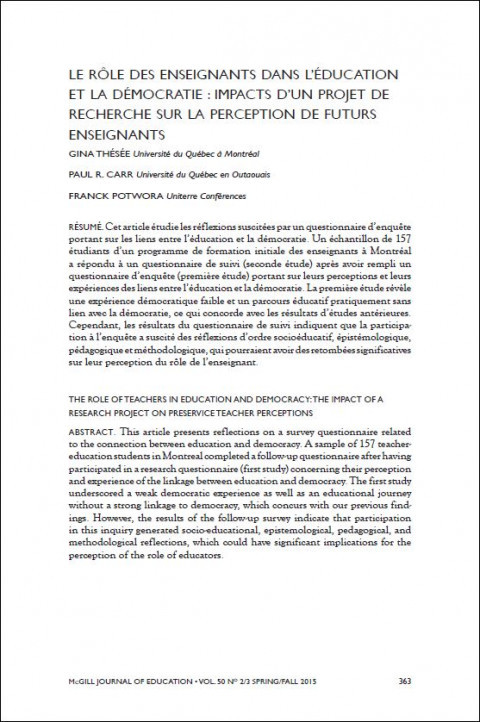 Le rôle des enseignants dans l’éducation et la démocratie : impacts d’un projet de recherche sur la perception de futurs enseignants Year of publication: 2015 Author: Gina Thésée | Paul R. Carr | Franck Potwora Corporate author: McGill University. Faculty of Education Cet article étudie les réflexions suscitées par un questionnaire d’enquête portant sur les liens entre l’éducation et la démocratie. Un échantillon de 157 étudiants d’un programme de formation initiale des enseignants à Montréal a répondu à un questionnaire de suivi (seconde étude) après avoir rempli un questionnaire d’enquête (première étude) portant sur leurs perceptions et leurs expériences des liens entre l’éducation et la démocratie. La première étude révèle une expérience démocratique faible et un parcours éducatif pratiquement sans lien avec la démocratie, ce qui concorde avec les résultats d’études antérieures. Cependant, les résultats du questionnaire de suivi indiquent que la participation à l’enquête a suscité des réflexions d’ordre socioéducatif, épistémologique, pédagogique et méthodologique, qui pourraient avoir des retombées significatives sur leur perception du rôle de l’enseignant. The Role of Teachers in Education and Democracy: The Impact of a Research Project on Preservice Teacher Perceptions Year of publication: 2015 Author: Gina Thésée | Paul R. Carr | Franck Potwora Corporate author: McGill University. Faculty of Education This article presents reflections on a survey questionnaire related to the connection between education and democracy. A sample of 157 teacher-education students in Montreal completed a follow-up questionnaire after having participated in a research questionnaire (first study) concerning their perception and experience of the linkage between education and democracy. The first study underscored a weak democratic experience as well as an educational journey without a strong linkage to democracy, which concurs with our previous findings. However, the results of the follow-up survey indicate that participation in this inquiry generated socio-educational, epistemological, pedagogical, and methodological reflections, which could have significant implications for the perception of the role of educators.
  MODÈLES DE RECHERCHE: Démocratie, citoyenneté mondiale et éducation transformatoire Year of publication: 2018 Author: Paul R. Carr | Gina Thésée Corporate author: Chaire UNESCO Démocratie, citoyenneté mondiale et éducation transformatoire (DCMÉT) Les modèles conceptuels et théoriques présentés dans ce document ont été élaborés sur une période d’environ douze ans, commençant en 2005, par le titulaire (Paul R. Carr, Université du Québec en Outaouais) et la co-titulaire (Gina Thésée, Université du Québec à Montréal) de la Chaire UNESCO. Ces modèles ont été publiés dans diverses revues académiques, en anglais ou en français et ont été traduits et adaptés ici pour produire une représentation mise à jour et bilingue de la recherche sur l’éducation pour la démocratie que Carr et Thésée ont réalisée. Certains de ces modèles ont été affinés (et améliorés) avec le temps et sont des moyens qui aident à élucider, interroger et mettre en évidence le sens des trois thèmes qui sous-tendent la Chaire UNESCO DCMÉT. Research Models Laying the Foundation for the Unesco Chair: Democracy, Global Citizenship and Transformative Education (DCMÉT) Year of publication: 2018 Author: Paul R. Carr | Gina Thésée Corporate author: Chaire UNESCO Démocratie, citoyenneté mondiale et éducation transformatoire (DCMÉT) The conceptual and theoretical models presented in this document were developed over a roughly twelve-year period, starting in 2005, by the Chair (Paul R. Carr, Université du Québec en Outaouais) and Co-Chair (Gina Thésée, Université du Québec à Montréal) of the UNESCO Chair DCMÉT. These models have been published in diverse academic journals in either English or French, and have been translated and adapted herein to produce an updated and bilingual representation of the Education for Democracy research that Carr and Thésée have produced. In some cases, the models have been refined (and improved) over time, and they are presented as a means of attempting to elucidate, interrogate and highlight the meaning of the three themes that underpin the UNESCO Chair DCMÉT.
 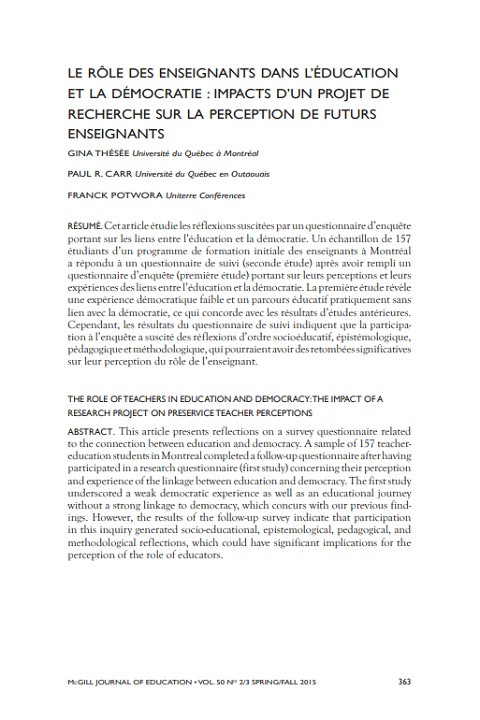 The Role of Teachers in Education and Democracy: The Impact of a Research Project on Preservice Teacher Perceptions Year of publication: 2015 Author: Gina Thésée | Paul R. Carr | Franck Potwora Corporate author: McGill University. Faculty of Education This article presents reflections on a survey questionnaire related to the connection between education and democracy. A sample of 157 teacher-education students in Montreal completed a follow-up questionnaire after having participated in a research questionnaire (first study) concerning their perception and experience of the linkage between education and democracy. The first study underscored a weak democratic experience as well as an educational journey without a strong linkage to democracy, which concurs with our previous findings. However, the results of the follow-up survey indicate that participation in this inquiry generated socio-educational, epistemological, pedagogical, and methodological reflections, which could have significant implications for the perception of the role of educators. Le rôle des enseignants dans l’éducation et la démocratie: Impacts d’un projet de recherche sur la perception de futurs enseignants Year of publication: 2015 Author: Gina Thésée | Paul R. Carr | Franck Potwora Corporate author: McGill University. Faculty of Education Cet article étudie les réflexions suscitées par un questionnaire d’enquête portant sur les liens entre l’éducation et la démocratie. Un échantillon de 157 étudiants d’un programme de formation initiale des enseignants à Montréal a répondu à un questionnaire de suivi (seconde étude) après avoir rempli un questionnaire d’enquête (première étude) portant sur leurs perceptions et leurs expériences des liens entre l’éducation et la démocratie. La première étude révèle une expérience démocratique faible et un parcours éducatif pratiquement sans lien avec la démocratie, ce qui concorde avec les résultats d’études antérieures. Cependant, les résultats du questionnaire de suivi indiquent que la participation à l’enquête a suscité des réflexions d’ordre socioéducatif, épistémologique, pédagogique et méthodologique, qui pourraient avoir des retombées significatives sur leur perception du rôle de l’enseignant.
  미디어․정보 리터러시 갖춘 시민 되기: 비판적으로 사고하고 현명하게 클릭하기! Year of publication: 2022 Author: Alton Grizzle | Carolyn Wilson | Ramon Tuazon | C.K. Cheung | Jesus Lau | Rachel Fischer | Dorothy Gordon | Kwame Akyempong | Jagtar Singh | Paul R. Carr | Kristine Stewart | Samy Tayie | Olunifesi Suraj | Maarit Jaakkola | Gina Thésée | Curmira Gulston Corporate author: 유네스코 현명한 클릭으로 우리 사회를 개선할 수 있을까? 도서관을 비롯한 아카이브, 박물관, 미디어와 디지털 통신 회사 같은 콘텐츠 제공자는 모든 이를 포용하고 지속 가능한 개발을 이루어내려는 역할을 지니고 있다. 하지만 콘텐츠 제공자가 그와 같은 이상에 근거해서만 움직이는 것은 아니기 때문에 서비스 사용자들은 어려움을 겪게 된다. 모든 콘텐츠 제공자는 평생학습의 기회를 열어 주기도 하지만 동시에 잘못된 정보나 허위정보, 혐오 표현, 온라인 프라이버시 침해 등과 같은 과제도 안겨 준다. 미디어·정보 리터러시란 사람들이 취할 수 있는 혜택은 최대로 얻고, 입을 수 있는 피해는 최소화할 수 있도록 하는 일련의 역량을 의미한다. 미디어·정보 리터러시는 커뮤니케이션 콘텐츠와 해당 콘텐츠를 제공하는 기관 및 디지털 기술을 비판적이고 효과적으로 이용할 수 있는 역량이다. 이는 나이, 배경과 관계없이 모든 시민이 필수적으로 갖추어야 하는 능력이다. 이 선구적인 커리큘럼은 미디어·정보 리터러시 역량의 종합적인 프레임워크를 제공하며, 교육자와 학습자가 활용할 수 있는 체계적인 교육적 방안을 제안한다. 또한 다양한 모듈을 제시하여 오늘날의 커뮤니케이션 생태계를 이해하는 데 필수적인 역량 범위를 상세하게 다루고 있다. 이 자료에서는 미디어·정보 리터러시를 지금 우리 사회에서 새롭게 부상하고 있는 문제들, 즉 인공지능을 비롯해 디지털 시민 교육, 지속가능 발전 교육, 문화 리터러시 및 허위정보와 잘못된 정보의 급증 등과 연계하여 다루고 있다. 본 커리큘럼을 효과적으로 활용한다면 누구나 미디어·정보 리터러시를 갖춘 시민은 물론, 미디어·정보 리터러시 동료 교육자도 될 수 있을 것이다.
 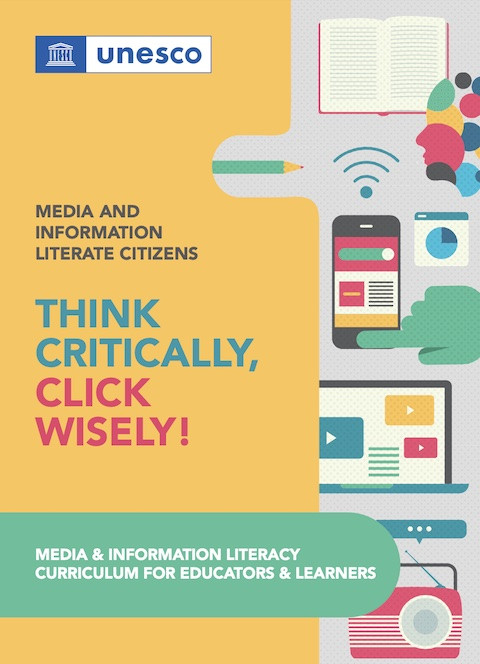 Media and Information Literate Citizens: Think Critically, Click Wisely! Year of publication: 2021 Author: Alton Grizzle | Carolyn Wilson | Ramon Tuazon | C.K. Cheung | Jesus Lau | Rachel Fischer | Dorothy Gordon | Kwame Akyempong | Jagtar Singh | Paul R. Carr | Kristine Stewart | Samy Tayie | Olunifesi Suraj | Maarit Jaakkola | Gina Thésée | Curmira Gulston Corporate author: UNESCO Content providers such as libraries, archives, museums, media and digital communications companies can enable inclusive and sustainable development. However, they do not always live up to these ideals, which creates challenges for the users of these services. Content providers of all types open up new opportunities for lifelong learning. But at the same time, they open up challenges such as misinformation and disinformation, hate speech, and infringement of online privacy, among others.Media and information literacy is a set of competencies that help people to maximize advantages and minimize harms. Media and information literacy covers competencies that enable people to critically and use of digital technologies. Capacities in these areas are indispensable for all citizens regardless of their ages or backgrounds.This pioneering curriculum presents a comprehensive competency framework of media and information pedagogical suggestions. It features various detailed modules covering the range of competencies needed to navigate today’s communications ecosystem. This resource links media and education, education for sustainable development, cultural literacy and the exponential information literacy curriculum, everyone can become media and information literate as well as peer-educators of media and information literacy.
 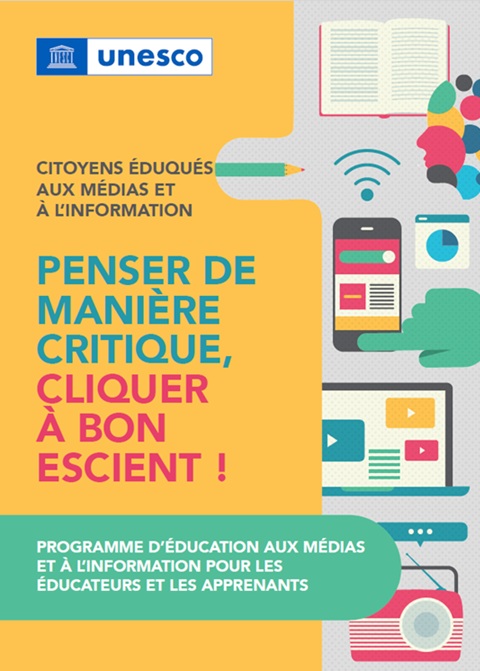 Citoyens éduqués aux médias et à l’information : penser de manière critique, cliquer à bon escient ! Year of publication: 2023 Author: Alton Grizzle | Carolyn Wilson | Ramon Tuazon | C.K. Cheung | Jesus Lau | Rachel Fischer | Dorothy Gordon | Kwame Akyempong | Jagtar Singh | Paul R. Carr | Kristine Stewart | Samy Tayie | Olunifesi Suraj | Maarit Jaakkola | Gina Thésée | Curmira Gulston Corporate author: UNESCO Pouvons-nous améliorer nos sociétés en cliquant à bon escient ?Les fournisseurs de contenus que sont les bibliothèques, les archives, les musées, les médias et les entreprises de communication numérique, entre autres, peuvent favoriser un développement inclusif et durable. Cependant, ils ne sont pas toujours à la hauteur de cet idéal, ce qui pose des difficultés aux utilisateurs de ces services.Les fournisseurs de contenus de tous types ouvrent de nouvelles opportunités d’apprentissage tout au long de la vie. Mais dans le même temps, ils ouvrent aussi la porte aux problèmes que sont la mésinformation, la désinformation, les discours de haine et la violation de la confidentialité en ligne, entre autres.L’éducation aux médias et à l’information est un ensemble de compétences qui permet d’optimiser les avantages et de minimiser les préjudices. L’éducation aux médias et à l’information couvre les compétences qui permettent à chacun d’interagir de façon critique et efficace avec le contenu des communications, les institutions qui fournissent ce contenu et les technologies numériques. Les capacités dans ces domaines sont indispensables pour tout citoyen, quel que soit son âge ou son origine.Ce programme novateur présente un cadre de compétences complet en matière d’éducation aux médias et à l’information, ainsi que des suggestions pédagogiques structurées pour les éducateurs et les apprenants. Il se compose de plusieurs modules détaillés couvrant l’éventail des compétences nécessaires pour évoluer dans l’écosystème des communications d’aujourd’hui. Cette ressource relie l’éducation aux médias et à l’information à des questions émergentes telles que l’intelligence artificielle, l’éducation à la citoyenneté numérique, l’éducation en vue du développement durable, l’éducation culturelle et l’augmentation exponentielle de la mésinformation et de la désinformation. En utilisant ce programme d’éducation aux médias et à l’information de façon efficace, chacun peut s’éduquer aux médias et à l’information, voire devenir pair éducateur dans ce domaine.
 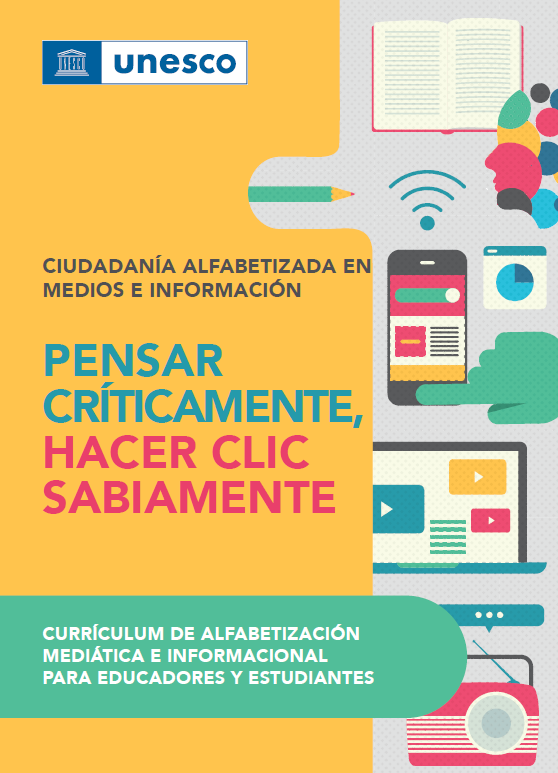 Ciudadanía alfabetizada en medios e información: pensar críticamente, hacer clic sabiamente Year of publication: 2023 Author: Alton Grizzle | Carolyn Wilson | Ramon Tuazon | C.K. Cheung | Jesus Lau | Rachel Fischer | Dorothy Gordon | Kwame Akyempong | Jagtar Singh | Paul R. Carr | Kristine Stewart | Samy Tayie | Olunifesi Suraj | Maarit Jaakkola | Gina Thésée | Curmira Gulston Corporate author: UNESCO ¿Podemos mejorar nuestras sociedades haciendo clic sabiamente?Los proveedores de contenidos como bibliotecas, archivos, museos, medios y empresas de comunicación digital pueden permitir un desarrollo inclusivo y sostenible. Sin embargo, no siempre están a la altura de estos ideales, lo que crea desafíos para los usuarios de estos servicios. Los proveedores de contenidos de todo tipo abren nuevas oportunidades para el aprendizaje permanente. Pero al mismo tiempo, plantean desafíos como la información falsa y la desinformación, el discurso de odio y la violación de la privacidad en línea, entre otros.La Alfabetización Mediática e Informacional es un conjunto de competencias que ayudan a las personas a maximizar las ventajas y minimizar los daños. La Alfabetización Mediática e Informacional abarca las competencias que permiten a las personas interactuar de manera crítica y efectiva con el contenido de las comunicaciones; las instituciones que facilitan este contenido y el uso de tecnologías digitales. Las capacidades en estos ámbitos son indispensables para la ciudadanía, independientemente de su edad o procedencia. Este Currículum pionero presenta un marco integral de competencias de Alfabetización Mediática e Informacional y ofrece a educadores y estudiantes sugerencias pedagógicas estructuradas. Cuenta con varios módulos detallados que cubren la gama de competencias necesarias para navegar por el ecosistema de comunicaciones de hoy.Este recurso vincula la Alfabetización Mediática e Informacional con cuestiones emergentes como la Inteligencia Artificial, la educación para la ciudadanía digital, la educación para el desarrollo sostenible, la alfabetización cultural y el aumento exponencial de la información falsa y la desinformación. Con el uso efectivo de este Currículum de Alfabetización Mediática e Informacional, todos pueden volverse alfabetizados mediáticos e informacionales, así como educadores pares de la Alfabetización Mediática e Informacional.