
Resources
Explore a wide range of valuable resources on GCED to deepen your understanding and enhance your research, advocacy, teaching, and learning.
6 Results found
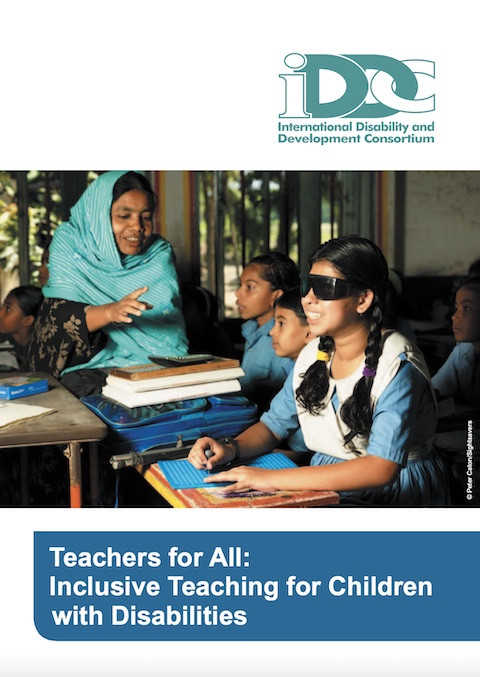 Teachers for All: Inclusive Teaching for Children With Disabilities Year of publication: 2013 Author: Ingrid Lewis | Sunit Bagree Corporate author: International Disability and Development Consortium (IDDC) Globally we need more well-trained and motivated teachers.Good teachers can help ensure that every child learns to their full potential from an early age and enters adult life well-equipped to be active citizens and support the development of their community and country. Many countries do not have enough teachers, let alone enough teachers who have received sufficiently high quality pre- and in-service training and access to continuing professional development. This paper first provides detail about the context and scale of the challenge. It then outlines five broad issues that need addressing if we are to prepare, recruit and support enough teachers, with appropriate skills, to educate every child – including those with disabilities.
  Promoting inclusive teacher education: Introduction Year of publication: 2013 Author: Ian Kaplan | Ingrid Lewis Corporate author: UNESCO Bangkok ‘Promoting Inclusive Teacher Education’ is a series of five advocacy guides. The guides discuss challenges and barriers to inclusive education in different areas of teacher education and offer related strategies and solutions for effective advocacy towards more inclusive practices. The series begins with this introductory guide. It provides an overview of inclusive teacher education and of what advocacy means in this context. It also provides an introduction to the topics covered in the four other guides in the series. These are ‘Policy’, ‘Curriculum’, ‘Materials’, and ‘Methodology’.Advocacy Guide 1: Introduction – This introductory guide begins by providing a brief introduction to inclusive education. Readers should not, however, see this introductory guide as their only guide for understanding inclusive education. It is assumed that advocates will either have existing knowledge of inclusive education or will refer to other more comprehensive sources of information to learn about the concept. This guide goes on to explain the benefits of integrating awareness and understanding of inclusive education throughout pre-service teacher education. Finally, it provides a practical introductory guide to advocacy.
  Promoting inclusive teacher education: curriculum Year of publication: 2013 Author: Ian Kaplan | Ingrid Lewis Corporate author: UNESCO Bangkok ‘Promoting Inclusive Teacher Education’ is a series of five advocacy guides. The guides discuss challenges and barriers to inclusive education in different areas of teacher education and offer related strategies and solutions for effective advocacy towards more inclusive practices. The series begins with this introductory guide. It provides an overview of inclusive teacher education and of what advocacy means in this context. It also provides an introduction to the topics covered in the four other guides in the series. These are ‘Policy’, ‘Curriculum’, ‘Materials’, and ‘Methodology’.Advocacy Guide 3: Curriculum – changing the overall organization and sequencing of teacher education. Curriculum refers to the overall courses of study at pre-service teacher education institutions. A curriculum is a way of organizing and sequencing learning experiences with the aim of achieving specified learning outcomes. It guides what will be learned, and why, and how this learning is facilitated. The curriculum reflects connections between society, politics and schools/teachers, so the development of inclusive curricula reflects 2 ADVOCACY GUIDE 1 3 a desire to develop an equitable, non-discriminatory society1 through attention to the overall structuring of teaching and learning within teacher education.
  Promoting inclusive teacher education: materials Year of publication: 2013 Author: Ian Kaplan | Ingrid Lewis Corporate author: UNESCO Bangkok ‘Promoting Inclusive Teacher Education’ is a series of five advocacy guides. The guides discuss challenges and barriers to inclusive education in different areas of teacher education and offer related strategies and solutions for effective advocacy towards more inclusive practices. The series begins with this introductory guide. It provides an overview of inclusive teacher education and of what advocacy means in this context. It also provides an introduction to the topics covered in the four other guides in the series. These are ‘Policy’, ‘Curriculum’, ‘Materials’, and ‘Methodology’.Advocacy Guide 4: Materials – changing the materials that are used to support teaching and learning within teacher education. Materials refer to the resources (e.g. textbooks) which are used in pre-service teacher education institutions. Teacher education utilizes a wide range of materials, including those used by teacher educators as an aid to teaching, and those used by student teachers as an aid to learning.
  Promoting inclusive teacher education: methodology Year of publication: 2013 Author: Ian Kaplan | Ingrid Lewis Corporate author: UNESCO Bangkok ‘Promoting Inclusive Teacher Education’ is a series of five advocacy guides. The guides discuss challenges and barriers to inclusive education in different areas of teacher education and offer related strategies and solutions for effective advocacy towards more inclusive practices. The series begins with this introductory guide. It provides an overview of inclusive teacher education and of what advocacy means in this context. It also provides an introduction to the topics covered in the four other guides in the series. These are ‘Policy’, ‘Curriculum’, ‘Materials’, and ‘Methodology’.Advocacy Guide 5: Methodology – changing teaching methodology within teacher education institutions. Methodology refers to the theory and practice of teaching and learning. This addresses how teaching and learning is understood, organized, and conducted. Methodology, then, is the overall framework or approach to teaching which encompasses specific teaching methods. For example, an overall inclusive teaching methodology involves specific approaches to individualized/personalized instruction, and learner-centred teaching. These four advocacy guides are structured so that they: • break the issue down into several key challenges; • analyse the broad situation in the region, and suggest questions that advocates could ask to help them investigate the situation in their specific context; and • suggest pertinent advocacy goals, and the messages that advocates may want to convey, as well as indicators for deciding whether advocacy on the issue is having any impact. Tables at the end of each advocacy guide summarize the advocacy messages and suggest potential targets for each message, and then offer space for readers to make notes about how they might convey these messages to each target (drawing on advice provided in the brief guide to advocacy in this introductory guide). Illustrative case studies are provided wherever possible, and readers are encouraged to use their own investigations within their context to identify local case studies that they can use to back up their advocacy messages.
  Promoting inclusive teacher education: policy Year of publication: 2013 Author: Ian Kaplan | Ingrid Lewis Corporate author: UNESCO Bangkok ‘Promoting Inclusive Teacher Education’ is a series of five advocacy guides. The guides discuss challenges and barriers to inclusive education in different areas of teacher education and offer related strategies and solutions for effective advocacy towards more inclusive practices. The series begins with this introductory guide. It provides an overview of inclusive teacher education and of what advocacy means in this context. It also provides an introduction to the topics covered in the four other guides in the series. These are ‘Policy’, ‘Curriculum’, ‘Materials’, and ‘Methodology’.Advocacy Guide 2: Policy – raising awareness of existing policies for inclusive education and changing/adapting policies at different levels in the education system (e.g. at the ministry, teacher education institution and school levels). Policy refers mainly to the guiding rules, laws and principles of education at the national level and within teacher education institutions. Policy guides the practices of individuals, groups and institutions on various inclusive education issues.