
Resources
Explore a wide range of valuable resources on GCED to deepen your understanding and enhance your research, advocacy, teaching, and learning.
8 Results found
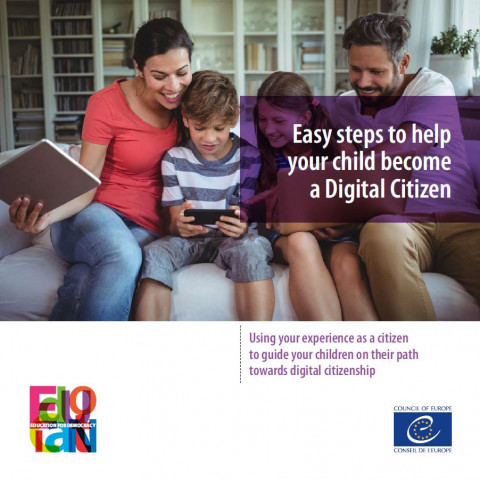 Easy Steps to Help Your Child Become a Digital Citizen Year of publication: 2020 Author: Janice Richardson | Veronica Samara Corporate author: Council of Europe A guide to help you use your experience as a citizen to guide your children on their path towards digital citizenship.Young people today inhabit a world that has been transformed by digital technologies, effortlessly enabling connectedness through social media and access to vast quantities of information. Making sense of this hyper rich information and engaging effectively and responsibly poses a whole set of new challenges for educators as they seek to prepare young people as citizens, exercising their rights and participating effectively in the affairs of the community.Parents, and “non-tech” grandparents too, can help children become digital citizens. In this guide, we explain some of the easy steps to follow, to help children master what it takes to act responsibly and respectfully online. Étapes simples pour aider votre enfant à devenir un citoyen numérique Year of publication: 2020 Author: Janice Richardson | Veronica Samara Corporate author: Conseil de l'Europe Un guide pour vous aider à utiliser votre expérience en tant que citoyen pour guider vos enfants sur la voie de la citoyenneté numérique.Les jeunes habitent aujourd'hui un monde qui a été transformé par des technologies numériques, permettant la connexion sans effort via les médias sociaux et l'accès à de vastes quantités d'informations. Etre capable de décortiquer cette information hyper riche et s’engager de manière efficace et responsable pose toute une série de nouveaux défis pour les éducateurs dans la mesure où ils cherchent à préparer les jeunes en tant que citoyens, à exercer leurs droits et à participer efficacement aux affaires de la communauté.Les parents et les grands-parents (même les profanes en technologie), peuvent aider les enfants à devenir des citoyens numériques. Dans ce guide, nous présentons quelques étapes faciles à suivre afin d’aider les enfants à maîtriser l’essentiel pour agir de façon responsable et respectueuse en ligne.
 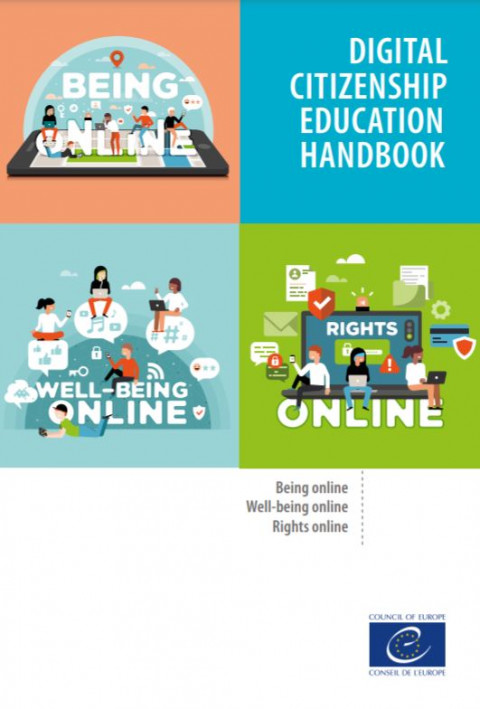 Digital Citizenship Education Handbook Year of publication: 2019 Author: Janice Richardson | Elizabeth Milovidov Corporate author: Council of Europe Digital citizenship and engagement involves a wide range of activities, from creating, consuming, sharing, playing and socialising, to investigating, communicating, learning and working. Competent digital citizens are able to respond to new and everyday challenges related to learning, work, employability, leisure, inclusion and participation in society, respecting human rights and intercultural differences.This Digital citizenship education handbook is designed to help educators and other interested adults understand and deal with them. It builds on the Council of Europe’s Reference Framework of Competences for Democratic Culture and the achievements of our longstanding Education for Democratic Citizenship programme, and complements the Internet literacy handbook as part of a coherent approach to educating citizens for the society of the future.
 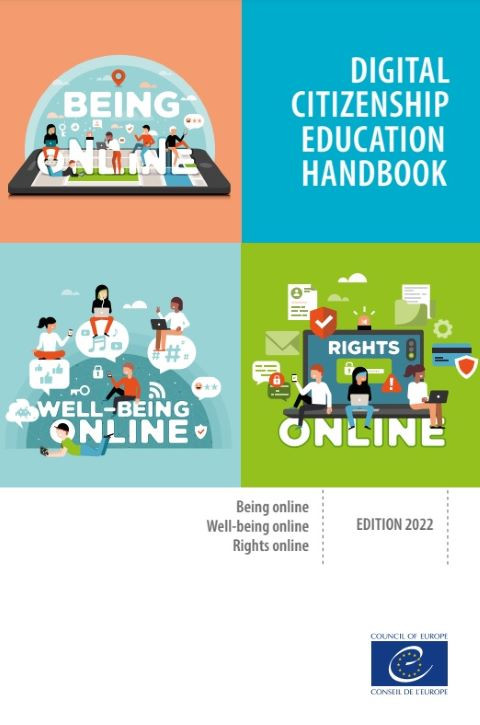 Digital Citizenship Education Handbook (Edition 2022) Year of publication: 2022 Author: Janice Richardson | Elizabeth Milovidov Corporate author: Council of Europe Digital citizenship competences define how we act and interact online. They comprise the values, attitudes, skills and knowledge and critical understanding necessary to responsibly navigate the constantly evolving digital world, and to shape technology to meet our own needs rather than to be shaped by it. The Digital citizenship education handbook offers information, tools and good practice to support the development of these competences in keeping with the Council of Europe’s vocation to empower and protect children, enabling them to live together as equals in today’s culturally diverse democratic societies, both on- and offline.The Digital citizenship education handbook is intended for teachers and parents, education decision makers and platform providers alike. It describes in depth the multiple dimensions that make up each of 10 digital citizenship domains, and includes a fact sheet on each domain providing ideas, good practice and further references to support educators in building the competences that will stand children in good stead when they are confronted with the challenges of tomorrow’s digital world. The Digital citizenship education handbook is consistent with the Council of Europe’s Reference Framework of Competences for Democratic Culture and compatible for use with the Internet literacy handbook.
 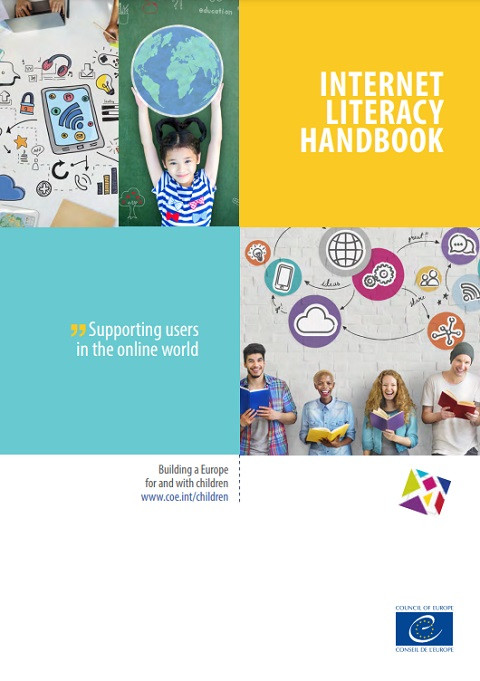 Internet Literacy Handbook: Supporting Users in the Online World Year of publication: 2017 Author: Janice Richardson | Elizabeth Milovidov | Martin Schmalzried Corporate author: Council of Europe Since the first edition of the Internet Literacy Handbook was issued in 2003 the world of the Internet has changed tremendously. The number of Internet users has risen; users are increasingly younger, trends in how people use the Internet and what they are looking for evolve, and new pitfalls in, for example, personal security arise seemingly overnight.This new edition takes into account the myriad changes, although the object of the Handbook still remains, namely to offer families, educators and policy-makers sufficient technical know-how to allow them to navigate, with young people, through communication technology. The new edition also expands the scope of the Fact sheets anchoring previously “new” concepts of digital citizenship and digital parenting. This edition includes 26 Fact sheets arranged under 6 thematic headings including a heading specifically dedicated to “Looking Forward” towards the future of the Internet. The Handbook is designed to be easy to use and helpful, as illustrated by the Fact sheet entitled “Finding quality information on the Web”. It is also available online, where it can be downloaded either in its full format or per individual factsheet. Manuel de maîtrise de l'internet: Accompagner les utilisateurs dans le monde en ligne Year of publication: 2017 Author: Janice Richardson | Elizabeth Milovidov | Martin Schmalzried Corporate author: Conseil de l'Europe Depuis la publication de la première édition du Manuel de maîtrise d’Internet en 2003, le monde en ligne a beaucoup changé. Les Internautes sont de plus en plus jeunes, leur nombre a augmenté, leurs usages d’Internet et l’objet de leurs recherches évoluent et de nouveaux dangers, par exemple en matière de sécurité individuelle, apparaissent chaque jour. Cette nouvelle édition tient compte de ces nombreux changements mais conserve son objectif, qui est de donner aux familles, aux enseignants et aux décideurs politiques des connaissances techniques suffisantes pour pouvoir naviguer, avec les jeunes, dans le monde des technologies de la communication. La nouvelle édition étend également le contenu des Fiches d’information aux concepts qui étaient alors «nouveaux» de citoyenneté numérique et de parentalité numérique, ce qui porte le nombre de fiches à 26, organisées en six thématiques dont l’une est spécialement consacrée à l’avenir d’Internet. Le manuel se veut convivial et pratique, comme l’illustre la fiche intitulée « Trouver de l’information de qualité sur le web ». Il est également accessible en ligne où il peut être téléchargé dans son intégralité ou fiche par fiche.
 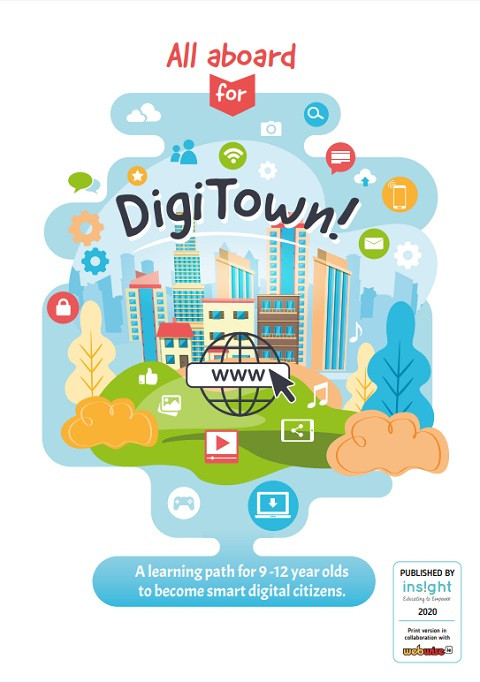 All Aboard for DigiTown: A Learning Path for 9 -12 Year Olds to Become Smart Digital Citizens Year of publication: 2020 Author: Janice Richardson | Veronica Samara Corporate author: Webwise “All Aboard for DigiTown!”is a fun, entertaining learning journey for young digital citizens through 10 digital themes centred on ‘Being online’, ‘Well-being online’ and ‘Rights online’. These are based on the Council of Europe’s successful Digital Citizenship Education model. As children progress through the stories, exercises and individual and group activities in the book, they will learn about using digital technology wisely, behaving respectfully and responsibly, and cooperating meaningfully online and offline. They end their journey with a backpack of badges to remind them of what being a digital citizen really means. A final section provides solutions, and offers teachers and parents a detailed overview of the competences their children are developing in order to better guide them on their path towards digital citizenship.The book can be used both in class, at home and in distance learning. It is adapted to the learning needs of children in the final years of elementary school (age around 9-12 years).
 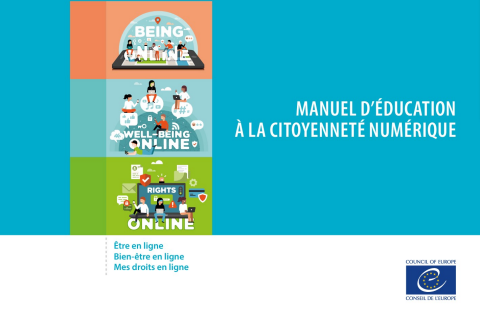 Manuel d'éducation à la citoyenneté Numérique Year of publication: 2020 Author: Janice Richardson | Elizabeth Milovidov Corporate author: Conseil de l'Europe Le manuel se divise en trois chapitres:Chapitre 1: Être en ligne – Quels sont nos modes d’action et d’existence en ligne? Ce chapitre propose une réponse en trois thèmes: accès et inclusion, apprentissage et créativité, éducation aux médias et à l’information.Chapitre 2: Bien-être en ligne – Comment nous sentons-nous en ligne? La réponse se décline là encore en trois thèmes: éthique et empathie, santé et bien-être, présence et communications en ligne.Chapitre 3: Mes droits en ligne – Qui rend compte de quoi sur internet ?Ce chapitre aborde quatre derniers thèmes: participation active, droits etresponsabilités, vie privée et sécurité, sensibilisation des consommateurs. The manual is divided into three chapters: Chapter 1: Being online - How do we act and exist online? This chapter proposes a response in three themes: access and inclusion, learning and creativity, media and information literacy. Chapter 2: Online well-being - How do we feel online? Again, the answer is divided into three themes: ethics and empathy, health and well-being, online presence and communications. Chapter 3: My rights online - Who is accountable for what online? This chapter covers four final themes: active participation, rights and responsibilities, privacy and security, and awareness.