
Resources
Explore a wide range of valuable resources on GCED to deepen your understanding and enhance your research, advocacy, teaching, and learning.
18 Results found
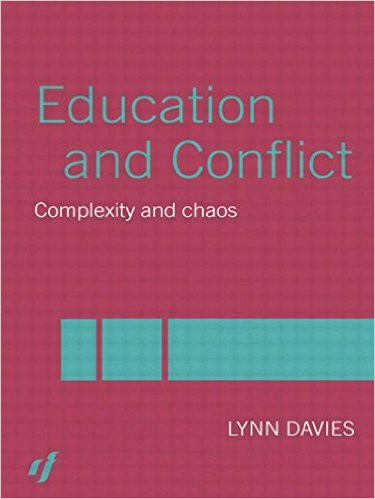 Education and Conflict: Complexity and Chaos Year of publication: 2003 Author: Lynn Davies Based on the author's extensive research and experience of education in several areas afflicted by conflict, the book explores the relationship between schooling and social conflict and looks at conflict internal to schools. It posits a direct link between the ethos of a school and the attitudes of future citizens towards 'others'. It also looks at the nature and purpose of peace education and war education, and addresses the role of gender and masculinity. Education and Conflict: Complexity and Chaos Year of publication: 2003 Author: Lynn Davies Basé sur une recherche approfondie de l'auteur et sur son expérience en terme d'éducation dans plusieurs zones affectées par des conflits, ce livre analyse la relation entre le fait d'aller à l'école et le conflit social, et s'attache aux conflits qui surviennent au sein des établissements scolaires. L’auteur postule un lien direct entre l'éthos adopté par une école donnée et le comportement de ses futures citoyens envers « les autres ». Il s'attache également à la nature et à l'objet de l'éducation pour la paix et de l'enseignement des conflits, et aborde la question du rôle joué par le genre et la masculinité.
  Schools and war: urgent agendas for comparative and international education Year of publication: 2005 Author: Lynn Davies Corporate author: Taylor & Francis This paper looks first at the contributions that education makes to conflict, through the reproduction of inequality and exclusion, through perpetuation of ethnic or religious divisions, through its acceptance of dominant aggressive masculinities, through selection, competition and fear, and through distorted curricular emphases on narrow cognitive areas of learning. However, the paper also outlines some ‘possibilities for hope’, such as resilient schools, the impact of peace education initiatives and the rise of global citizenship education. Schools and war: urgent agendas for comparative and international education Year of publication: 2005 Author: Lynn Davies Corporate author: Taylor & Francis Cet article examine en premier lieu les contributions de l'éducation aux conflits, à travers la reproduction de l'inégalité et de l’exclusion, la perpétuation des divisions ethniques ou religieuses, l’acceptation de la dominance de l’agressivité masculine ; à travers la sélection, la compétition et la peur, et à travers une déformation des programmes scolaires mettant l’accent sur des zones cognitives étroites de l'apprentissage. Toutefois, le document décrit également quelques « notes positives », telles que les écoles de la résilience, l'impact des initiatives de l'éducation à la paix et l’importance croissante donnée à l'éducation à la citoyenneté mondiale.
  Evaluating the Link between Conflict and Education Year of publication: 2005 Author: Lynn Davies Corporate author: SAGE Publishing This paper examines two areas of important evaluation: the impact of education on peace and the impact of education on conflict, and argues that they are not necessarily the same type of evaluation. Evaluating the Link between Conflict and Education Year of publication: 2005 Author: Lynn Davies Corporate author: SAGE Publishing Cet article examine deux domaines importants d’évaluation : l'impact de l'éducation sur la paix et l'impact de l'éducation sur les conflits ; il démontre ensuite que le même type d'évaluation ne s’applique pas nécessairement au deux.
  Security, Extremism and Education: Safeguarding or Surveillance? Year of publication: 2015 Author: Lynn Davies This article analyses how education is positioned in the current concerns about security and extremism. Initially, a central dilemma is acknowledged: that schooling appears to be simultaneously irrelevant to the huge global questions of security and yet central to the learning of alternative ways to conduct human relations. With regard to extremism, two aspects of importance in ideological compliance or challenge are firstly the attempted securitization of education, and secondly the role of education in young people joining or supporting extremist movements. Educational approaches within transitional justice underline the importance of tackling violence in schools and promoting a human rights culture that promotes both human security and ultimately national security. Security, Extremism and Education: Safeguarding or Surveillance? Year of publication: 2015 Author: Lynn Davies Cet article analyse le rôle de l'éducation dans les préoccupations actuelles concernant la sécurité et l'extrémisme. Dans un premier temps, on reconnait le problème fondamental suivant : à priori, il n’y a aucun rapport entre l'école et la question pressante de la sécurité dans le monde, et pourtant l’école est clé dans l'apprentissage des différents moyens de gestion des relations interpersonnelles. En ce qui concerne l'extrémisme, deux aspects de l’adhésion à une idéologie ou de la défiance sont importants : d'une part les efforts pour sécuriser l'éducation, et d'autre part le rôle de l'éducation vis-à-vis des jeunes rejoignent ou soutiennent des mouvements extrémistes. Les approches éducatives au sein de la justice transitionnelle soulignent l'importance de lutter contre la violence dans les écoles et de promouvoir une culture des droits de l'homme favorisant à la fois la sécurité humaine et la sécurité nationale.
  Global Security, Religion and Education Development: a Crisis for the Field of Comparative Education? Year of publication: 2011 Author: Yusuf Sayed | Lynn Davies | Mike Hardy | Abbas Madandar Arani | Lida Kakia | Masooda Bano Corporate author: Taylor & Francis Building common ground on shared values should be a high priority for a diverse and devout society in an era of religious conflict. Otherwise we might fall into the equally false and far more dangerous illusion that we agree on nothing at all – and perhaps we tend to assume that education helps to do this, which is not necessarily the case. There is a greater concern that education is not just failing to step up effectively to the task of contesting undifferentiated and negative views of religions, but that it might not always be a force for good at all. It may in some cases help reinforce difference and create the conditions for conflict.The relationship, therefore, between religious difference, security and the assumed supportive role of education is far from a simple one. Global security, religion and education development: a crisis for the field of comparative education? Year of publication: 2011 Author: Yusuf Sayed | Lynn Davies | Mike Hardy | Abbas Madandar Arani | Lida Kakia | Masooda Bano Corporate author: Taylor & Francis Partager des valeurs communes devrait être une priorité absolue dans une société diversifiée et dévote en cette période de conflits religieux. Autrement, on pourrait tomber dans l’illusion, fausse et dangereuse, que nous sommes d’accord en rien - et on pense, probablement que l'éducation contribue à cet état de choses, alors que ce n’est pas forcément le cas. On est de plus en plus préoccupé par la question suivante : celle de considérer que non seulement l'éducation échoue quand il s’agit de contester d’une manière solide et efficace les points de vues non nuancés et négatifs en matière de religions, mais aussi que l’éducation n’est finalement pas une bonne chose. Dans certains cas, elle peut contribuer à renforcer la différence et créer les conditions d'un conflit. La relation, donc, entre la différence religieuse, la sécurité et le rôle présumé de soutien de l'éducation est loin d'être simple.