
Resources
Explore a wide range of valuable resources on GCED to deepen your understanding and enhance your research, advocacy, teaching, and learning.
3 Results found
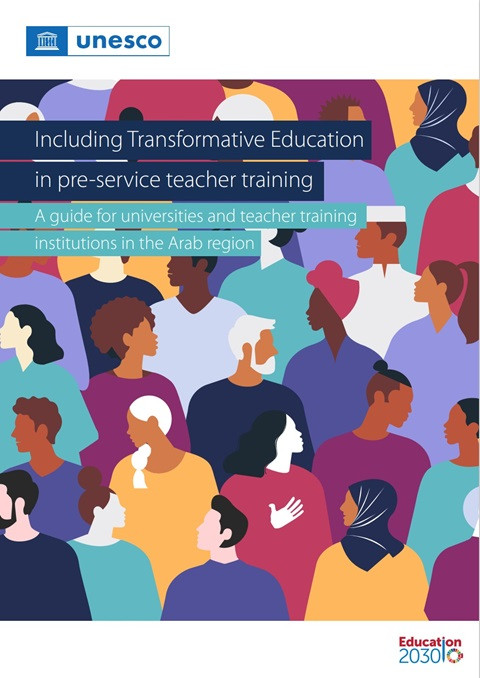 Including Transformative Education in Pre-service Teacher Training: A Guide for Universities and Teacher Training Institutions in the Arab Region Year of publication: 2024 Author: Khalaf Al Abri | Marco Pasqualini Corporate author: UNESCO Beirut Transformative Education (TE), which includes concepts such as Global Citizenship Education (GCED) and Education for Sustainable Development (ESD), is an essential approach to provide learners with the tools to act for more just, peaceful and sustainable societies. Between 2021 and 2023, the experts of the UNESCO Arab Transformative Education Network identified the creation of a course on Transformative Education for teachers’ pre-service training as a key step to (i) provide teachers with the needed skills to promote Transformative Education as part of the national curriculum as well as though their daily teaching practices, and (ii) to support the reform of pedagogies more broadly, by making them more interactive and focused on critical thinking, and thus positively contributing to improving learners’ overall learning outcomes. This guidance document is addressed to all entities in charge of pre-service teacher training (e.g. departments of education within higher education institutions and teacher training institutions) in the Arab region interested in including Transformative Education as part of their programmes. The guidance document particularly supports faculty deans and academia in defining the scope and the key parameters to consider while developing a course on Transformative Education, including defining course objectives, format, content, and pedagogy, as well as choosing the right facilitator(s) to deliver the course. The document also provides useful references to other guides and tools which can further support the reflections around Transformative Education and how it can be concretely applied and promoted at the higher education level.
 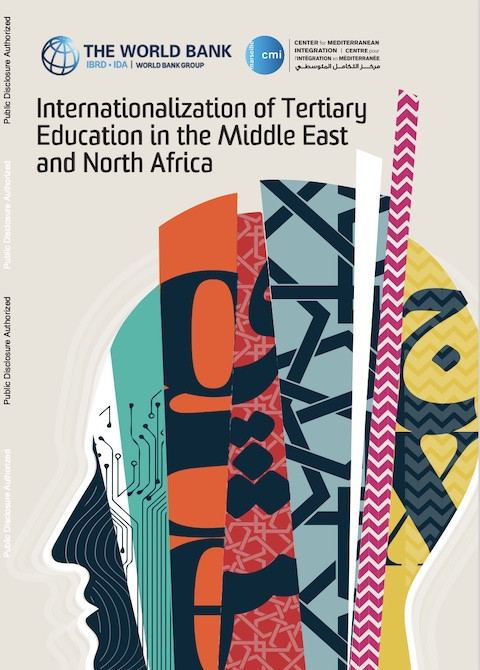 Internationalization of Tertiary Education in the Middle East and North Africa Year of publication: 2020 Author: Giulia Marchesini | Lise Barbotte | Paul Cahu | Aurelia Hoffmann | Holly Johnstone | Mirna Mehrez | Marco Pasqualini | Francisco Marmolejo Corporate author: World Bank This report draws on available data to respond to both a real need for regional analysis and a direct demand from stakeholders, including tertiary education institutions in MENA. Encouraging internationalization to be mainstreamed throughout MENA is the objective that this report seeks to achieve by way of stimulating regional policy dialogue on the subject. The report presents some global trends in internationalization and details its main benefits, before providing an overview of the current status of internationalization in the MENA region, including an in-depth analysis of student mobility. In its reflections on the way forward for the region, the report situates its recommendations in the context of COVID-19, within which, despite serious challenges due to a lack of attractiveness of the region, MENA may find a key opportunity. It suggests that adapting to the “new normal” through the deeper implementation of internationalization “at home” – a dimension that does not require physical mobility and, being implemented within domestic environments, has a much wider reach – may help enable the region to make strides towards catching up on the internationalization agenda. Internationalisation de l’enseignement supérieur dans la région Moyen-Orient Afrique du Nord Year of publication: 2020 Author: Giulia Marchesini | Lise Barbotte | Paul Cahu | Aurelia Hoffmann | Holly Johnstone | Mirna Mehrez | Marco Pasqualini | Francisco Marmolejo Corporate author: World Bank Ce rapport s'appuie sur les données disponibles pour répondre à la fois à un réel besoin d'analyse régionale et à une demande directe des parties prenantes, y compris des établissements d'enseignement supérieur de la région MENA. Encourager le développement de l’internationalisation à travers la région MENA est l'objectif que ce rapport cherche à atteindre, en stimulant un dialogue régional sur les politiques publiques autour de ce sujet. Le rapport présente quelques tendances mondiales de l'internationalisation et détaille ses principaux avantages, avant de donner un aperçu de l'état actuel de l'internationalisation dans la région MENA, y compris une analyse approfondie de la mobilité étudiante. Parmi les recommandations proposées pour le développement de l’internationalisation, le contexte de la COVID-19 est vu, pour la région MENA, comme une fenêtre d’opportunité pour pallier au manque d'attractivité de la région dans ce domaine. Mettre l’accent sur l'internationalisation « à domicile » - une dimension qui ne nécessite pas de mobilité physique et qui se développe dans le cadre domestique, et a donc une portée plus large - pour s’adapter à la « nouvelle normalité » peut aider la région à rattraper son retard sur le plan de l’internationalisation.