
Resources
Explore a wide range of valuable resources on GCED to deepen your understanding and enhance your research, advocacy, teaching, and learning.
3 Results found
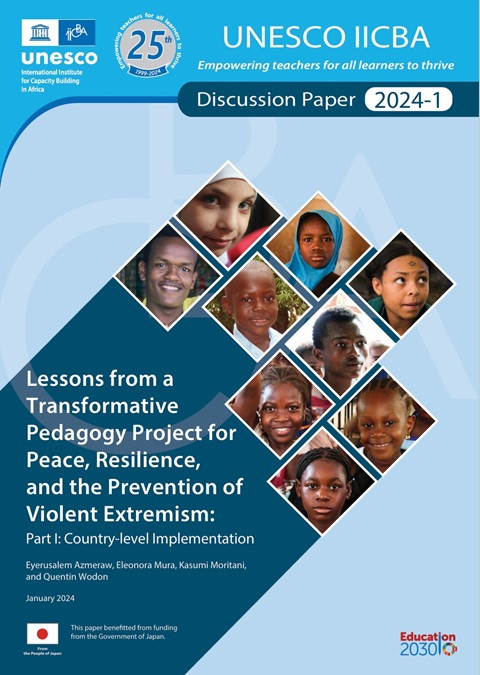 Lessons from a Transformative Pedagogy Project for Peace, Resilience, and the Prevention of Violent Extremism: Part I; Country-Level Implementation Year of publication: 2024 Author: Eyerusalem Azmeraw | Quentin Wodon | Eleonora Mura | Kasumi Moritani Corporate author: UNESCO International Institute for Capacity-Building in Africa (IICBA) From 2017 to 2022, UNESCO’s International Institute for Capacity Building in Africa (IICBA) led a series of projects for peacebuilding and the prevention of violent extremism through education with support from the Government of Japan. This two-part paper draws lessons from the projects. The first part of the paper briefly explains the transformative pedagogy approach that guided project implementation and provides examples of changes that were implemented at the country level under the projects. The analysis is qualitative, with the aim being to outline, through country examples, what can be achieved through such projects. Lessons on factors contributing to impact are also outlined.
 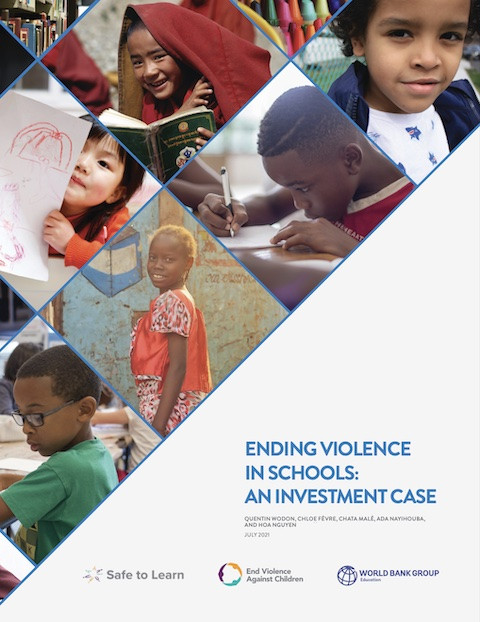 Ending Violence in Schools : An Investment Case Year of publication: 2021 Author: Quentin Wodon | Chloë Fèvre | Chata Malé | Ada Nayihouba | Hoa Nguyen Corporate author: World Bank Preventing violence in and through school is a prerequisite for girls and boys getting the education they need and deserve, and acquiring the skills, knowledge and values that provide the foundations for strong and inclusive societies. This report demonstrates that violence in and around schools negatively impacts educational outcomes, and society pays a heavy price as a result (with an estimate of $11 trillion in lost lifetime earnings). Cost-benefit analyses suggest that implementing interventions to prevent violence in and through schools from early childhood to secondary education is a smart economic investment. Rigorously evaluated programs and policies aimed at preventing violence at different levels of the education system show that action is feasible. The benefits of investing in preventing violence in and through schools is likely to far outweigh the costs.
 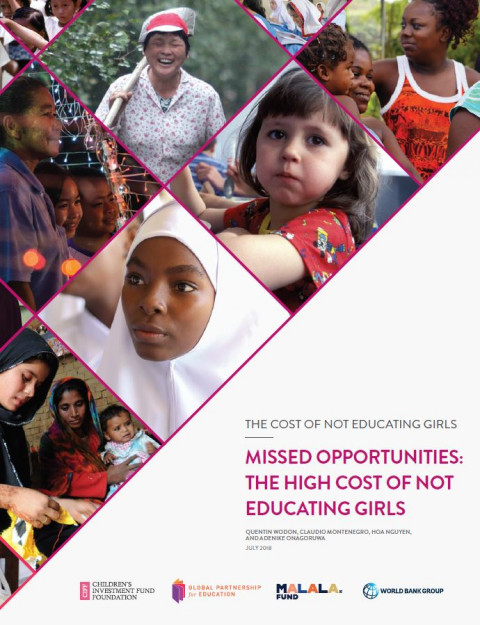 Missed opportunities: the high cost of not educating girls Year of publication: 2018 Author: Quentin Wodon | Claudio Montenegro | Hoa Nguyen | Adenike Onagoruwa Corporate author: Children's Investment Fund Foundation (CIFF) This report estimates the global impact of depriving girls of education as well as showing how educational attainment can affect their life chances and choices, and the outcomes of this at an individual, family and community level. Its findings show the transformative power of education for girls in six areas: (1) earnings and standards of living, (2) child marriage and early childbearing, (3) fertility and population growth, (4) health, nutrition and well-being, (5) agency and decision-making, and (6) social capital and institutions. Findings indicate that limited educational opportunities for girls and barriers to completing 12 years of education cost countries between $15 trillion and $30 trillion dollars in lost lifetime productivity and earnings. The report also finds that primary education is not enough. Across many indicators, benefits from primary education only are limited.