
Resources
Explore a wide range of valuable resources on GCED to deepen your understanding and enhance your research, advocacy, teaching, and learning.
17 Results found
 How Are Vocational Institutions Innovating, Evolving and Changing as a Result of COVID-19?: A Study of Practice and Perspectives in Five Countries Year of publication: 2021 Corporate author: British Council As an international problem, Covid-19 requires international cooperation. The social, economic and educational recovery from the pandemic can be enhanced by knowledge transfer and exchange. This research brought together 15 technical and vocational education and training (TVET) institutions from the five countries in the British Council’s I-WORK Programme (Improving Work Opportunities - Relaying Knowledge) to explore innovation, evolution and change stemming from the pandemic. TVET practitioners and leaders from Ghana, India, Malaysia, South Africa and the UK were asked to reflect on five key questions: How are institutional policy and structures likely to change to reflect the changing situation? Is this different for private institutions? What changes are proposed to the curriculum/ occupational areas to reflect the rapidly changing demand and how are they identifying this demand? How will learners get the practical and work-based experience they need and what changes to work- based learning and apprenticeships are needed? What changes are needed to the skills and type of staff in the teaching institution? How can new delivery models and ways of working promote more inclusive practice? The research took place as institutions approached almost a year of adapting their teaching, learning and support to localised lockdowns and the restrictions of the pandemic. The national policy context may have been different in each country, but the research findings pointed to a single conclusion: that across the board, the move to digital learning and teaching had brought benefits, opportunities and challenges that might not otherwise have been realised.
  The Big Conversation: Climate Change; Final Report Year of publication: 2021 Author: Michael Bruter | Sarah Harrison | Sandra Obradović | Elisabet Vives Corporate author: British Council | London School of Economics and Political Science This research draws on experience from the field of international cultural relations as well as the latest academic research on values, behaviours and norms to understand more about how we can create the conditions for co-operation on shared global challenges.It delivers new insight on values and attitudes towards climate change among the populations of China, India, Japan and Mexico – selected to represent a diverse range of major world economies who are also important players in the global climate change debate.The research also draws on the experience of international cultural relations experts to provide new insight on how to strengthen international cooperation on climate change and the important role that cultural relations can play in supporting that.
  Gender Equality and Empowerment of Women and Girls in the UK: Meeting the Challenge of the Sustainable Development Goals Year of publication: 2016 Author: Holly Dustin | Helen Mott | Nicola Waterworth | Gillian Cowell | Janet Veitch Corporate author: British Council This research provides the first stocktake of gender equality in the UK from the perspective of the UN’s Sustainable Development Goals (SDGs), the 17 goals adopted by world leaders in 2015 in order to end poverty, protect the planet and ensure prosperity for all.It focuses on the UK’s successes towards achieving gender equality, as well as gaps and priorities for further action in five key areas: participation, power and leadership; education; economy; justice and violence against women and girls and culture (including arts, sports and technology). There are many examples of good practice from the UK, such as strong legislation, data gathering and structures. However, the research also concludes that women and girls continue to lag behind men and boys on key rights, opportunities and well-being, with men over-represented in almost all positions of power and decision-making. It also explores the impact of international linkages and collaboration to determine whether as the UK’s cultural relations organisation, there is a role for the British Council in this.
  One Voice for All: Education Pack Year of publication: 2013 Corporate author: British Council One Voice for All is a set of resources designed to help teachers work on the Connecting Classrooms themes of Rights and Responsibilities and Fairness and Equality through an exploration of human rights and street children. Its focus is the UN Convention on the Rights of the Child and it aims to allow learners to develop understanding of the key concepts of global citizenship, universal rights and justice.This resource aims to give young people the opportunity to understand the complexity of the wider world in which they live by exploring inequality and steps to address it.
 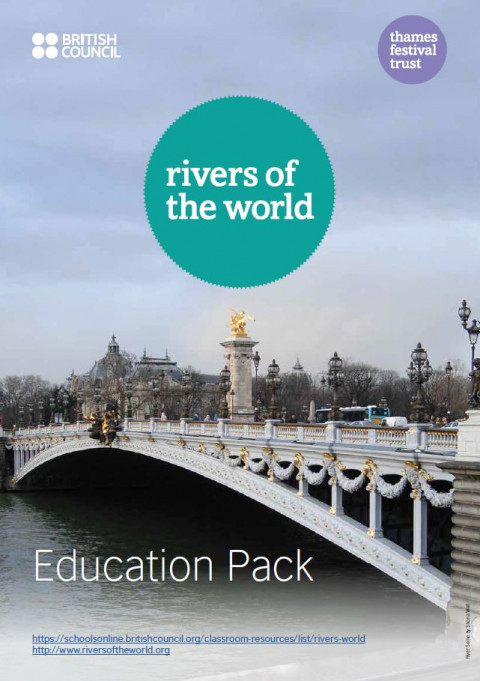 Rivers of the World Education Pack Year of publication: 2015 Author: Alison Willmott Corporate author: British Council This education resource pack extends the project’s reach to a much greater number of schools and provides a wealth of exciting cross-curricular activities for pupils aged 7–14. It is designed to expand knowledge and understanding, help your pupils to develop core skills and encourage them to explore and reflect on local and global issues. It also contains examples of artwork from the project and illustrations of how schools around the world have used the resources with their students.
 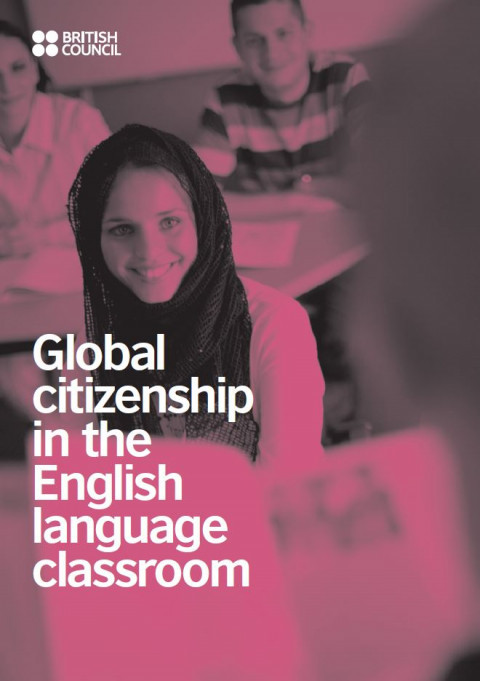 Global Citizenship in the English Language Classroom Year of publication: 2008 Author: Susan Hillyard | Elena Tarasheva | Clarissa Jordão | Francisco Fogaça | Esperanza Revelo Jiménez | Sabiha Khuram | Telma Gimenez | Vanessa Andeotti Corporate author: British Council This booklet contains a collection of papers on global citizenship in language education around the world. It provides theoretical frameworks and practical applications in different contexts.Following on from Audrey Osler and Hugh Starkey’s 'Citizenship and Language Learning: international perspectives', published in 2005, this collection aims at offering ideas and practical suggestions on how teachers around the world have tackled the teaching of English within a citizenship education perspective. There are seven chapters, from authors working in different parts of the world, such as Argentina, Bulgaria, Brazil, Colombia, and Pakistan.There are five report style chapters that deal with courses, teaching materials, research and curriculum innovation. The two remaining contributions can be seen as proposals for implementation of a global citizenship perspective in English language classrooms.The diverse interpretations teachers of English around the world have been giving to the task of promoting global citizenship in their classrooms are reflected in this collection with understandings that range from a more prescriptive approach to a transformational one. They bring the potential for new approaches to be tried out in different contexts. The aim is to inspire teachers to experiment and evaluate the results.
 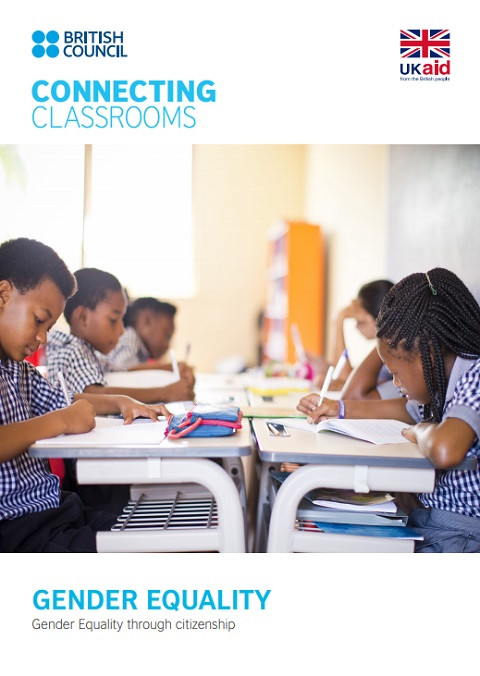 Connecting Classrooms: Gender Equality; Gender Equality through Citizenship Year of publication: 2019 Corporate author: British Council | UK aid This material shows an example of how you can support the development of pupils’ core skills such as citizenship, critical thinking, problem solving, creativity and imagination through the study and investigation of gender equality. This can be done in the context of English, citizenship, geography, history or other subjects. The materials can be used either with an international partner school or without one and instructions are provided on how to best use the resources. This learning unit will explore the Global Goals for Sustainable Development, and in particular, gender equality.
 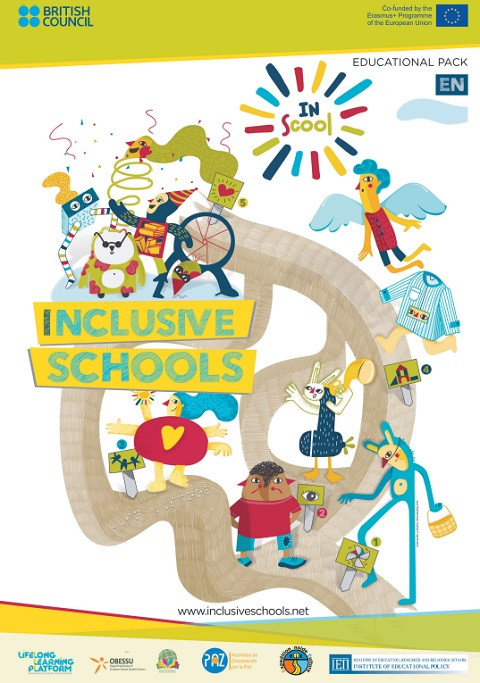 Inclusive Schools: Educational Pack (Inscool) Year of publication: 2019 Author: Sian Williams Corporate author: British Council | European Union (EU) This toolkit is designed to guide you flexibly, in ways that suit your school, through the start of a journey towards inclusion: improving personal and academic outcomes for all children and young people by focusing on their access to and participation in quality, relevant education. A key point to remember about this journey is that it does not have a final destination. Rather, it is about cumulative change that has, at its heart, a continuous focus on including more children and young people in learning and life at school: “an inclusive school is one that is on the move.” Inclusive Schools: Material Educativo (Inscool) Year of publication: 2019 Author: Sian Williams Corporate author: British Council | European Union (EU) Este kit de herramientas se diseñó para orientarle de una manera más flexible, con métodos adaptables a su centro educativo, en el inicio de un viaje hacia la inclusión: en este proceso se mejorarán los resultados personales y académicos de todos las/los menores y jóvenes poniendo el foco en su acceso a una educación de calidad y pertinente, y en su participación en ella. Un aspecto clave que cabe recordar respecto a este viaje es que no tiene un destino definitivo. Más bien, se trata de un cambio acumulativo que alberga, en su núcleo, un propósito constante de incluir a más niñas/os y jóvenes en el aprendizaje y en la vida cotidiana del centro educativo: «una escuela inclusiva es aquella que está siempre en un proceso de evolución». Inclusive Schools: Educational Pack (Inscool) Year of publication: 2019 Author: Sian Williams Corporate author: British Council | European Union (EU) Ce toolkit est conçu pour vous accompagner avec souplesse tout au long d’un voyage vers l’inclusion, d’une manière qui conviendra à votre école, dans le but d’améliorer les résultats personnels et scolaires de tous les enfants et de tous les jeunes, en mettant l’accent sur leur accès à l’éducation et sur leur participation à une éducation pertinente et de qualité. Un point essentiel à retenir de ce voyage est qu’il n’y a pas de destination finale. Il s’agit plutôt d’un changement cumulatif qui vise essentiellement à inclure davantage d’enfants et de jeunes dans l’apprentissage et dans la vie scolaire: «une école inclusive est une école en mouvement».”