
Resources
Explore a wide range of valuable resources on GCED to deepen your understanding and enhance your research, advocacy, teaching, and learning.
4 Results found
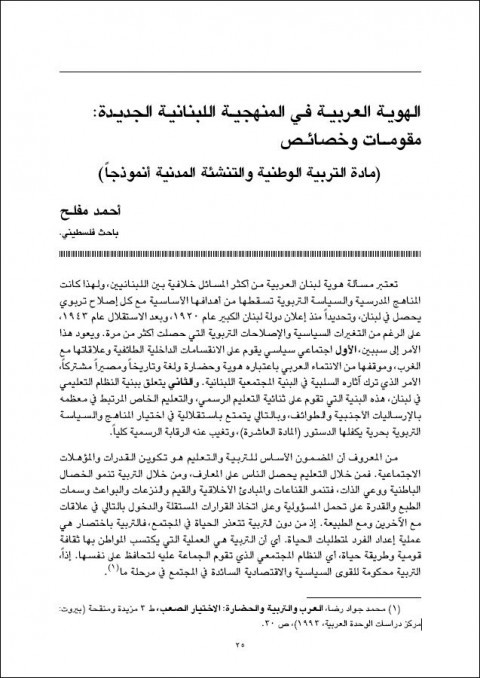 الهوية العربية في المنهجية اللبنانية الجديدة: مقومات وخصائص: مادة التربية الوطنية والتنشئة المدنية أنموذجا Year of publication: 2007 Author: مفلح، أحمد Corporate author: Centre for Arab Unity Studies هدف هذه الدراسة إلى الاهتمام بقضية الهوية العربية في المنهجية الجديدة اللبنانية من خلال توحيد مادة التربية الوطنية والتنشئة المدنية. وقد تم الكشف عن كيفية تقديم هذه المادة مفهوم الهوية العربية وكيفية بلورة مفهوم الانتماء العربي بالإضافة إلى التطرق للمجالات التي من خلالها يتم توصيل هذه المفاهيم والموضوعات التي تبرز فيها فكرة الانتماء والهوية. مع الكشف عما هو موجود في هذه المادة وقابليته للحياة والاستمرار في ضوء التغيرات التي حصلت في لبنان بعد وثيقة الوفاق الوطني (الطائف 1989)، وقدرتها على الصمود في وجه المؤثرات الأخرى في تربية النشء، مثل الأسرة والإعلام والبيئة والصحة وغيرها. وقد تبين من خلال التحليل أنه على الرغم مما حملته المنهجية التربوية الجديدة من التفاف حول حقيقة هوية لبنان العربية، وأنها قدمتها بشكلها الظاهري والنفعي والعاطفي أحيانا بما ينسجم مع التغيرات السياسية التي حلّت بلبنان بعد اتفاق الطائف، تبقى هذه المتغيرات في المنهاج الجديد متطورة جدا، مقابل التجاهل الكلي وحتى محاربة هذه الهوية في المنهاج القديم. Arab Identity in the New Lebanese Curriculum: Determinants and Characteristics of the National and Civic Education as an Example Year of publication: 2007 Author: مفلح، أحمد Corporate author: Centre for Arab Unity Studies This study deals with Lebanon’s Arab Identity issue in the new Lebanese curriculum through the unification of the contents of the National and Civic education subject. The study researched how this subject is presented and how to crystallize the concept of Arab Belonging, in addition to dealing with the aspects of communicating the concepts and subjects of identity and belonging. The study reveals the contents of this subject and its ability to be sustained and utilized given the changes in Lebanon following the Taef Agreement and the National Conciliation Document of 1989, and it tests the ability of this subject to withstand the other factors in bringing up the new generation - such as the effects of the family, media, environment, health and others. The analysis showed that despite that the new education curriculum calls for rallying around the fact of Lebanon’s Arab identity and that this identity is sometimes presented in a conspicuous, emotional and self-interest way, in harmony with the political changes following Taef, nevertheless, the changes in the new contents remain very advanced compared to how the identity and belonging were ignored and even fought in the old curriculum.
  The Art of Inclusive Exclusions: Educating the Palestinian Refugee Students in Lebanon (Refugee Survey Quarterly, Vol. 33, No. 2) Year of publication: 2014 Author: Maha Shuayb Corporate author: Centre for Arab Unity Studies For more than 65 years, Palestinian refugees have been living in Lebanon in a “temporary” State in over-crowded camps, deprived of basic rights such as the right to have a professional job. It has been argued that these restrictions have had a major effect on the fair provision and quality of education, an effect manifested in the increasing number of Palestinian students who are dropping out of school. This article examines the quality of education offered in United Nations Relief and Works Agency for Palestine Refugees schools and the impact of Lebanese legal restrictions on students’ educational motivation and aspirations.A quantitative survey of the educational experiences and aspirations of 404 secondary students and 48 teachers in five secondary schools of the United Nations Relief and Works Agency for Palestine Refugees was carried out. An in-depth study of a primary school also took place. The findings revealed that Palestinian refugee students are confronted by a paradox: forced inclusion because of having to learn the Lebanese curriculum, but exclusion because of simultaneously being pushed to the periphery of Lebanese society as a result of the Lebanon’s discriminatory laws and regulations. فن الإقصاء الإدماجي : تعليم الطلاب الفلسطينيين اللاجئين في لبنان Year of publication: 2014 Author: Maha Shuayb Corporate author: Centre for Arab Unity Studies ترمي هذه الدراسة إلى إبراز المفارقة التي تواجه اللاجئين الفلسطينيين في لبنان مُتَجَلّيةً في إدماجهم قسراً عبر تلقّي المقرر الدراسي اللبناني مع اضطرارهم في الوقت ذاته إلى البقاء على هامش المجتمع اللبناني نتيجة للقوانين والترتيبات اللبنانية التمييزية. بغية استقصاء ذلك؛ فحصتِ هذه الدراسة، نوعية التربية المتوافرة للفلسطينيين الدارسين في مدارس الأنروا (وكالة الأمم المتحدة لغوث وتشغيل اللاجئين الفلسطينيين) ووَقْع التضييقات القانونية اللبنانية على حافزهم التعليمي وتطلعاتهم التربوية. يتوزّع محتوى الورقة على قسمين اثنين يعرض الأوّل منهما تقويماً عامّاً للظروف الاجتماعية والسياسية والاقتصادية والتعليمية التي يعيشها اللاجئون الفلسطينيون في لبنان.