
Resources
Explore a wide range of valuable resources on GCED to deepen your understanding and enhance your research, advocacy, teaching, and learning.
52 Results found
 Демократия и права человека: Начинаются с нас; Хартия для всех Year of publication: 2012 Corporate author: Council of Europe Настоящий вариант Хартии ("Хартия для всех") ориентирован на всех тех, и прежде всего молодежь, кто хотел бы узнать о том, чему посвящен данный международный юридический документ, и как он может быть использован для содействия демократии и правам человека в классе, в молодежных организациях и в обществе в целом.
  Digital Citizenship Education Project (DCE): 10 Domains Year of publication: 2018 Corporate author: Council of Europe The aim of the DCE project launched by the Council of Europe’s Education Policy Division is to empower children to participate actively in digital society. This involves providing them with an education that develops a sense of critical analysis and the effective use of digital technologies while fostering a notion of citizenship based on respect for human rights and democratic culture.
 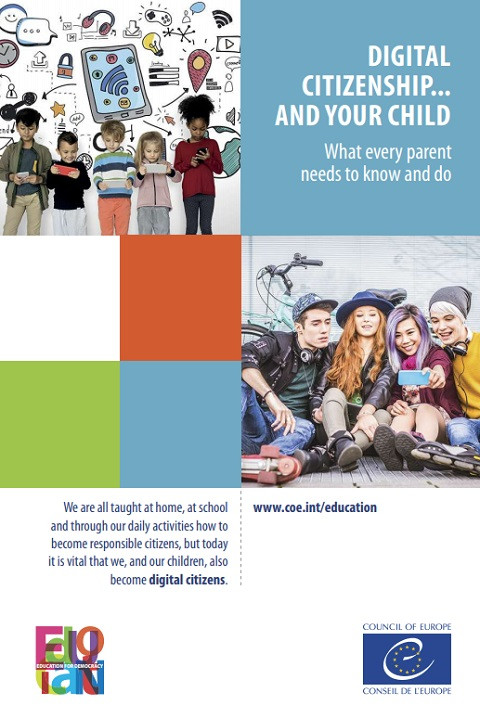 Digital Citizenship... and Your Child What Every Parent Needs to Know and Do Year of publication: 2019 Corporate author: Council of Europe The Council of Europe has created this guide to help you: better understand digital citizenship, and how it shapes online behaviour discuss digital citizenship with your children take steps to help your children master the competences digital citizenship is built on encourage your children’s school to play its role in educating competent young digital citizens.
 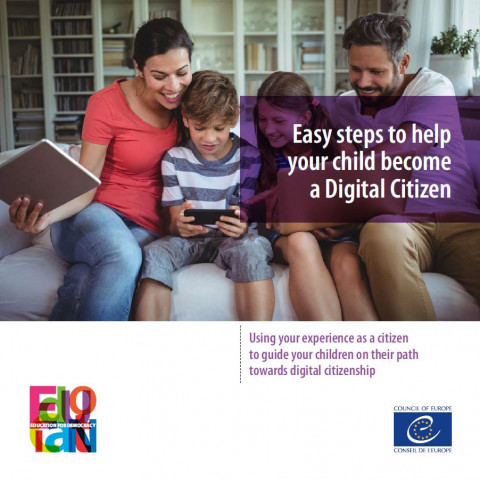 Easy Steps to Help Your Child Become a Digital Citizen Year of publication: 2020 Author: Janice Richardson | Veronica Samara Corporate author: Council of Europe A guide to help you use your experience as a citizen to guide your children on their path towards digital citizenship.Young people today inhabit a world that has been transformed by digital technologies, effortlessly enabling connectedness through social media and access to vast quantities of information. Making sense of this hyper rich information and engaging effectively and responsibly poses a whole set of new challenges for educators as they seek to prepare young people as citizens, exercising their rights and participating effectively in the affairs of the community.Parents, and “non-tech” grandparents too, can help children become digital citizens. In this guide, we explain some of the easy steps to follow, to help children master what it takes to act responsibly and respectfully online.
  A Report on Education for Democratic Citizenship and Human Rights Education Policy and Practice in Six Eastern Partnership Countries: Promoting Human Rights Education and Democratic Citizenship in Eastern Partnership Countries Year of publication: 2017 Author: Ralph Edward Huddleston | Karine Harutyunyan | Ulviyya Mikayilova | Irina Fursa | Shorena Gharibashvili | Cezar Gavriliuc | Polina Verbytska Corporate author: Council of Europe This report has been produced within the framework of the EU/CoE Joint Programme “Supporting Education Policies in Democratic Citizenship and Human Rights Education in 6 Eastern Partnership countries”. The Programme embraces the six countries of the EU’s Eastern Partnership: Armenia, Azerbaijan, Belarus, Georgia, Moldova and Ukraine. Its aim is to support integration and/or further develop of education for democratic citizenship and human rights education in national education systems (including school curriculum) in Eastern Partnership countries, in accordance with the Council of Europe Charter on Education for Democratic Citizenship and Human Rights Education. The report draws on the results of a research exercise designed to map the most important initiatives and priorities in the area of Education for Democratic Citizenship and Human Rights Education (EDC/HRE) in the six countries. The research exercise was carried out 2015-16 by local experts within each country. It resulted in six individual country reports outlining the current situation in relation to the integration of the principles of EDC/HRE within the national education system, and identifying opportunities for further development.
 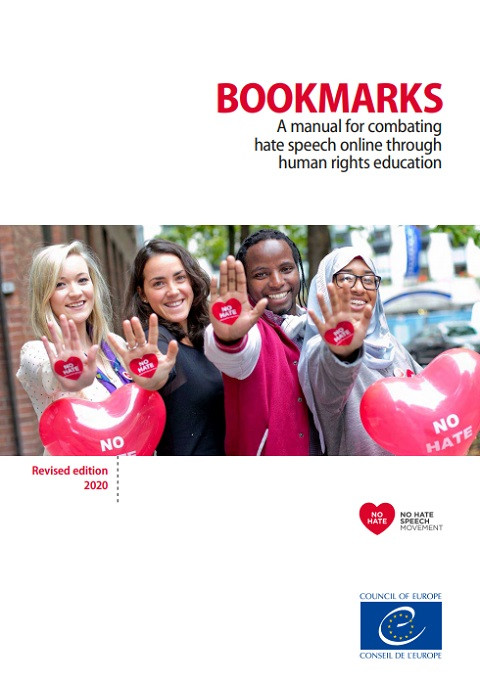 Bookmarks: A Manual for Combating Hate Speech Online Through Human Rights Education Year of publication: 2020 Author: Ellie Keen | Mara Georgescu Corporate author: Council of Europe The work of the Council of Europe for democracy is strongly based on education: education in schools, and education as a lifelong learning process of practising democracy, such as in non-formal learning activities. Human rights education and education for democratic citizenship form an integral part of what we have to secure to make democracy sustainable. Hate speech is one of the most worrying forms of racism and discrimination prevailing across Europe and amplified by the Internet and social media.Hate speech online is the visible tip of the iceberg of intolerance and ethnocentrism. Young people are directly concerned as agents and victims of online abuse of human rights; Europe needs young people to care and look after human rights, the life insurance for democracy.Bookmarks was originally published to support the No Hate Speech Movement youth campaign of the Council of Europe for human rights online. Bookmarks is useful for educators wanting to address hate speech online from a human rights perspective, both inside and outside the formal education system. The manual is designed for working with learners aged 13 to 18 but the activities can be adapted to other age ranges.This edition of Bookmarks reflects the end of the coordination of the youth campaign by the Council Europe. The campaign may be officially over, but the education and awarenessraising to counter hate speech and promote human rights values remain an urgent task for young people of all ages.
 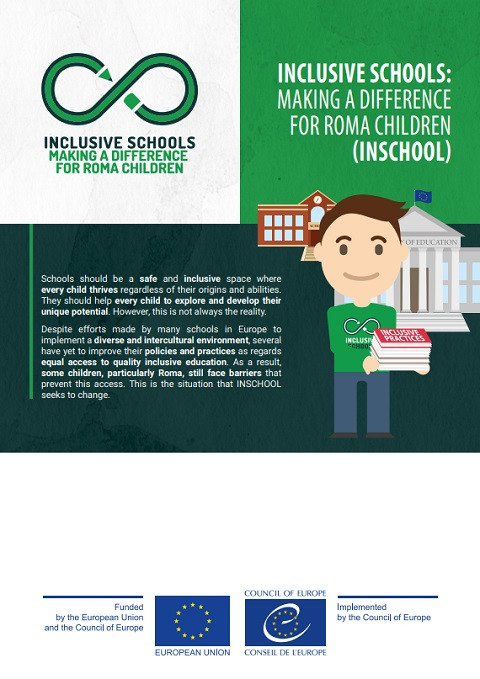 Inclusive Schools: Making a Difference for Roma Children (Inschool) Corporate author: European Union (EU) | Council of Europe This leaflet presents a joint project of the European Union and the Council of Europe on “Inclusive schools: making a difference for Roma children” targeting schools where Roma children learn, in the Czech Republic, Hungary, Romania, Slovak Republic and United Kingdom. The project aims at enhancing social inclusion of Roma by promoting inclusive education policies and practices in Europe.
 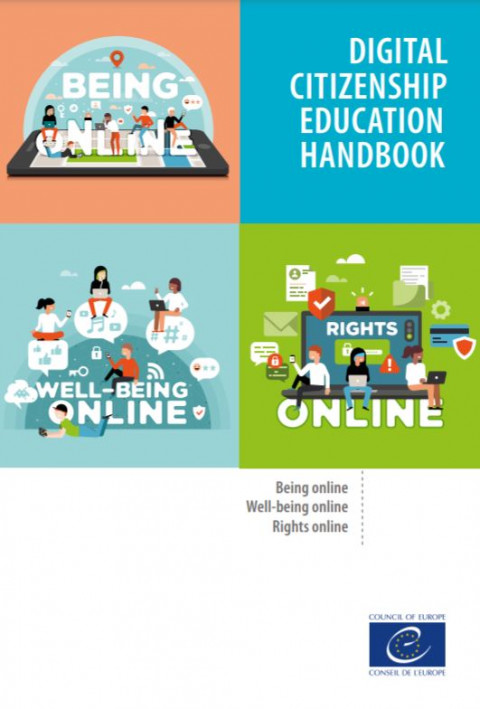 Digital Citizenship Education Handbook Year of publication: 2019 Author: Janice Richardson | Elizabeth Milovidov Corporate author: Council of Europe Digital citizenship and engagement involves a wide range of activities, from creating, consuming, sharing, playing and socialising, to investigating, communicating, learning and working. Competent digital citizens are able to respond to new and everyday challenges related to learning, work, employability, leisure, inclusion and participation in society, respecting human rights and intercultural differences.This Digital citizenship education handbook is designed to help educators and other interested adults understand and deal with them. It builds on the Council of Europe’s Reference Framework of Competences for Democratic Culture and the achievements of our longstanding Education for Democratic Citizenship programme, and complements the Internet literacy handbook as part of a coherent approach to educating citizens for the society of the future.
  T-KIT 4: Intercultural Learning Year of publication: 2018 Author: Oana Nestian Sandu | Nadine Lyamouri-Bajja Corporate author: Council of Europe | European Commission Intercultural learning is an important topic for the priorities of both the European Commission and the Council of Europe, and of their partnership in the field of youth.Intercultural learning is an educational approach that can lead to social transformation, so that people from different cultural backgrounds can develop positive relations based on the values and principles of human rights and on seeing cultural differences as positive things. It is a form of political and social education that needs to pay attention not only to intercultural relations, but also to different understandings of culture and diversity, power relations, distribution of resources, political and social context, human rights, discrimination, history and daily interactions among different groups.This T-Kit was developed for the context of youth work and non-formal education with young people, both of which support the personal development, social integration and active citizenship of young people. Educators and youth workers have an important role in addressing intercultural learning in their work with young people. They can stimulate young people’s learning in their daily lives, so that they can question and extend their perception, develop competences to interact positively with people from different cultural backgrounds and embrace the values of diversity, equality and dignity. In today’s Europe, these values and skills are fundamental for young people and for society as a whole in order to continue building peace and mutual understanding.
 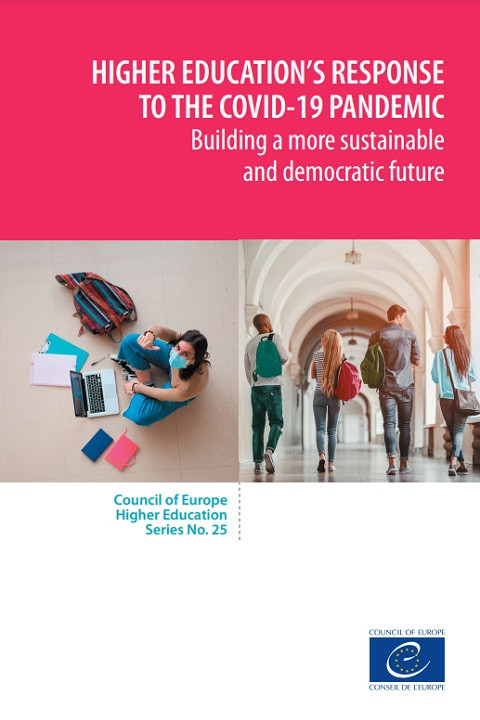 Higher Education's Response to the COVID-19 Pandemic: Building a More Sustainable and Democratic Future (Council of Europe Higher Education Series; No. 25) Year of publication: 2021 Author: Sjur Bergan | Tony Gallagher | Ira Harkavy | Ronaldo Munck | Hilligje van’t Land Corporate author: Council of Europe Public health was the immediate concern when the Covid-19 pandemic struck in Asia, then in Europe and other parts of the world. The response of our education systems is no less vital. Higher education has played a major role in responding to the pandemic and it must help shape a better, more equitable and just post-Covid-19 world. This book explores the various responses of higher education to the pandemic across Europe and North America, with contributions also from Africa, Asia and South America.The book describes the various ways in which higher education is facing the Covid-19 pandemic. It is designed to help universities, specifically their staff and students as well as their partners, contribute to a more sustainable and democratic future.