
Resources
Explore a wide range of valuable resources on GCED to deepen your understanding and enhance your research, advocacy, teaching, and learning.
52 Results found
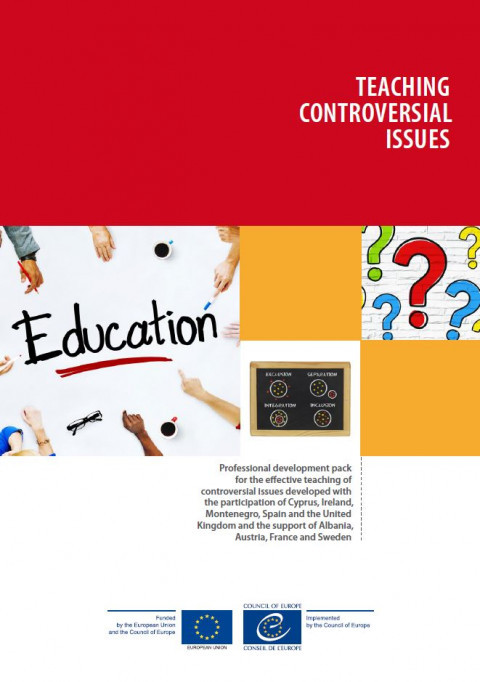 Living with Controversy: Teaching Controversial Issues through Education for Democratic Citizenship and Human Rights (EDC/HRE); Training Pack for Teachers Year of publication: 2015 Corporate author: Council of Europe Learning how to engage in dialogue with people whose values are different from one’s own and to respect them is central to the democratic process and essential for the protection and strengthening of democracy and fostering a culture of human rights. Yet in Europe young people do not often have an opportunity to discuss controversial issues in school because they are seen as too challenging to teach, e.g., issues to do with extremism, gender violence, child abuse, or sexual orientation. Unable to voice their concerns, unaware of how others feel or left to rely on friends and social media for their information, young people can be frustrated or confused about some of the major issues which affect their communities and European society today. In the absence of help from school, they might have no reliable means of dealing with these issues constructively and no one to guide them. The idea for this Pack came out of a call from policy-makers and practitioners in a number of European countries for more effective training for teachers in the teaching of controversial issues.
  COMPASS: a manual on human rights education with young people Year of publication: 2012 Author: Patricia Brander Corporate author: Council of Europe Compass was first published in 2002 within the framework of the Human Rights Education Youth Programme of the Directorate of Youth and Sport of the Council of Europe. The programme was created because human rights education – meaning educational programmes and activities that focus on promoting equality in human dignity – was and remains of incalculable value in shaping a dimension of democratic citizenship for all young people and in promoting a culture of universal human rights.Compass has become a reference manual for many young people involved in value-based youth work and non-formal education. It is currently available in more than 30 languages, ranging from Arabic and Japanese to Icelandic and Basque. In some countries it has become part of the resources for human rights education in schools and in some others it is not possible to use it in schools. The adventures of Compass across Europe often mirror the contrasted reality of human rights education: promoted here and combated there, praised by some and despised by others.The success of Compass has been followed by its younger sibling, Compasito – a manual for human rights education with children is already available in several languages and on the way to becoming another bestseller for human rights education. More importantly, Compass and its publication in various language versions has been the medium through which human rights education has been brought onto the agenda of youth work and into the programme of many schools. National networks for human rights education have been created in several countries, where they reinforce the work done by human rights organisations and educational professionals in making the right to human rights education a reality to more children and young people across Europe. The forum on human rights education with young people, Living, Learning, Acting for Human Rights, held in Budapest in 2009, stressed the importance of human rights education today.
  Human rights education in the school systems of Europe, Central Asia and North America: a compendium of good practice Year of publication: 2009 Corporate author: Council of Europe | UNESCO | UN. Office of the United Nations High Commissioner for Human Rights (UN. OHCHR) | OSCE. Office for Democratic Institutions and Human Rights (ODIHR) “Human Rights Education in the School Systems of Europe, Central Asia and North America: A Compendium of Good Practice” is a compilation of 101 examples of good practice in human rights education in primary schools, secondary schools and teacher training institutions in the Organization for Security and Co-operation in Europe (OSCE) area, which is also covered by the United Nations Educational, Scientific and Cultural Organization (UNESCO), the Office of the United Nations High Commissioner for Human Rights (OHCHR) and, partially, the geographical mandate of the Council of Europe (CoE).The term “human rights education” is often used in this resource in a broader sense, to also include educationfor democratic citizenship and education for mutual respect and understanding, which are all based on internationally agreed human rights standards. These three areas are seen as interconnected and essential within educational systems in order to prepare youth to be active, responsible and caring participants in their communities, as well as at the national and global levels.Human rights education has been defined as education, training and information aimed at building a universal culture of human rights. A comprehensive education in human rights not only provides knowledge about human rights and the mechanisms that protect them, but also imparts the skills needed to promote, defend and apply human rights in daily life. Education for democratic citizenship focuses on educational practices and activities designed to help young people and adults to play an active part in democratic life and exercise their rights and responsibilities in society. Education for mutual respect and understanding highlights self-respect, respect for others, and the improvement of relationships between people of differing cultural traditions.This book aims to support quality teaching in these areas and to inspire educational policymakers (those working in education ministries and local school boards) and administrators, teachers, teacher trainers, non-formal educators and all other interested actors, as well as to facilitate networking and the exchange of experience among education professionals. Inclusion from the start: guidelines on inclusive early childhood care and education for Roma children Year of publication: 2014 Corporate author: UNESCO | Council of Europe Inclusion from the start: guidelines on inclusive early childhood care and education for Roma children (Guidelines hereafter) is a joint contribution by the Council of Europe and UNESCO to improving access to quality early childhood services for Roma children. They are a concrete follow-up to the recommendations arising from an expert meeting, organised by the two organisations in 2007.1 Recognising that quality early childhood experience is an important stepping stone toward inclusive participation in school and society, the Guidelines address the challenges specifc to Roma children in the early years and transition to primary education. They provide guidance on key themes, such as the conceptualisation of early childhood care and education (ECCE) services, agenda-setting, stakeholders’ responsibilities, curricular and pedagogical approaches, staf training and professional development, assessment and transition to primary education. The Guidelines primarily address formal ECCE services – such as kindergartens and preschools – which typically cater for children from ages 3-6 years. The reason for this focus is that providing care and education experience prior to primary school entry is crucial for supporting Roma children’s school readiness and for facilitating an equal start in their frst year. This being said, the Guidelines also acknowledge the critical importance of the years pre-natal to age 3, and consider health and nutrition interventions and non-formal ECCE programmes (e.g. community-based childcare, parenting education) as essential services in deprived neighbourhoods and settlements.
  Monitoring the implementation of the Lisbon Recognition Convention - Council of Europe Higher Education Series No. 23 Year of publication: 2019 Corporate author: UNESCO | Council of Europe In accordance with the Lisbon Recognition Convention, the Committee of the Convention shall oversee its implementation and guide the competent authorities in implementing the convention and in their consideration of applications for the recognition of foreign qualifications. The Rules of procedure (adopted by the Committee in Vilnius in 1999) reiterate this role – the function of the Committee is to promote the application of the convention and oversee its implementation. Article II. of the convention states that where the central authorities of a party are competent to make decisions in recognition cases, that party shall be immediately bound by the provisions of the convention and shall take the necessary measures to ensure the implementation of its provisions on its territory. Where the competence to make decisions in recognition matters lies with individual higher education institutions or other entities, each party, according to its constitutional situation or structure, shall transmit the text of this convention to those institutions or entities and shall take all possible steps to encourage the favourable consideration and application of its provisions. The provisions of Article II. are central to determining the obligations of the parties to the convention. This article places upon these parties an obligation to make sure that information on the provisions is disseminated to all competent recognition authorities, and that these institutions are encouraged to abide by the convention (Explanatory report to the convention). The objective of this monitoring exercise has been to oversee the implementation of the main provisions of the convention and to report to parties on the outcome of this monitoring, presenting the main findings and recommendations. This monitoring report is also a contribution to the commitment set out in the Yerevan Communiqué (2015) to review national legislation to ensure full compliance with the convention, and to ask the Convention Committee, in co-operation with the ENIC (Council of Europe and UNESCO European Network of National Information Centres on academic recognition and mobility) and NARIC (EU Network of National Academic Recognition Information Centres) networks, to prepare an analysis of the national legislation reports by the end of 2017, taking due account of this monitoring report. This is the first monitoring of implementation of the Lisbon Recognition Convention (LRC) since its signature in 1997. The questionnaire used for the monitoring exercise was drawn up by the Bureau of the Convention Committee, namely Gunnar Vaht, President of the Committee, Gayane Harutyunyan, Vice-President, Allan Bruun Pedersen, Vice-President, and Baiba Ramina, Rapporteur, together with the joint Council of Europe/UNESCO Secretariat. The monitoring covers the 10 main provisions of the convention and comprises 22 questions relating to implementation of the main principles. The questions focus primarily on how the convention requirements are regulated at national level and to what extent the rules are reflected in national legislation. In cases where some or all of the provisions are not regulated at national level and where the higher education institutions have total autonomy in establishing the principles of the convention, the aim has been to discover how national authorities oversee implementation of the principles of the convention at institutional level. As stated above, the objective of this monitoring report is to monitor implementation of the convention by the parties to the convention. The executive summary focuses on the key findings and the conclusions focus on the recommendations made by the Convention Committee Bureau, which will require political decisions from the Convention Committee and from national authorities for follow-up action. The various chapters of the report elaborate further on both the key findings and the recommendations. The questionnaire was sent to 53 states parties to the LRC, and replies were received from 50 countries. The initial deadline given was 15 February 2015, but this was extended to June 2015. The analysis by the members of the Convention Committee Bureau took place from June to November 2015 and was assisted and reviewed by the Council of Europe and UNESCO, the joint Secretariat of the LRCC Bureau.
 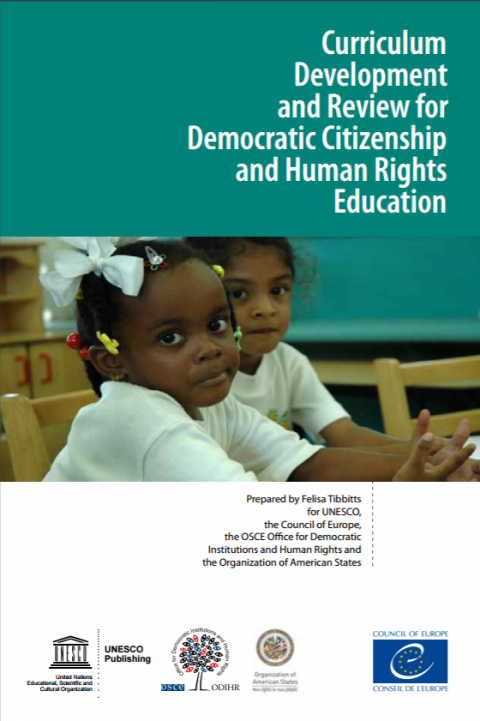 Curriculum Development and Review for Democratic Citizenship and Human Rights Education Year of publication: 2016 Corporate author: UNESCO | Council of Europe | Organization of American States (OAS) | OSCE. Office for Democratic Institutions and Human Rights (ODIHR) Education for democratic citizenship and human rights education are vital for peaceful, sustainable and inclusive societies based on respect for the human rights of every person. Effective teaching and learning processes require well-trained teachers, positive learning environments and high-quality learning materials. This is underpinned by education policy, including curriculum development and review, which is the main focus of this book. The strengthening of education policies in the fields of education for democratic citizenship and human rights lies at the very heart of the efforts of the Council of Europe, the United Nations Educational, Scientific and Cultural Organization, the Office for Democratic Institutions and Human Rights of the Organization for Security and Co-operation in Europe, and the Organization of American States. These organisations have jointly produced this publication in order to support states’ commitment to fostering citizenship and human rights education and improving access to quality education for all. Разработка и пересмотр учебных программ по воспитанию демократической гражданственности и образованию в области прав человека Year of publication: 2016 Corporate author: UNESCO | Council of Europe | Organization of American States (OAS) | OSCE. Office for Democratic Institutions and Human Rights (ODIHR) Education for democratic citizenship and human rights education are vital for peaceful, sustainable and inclusive societies based on respect for the human rights of every person. Effective teaching and learning processes require well-trained teachers, positive learning environments and high-quality learning materials. This is underpinned by education policy, including curriculum development and review, which is the main focus of this book. The strengthening of education policies in the fields of education for democratic citizenship and human rights lies at the very heart of the efforts of the Council of Europe, the United Nations Educational, Scientific and Cultural Organization, the Office for Democratic Institutions and Human Rights of the Organization for Security and Co-operation in Europe, and the Organization of American States. These organisations have jointly produced this publication in order to support states’ commitment to fostering citizenship and human rights education and improving access to quality education for all.
  Guidelines for educators on countering intolerance and discrimination against Muslims: addressing islamophobia through education Year of publication: 2013 Corporate author: UNESCO | Council of Europe | OSCE. Office for Democratic Institutions and Human Rights (ODIHR) Intolerance and discrimination against Muslims are not new phenomena. However, they have evolved and gained momentum in recent years, particularly under conditions of the “war on terror”, the global economic crisis, anxieties about national identity and difficulties in coping with the increased diversity in many societies. Such developments have contributed to a growth in resentment and fear of Muslims and Islam that often been fuelled by sections of the media and by some political discourse. Muslims are often portrayed as extremists who threaten the security and well-being of others.These stereotypes have impact not only on young people but also on their parents, as well as on teachers and other education professionals. This presents a new challenge for educators. While teachers cannot be expected to resolve the political and social tensions among communities, they can play a central role in shaping the attitudes and behaviours of young people. The actions and approaches adopted by teachers and school administrators can be crucial in promoting respect for diversity and mutual understanding, both in schools and in society.Developed by OSCE/ODIHR, the Council of Europe and UNESCO, these Guidelines aim to support educators in countering intolerance and discrimination against Muslims. They are intended for a wide audience, including teachers, principals and head teachers, education policymakers and officials, teacher trainers, teacher unions and professional associations, and NGOs. The Guidelines are relevant for both primary and secondary education and can also be used in non-formal education settings. Directrices para educadores sobre la manera de combatir la intolerancia y la discriminación contra los musulmanes: afrontar la islamofobia mediante la educación Year of publication: 2013 Corporate author: UNESCO | Council of Europe | OSCE. Office for Democratic Institutions and Human Rights (ODIHR) Intolerance and discrimination against Muslims are not new phenomena. However, they have evolved and gained momentum in recent years, particularly under conditions of the “war on terror”, the global economic crisis, anxieties about national identity and difficulties in coping with the increased diversity in many societies. Such developments have contributed to a growth in resentment and fear of Muslims and Islam that often been fuelled by sections of the media and by some political discourse. Muslims are often portrayed as extremists who threaten the security and well-being of others.These stereotypes have impact not only on young people but also on their parents, as well as on teachers and other education professionals. This presents a new challenge for educators. While teachers cannot be expected to resolve the political and social tensions among communities, they can play a central role in shaping the attitudes and behaviours of young people. The actions and approaches adopted by teachers and school administrators can be crucial in promoting respect for diversity and mutual understanding, both in schools and in society.Developed by OSCE/ODIHR, the Council of Europe and UNESCO, these Guidelines aim to support educators in countering intolerance and discrimination against Muslims. They are intended for a wide audience, including teachers, principals and head teachers, education policymakers and officials, teacher trainers, teacher unions and professional associations, and NGOs. The Guidelines are relevant for both primary and secondary education and can also be used in non-formal education settings. : Противодействие нетерпимости и дискриминации в отношении мусульман: руководящие принципы. Борьба с исламофобией через образование для преподавателей Year of publication: 2013 Corporate author: UNESCO | Council of Europe | OSCE. Office for Democratic Institutions and Human Rights (ODIHR) Intolerance and discrimination against Muslims are not new phenomena. However, they have evolved and gained momentum in recent years, particularly under conditions of the “war on terror”, the global economic crisis, anxieties about national identity and difficulties in coping with the increased diversity in many societies. Such developments have contributed to a growth in resentment and fear of Muslims and Islam that often been fuelled by sections of the media and by some political discourse. Muslims are often portrayed as extremists who threaten the security and well-being of others.These stereotypes have impact not only on young people but also on their parents, as well as on teachers and other education professionals. This presents a new challenge for educators. While teachers cannot be expected to resolve the political and social tensions among communities, they can play a central role in shaping the attitudes and behaviours of young people. The actions and approaches adopted by teachers and school administrators can be crucial in promoting respect for diversity and mutual understanding, both in schools and in society.Developed by OSCE/ODIHR, the Council of Europe and UNESCO, these Guidelines aim to support educators in countering intolerance and discrimination against Muslims. They are intended for a wide audience, including teachers, principals and head teachers, education policymakers and officials, teacher trainers, teacher unions and professional associations, and NGOs. The Guidelines are relevant for both primary and secondary education and can also be used in non-formal education settings.