
Resources
Explore a wide range of valuable resources on GCED to deepen your understanding and enhance your research, advocacy, teaching, and learning.
6 Results found
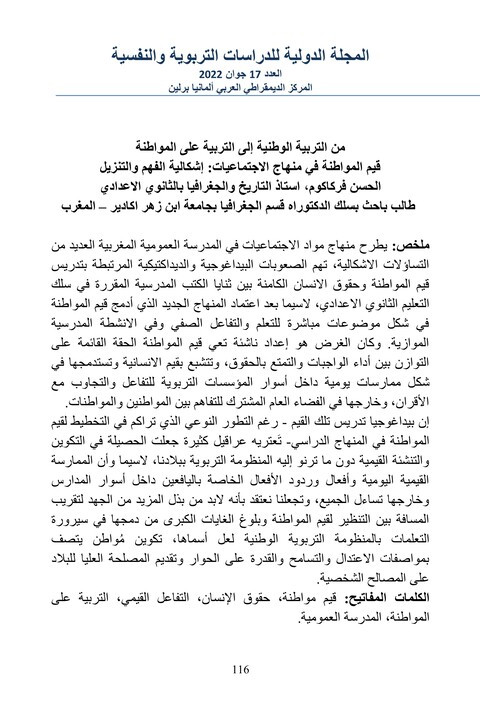 From Civic Education to Citizenship Education: Citizenship Values in the Geography Curriculum; The Problem of Understanding and Downloading (International Journal of Educational and Psychological Studies; vol. 6, no. 17) Year of publication: 2022 Author: Al-Hassan Farkakoum Corporate author: Democratic Arab Center This paper aims to contribute to revealing the extent to which the values of citizenship and human rights are present in the social studies lesson in Moroccan public schools, specifically in the middle school education curriculum. The inclusion of human rights values at this level raises several problems that lead to two complementary trends: The first is related to the didactics of human rights and citizenship education, and the second trend is related to the extent of the learner’s ability to acquire and represent the values of citizenship and transform them into automatic daily behaviors and practices in the school environment and then after that in daily public life and private transactions. من التربية الوطنية إلى التربية على المواطنة قيم المواطنة في منهاج الاجتماعيات: إشكالية الفهم والتنزيل (مجلة الدراسات التربوية والنفسية ;no.17, vol.6) Year of publication: 2022 Author: Al-Hassan Farkakoum Corporate author: Democratic Arab Center تهدف هذه الورقة الإسهام في كشف مدى حضور قيم المواطنة وحقوق اإلنسان في درس الاجتماعيات بالمدرسة العمومية المغربية، وتحديدا في منهاج التعليم الثانوي الإعدادي. إن إدراج قيم حقوق اإلنسان في هذا المستوى يطرح عدة إشكالات تصب في منحيين يكمل بعضهما البعض، الأول مرتبط بديداكتيك مادة حقوق اإلنسان والتربية على المواطنة، والمنحى الثاني له عالقة بمدى قدرة المتعلم على اكتساب قيم المواطنة وتمثلها وتحويلها إلى سلوكات وممارسات تلقائية يومية في الوسط المدرسي ثم بعد ذلك في الحياة العامة اليومية والمعاملات الخاصة.
  التربية على التسامح وتجسيد ثقافة العيش المشترك من التسامح إلى التعايش Year of publication: 2022 Corporate author: Democratic Arab Center حظى مفهوم التسامح باهتمام كبير في ضوء المتغيرات المجتمعية المعاصرة من أجل ضمان استقرار المجتمع، وتعايش أفراده في وئام وسلام بالإضافة إلى أهميته على مستوى العلاقات بين الدول وبعضها. التسامح قيمة إنسانية ذات طابع عالمي، ولقد ظهر مفهوم التسامح من حاجة المجتمعات الغارقة في الحروب والاقتتال الأهلي، وهو أعطى تقدما باهرا للمجتمعات والمؤسسات في الغرب، وحرّر الإنسـان من قيود الخوف، لقد أرسى مفهوم التسامح قوانين أكثر إنسانية، وفرض على الـدول أنماطا جديدة مـن التفكير وإعمال العقل لاستنباط مخارج تجنب البشرية العنف والتعصب، وقـد التزمت الأمـم المتحدة بتدعيم التسامح من خلال تعزيز التفاهم المتبادل بين الثقافات والشعوب . وقد تنبهت منظمة اليونسكو للتربية والثقافة والعلـوم التابعة للأمم المتحدة، إلى موضوع ثقافة التسامح فأصدرت في السادس عشر من تشرين الثاني لعام 1995، إعلاناً يتضمـن الـمبـادئ الأساسية للتسامح كثقافة تربوية ونفسية و اجتماعية. وقـد أصبح هذا اليوم ومنذ المؤتمر العام لليونسكو في دورته الثامنة والعشرين، يوماً عالمياً للتسامح Tolerance Education and the Embodiment of Coexistence Culture: From Tolerance to Coexistence Year of publication: 2022 Corporate author: Democratic Arab Center The concept of tolerance has received great attention in light of contemporary societal changes in order to ensure the stability of society and the coexistence of its members in harmony and peace, in addition to its importance at the level of relations between countries.Tolerance is a human value of a universal nature. The concept of tolerance emerged from the need of societies mired in war and civil strife. It gave remarkable progress to societies and institutions in the West, and liberated people from the shackles of fear. The concept of tolerance established more humane laws and imposed on countries new patterns of thinking. And using reason to devise ways to avoid violence and intolerance for humanity. The United Nations has committed to strengthening tolerance by promoting mutual understanding between cultures and peoples.The United Nations Educational, Scientific and Cultural Organization, UNESCO, became aware of the issue of the culture of tolerance and issued, on November 16, 1995, a declaration containing the basic principles of tolerance as an educational, psychological and social culture. Since the twenty-eighth session of the UNESCO General Conference, this day has become an international day for tolerance.
  قيم المواطنة في التعليم الأبتدائي : دراسة وصفية تحليلية لمحتوى كتاب التربية المدنية Year of publication: 2022 Author: Abdelghani Makhloufi Corporate author: Democratic Arab Center هدفت الدراسة إلى الوقوف على واقع انسجام قيم المواطنة الواردة في كتاب التربية المدنية للتعليم الابتدائي مع تلك القيم التي وردت في القانون التوجيهي للتربية الوطنية، باعتباره الإطار المرجعي لتأليف المناهج والكتب المدرسية، حيث توصلت الدراسة باعتماد منهج تحليل المحتوى من خلال شبكة تحليل محددة لقيم المواطنة في القانون التوجيهي، وتحليل محتويات كتب التربية المدنية لمرحلة التعليم الابتدائي ككل على ضوئها، إلى أن قيم المواطنة الواردة في كتاب التربية المدنية لمرحلة التعليم الابتدائي لا تتوافق مع مقدار القيم الواردة في القانون التوجيهي للتربية الوطنية إلا بنسبة46.15%، وهي نسبة غير كافية للدلالة على الاعتماد الفعلي للمؤلفين والجهات الوصية على مرجعية القانون التوجيهي للتربية الوطنية في المؤلفات المدرسية. Citizenship Values in Primary Education : An Analytical Descriptive Study of the Content of the Civics Textbook Year of publication: 2022 Author: Abdelghani Makhloufi Corporate author: Democratic Arab Center The study aimed to assess the alignment between the citizenship values presented in the civics textbooks for primary education and those outlined in the National Education Directive Law, which serves as the guiding framework for curriculum and textbook development. Employing a content analysis approach, the study compared the network of citizenship values delineated in the directive law with the contents of civics textbooks for primary education. Findings revealed a discrepancy, with the citizenship values in the civics textbooks aligning with only 53.85% of those specified in the directive law for national education. This disparity suggests a lack of adherence by textbook authors and publishers to the values prescribed in the directive law.