
Resources
Explore a wide range of valuable resources on GCED to deepen your understanding and enhance your research, advocacy, teaching, and learning.
28 Results found
 T-KIT 4: Intercultural Learning Year of publication: 2018 Author: Oana Nestian Sandu | Nadine Lyamouri-Bajja Corporate author: Council of Europe | European Commission Intercultural learning is an important topic for the priorities of both the European Commission and the Council of Europe, and of their partnership in the field of youth.Intercultural learning is an educational approach that can lead to social transformation, so that people from different cultural backgrounds can develop positive relations based on the values and principles of human rights and on seeing cultural differences as positive things. It is a form of political and social education that needs to pay attention not only to intercultural relations, but also to different understandings of culture and diversity, power relations, distribution of resources, political and social context, human rights, discrimination, history and daily interactions among different groups.This T-Kit was developed for the context of youth work and non-formal education with young people, both of which support the personal development, social integration and active citizenship of young people. Educators and youth workers have an important role in addressing intercultural learning in their work with young people. They can stimulate young people’s learning in their daily lives, so that they can question and extend their perception, develop competences to interact positively with people from different cultural backgrounds and embrace the values of diversity, equality and dignity. In today’s Europe, these values and skills are fundamental for young people and for society as a whole in order to continue building peace and mutual understanding.
  The Impact of COVID-19 on Inclusive Education at the European Level: Literature Review Year of publication: 2021 Corporate author: European Agency for Special Needs and Inclusive Education | European Commission The coronavirus (COVID-19) pandemic has affected learners around the world. School closures forced emergency responses from education systems, resulting in various forms of remote schooling. The crisis highlighted pre-existing inequalities in education and provided a reason for systemic change in education worldwide.This literature review aims to map evidence and identify acknowledged ways in which COVID‑19 has impacted on education in general and inclusive education in particular at European and national levels. The intention is to provide a comprehensive overview of key messages for Agency member countries. It will also inform possible future Agency work on this topic.
 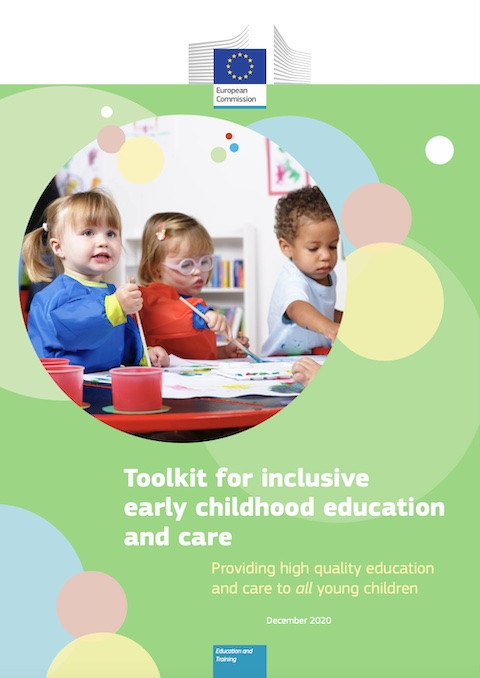 Toolkit for Inclusive Early Childhood Education and Care (ECEC): Providing High Quality Education and Care to All Young Children Year of publication: 2021 Corporate author: European Commission | European Union (EU) Early childhood education and care (ECEC) is the first step on the lifelong learning ladder. It provides young children with professional support to grow, learn and flourish. While it benefits all children, it is even more crucial to children who may face additional needs or difficulties due to individual or family circumstances, e.g. children living in poverty or precarious conditions, children with disabilities or special learning needs, or children from a migrant background or from a minority ethnic community. All children must therefore be able to benefit from high quality ECEC, independently from their individual or family circumstances. It helps them develop to the best of their abilities and supports their well-being. The European Union 2019 Council Recommendation for High-Quality Early Childhood Education and Care Systems offers a Quality framework for ECEC to support Member States to work towards achieving higher quality and more inclusive ECEC systems. The 2020 Communication from the European Commission on achieving the European Education Area by 2025 announced the release of a European toolkit for inclusion in ECEC, drawing on exchange of best practice and the input of experts and stakeholders. The Toolkit for inclusion in ECEC recalls political commitments made e.g. in the European Pillar of Social Rights, policy recommendations which have been adopted by EU Member States as well as research findings. They all converge towards the need and will to develop more inclusive ECEC systems and settings. To ensure equity for all children in accessing and benefitting from ECEC, the toolkit includes a set of practical solutions and measures to inspire ECEC policy makers at the national, regional or local level, as well as ECEC practitioners. It includes examples of good practice in ECEC settings and identifies useful ideas and resources to inspire leaders and staff across Europe to progress towards practice that is more inclusive. The toolkit aims to inspire decision-makers to use the examples of good practice to create appropriate conditions that can benefit all children and families.
  Spot and Fight Disinformation Year of publication: 2021 Corporate author: European Commission The pandemic demonstrated just how fast misleading or false information can spread online. With this toolkit, secondary school teachers can help their students separate what is real from what is fake when they are browsing online. The toolkit is comprised of an editable presentation (which includes real life examples and group exercises) and an instruction booklet for teachers. Detectar y combatir desinformación Year of publication: 2021 Corporate author: European Commission La pandemia ha puesto de manifiesto la rapidez con que informaciones falsas se propagan en línea. Con este kit de herramientas, los profesores de enseñanza secundaria pueden ayudar a sus alumnos a distinguir lo verdadero de lo falso cuando navegan por internet. El kit de herramientas se compone de una presentación editable y de un folleto de instrucciones. Repérer et combattre la désinformation Year of publication: 2021 Corporate author: European Commission La pandémie a montré à quel point les fausses informations se diffusent rapidement en ligne. Grâce à cette boîte à outils, les enseignants du secondaire peuvent aider leurs élèves à démêler le vrai du faux lorsqu’ils naviguent en ligne. Elle se compose d’une présentation éditable et d’une brochure contenant des instructions.
 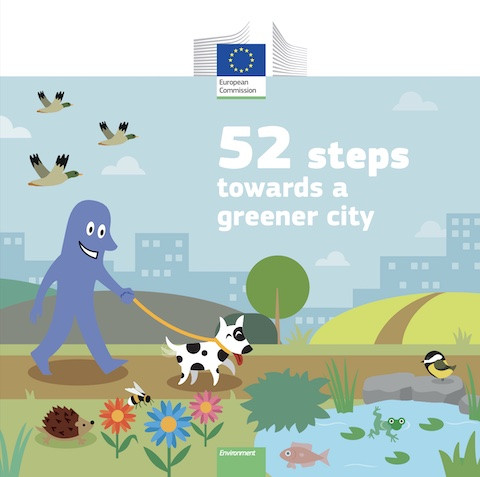 52 Steps: Towards a Greener City Year of publication: 2018 Corporate author: European Commission | European Union (EU) This booklet contains 52 suggestions about how to support urban biodiversity throughout the year. It includes:Practical things you can do every dayActivities to start or join in your communityHow you can help research by watching and recording wildlife, andUsing sustainable techniques in your garden 52 medidas: Para una ciudad más ecológica Year of publication: 2018 Corporate author: European Commission | European Union (EU) Este folleto contiene cincuenta y dos sugerencias sobre cómo contribuir a la biodiversidad urbana a lo largo del año. Incluye: acciones prácticas para todos los días; actividades que puedes iniciar o en las que participar en tucomunidad; cómo puedes ayudar a la investigación observando y grabando la vida silvestre; y uso de técnicas sostenibles en tu jardín o huerta. 52 étapes: Pour une ville plus verte Year of publication: 2018 Corporate author: European Commission | European Union (EU) Cette brochure contient cinquante-deux suggestions sur la façon dont vous pouvez protéger la biodiversité urbaine toute l’année. Elle inclut:des actions concrètes pour la vie quotidienne;des activités à lancer ou à rejoindre dans votre communauté;des conseils pour ceux qui veulent aider la recherche en observant et en enregistrant la vie sauvage; etdes conseils sur l’utilisation de techniques durables dans votre jardin.
  Citizenship Education at School in Europe, 2017: Eurydice Report Year of publication: 2017 Corporate author: European Commission | Education, Audiovisual and Culture Executive Agency (EACEA) | Eurydice The Eurydice Citizenship Education at School in Europe – 2017 report provides a comparative overview of national policies in the area of citizenship education across Europe, at a time when increasing demands are being made on education and training systems to promote this area of learning. It focuses on the curriculum content and organisation, the teaching and learning methods in and outside the classroom, the assessment of students, and the training and support for teachers. These issues are addressed in the four chapters, each of which is complemented by a case study on a recent policy initiative. The report is primarily based on qualitative data and covers 42 education systems. It draws on the existing regulations and recommendations regarding citizenship education in public sector schools and includes general education and school-based initial vocational education training programmes.