
Resources
Explore a wide range of valuable resources on GCED to deepen your understanding and enhance your research, advocacy, teaching, and learning.
58 Results found
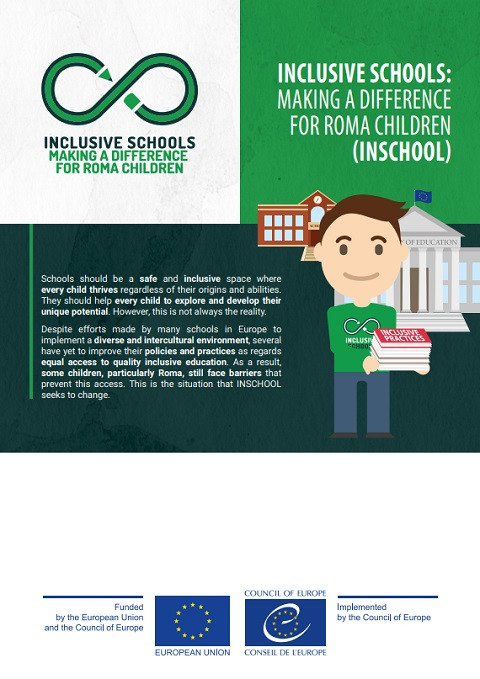 Inclusive Schools: Making a Difference for Roma Children (Inschool) Corporate author: European Union (EU) | Council of Europe This leaflet presents a joint project of the European Union and the Council of Europe on “Inclusive schools: making a difference for Roma children” targeting schools where Roma children learn, in the Czech Republic, Hungary, Romania, Slovak Republic and United Kingdom. The project aims at enhancing social inclusion of Roma by promoting inclusive education policies and practices in Europe.
 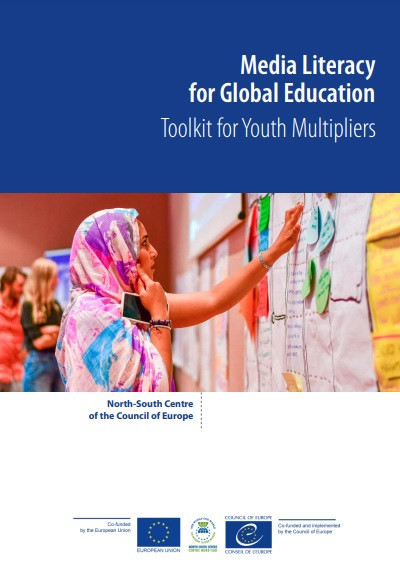 Media Literacy for Global Education: Toolkit for Youth Multipliers Year of publication: 2022 Corporate author: North-South Centre of the Council of Europe | Council of Europe | European Union (EU) This toolkit targets youth multipliers and educators and gathers practical and contextual information about Media Literacy (ML) and its contribution to the field of Global Education (GE). Its activities and fact sheets are focused on non-formal learning contexts, but they can also be implemented in schools since the toolkit combines the most recent developments in GE, ML and Digital Citizenship Education useful to enrich formal school curricula. All the practical activities proposed in the toolkit are in line with the Competences for Democratic Culture and the Human Rights approach of the Council of Europe.The toolkit’s main aim is to empower practitioners on ML, but also to provide the wider public with the knowledge and tools to become more responsible and active citizens, offering activities focused on the critical analysis and production of media messages, analysis of algorithms, active participation in societies, maintenance of privacy, maintenance of well-being and management of e-identity.
  Vivir con la controversia: Cómo enseñar temas controvertidos mediante la Educación para la ciudadanía y los derechos humanos (EDC/HRE) Módulo de formación para el profesorado Year of publication: 2015 Corporate author: European Union (EU) Learning how to engage in dialogue with people whose values are different from one’s own and to respect them is central to the democratic process and essential for the protection and strengthening of democracy and fostering a culture of human rights. ■ Yet in Europe young people do not often have an opportunity to discuss controversial issues in school because they are seen as too challenging to teach, e.g., issues to do with extremism, gender violence, child abuse, or sexual orientation. Unable to voice their concerns, unaware of how others feel or left to rely on friends and social media for their information, young people can be frustrated or confused about some of the major issues which affect their communities and European society today. In the absence of help from school, they might have no reliable means of dealing with these issues constructively and no one to guide them. ■ The idea for this Pack came out of a call from policy-makers and practitioners in a number of European countries for more effective training for teachers in the teaching of controversial issues.
  Thematic Alternative Report on the Implementation by the Republic of Tajikistan of the Convention on the Elimination of All Forms of Discrimination Against Women (CEDAW) in Relation to the Rights of Women Released from Places of Deprivation of Liberty Year of publication: 2024 Corporate author: European Union (EU) | DVV International | Bureau of Human Rights and Rule of Law (BHR) This alternative report focuses on the implementation by the Republic of Tajikistan of the UN Convention on the Elimination of All Forms of Discrimination against Women (CEDAW) in relation to the rights of women released from places of deprivation of liberty. The report contains information for the period from 2019 to 2023.
 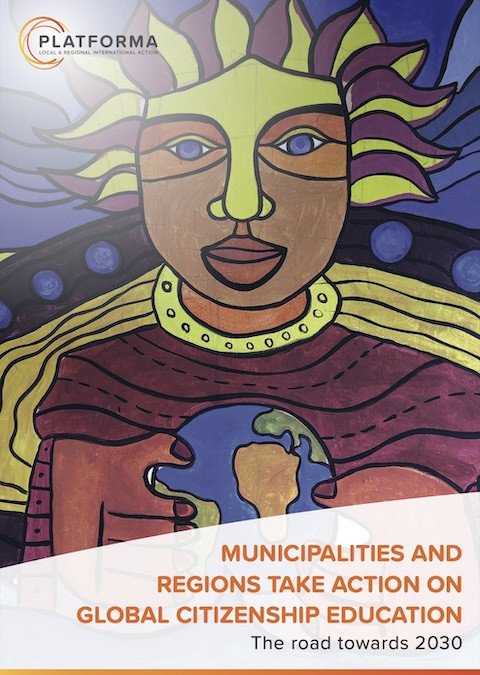 Municipalities and Regions Take Action on Global Citizenship Education: The Road Towards 2030 Year of publication: 2021 Author: Aurèle Destrée | Tereza Čajková Corporate author: PLATFORMA | European Union (EU) Development Education and Awareness Raising (DEAR)/Global Citizenship Education (GCE) can cultivate the spirit of the 2030 Agenda because it helps acquiring missing knowledge on global interconnections and creates spaces for enquiries.Whilst old constraints still remain and new challenges are appearing, local and regional governments continue to innovate, experiment and work hand in hand with key partners, including with their peers across the globe, to find new solutions and achieve their ambitions.Discover in this publication how local and regional governments are active in supporting learning and fostering changes in a context of socio-economic recovery plans.
 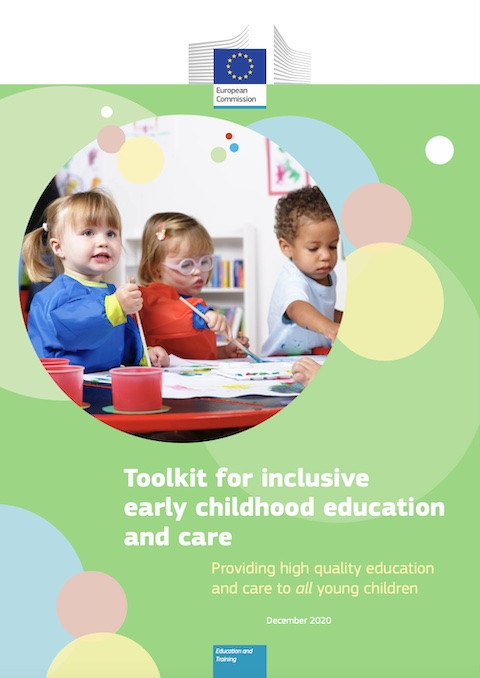 Toolkit for Inclusive Early Childhood Education and Care (ECEC): Providing High Quality Education and Care to All Young Children Year of publication: 2021 Corporate author: European Commission | European Union (EU) Early childhood education and care (ECEC) is the first step on the lifelong learning ladder. It provides young children with professional support to grow, learn and flourish. While it benefits all children, it is even more crucial to children who may face additional needs or difficulties due to individual or family circumstances, e.g. children living in poverty or precarious conditions, children with disabilities or special learning needs, or children from a migrant background or from a minority ethnic community. All children must therefore be able to benefit from high quality ECEC, independently from their individual or family circumstances. It helps them develop to the best of their abilities and supports their well-being. The European Union 2019 Council Recommendation for High-Quality Early Childhood Education and Care Systems offers a Quality framework for ECEC to support Member States to work towards achieving higher quality and more inclusive ECEC systems. The 2020 Communication from the European Commission on achieving the European Education Area by 2025 announced the release of a European toolkit for inclusion in ECEC, drawing on exchange of best practice and the input of experts and stakeholders. The Toolkit for inclusion in ECEC recalls political commitments made e.g. in the European Pillar of Social Rights, policy recommendations which have been adopted by EU Member States as well as research findings. They all converge towards the need and will to develop more inclusive ECEC systems and settings. To ensure equity for all children in accessing and benefitting from ECEC, the toolkit includes a set of practical solutions and measures to inspire ECEC policy makers at the national, regional or local level, as well as ECEC practitioners. It includes examples of good practice in ECEC settings and identifies useful ideas and resources to inspire leaders and staff across Europe to progress towards practice that is more inclusive. The toolkit aims to inspire decision-makers to use the examples of good practice to create appropriate conditions that can benefit all children and families.
  الأطفال غير المصحوبين بذويهم أو المنفصلين عنهم في منطقة الشرق الأوسط Year of publication: 2024 Author: Pierre Cazenave Corporate author: International Centre for Migration Policy Development (ICMPD) | European Union (EU) قد صمم هذا العمل لتسليط الضوء على الديناميات السابقة والحالية التي تؤثر على الهجرة الدولية (من المنطقة وداخلها)، وجمع وجهات النظر وتحليل سرد الأطفال غير المصحوبين بذويهم أو المنفصلين عنهم في محاولة لفهم الأسباب التي تدعم تنقل والأطفال غير المصحوبين بذويهم أو المنفصلين عنهم من المنطقة وداخلها، وذلك أي ًضا بهدف تقديم توصيات بشأن كيفية توفير احتياجاتهم المحددة على نحو أفضل في سياقات مختلفة. ركزت الدراسة بشكل خاص على ٣ بلدان مختارة في منطقة الشرق الأوسط وشمال إفريقيا (المغرب والأردن ولبنان) بينما تم استخدام المعلومات والبيانات القيمة التي تم جمعها في بلدين من بلدان الاتحاد الأوروبي (الاتحاد الأوروبي)، وهما اليونان وإسبانيا. Unaccompanied and Separated Children in the Mediterranean Region Year of publication: 2024 Author: Pierre Cazenave Corporate author: International Centre for Migration Policy Development (ICMPD) | European Union (EU) This work was designed to shed light on past and current dynamics that influence international migration (from and within the region), gather the perspectives and analyse the narratives of Unaccompanied and Separated Children (UASC) in an attempt to understand the reasons that underpin the mobility of unaccompanied and separated children from and within the region, also with a view to provide recommendations on how to better provide for their specific needs in different contexts. The study placed a special emphasis on 3 selected countries in the MENA region (Morocco, Jordan and Lebanon) while valuable information and data gathered in 2 European Union (EU) countries, Greece and Spain, were also used. Les enfants non accompagnés et séparés dans la région méditerranéenne Year of publication: 2024 Author: Pierre Cazenave Corporate author: International Centre for Migration Policy Development (ICMPD) | European Union (EU) La présente étude a été menée dans le cadre du programme EUROMED Migration V, qui est financé par l'Union européenne (UE) et mis en œuvre par le Centre international pour le développement des politiques migratoires (ICMDP). Il aide les Pays membres de l’Union européenne et les Pays partenaires du sud (PPS) à mettre en place un cadre de dialogue et de coopération global, constructif et opérationnel, portant en particulier sur le renforcement des instruments et des capacités pour développer et mettre en œuvre des politiques de migration fondées sur des données factuelles. EMM5 s’appuie sur les résultats de ses quatre premières phases (2004-2020) et développe ses activités autour de la facilitation d’un dialogue et d’une coopération régionale Sud-Nord et Sud-Sud efficaces dans les domaines thématiques identifiés dans le nouvel agenda pour la Méditerranée sur les migrations et la mobilité et le Nouveau pacte sur les migrations et l'asile. Il s'agit notamment de la gouvernance en matière de migration et d'asile, des opportunités socio-économiques pour les migrants et les communautés d'accueil, du retour et de la réintégration, de la migration légale et de la mobilité.
 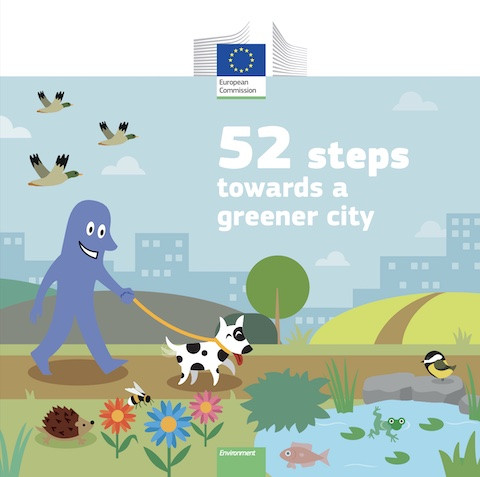 52 Steps: Towards a Greener City Year of publication: 2018 Corporate author: European Commission | European Union (EU) This booklet contains 52 suggestions about how to support urban biodiversity throughout the year. It includes:Practical things you can do every dayActivities to start or join in your communityHow you can help research by watching and recording wildlife, andUsing sustainable techniques in your garden